Kirjojen hintavertailu. Mukana 12 595 353 kirjaa ja 12 kauppaa.

Kirjailija

Jeremy Carrette

Kirjat ja teokset yhdessä paikassa: 8 kirjaa, julkaisuja vuosilta 1999-2018, suosituimpien joukossa William James's Hidden Religious Imagination. Vertaile teosten hintoja ja tarkista saatavuus suomalaisista kirjakaupoista.

8 kirjaa

Kirjojen julkaisuhaarukka 1999-2018.

William James's Hidden Religious Imagination
This book offers a radical new reading of William James’s work on the idea of ‘religion.’ Moving beyond previous psychological and philosophical interpretations, it uncovers a dynamic, imaginative, and critical use of the category of religion. This work argues that we can only fully understand James’s work on religion by returning to the ground of his metaphysics of relations and by incorporating literary and historical themes. Author Jeremy Carette develops original perspectives on the influence of James’s father and Calvinism, on the place of the body and sex in James, on the significance of George Eliot’s novels, and Herbert Spencer’s ‘unknown,’ revealing a social and political discourse of civil religion and republicanism and a poetic imagination at the heart of James understanding of religion. These diverse themes are brought together through a post-structural sensitivity and a recovery of the importance of the French philosopher Charles Renouvier to James’s work. This study pushes new boundaries in Jamesian scholarship by reading James with pluralism and from the French tradition. It will be a benchmark text in the reshaping of James and the nineteenth-century foundations of the modern study of ‘religion.’
William James's Hidden Religious Imagination
This book offers a radical new reading of William James’s work on the idea of ‘religion.’ Moving beyond previous psychological and philosophical interpretations, it uncovers a dynamic, imaginative, and critical use of the category of religion. This work argues that we can only fully understand James’s work on religion by returning to the ground of his metaphysics of relations and by incorporating literary and historical themes. Author Jeremy Carette develops original perspectives on the influence of James’s father and Calvinism, on the place of the body and sex in James, on the significance of George Eliot’s novels, and Herbert Spencer’s ‘unknown,’ revealing a social and political discourse of civil religion and republicanism and a poetic imagination at the heart of James understanding of religion. These diverse themes are brought together through a post-structural sensitivity and a recovery of the importance of the French philosopher Charles Renouvier to James’s work. This study pushes new boundaries in Jamesian scholarship by reading James with pluralism and from the French tradition. It will be a benchmark text in the reshaping of James and the nineteenth-century foundations of the modern study of ‘religion.’
Religion and Critical Psychology

Religion and Critical Psychology

Jeremy Carrette

Routledge
2007
nidottu
Jeremy Carrette argues that the psychology of religion is no longer sustainable without a social critique, and that as William James predicted, the project of the modernist psychology of religion has failed. Controversially he champions greater social and philosophical analysis within the field to challenge the political naivety and disciplinary illusions of the traditional approaches to psychology of religion. Carrette discusses the relevance of the social and economic factors surrounding the debates of psychology and religion, through three critical examples:psychoanalysishumanistic psychologycognitive neuroscience. A Critical Psychology of Religion provides a new dimension to the debates surrounding religious experience. It will be of interest to students and researchers in the fields of critical psychology, religious experience and the psychology of religion and extends an interdisciplinary challenge to the separation of psychology, sociology, politics, economics and religion.
Religion and Critical Psychology

Religion and Critical Psychology

Jeremy Carrette

Routledge
2007
sidottu
Jeremy Carrette argues that the psychology of religion is no longer sustainable without a social critique, and that as William James predicted, the project of the modernist psychology of religion has failed. Controversially he champions greater social and philosophical analysis within the field to challenge the political naivety and disciplinary illusions of the traditional approaches to psychology of religion. Carrette discusses the relevance of the social and economic factors surrounding the debates of psychology and religion, through three critical examples:psychoanalysishumanistic psychologycognitive neuroscience. A Critical Psychology of Religion provides a new dimension to the debates surrounding religious experience. It will be of interest to students and researchers in the fields of critical psychology, religious experience and the psychology of religion and extends an interdisciplinary challenge to the separation of psychology, sociology, politics, economics and religion.
Selling Spirituality

Selling Spirituality

Jeremy Carrette; Richard King

Routledge
2004
nidottu
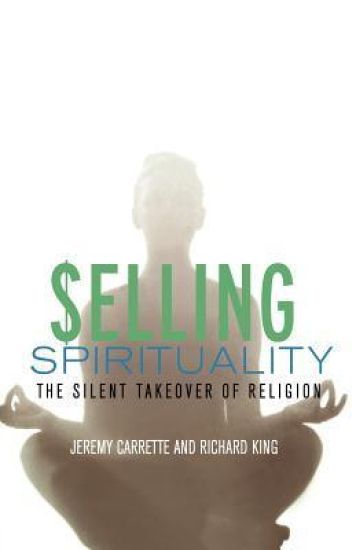
From Feng Shui to holistic medicine, from aromatherapy candles to yoga weekends, spirituality is big business. It promises to soothe away the angst of modern living and to offer an antidote to shallow materialism.Selling Spirituality is a short, sharp, attack on this fallacy. It shows how spirituality has in fact become a powerful commodity in the global marketplace - a cultural addiction that reflects orthodox politics, curbs self-expression and colonizes Eastern beliefs.Exposing how spirituality has today come to embody the privatization of religion in the modern West, Jeremy Carrette and Richard King reveal the people and brands who profit from this corporate hijack, and explore how spirituality can be reclaimed as a means of resistance to capitalism and its deceptions.
Selling Spirituality

Selling Spirituality

Jeremy Carrette; Richard King

Routledge
2004
sidottu
From Feng Shui to holistic medicine, from aromatherapy candles to yoga weekends, spirituality is big business. It promises to soothe away the angst of modern living and to offer an antidote to shallow materialism.Selling Spirituality is a short, sharp, attack on this fallacy. It shows how spirituality has in fact become a powerful commodity in the global marketplace - a cultural addiction that reflects orthodox politics, curbs self-expression and colonizes Eastern beliefs.Exposing how spirituality has today come to embody the privatization of religion in the modern West, Jeremy Carrette and Richard King reveal the people and brands who profit from this corporate hijack, and explore how spirituality can be reclaimed as a means of resistance to capitalism and its deceptions.
Foucault and Religion

Foucault and Religion

Jeremy Carrette

Routledge
1999
sidottu
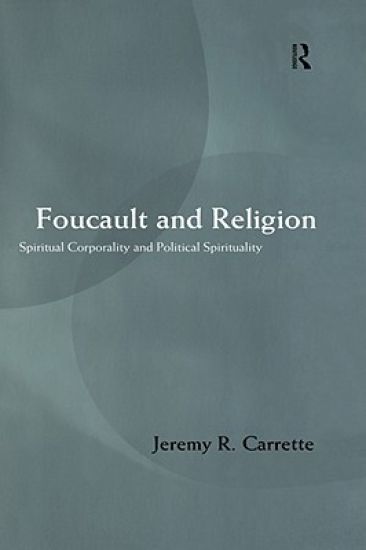
Foucault and Religion is the first major study of Michel Foucault in relation and response to Religion. Jeremy Carrette offers us a challenging new look at Foucault's work and addresses a religious dimension that has previously been neglected. We see that prior to Foucault's infamous unpublished volume in the 'History of Sexuality', on the theme of Christianity, there is a complex religious sub-text which anticipates this final unseen work.Jeremy Carrette argues that Foucault offers a twofold critique of Christianity by bringing the body and sexuality into religious practice and exploring a political spirituality of the self. He shows us that Foucault's creation of a body theology through the death of God, reveals how religious beliefs reflect the sexual body, questions the notion of a mystical archaeology and exposes the political technology of confession.Anyone interested in understanding Foucault's thought in a new light will find this book a truly fascinating read.
Foucault and Religion

Foucault and Religion

Jeremy Carrette

Routledge
1999
nidottu
Foucault and Religion is the first major study of Michel Foucault in relation and response to Religion. Jeremy Carrette offers us a challenging new look at Foucault's work and addresses a religious dimension that has previously been neglected. We see that prior to Foucault's infamous unpublished volume in the 'History of Sexuality', on the theme of Christianity, there is a complex religious sub-text which anticipates this final unseen work.Jeremy Carrette argues that Foucault offers a twofold critique of Christianity by bringing the body and sexuality into religious practice and exploring a political spirituality of the self. He shows us that Foucault's creation of a body theology through the death of God, reveals how religious beliefs reflect the sexual body, questions the notion of a mystical archaeology and exposes the political technology of confession.Anyone interested in understanding Foucault's thought in a new light will find this book a truly fascinating read.