Kirjojen hintavertailu. Mukana 12 211 469 kirjaa ja 12 kauppaa.

Kirjailija

Jeremy D. Bailey

Kirjat ja teokset yhdessä paikassa: 7 kirjaa, julkaisuja vuosilta 2007-2026, suosituimpien joukossa The Other Declarations. Vertaile teosten hintoja ja tarkista saatavuus suomalaisista kirjakaupoista.

7 kirjaa

Kirjojen julkaisuhaarukka 2007-2026.

The Other Declarations

The Other Declarations

Jeremy D. Bailey

UNIVERSITY PRESS OF KANSAS
2026
sidottu
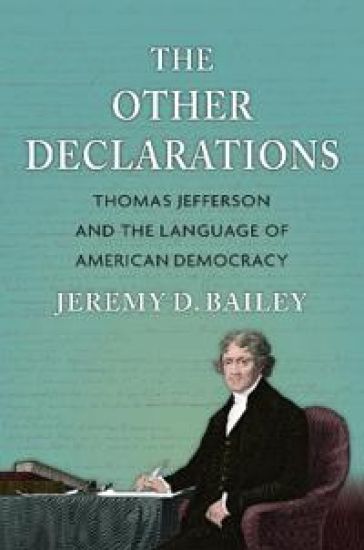
The Declaration of Independence is Thomas Jefferson's most enduring contribution, but his many lesserknown declarations offer essential lessons for what it takes to keep American democracy alive. Thomas Jefferson spent his life writing declarations. He believed that the written word could shape democracy, and he worked tirelessly to do so. Ironically, Jefferson’s authorship of the Declaration has stood in the way of our understanding his many contributions to the practice of American democracy by way of his other declarations. Renowned Jefferson scholar Jeremy D. Bailey shows how the founder wrestled with three fundamental and enduring problems in American democracy. The first is the freedom of the press and the problem of disinformation in electoral politics, or what Jefferson called “false opinions in league with false facts.” The second is the tension between the necessity of westward expansion and the desirability of some protection of the natural right of Native nations to own their lands. And the third is the question of slavery, and whether the United States could ever bring an end to the peculiar institution. These questions highlight timeless tension between the philosophical ideals and practical imperatives of democratic politics. Jefferson was uniquely equipped, philosophically and politically, to address these difficulties, but our understanding of Jefferson, and of his successes and failures, is surprisingly incomplete. The Other Declarations gives us a fuller picture of one of our most consequential founders.
The Idea of Presidential Representation

The Idea of Presidential Representation

Jeremy D. Bailey

University Press of Kansas
2019
sidottu
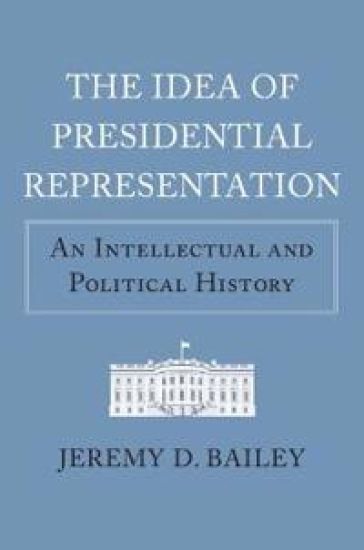
Does the president represent the entire nation? Or does he speak for core partisans and narrow constituencies? The Federalist Papers, the electoral college, history and circumstance from the founders’ time to our own: all factor in theories of presidential representation, again and again lending themselves to different interpretations. This back-and-forth, Jeremy D. Bailey contends, is a critical feature, not a flaw, in American politics. Arriving at a moment of great debate over the nature and exercise of executive power, Bailey’s history offers an invaluable, remarkably relevant analysis of the intellectual underpinnings, political usefulness, and practical merits of contending ideas of presidential representation over time.Among scholars, a common reading of political history holds that the founders, aware of the dangers of demagogy, created a singularly powerful presidency that would serve as a check on the people’s representatives in Congress; then, this theory goes, the Progressives, impatient with such a counter-majoritarian approach, reformed the presidency to better reflect the people’s will—and, they reasoned, advance the public good. The Idea of Presidential Representation challenges this consensus, offering a more nuanced view of the shifting relationship between the president and the American people. Implicit in this pattern, Bailey tells us, is another equivocal relationship—that between law and public opinion as the basis for executive power in republican constitutionalism. Tracing these contending ideas from the framers time to our own, his book provides both a history and a much-needed context for our understanding of presidential representation in light of the modern presidency. In The Idea of Presidential Representation Bailey gives us a new and useful sense of an enduring and necessary feature of our politics.
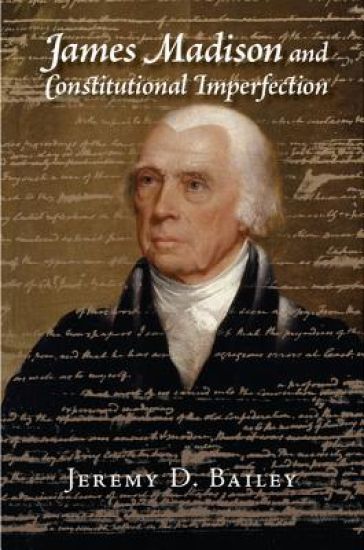
James Madison and Constitutional Imperfection

James Madison and Constitutional Imperfection

Jeremy D. Bailey

Cambridge University Press
2015
pokkari
This book presents a provocative account of James Madison's political thought by focusing on Madison's lifelong encounter with the enduring problem of constitutional imperfection. In particular, it emphasizes Madison's alliance with Thomas Jefferson, liberating it from those long-standing accounts of Madisonian constitutionalism that emphasize deliberation by elites and constitutional veneration. Contrary to much of the scholarship, this book shows that Madison was aware of the limits of the inventions of political science and held a far more subtle understanding of the possibility of constitutional government than has been recognized. By repositioning Madison as closer to Jefferson and the Revolution of 1800, this book offers a reinterpretation of one of the central figures of the early republic.
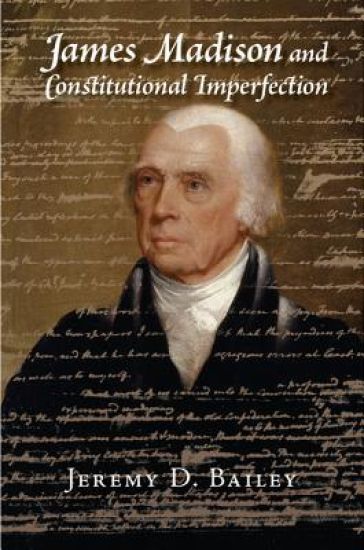
James Madison and Constitutional Imperfection

James Madison and Constitutional Imperfection

Jeremy D. Bailey

Cambridge University Press
2015
sidottu
This book presents a provocative account of James Madison's political thought by focusing on Madison's lifelong encounter with the enduring problem of constitutional imperfection. In particular, it emphasizes Madison's alliance with Thomas Jefferson, liberating it from those long-standing accounts of Madisonian constitutionalism that emphasize deliberation by elites and constitutional veneration. Contrary to much of the scholarship, this book shows that Madison was aware of the limits of the inventions of political science and held a far more subtle understanding of the possibility of constitutional government than has been recognized. By repositioning Madison as closer to Jefferson and the Revolution of 1800, this book offers a reinterpretation of one of the central figures of the early republic.
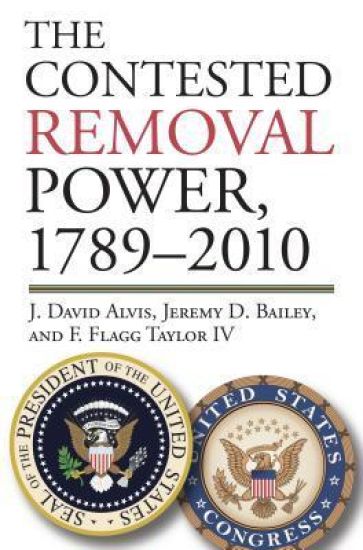
The Contested Removal Power, 1789-2010

The Contested Removal Power, 1789-2010

J. David Alvis; Jeremy D. Bailey; F. Flagg Taylor IV

University Press of Kansas
2013
sidottu
The U.S. Constitution is clear on the appointment of executive officials: the president nominates, the Senate approves. But on the question of removing those officials, the Constitution is silent—although that silence has not discouraged strenuous efforts to challenge, censure, and even impeach presidents from Andrew Jackson to Bill Clinton. As J. David Alvis, Jeremy D. Bailey, and Flagg Taylor show, the removal power has always been and continues to be a thorny issue, especially as presidential power has expanded dramatically during the past century. Linking this provocative issue to American political and constitutional development, the authors recount removal power debate from the Founding to the present day. Understanding the historical context of outbreaks in the debate, they contend, is essential to sorting out the theoretical claims from partisan manoeuvring and sectional interests, enabling readers to better understand the actual constitutional questions involved. After a detailed review of the Decision of 1789, the book examines the initial assertions of executive power theory, particularly by Thomas Jefferson and Andrew Jackson, then the rise of the argument for congressional delegation, beginning with the Whigs and ending with the impeachment of Andrew Johnson. The authors chronicle the return of executive power theory in the efforts of Presidents Grant, Hayes, Garfield, and Cleveland, who all battled with Congress over removals, then describe the emergence of new institutional arrangements with the creation of independent regulatory commissions. They conclude by tracking the rise of the unitarians and the challenges that this school has posed to the modern administrative state. Although many scholars consider the matter to have been settled in 1789, the authors argue that a Supreme Court case as recent as 2010—Free Enterprise Fund v. Public Company Accounting Oversight Board—shows the extent to which questions surrounding removal power remain unresolved and demand more attention. Their work offers a more nuanced and balanced account of the debate, teasing out the logic of the different institutional perspectives on this important constitutional question as no previous book has.
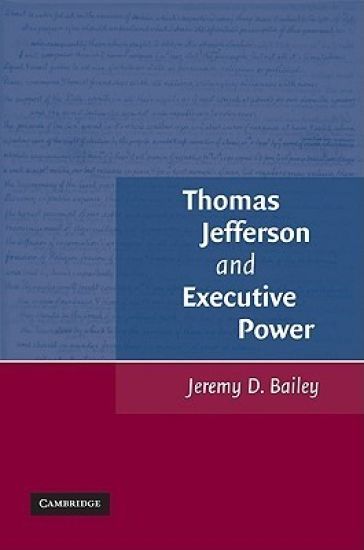
Thomas Jefferson and Executive Power

Thomas Jefferson and Executive Power

Jeremy D. Bailey

Cambridge University Press
2010
pokkari
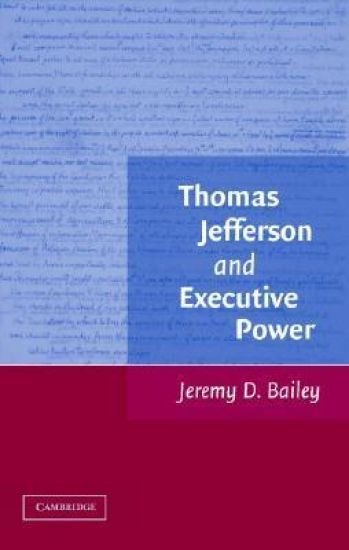
By revisiting Thomas Jefferson's understanding of executive power this book offers a new understanding of the origins of presidential power. Before Jefferson was elected president, he arrived at a way to resolve the tension between constitutionalism and executive power. Because his solution would preserve a strict interpretation of the Constitution as well as transform the precedents left by his Federalist predecessors, it provided an alternative to Alexander Hamilton's understanding of executive power. In fact, a more thorough account of Jefferson's political career suggests that Jefferson envisioned an executive that was powerful, or 'energetic', because it would be more explicitly attached to the majority will. Jefferson's Revolution of 1800, often portrayed as a reversal of the strong presidency, was itself premised on energy in the executive and was part of Jefferson's project to enable the Constitution to survive and even flourish in a world governed by necessity.
Thomas Jefferson and Executive Power

Thomas Jefferson and Executive Power

Jeremy D. Bailey

Cambridge University Press
2007
sidottu
By revisiting Thomas Jefferson's understanding of executive power this book offers a new understanding of the origins of presidential power. Before Jefferson was elected president, he arrived at a way to resolve the tension between constitutionalism and executive power. Because his solution would preserve a strict interpretation of the Constitution as well as transform the precedents left by his Federalist predecessors, it provided an alternative to Alexander Hamilton's understanding of executive power. In fact, a more thorough account of Jefferson's political career suggests that Jefferson envisioned an executive that was powerful, or 'energetic', because it would be more explicitly attached to the majority will. Jefferson's Revolution of 1800, often portrayed as a reversal of the strong presidency, was itself premised on energy in the executive and was part of Jefferson's project to enable the Constitution to survive and even flourish in a world governed by necessity.