Kirjojen hintavertailu. Mukana 12 657 676 kirjaa ja 12 kauppaa.

Kirjailija

Jeremy Gould

Kirjat ja teokset yhdessä paikassa: 4 kirjaa, julkaisuja vuosilta 2010-2024, suosituimpien joukossa Coventry. Vertaile teosten hintoja ja tarkista saatavuus suomalaisista kirjakaupoista.

4 kirjaa

Kirjojen julkaisuhaarukka 2010-2024.

Coventry

Coventry

Jeremy Gould; Caroline Gould

Historic England
2016
nidottu
The Coventry Blitz of 14 November 1940 was a key event of the Second World War and in the growth of public consciousness of the destructive power of warfare. The medieval city, already undergoing rapid change, was largely destroyed on that night. The destruction was seen as an opportunity by some including the then City Architect, Donald Gibson. The result was the first of the master plans for post-war redevelopment of Britain’s bombed city centres. The redevelopment of Coventry city centre to plans by Gibson and his successors provided an intensely urban and civilised centre, embodying new planning principles. Post-war Coventry was hugely influential and Gibson’s ideas helped to shape the rebuilding of other city centres, the post-war new towns and developments in Europe. Despite incremental change in the subsequent decades the planning and architecture of Gibson’s city centre are still clearly legible. The modern demands of a growing city on its centre are now very different from those of the post-war years. Coventry needs to grow and plan for its future and change will inevitably affect the city centre. This book aims to inform the public and decision makers of the significance of Coventry, and especially its centre, so that change can be managed in ways that will continue the life, use and enjoyment of the best of Coventry’s remarkable post-war heritage.
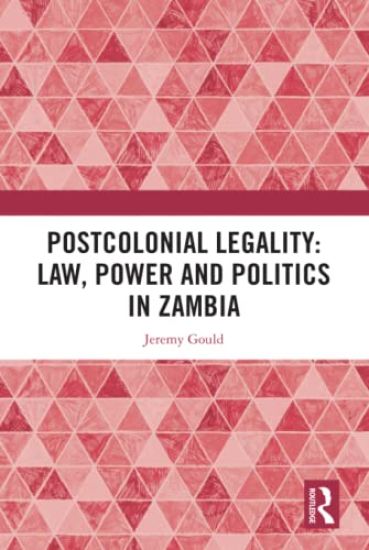
Postcolonial Legality: Law, Power and Politics in Zambia
This book interrogates the ideology and practices of liberal constitutionalism in the Zambian postcolony. The analysis focuses on the residual political and governmental effects of an imperial form of power, embodied in the person of the republican president, termed here prerogativism. Through systematic, long-term ethnographic engagement with Zambian constitutionalist activists – lawyers, judges and civic leaders – the study examines how prerogativism has shaped the postcolonial political landscape and limited the possibilities of constitutional liberalism. This is revealed in the ways that repeated efforts to reform the constitution have sidelined popular participation and thus failed to address the deep divide between a small elite stratum (from which the constitutional activists are drawn) and the marginalized masses of the population. Along the way, the study documents the intimate interpenetration of political and legal action and examines how prerogativism delimits the political engagements of elite actors. Special attention is given to the reluctance of legal activists to engage with popular politics and to the conservative ethos that undermines efforts to pursue a jurisprudence of transformational constitutionalism in the findings of the Constitutional Court. The work contributes to the rising interest in applying socio-legal analysis to the statutory domain in postcolonial jurisdictions. It offers a pioneering attempt to deconstruct the amorphous and ambivalent assemblage of ideas and practices related to constitutionalism through detailed ethnographic interrogation. It will appeal to scholars, students and practitioners with an interest in theorizing challenges to political liberalism in postcolonial contexts, as well as in rethinking the methodological toolbox of socio-legal analysis.
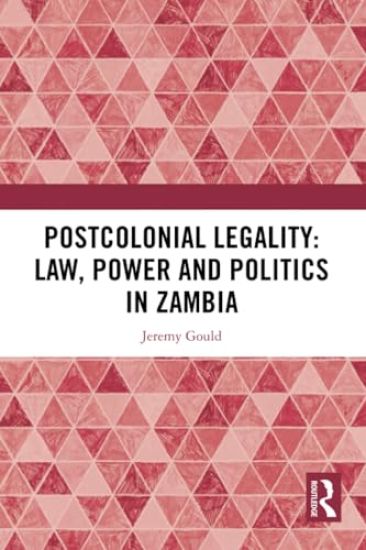
Postcolonial Legality: Law, Power and Politics in Zambia
This book interrogates the ideology and practices of liberal constitutionalism in the Zambian postcolony. The analysis focuses on the residual political and governmental effects of an imperial form of power, embodied in the person of the republican president, termed here prerogativism. Through systematic, long-term ethnographic engagement with Zambian constitutionalist activists – lawyers, judges and civic leaders – the study examines how prerogativism has shaped the postcolonial political landscape and limited the possibilities of constitutional liberalism. This is revealed in the ways that repeated efforts to reform the constitution have sidelined popular participation and thus failed to address the deep divide between a small elite stratum (from which the constitutional activists are drawn) and the marginalized masses of the population. Along the way, the study documents the intimate interpenetration of political and legal action and examines how prerogativism delimits the political engagements of elite actors. Special attention is given to the reluctance of legal activists to engage with popular politics and to the conservative ethos that undermines efforts to pursue a jurisprudence of transformational constitutionalism in the findings of the Constitutional Court. The work contributes to the rising interest in applying socio-legal analysis to the statutory domain in postcolonial jurisdictions. It offers a pioneering attempt to deconstruct the amorphous and ambivalent assemblage of ideas and practices related to constitutionalism through detailed ethnographic interrogation. It will appeal to scholars, students and practitioners with an interest in theorizing challenges to political liberalism in postcolonial contexts, as well as in rethinking the methodological toolbox of socio-legal analysis.