

Kirjailija
Jeremy Gray
Kirjat ja teokset yhdessä paikassa: 23 kirjaa, julkaisuja vuosilta 1989-2026, suosituimpien joukossa Rune and the Supermoon. Vertaile teosten hintoja ja tarkista saatavuus suomalaisista kirjakaupoista.
23 kirjaa
Kirjojen julkaisuhaarukka 1989-2026.

It’s one thing for a doctor to support in theory a terminally ill patient’s right to die with dignity, quite another to be the person asked to end their brother’s suffering. When Robert, a doctor, learns that his older brother Jim, a successful rock ’n’ roll pianist he hasn’t seen in more than 20 years, has returned to England from the USA, he and his wife Barbara go to see him. While there, Jim’s wife Scarlet confirms Robert’s suspicion that Jim is in the advanced stages of cancer. Robert, against Barbara’s strongly held views, is on the verge of signing an open letter that will call for a public conversation about assisted dying, and finds himself moving quickly from supporting the idea in theory to confronting the thought of ending a person’s life in reality. While Robert and Scarlet are drawn together, the conflicting feelings Robert and Jim have about their childhood culminate in a fierce row and Robert storms out. Jim becomes desperate for his brother to bring an end to his suffering before he loses the ability to play music, and Barbara urges Robert not to do anything that will destroy her trust in him. Robert is drawn back to visit Jim again, but will he risk sacrificing everything he’s ever worked for – his career, his marriage, even his freedom – for a brother he barely knows?
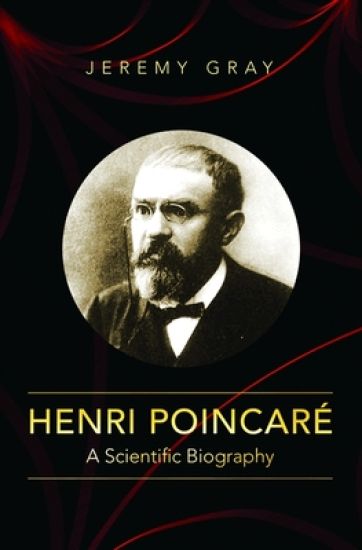
A comprehensive look at the mathematics, physics, and philosophy of Henri PoincaréHenri Poincaré (1854–1912) was not just one of the most inventive, versatile, and productive mathematicians of all time—he was also a leading physicist who almost won a Nobel Prize for physics and a prominent philosopher of science whose fresh and surprising essays are still in print a century later. The first in-depth and comprehensive look at his many accomplishments, Henri Poincaré explores all the fields that Poincaré touched, the debates sparked by his original investigations, and how his discoveries still contribute to society today.Math historian Jeremy Gray shows that Poincaré's influence was wide-ranging and permanent. His novel interpretation of non-Euclidean geometry challenged contemporary ideas about space, stirred heated discussion, and led to flourishing research. His work in topology began the modern study of the subject, recently highlighted by the successful resolution of the famous Poincaré conjecture. And Poincaré's reformulation of celestial mechanics and discovery of chaotic motion started the modern theory of dynamical systems. In physics, his insights on the Lorentz group preceded Einstein's, and he was the first to indicate that space and time might be fundamentally atomic. Poincaré the public intellectual did not shy away from scientific controversy, and he defended mathematics against the attacks of logicians such as Bertrand Russell, opposed the views of Catholic apologists, and served as an expert witness in probability for the notorious Dreyfus case that polarized France.Richly informed by letters and documents, Henri Poincaré demonstrates how one man's work revolutionized math, science, and the greater world.

The History of Mathematics: A Source-Based Approach, Volume 2
June Barrow-Green; Jeremy Gray; Robin Wilson
AMERICAN MATHEMATICAL SOCIETY
2022
nidottu
The History of Mathematics: A Source-Based Approach is a comprehensive history of the development of mathematics. This, the second volume of a two-volume set, takes the reader from the invention of the calculus to the beginning of the twentieth century. The initial discoverers of calculus are given thorough investigation, and special attention is also paid to Newton's Principia. The eighteenth century is presented as primarily a period of the development of calculus, particularly in differential equations and applications of mathematics. Mathematics blossomed in the nineteenth century and the book explores progress in geometry, analysis, foundations, algebra, and applied mathematics, especially celestial mechanics. The approach throughout is markedly historiographic: How do we know what we know? How do we read the original documents? What are the institutions supporting mathematics? Who are the people of mathematics? The reader learns not only the history of mathematics, but also how to think like a historian. The two-volume set was designed as a textbook for the authors' acclaimed year-long course at the Open University. It is, in addition to being an innovative and insightful textbook, an invaluable resource for students and scholars of the history of mathematics. The authors, each among the most distinguished mathematical historians in the world, have produced over fifty books and earned scholarly and expository prizes from the major mathematical societies of the English-speaking world.
Plato's Ghost is the first book to examine the development of mathematics from 1880 to 1920 as a modernist transformation similar to those in art, literature, and music. Jeremy Gray traces the growth of mathematical modernism from its roots in problem solving and theory to its interactions with physics, philosophy, theology, psychology, and ideas about real and artificial languages. He shows how mathematics was popularized, and explains how mathematical modernism not only gave expression to the work of mathematicians and the professional image they sought to create for themselves, but how modernism also introduced deeper and ultimately unanswerable questions.Plato's Ghost evokes Yeats's lament that any claim to worldly perfection inevitably is proven wrong by the philosopher's ghost; Gray demonstrates how modernist mathematicians believed they had advanced further than anyone before them, only to make more profound mistakes. He tells for the first time the story of these ambitious and brilliant mathematicians, including Richard Dedekind, Henri Lebesgue, Henri Poincaré, and many others. He describes the lively debates surrounding novel objects, definitions, and proofs in mathematics arising from the use of naïve set theory and the revived axiomatic method—debates that spilled over into contemporary arguments in philosophy and the sciences and drove an upsurge of popular writing on mathematics. And he looks at mathematics after World War I, including the foundational crisis and mathematical Platonism.Plato's Ghost is essential reading for mathematicians and historians, and will appeal to anyone interested in the development of modern mathematics.

The History of Mathematics
June Barrow-Green; Jeremy Gray; Robin Wilson
AMERICAN MATHEMATICAL SOCIETY
2022
nidottu
The History of Mathematics: A Source-Based Approach is a comprehensive history of the development of mathematics. The first volume of the two-volume set takes readers from the beginning of counting in prehistory to 1600 and the threshold of the discovery of calculus. It is notable for the extensive engagement with original-primary and secondary-source material. The coverage is worldwide, and embraces developments, including education, in Egypt, Mesopotamia, Greece, China, India, the Islamic world and Europe. The emphasis on astronomy and its historical relationship to mathematics is new, and the presentation of every topic is informed by the most recent scholarship in the field.The second volume takes the reader from the invention of the calculus to the beginning of the twentieth century. The initial discoverers of calculus are given thorough investigation, and special attention is also paid to Newton's Principia. The eighteenth century is presented as primarily a period of the development of calculus, particularly in differential equations and applications of mathematics. Mathematics blossomed in the nineteenth century and the book explores progress in geometry, analysis, foundations, algebra, and applied mathematics, especially celestial mechanics. The approach throughout is markedly historiographic: How do we know what we know? How do we read the original documents? What are the institutions supporting mathematics? Who are the people of mathematics? The reader learns not only the history of mathematics, but also how to think like a historian.The two-volume set was designed as a textbook for the authors' acclaimed year-long course at the Open University. It is, in addition to being an innovative and insightful textbook, an invaluable resource for students and scholars of the history of mathematics. The authors, each among the most distinguished mathematical historians in the world, have produced over fifty books and earned scholarly and expository prizes from the major mathematical societies of the English-speaking world.

This book presents a history of differential equations, both ordinary and partial, as well as the calculus of variations, from the origins of the subjects to around 1900. Topics treated include the wave equation in the hands of d’Alembert and Euler; Fourier’s solutions to the heat equation and the contribution of Kovalevskaya; the work of Euler, Gauss, Kummer, Riemann, and Poincaré on the hypergeometric equation; Green’s functions, the Dirichlet principle, and Schwarz’s solution of the Dirichlet problem; minimal surfaces; the telegraphists’ equation and Thomson’s successful design of the trans-Atlantic cable; Riemann’s paper on shock waves; the geometrical interpretation of mechanics; and aspects of the study of the calculus of variations from the problems of the catenary and the brachistochrone to attempts at a rigorous theory by Weierstrass, Kneser, and Hilbert. Three final chapters look at how the theory of partial differential equations stood around 1900, as they were treated by Picard and Hadamard. There are also extensive, new translations of original papers by Cauchy, Riemann, Schwarz, Darboux, and Picard. The first book to cover the history of differential equations and the calculus of variations in such breadth and detail, it will appeal to anyone with an interest in the field. Beyond secondary school mathematics and physics, a course in mathematical analysis is the only prerequisite to fully appreciate its contents. Based on a course for third-year university students, the book contains numerous historical and mathematical exercises, offers extensive advice to the student on how to write essays, and can easily be used in whole or in part as a course in the history of mathematics. Several appendices help make the book self-contained and suitable for self-study.

Born to a poor Lutheran pastor in what is today the Federal Republic of Germany, Bernhard Riemann (1826-1866) was a child math prodigy who began studying for a degree in theology before formally committing to mathematics in 1846, at the age of 20. Though he would live for only another 20 years (he died of pleurisy during a trip to Italy), his seminal work in a number of key areas--several of which now bear his name--had a decisive impact on the shape of mathematics in the succeeding century and a half.In Simply Riemann, author Jeremy Gray provides a comprehensive and intellectually stimulating introduction to Riemann's life and paradigm-defining work. Beginning with his early influences--in particular his relationship with his renowned predecessor Carl Friedrich Gauss--Gray goes on to explore Riemann's specific contributions to geometry, functions of a complex variable, prime numbers, and functions of a real variable, which opened the way to discovering the limits of the calculus. He shows how without Riemannian geometry, cosmology after Einstein would be unthinkable, and he illuminates the famous Riemann hypothesis, which is regarded by many as the most important unsolved problem in mathematics today.With admirable concision and clarity, Simply Riemann opens the door on one of the most profound and original thinkers of the 19th century--a man who pioneered the concept of a multidimensional reality and who always saw his work as another way to serve God.

The History of Mathematics
June Barrow-Green; Jeremy Gray; Robin Wilson
AMERICAN MATHEMATICAL SOCIETY
2019
nidottu
The History of Mathematics: A Source-Based Approach is a comprehensive history of the development of mathematics. This, the first volume of the two-volume set, takes readers from the beginning of counting in prehistory to 1600 and the threshold of the discovery of calculus. It is notable for the extensive engagement with original—primary and secondary—source material. The coverage is worldwide, and embraces developments, including education, in Egypt, Mesopotamia, Greece, China, India, the Islamic world and Europe. The emphasis on astronomy and its historical relationship to mathematics is new, and the presentation of every topic is informed by the most recent scholarship in the field.The two-volume set was designed as a textbook for the authors' acclaimed year-long course at the Open University. It is, in addition to being an innovative and insightful textbook, an invaluable resource for students and scholars of the history of mathematics. The authors, each among the most distinguished mathematical historians in the world, have produced over fifty books and earned scholarly and expository prizes from the major mathematical societies of the English-speaking world.
This textbook provides an accessible account of the history of abstract algebra, tracing a range of topics in modern algebra and number theory back to their modest presence in the seventeenth and eighteenth centuries, and exploring the impact of ideas on the development of the subject. Beginning with Gauss’s theory of numbers and Galois’s ideas, the book progresses to Dedekind and Kronecker, Jordan and Klein, Steinitz, Hilbert, and Emmy Noether. Approaching mathematical topics from a historical perspective, the author explores quadratic forms, quadratic reciprocity, Fermat’s Last Theorem, cyclotomy, quintic equations, Galois theory, commutative rings, abstract fields, ideal theory, invariant theory, and group theory. Readers will learn what Galois accomplished, how difficult the proofs of his theorems were, and how important Camille Jordan and Felix Klein were in the eventual acceptance of Galois’s approach to the solution of equations. The book also describes the relationshipbetween Kummer’s ideal numbers and Dedekind’s ideals, and discusses why Dedekind felt his solution to the divisor problem was better than Kummer’s. Designed for a course in the history of modern algebra, this book is aimed at undergraduate students with an introductory background in algebra but will also appeal to researchers with a general interest in the topic. With exercises at the end of each chapter and appendices providing material difficult to find elsewhere, this book is self-contained and therefore suitable for self-study.
Hidden Harmony—Geometric Fantasies
Umberto Bottazzini; Jeremy Gray
Springer-Verlag New York Inc.
2016
nidottu
?This book is a history of complex function theory from its origins to 1914, when the essential features of the modern theory were in place. It is the first history of mathematics devoted to complex function theory, and it draws on a wide range of published and unpublished sources. In addition to an extensive and detailed coverage of the three founders of the subject – Cauchy, Riemann, and Weierstrass – it looks at the contributions of authors from d’Alembert to Hilbert, and Laplace to Weyl. Particular chapters examine the rise and importance of elliptic function theory, differential equations in the complex domain, geometric function theory, and the early years of complex function theory in several variables. Unique emphasis has been devoted to the creation of a textbook tradition in complex analysis by considering some seventy textbooks in nine different languages. The book is not a mere sequence of disembodied results and theories, but offers a comprehensive picture of the broad cultural and social context in which the main actors lived and worked by paying attention to the rise of mathematical schools and of contrasting national traditions. The book is unrivaled for its breadth and depth, both in the core theory and its implications for other fields of mathematics. It documents the motivations for the early ideas and their gradual refinement into a rigorous theory.?

The Real and the Complex: A History of Analysis in the 19th Century
Jeremy Gray
Springer International Publishing AG
2015
nidottu
This book contains a history of real and complex analysis in the nineteenth century, from the work of Lagrange and Fourier to the origins of set theory and the modern foundations of analysis. It studies the works of many contributors including Gauss, Cauchy, Riemann, and Weierstrass.This book is unique owing to the treatment of real and complex analysis as overlapping, inter-related subjects, in keeping with how they were seen at the time. It is suitable as a course in the history of mathematics for students who have studied an introductory course in analysis, and will enrich any course in undergraduate real or complex analysis.


Hidden Harmony—Geometric Fantasies
Umberto Bottazzini; Jeremy Gray
Springer-Verlag New York Inc.
2013
sidottu
?This book is a history of complex function theory from its origins to 1914, when the essential features of the modern theory were in place. It is the first history of mathematics devoted to complex function theory, and it draws on a wide range of published and unpublished sources. In addition to an extensive and detailed coverage of the three founders of the subject – Cauchy, Riemann, and Weierstrass – it looks at the contributions of authors from d’Alembert to Hilbert, and Laplace to Weyl. Particular chapters examine the rise and importance of elliptic function theory, differential equations in the complex domain, geometric function theory, and the early years of complex function theory in several variables. Unique emphasis has been devoted to the creation of a textbook tradition in complex analysis by considering some seventy textbooks in nine different languages. The book is not a mere sequence of disembodied results and theories, but offers a comprehensive picture of the broad cultural and social context in which the main actors lived and worked by paying attention to the rise of mathematical schools and of contrasting national traditions. The book is unrivaled for its breadth and depth, both in the core theory and its implications for other fields of mathematics. It documents the motivations for the early ideas and their gradual refinement into a rigorous theory.?
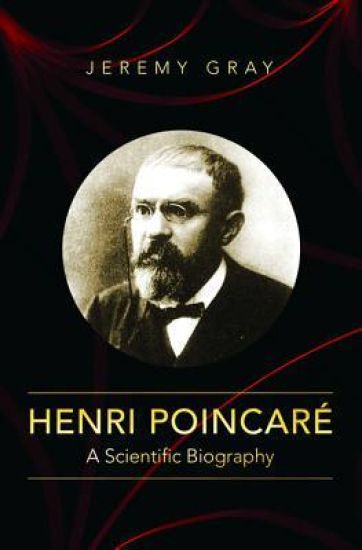
Henri Poincare (1854-1912) was not just one of the most inventive, versatile, and productive mathematicians of all time--he was also a leading physicist who almost won a Nobel Prize for physics and a prominent philosopher of science whose fresh and surprising essays are still in print a century later. The first in-depth and comprehensive look at his many accomplishments, Henri Poincare explores all the fields that Poincare touched, the debates sparked by his original investigations, and how his discoveries still contribute to society today. Math historian Jeremy Gray shows that Poincare's influence was wide-ranging and permanent. His novel interpretation of non-Euclidean geometry challenged contemporary ideas about space, stirred heated discussion, and led to flourishing research. His work in topology began the modern study of the subject, recently highlighted by the successful resolution of the famous Poincare conjecture. And Poincare's reformulation of celestial mechanics and discovery of chaotic motion started the modern theory of dynamical systems. In physics, his insights on the Lorentz group preceded Einstein's, and he was the first to indicate that space and time might be fundamentally atomic. Poincare the public intellectual did not shy away from scientific controversy, and he defended mathematics against the attacks of logicians such as Bertrand Russell, opposed the views of Catholic apologists, and served as an expert witness in probability for the notorious Dreyfus case that polarized France. Richly informed by letters and documents, Henri Poincare demonstrates how one man's work revolutionized math, science, and the greater world.
Approximately fifty articles that were published in The Mathematical Intelligencer during its first eighteen years. The selection demonstrates the wide variety of attractive articles that have appeared over the years, ranging from general interest articles of a historical nature to lucid expositions of important current discoveries. Each article is introduced by the editors. "...The Mathematical Intelligencer publishes stylish, well-illustrated articles, rich in ideas and usually short on proofs...Many, but not all articles fall within the reach of the advanced undergraduate mathematics major...This book makes a nice addition to any undergraduate mathematics collection that does not already sport back issues of The Mathematical Intelligencer." D.V. Feldman, University of New Hamphire, CHOICE Reviews, June 2001.
Based on the latest historical research, Worlds Out of Nothing is the first book to provide a course on the history of geometry in the 19th century. Topics covered in the first part of the book are projective geometry, especially the concept of duality, and non-Euclidean geometry. The book then moves on to the study of the singular points of algebraic curves (Plücker’s equations) and their role in resolving a paradox in the theory of duality; to Riemann’s work on differential geometry; and to Beltrami’s role in successfully establishing non-Euclidean geometry as a rigorous mathematical subject. The final part of the book considers how projective geometry rose to prominence, and looks at Poincaré’s ideas about non-Euclidean geometry and their physical and philosophical significance. Three chapters are devoted to writing and assessing work in the history of mathematics, with examples of sample questions in the subject, advice on how to write essays, and comments on what instructors should be looking for.
Plato's Ghost is the first book to examine the development of mathematics from 1880 to 1920 as a modernist transformation similar to those in art, literature, and music. Jeremy Gray traces the growth of mathematical modernism from its roots in problem solving and theory to its interactions with physics, philosophy, theology, psychology, and ideas about real and artificial languages. He shows how mathematics was popularized, and explains how mathematical modernism not only gave expression to the work of mathematicians and the professional image they sought to create for themselves, but how modernism also introduced deeper and ultimately unanswerable questions. Plato's Ghost evokes Yeats's lament that any claim to worldly perfection inevitably is proven wrong by the philosopher's ghost; Gray demonstrates how modernist mathematicians believed they had advanced further than anyone before them, only to make more profound mistakes. He tells for the first time the story of these ambitious and brilliant mathematicians, including Richard Dedekind, Henri Lebesgue, Henri Poincare, and many others. He describes the lively debates surrounding novel objects, definitions, and proofs in mathematics arising from the use of naive set theory and the revived axiomatic method--debates that spilled over into contemporary arguments in philosophy and the sciences and drove an upsurge of popular writing on mathematics. And he looks at mathematics after World War I, including the foundational crisis and mathematical Platonism. Plato's Ghost is essential reading for mathematicians and historians, and will appeal to anyone interested in the development of modern mathematics.
Linear Differential Equations and Group Theory from Riemann to Poincare
Jeremy Gray
Birkhauser Boston Inc
2008
nidottu
This book is a study of how a particular vision of the unity of mathematics, often called geometric function theory, was created in the 19th century. The central focus is on the convergence of three mathematical topics: the hypergeometric and related linear differential equations, group theory, and on-Euclidean geometry. The text for this second edition has been greatly expanded and revised, and the existing appendices enriched with historical accounts of the Riemann–Hilbert problem, the uniformization theorem, Picard–Vessiot theory, and the hypergeometric equation in higher dimensions. The exercises have been retained, making it possible to use the book as a companion to mathematics courses at the graduate level.