Kirjojen hintavertailu. Mukana 12 595 353 kirjaa ja 12 kauppaa.

Kirjailija

Jeremy Holmes

Kirjat ja teokset yhdessä paikassa: 26 kirjaa, julkaisuja vuosilta 1996-2024, suosituimpien joukossa John Bowlby and Attachment Theory. Vertaile teosten hintoja ja tarkista saatavuus suomalaisista kirjakaupoista.

26 kirjaa

Kirjojen julkaisuhaarukka 1996-2024.

Moderne psykoterapi

Moderne psykoterapi

Per Sørensen; Bent Rosenbaum; Francisco Alberdi; Rudy Abi-Habib; Peter Elsass; Susanne Harder; Claus Haugaard Jacobsen; Signe Holm Pedersen; Jeremy Holmes; Morten Kjølbye; Marianne Engelbrecht Lau; Anne Lindhardt; Randi Luggin; Susanne Lunn; Patrick Luyten; Lise Mondrup; Birgitte munch Jensen; Bo Møhl; Christian Møller Pedersen; Merete Metz Mørch; Jan Nielsen; Stig Poulsen; Svend Aage Rasmussen; Nicole K. Rosenberg; Jacob Sander Hansen; Sebastian Simonsen; Helge Sletvold; Sverre Varvin

Gyldendal
2015
nidottu
Moderne psykoterapi – teorier og metoder er den første samlede og opdaterede beskrivelse af de dominerende psykoterapeutiske retninger og deres anvendelse i psykiatrisk og psykoterapeutisk praksis i en dansk sammenhæng. Bogen er skrevet af en lang række erfarne psykiatere og psykologer. I den første del omtales de mest udbredte psykoterapeutiske retninger, herunder psykodynamisk psykoterapi, kognitiv adfærdsterapi, systemisk terapi, interpersonel psykoterapi og gruppeterapi. Første del afsluttes med to kapitler om psykoterapiens diversitet og integration. I anden del gennemgås den psykoterapeutiske behandling af forskellige psykiatriske lidelser som f.eks. psykoser, angsttilstande, depressioner, personlighedsforstyrrelser, belastningsreaktioner, somatiseringstilstande og spiseforstyrrelser. Tredje del af bogen beskriver behandlingen af særlige tilstande og problemstillinger som f.eks. selvmordsforsøg, traumer, transkulturelle spørgsmål og seksuelle problemer. Bogen afsluttes med kapitler om evidens i psykoterapi, supervision, uddannelse og identitet samt etiske spørgsmål i psykoterapien.
John Bowlby and Attachment Theory

John Bowlby and Attachment Theory

Jeremy Holmes

Routledge
2014
nidottu
Second edition, completely revised and updatedJohn Bowlby is one of the outstanding psychological theorists of the twentieth century. This new edition of John Bowlby and Attachment Theory is both a biographical account of Bowlby and his ideas and an up-to-date introduction to contemporary attachment theory and research, now a dominant force in psychology, counselling, psychotherapy and child development.Jeremy Holmes traces the evolution of Bowlby’s work from a focus on delinquency, material deprivation and his dissatisfaction with psychoanalysis's imperviousness to empirical science to the emergence of attachment theory as a psychological model in its own right. This new edition traces the explosion of interest, research and new theories generated by Bowlby’s followers, including Mary Main’s discovery of Disorganised Attachment and development of the Adult Attachment Interview, Mikulincer and Shaver’s explorations of attachment in adults and the key contributions of Fonagy, Bateman and Target. The book also examines advances in the biology and neuroscience of attachment.Thoroughly accessible yet academically rigorous, and written by a leading figure in the field, John Bowlby and Attachment Theory is still the perfect introduction to attachment for students of psychology, psychiatry, counselling, social work and nursing.
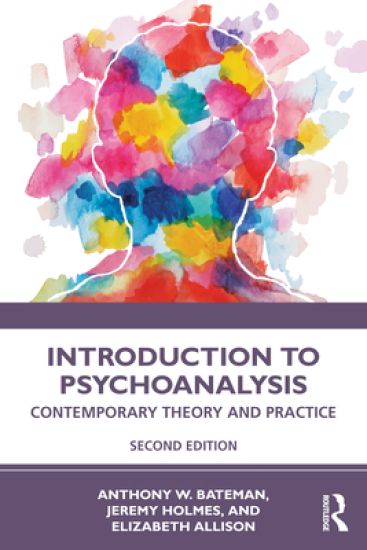
Introduction to Psychoanalysis

Introduction to Psychoanalysis

Anthony W. Bateman; Jeremy Holmes; Elizabeth Allison

Routledge
2021
nidottu
What is psychoanalysis? Is it relevant to today’s mental health crisis? How can psychoanalysis help people suffering from psychological distress and illness? This vital new book examines how psychoanalysis has changed since its inception, and how it has adapted to the needs and concerns of 21st-century mental health professionals and patients.The first part of this book provides a concise and unbiased account of the origins of psychoanalysis, and the theories which characterise the main post-Freudian schools – neo-Freudian, Kleinian, interpersonal, self-psychological, Lacanian – and the ways in which they agree and diverge. The second part uses clinical illustrations to examine the practicalities of psychoanalytic technique in the consulting room – assessment, free association, dream analysis, transference, and counter-transference. Whatever their allegiance or role, mental health professionals – psychologists, psychiatrists, social workers, child mental health professionals, mental health nurses – need to be conversant with the strengths, relevance, and limitations of the psychoanalytic approach.This book provides an indispensable, up-to-date, and accessible account of psychoanalysis today. Shaped throughout by considering the viewpoint of an interested 21st-century reader, it is of great interest to psychoanalysts and related mental health professionals, as well as students and all those interested in the treatment of mental health.
Introduction to Psychoanalysis

Introduction to Psychoanalysis

Anthony W. Bateman; Jeremy Holmes; Elizabeth Allison

Routledge
2021
sidottu
What is psychoanalysis? Is it relevant to today’s mental health crisis? How can psychoanalysis help people suffering from psychological distress and illness? This vital new book examines how psychoanalysis has changed since its inception, and how it has adapted to the needs and concerns of 21st-century mental health professionals and patients.The first part of this book provides a concise and unbiased account of the origins of psychoanalysis, and the theories which characterise the main post-Freudian schools – neo-Freudian, Kleinian, interpersonal, self-psychological, Lacanian – and the ways in which they agree and diverge. The second part uses clinical illustrations to examine the practicalities of psychoanalytic technique in the consulting room – assessment, free association, dream analysis, transference, and counter-transference. Whatever their allegiance or role, mental health professionals – psychologists, psychiatrists, social workers, child mental health professionals, mental health nurses – need to be conversant with the strengths, relevance, and limitations of the psychoanalytic approach.This book provides an indispensable, up-to-date, and accessible account of psychoanalysis today. Shaped throughout by considering the viewpoint of an interested 21st-century reader, it is of great interest to psychoanalysts and related mental health professionals, as well as students and all those interested in the treatment of mental health.
John Bowlby and Attachment Theory

John Bowlby and Attachment Theory

Jeremy Holmes

Routledge
2014
sidottu
Second edition, completely revised and updatedJohn Bowlby is one of the outstanding psychological theorists of the twentieth century. This new edition of John Bowlby and Attachment Theory is both a biographical account of Bowlby and his ideas and an up-to-date introduction to contemporary attachment theory and research, now a dominant force in psychology, counselling, psychotherapy and child development.Jeremy Holmes traces the evolution of Bowlby’s work from a focus on delinquency, material deprivation and his dissatisfaction with psychoanalysis's imperviousness to empirical science to the emergence of attachment theory as a psychological model in its own right. This new edition traces the explosion of interest, research and new theories generated by Bowlby’s followers, including Mary Main’s discovery of Disorganised Attachment and development of the Adult Attachment Interview, Mikulincer and Shaver’s explorations of attachment in adults and the key contributions of Fonagy, Bateman and Target. The book also examines advances in the biology and neuroscience of attachment.Thoroughly accessible yet academically rigorous, and written by a leading figure in the field, John Bowlby and Attachment Theory is still the perfect introduction to attachment for students of psychology, psychiatry, counselling, social work and nursing.
The Spirit of Psychotherapy

The Spirit of Psychotherapy

Jeremy Holmes

KARNAC BOOKS
2024
pokkari
In The Spirit of Psychotherapy, Holmes considers whether the principles which underpin religion this can be applied to the largely secular world of psychotherapy. Having a belief system is generally associated with good physical and mental health, and the prime focus of psychotherapy theory and practice is intrapersonal and interpersonal, but these are nested in an often-unexamined supra-personal context, sociological, ecological and spiritual. Structured around a qualitative study based on in-depth interviews with people from a wide range of faith backgrounds, Holmes presents the role belief and spirituality play in everyday lives. From these interviews the author identifies core themes such as attachment and hope; frameworks of meaning and rhythm and ritual. Individual chapters are devoted to detailed descriptions of subjects’ accounts of these, while drawing parallels and implications for psychotherapy.
The Art of Psychotherapy

The Art of Psychotherapy

Jeremy Holmes; Anthony Storr

TAYLOR FRANCIS LTD
2023
nidottu
Storr’s The Art of Psychotherapy first appeared in 1979 and became an instant classic. After Storr’s death, a third edition was rewritten and revised by Jeremy Holmes, and this fourth edition is a further up-to-date iteration.Storr (1920–2001) and Holmes, both medical psychoanalytic psychotherapists, are ‘elders’ in the world of psychotherapy. Their eclectic, experienced and cultured voices offer students and psychotherapy practitioners clinical wisdom hard to find elsewhere. Their book expounds in a very practical way the issues entailed in setting up and maintaining a psychotherapeutic relationship and practice: how to introduce oneself, arrange one’s consulting room, establish a contract, when and how to make ‘interpretations'. The second half of the book deals with more general and often problematic issues, including how to align therapy in the light of diagnosis, working with ‘difficult’ patients, therapy termination, and the life course of a therapist, ending with a valedictory overview. In this fourth edition, Holmes has added a chapter on the scientific validation of psychotherapy, sections on tele- and e-therapy, non-binary gender and sexual identities and the impact of race and class on the therapeutic relationship.This engaging, accessible and profound book is essential reading for psychotherapists, counsellors, psychiatrists and mental health practitioners in training or practice.
The Art of Psychotherapy

The Art of Psychotherapy

Jeremy Holmes; Anthony Storr

TAYLOR FRANCIS LTD
2023
sidottu
Storr’s The Art of Psychotherapy first appeared in 1979 and became an instant classic. After Storr’s death, a third edition was rewritten and revised by Jeremy Holmes, and this fourth edition is a further up-to-date iteration.Storr (1920–2001) and Holmes, both medical psychoanalytic psychotherapists, are ‘elders’ in the world of psychotherapy. Their eclectic, experienced and cultured voices offer students and psychotherapy practitioners clinical wisdom hard to find elsewhere. Their book expounds in a very practical way the issues entailed in setting up and maintaining a psychotherapeutic relationship and practice: how to introduce oneself, arrange one’s consulting room, establish a contract, when and how to make ‘interpretations'. The second half of the book deals with more general and often problematic issues, including how to align therapy in the light of diagnosis, working with ‘difficult’ patients, therapy termination, and the life course of a therapist, ending with a valedictory overview. In this fourth edition, Holmes has added a chapter on the scientific validation of psychotherapy, sections on tele- and e-therapy, non-binary gender and sexual identities and the impact of race and class on the therapeutic relationship.This engaging, accessible and profound book is essential reading for psychotherapists, counsellors, psychiatrists and mental health practitioners in training or practice.
Cur Deus Verba: Why the Word Became Words

Cur Deus Verba: Why the Word Became Words

Jeremy Holmes

IGNATIUS PRESS
2021
nidottu
Cur Deus Verba unfolds a systematic theology of Scripture from a single key question: What did God seek to accomplish by making the Bible? The answer requires seeing why the Holy Trinity made anything at all, why the Word became flesh, and finally why the Church needs an inspired text. As Christ is more fully "man" than any mere man, so his Church is more fully "society" than any merely human society. And as every society has its literary tradition, so the Church needed a canon of literature that would be more fully "book" than any merely human book. But to grasp what God intended to accomplish, we have to see how he intended to do it. To the extent possible, God wanted human beings to cause not just the text but revelation itself, and paradoxically this exaltation of human agency gave rise to the need for Scripture's spiritual sense. The spiritual sense of Scripture leads in turn to a meaning of the term "literal" that is unique to the realm of theology, and the connection between the two means that we cannot follow the literal sense without grasping the spiritual as well. Once God has made what he intended in the way he intended, one question remains: How does this inspired text continue to exist? As with any text, the answer is that Scripture exists in physical books, but really and principally in the hearts of the readers. And Scripture's own place in the salvation history it records means that one human heart is preeminent: the text of Sacred Scripture exists exemplarily in the Heart of Jesus Christ.
The Brain has a Mind of its Own

The Brain has a Mind of its Own

Jeremy Holmes

Confer Books
2020
pokkari
Describing the neuroscientific basis for effective psychotherapy, Professor Holmes draws on the Free Energy Principle, which holds that, through ‘active inference’ -- agency and model revision -- the brain minimises discrepancies between incoming experience and its pre-existing picture of the world. Difficulties with these processes underlie clients’ need for psychotherapeutic help. Based on his relational ‘borrowed brain’ model, and deploying his capacity to communicate complex ideas to a wide audience, Holmes shows us how the ‘talking cure’ reinstates active inference and thus how therapy helps bring about change.
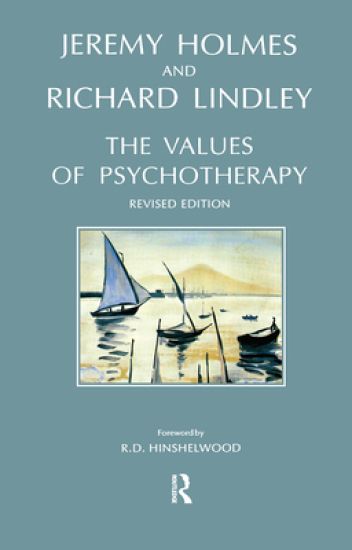
The Values of Psychotherapy

The Values of Psychotherapy

Jeremy Holmes; Richard Lindley

Routledge
2019
sidottu
This first-class book provides an unrivalled basis for further discussion on to how to make psychotherapy more effective both, ethically and professionally. Above all, psychotherapy is a moral practice. However scientific its research, or however much scientific research is demanded of it, psychotherapy remains a practice born of moral dilemmas, of how we live together, each with the other...Above all, the book is a plea to accept psychotherapy as a profession.
På sporet af den sikre base

På sporet af den sikre base

Jeremy Holmes

Gyldendal
2019
nidottu
Begrebet om den sikre eller trygge base skyldes Mary S. Ainsworth, men har navnlig vundet indpas gennem John Bowlbys (1907-90) og den såkaldte tilknytningsteori – kendt herhjemme gennem En sikker base (1994) og At knytte og bryde nære bånd (1996). Selvom Bowlby kom fra den kleinianske psykoanalyse og objektrelationsteori, er der ikke noget spekulativt og sofistikeret ved hans tilknytningsteori: Den grunder sig på empiri, en almen biologisk realitet, der dokumenterer, hvordan det lille barn gradvist udvikler sig gennem tilknytning til en base (den primære omsorgsperson), der kan vise sig mere eller mindre sikker og give anledning til forskellige – trygge som utrygge – udviklingsmønstre og grundtræk. Det er med afsæt i dette enkle, men fundamentale forhold, at Jeremy Holmes i På sporet af den sikre base ganske praktisk og konstruktivt diskuterer forskellige psykoterapeutiske problemstillinger og handlemuligheder – belyst gennem en række cases og sammenligninger mellem psykoanalyse, kognitiv psykologi m.v. og tilknytningsteorien. Til afrunding en række anvisninger og ideer til tilknytningsbaseret korttidsterapi. Bogen udgives nu i Hans Reitzels Forlags serie Klassikere og udkom første gang på dansk i 2003.
Attachment in Therapeutic Practice

Attachment in Therapeutic Practice

Jeremy Holmes; Arietta Slade

SAGE Publications Ltd
2017
nidottu
This is a concise, accessible introduction to the basic principles of attachment theory, and their application to therapeutic practice. Bringing together 70 years’ of theory and research, its expert authors provide a much-needed user-friendly guide to attachment-informed psychotherapy. The book covers: The history, research base, and key figures and concepts of attachment theoryThe key concepts of attachment theory, and their implications for practiceNeuroscience implications of attachment and its therapeutic relevanceThe parallels and differences between parent-child attachment and the therapeutic relationshipThe application of attachment in adult individual psychotherapy across a number of settings, also to couples and familiesThe applications of attachment to working with complex disordersThe applications of attachment in child psychotherapy
Attachment in Therapeutic Practice

Attachment in Therapeutic Practice

Jeremy Holmes; Arietta Slade

SAGE Publications Ltd
2017
sidottu
This is a concise, accessible introduction to the basic principles of attachment theory, and their application to therapeutic practice. Bringing together 70 years’ of theory and research, its expert authors provide a much-needed user-friendly guide to attachment-informed psychotherapy. The book covers: The history, research base, and key figures and concepts of attachment theoryThe key concepts of attachment theory, and their implications for practiceNeuroscience implications of attachment and its therapeutic relevanceThe parallels and differences between parent-child attachment and the therapeutic relationshipThe application of attachment in adult individual psychotherapy across a number of settings, also to couples and familiesThe applications of attachment to working with complex disordersThe applications of attachment in child psychotherapy
Attachments: Psychiatry, Psychotherapy, Psychoanalysis
For three decades Jeremy Holmes has been a leading figure in psychodynamic psychiatry in the UK and across the world. He has played a central role in promoting the ideas of John Bowlby and in developing the clinical applications – psychiatric and psychotherapeutic – of Attachment Theory in working with adults. Drawing on both psychoanalytic and attachment ideas, Holmes has been able to encompass a truly biopsychosocial perspective. As a psychotherapist Holmes brings together psychodynamic, systemic and cognitive models, alert to vital differences, but also keenly sensitive to overlaps and parallels.This volume of selected papers brings together the astonishing range of Holmes' interests and contributions. The various sections in the book cover:An extended interview – covering Holmes’ career and philosophy as a psychodynamic psychiatrist'Juvenilia' – sibling relationships, the psychology of nuclear weapons, and the psychodynamics of surgical intervention.Psychodynamic psychiatry: Integrative and Attachment-InformedA psychotherapy section in which he develops his model of psychotherapeutic change'Heroes' – biographical pieces about the major influences including, John Bowlby, Michael Balint, DavidMalan, Jonathan Pedder and Charles Rycroft.'Ephemera' – brief pieces covering such topics as frequency of psychodynamic sessions and fees.Attachments: Psychiatry, Psychotherapy, Psychoanalysis - The Selected Works of Jeremy Holmes will be essential and illuminating reading for practitioners and students of psychiatry and psychotherapy in all its guises.
The Therapeutic Imagination

The Therapeutic Imagination

Jeremy Holmes

Routledge
2016
nidottu
Use of the imagination is a key aspect of successful psychotherapeutic treatments. Psychotherapy helps clients get in touch with, awaken, and learn to trust their creative inner life, while therapists use their imaginations to mentalise the suffering other and to trace the unconscious stirrings evoked by the intimacy of the consulting room.Working from this premise, in The Therapeutic Imagination Jeremy Holmes argues unashamedly that literate therapists make better therapists. Drawing on psychoanalytic and literary traditions both classical and contemporary, Part I shows how poetry and novels help foster therapists’ understanding of their own imagination-in-action, anatomised into five phases: attachment, reverie, logos, action and reflection. Part II uses the contrast between secure and insecure narrative styles in attachment theory and relates these to literary storytelling and the transformational aspects of therapy. Part III uses literary accounts to illuminate the psychiatric conditions of narcissism, anxiety, splitting and bereavement. Based on Forster’s motto, ‘Only Connect’, Part IV argues, with the help of poetic examples, that a psychiatry shorn of psychodynamic creativity is impoverished and fails to serve its patients.Clearly and elegantly written, and drawing on the author’s deep knowledge of psychoanalysis and attachment theory and a lifetime of clinical experience, Holmes convincingly links the literary and psychoanalytic canon. The Therapeutic Imagination is a compelling and insightful work that will strike chords for therapists, counsellors, psychoanalysts, psychiatrists and psychologists.
Attachments: Psychiatry, Psychotherapy, Psychoanalysis
For three decades Jeremy Holmes has been a leading figure in psychodynamic psychiatry in the UK and across the world. He has played a central role in promoting the ideas of John Bowlby and in developing the clinical applications – psychiatric and psychotherapeutic – of Attachment Theory in working with adults. Drawing on both psychoanalytic and attachment ideas, Holmes has been able to encompass a truly biopsychosocial perspective. As a psychotherapist Holmes brings together psychodynamic, systemic and cognitive models, alert to vital differences, but also keenly sensitive to overlaps and parallels.This volume of selected papers brings together the astonishing range of Holmes' interests and contributions. The various sections in the book cover:An extended interview – covering Holmes’ career and philosophy as a psychodynamic psychiatrist'Juvenilia' – sibling relationships, the psychology of nuclear weapons, and the psychodynamics of surgical intervention.Psychodynamic psychiatry: Integrative and Attachment-InformedA psychotherapy section in which he develops his model of psychotherapeutic change'Heroes' – biographical pieces about the major influences including, John Bowlby, Michael Balint, DavidMalan, Jonathan Pedder and Charles Rycroft.'Ephemera' – brief pieces covering such topics as frequency of psychodynamic sessions and fees.Attachments: Psychiatry, Psychotherapy, Psychoanalysis - The Selected Works of Jeremy Holmes will be essential and illuminating reading for practitioners and students of psychiatry and psychotherapy in all its guises.
The Therapeutic Imagination

The Therapeutic Imagination

Jeremy Holmes

Routledge
2014
sidottu
Use of the imagination is a key aspect of successful psychotherapeutic treatments. Psychotherapy helps clients get in touch with, awaken, and learn to trust their creative inner life, while therapists use their imaginations to mentalise the suffering other and to trace the unconscious stirrings evoked by the intimacy of the consulting room.Working from this premise, in The Therapeutic Imagination Jeremy Holmes argues unashamedly that literate therapists make better therapists. Drawing on psychoanalytic and literary traditions both classical and contemporary, Part I shows how poetry and novels help foster therapists’ understanding of their own imagination-in-action, anatomised into five phases: attachment, reverie, logos, action and reflection. Part II uses the contrast between secure and insecure narrative styles in attachment theory and relates these to literary storytelling and the transformational aspects of therapy. Part III uses literary accounts to illuminate the psychiatric conditions of narcissism, anxiety, splitting and bereavement. Based on Forster’s motto, ‘Only Connect’, Part IV argues, with the help of poetic examples, that a psychiatry shorn of psychodynamic creativity is impoverished and fails to serve its patients.Clearly and elegantly written, and drawing on the author’s deep knowledge of psychoanalysis and attachment theory and a lifetime of clinical experience, Holmes convincingly links the literary and psychoanalytic canon. The Therapeutic Imagination is a compelling and insightful work that will strike chords for therapists, counsellors, psychoanalysts, psychiatrists and psychologists.