Kirjojen hintavertailu. Mukana 12 390 323 kirjaa ja 12 kauppaa.

Kirjailija

Jeremy Lent

Kirjat ja teokset yhdessä paikassa: 6 kirjaa, julkaisuja vuosilta 2017-2026, suosituimpien joukossa Ecocivilization. Vertaile teosten hintoja ja tarkista saatavuus suomalaisista kirjakaupoista.

6 kirjaa

Kirjojen julkaisuhaarukka 2017-2026.

Ecocivilization

Ecocivilization

Jeremy Lent

Melville House Publishing
2026
sidottu
"One of the greatest thinkers of our age" (The Guardian) presents a new way of living--one modeled on nature's design instead of capitalism's--for fans of Guns, Germs, and Steel and Doughnut Economics It has often been said that it is easier to imagine the end of the world than it is to imagine the end of capitalism--and yet that is what the historical moment urgently calls for. Climate change has reached an emergency state, inequality continues to grow, and, for many, the future has never seemed more bleak. Incremental policy improvements are no longer enough--we need a deep transformation of our current civilization to continue to survive. In Ecocivilization, leading thinker Jeremy Lent reimagines the basis of our civilization, and argues for a new global system of living, one based on life-affirming principles modeled after nature's own design. What enfolds is a robust framework incorporating Lent's own expertise, and the lived experiences of those on the ground already putting ecological civilization's core tenants into practice--justice, mutuality, diversity, and symbiosis. From the global economy to universal housing and income, from infrastructure to agriculture, every major aspect of our society could be redesigned to work together as a coherent whole, setting the conditions for all people to flourish. Ecocivilization shows how this future on a regenerated Earth is not only desirable, but entirely feasible.
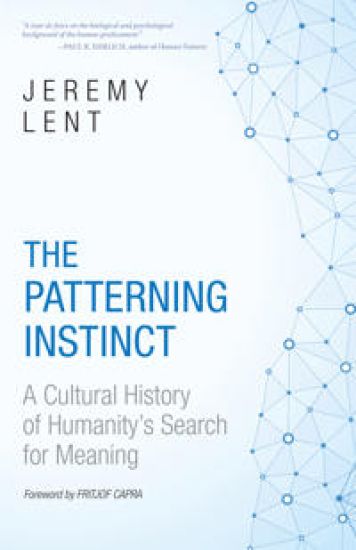
The Patterning Instinct

The Patterning Instinct

Jeremy Lent; Fritjof Capra

Prometheus Books
2022
pokkari
Winner of the 2017 Nautilus Silver Award! This fresh perspective on crucial questions of history identifies the root metaphors that cultures have used to construct meaning in their world. It offers a glimpse into the minds of a vast range of different peoples: early hunter-gatherers and farmers, ancient Egyptians, traditional Chinese sages, the founders of Christianity, trail-blazers of the Scientific Revolution, and those who constructed our modern consumer society.Taking the reader on an archaeological exploration of the mind, the author, an entrepreneur and sustainability leader, uses recent findings in cognitive science and systems theory to reveal the hidden layers of values that form today's cultural norms. Uprooting the tired cliches of the science-religion debate, he shows how medieval Christian rationalism acted as an incubator for scientific thought, which in turn shaped our modern vision of the conquest of nature. The author probes our current crisis of unsustainability and argues that it is not an inevitable result of human nature, but is culturally driven: a product of particular mental patterns that could conceivably be reshaped. By shining a light on our possible futures, the book foresees a coming struggle between two contrasting views of humanity: one driving to a technological endgame of artificially enhanced humans, the other enabling a sustainable future arising from our intrinsic connectedness with each other and the natural world. This struggle, it concludes, is one in which each of us will play a role through the meaning we choose to forge from the lives we lead.
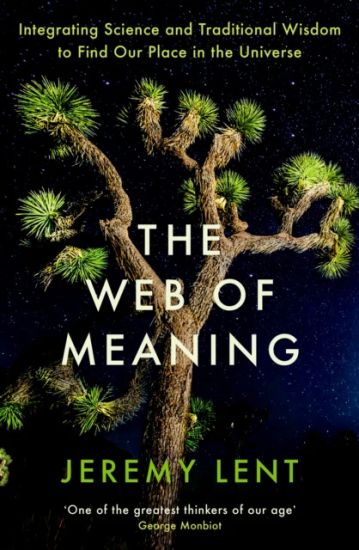
The Web of Meaning: Integrating Science and Traditional Wisdom to Find Our Place in the Universe
"A profound personal meditation on human existence and a tour-de-force weaving together of historic and contemporary thought on the deepest question of all: why are we here?" -- Gabor Mat M.D. , author, In the Realm of Hungry Ghosts As our civilization careens toward climate breakdown, ecological destruction, and gaping inequality, people are losing their existential moorings. The dominant worldview of disconnection, which tells us we are split between mind and body, separate from each other, and at odds with the natural world, has been invalidated by modern science. Award-winning author, Jeremy Lent, investigates humanity's age-old questions - Who am I? Why am I? How should I live? - from a fresh perspective, weaving together findings from modern systems thinking, evolutionary biology, and cognitive neuroscience with insights from Buddhism, Taoism, and Indigenous wisdom. The result is a breathtaking accomplishment: a rich, coherent worldview based on a deep recognition of connectedness within ourselves, between each other, and with the entire natural world. It offers a compelling foundation for a new philosophical framework that could enable humanity to thrive sustainably on a flourishing Earth. The Web of Meaning is for everyone looking for deep and coherent answers to the crisis of civilization.
The Web of Meaning

The Web of Meaning

Jeremy Lent

Profile Books Ltd
2022
pokkari
'The Web of Meaning is both a profound personal meditation on human existence and a tour-de-force weaving together of historic and contemporary world-wide secular and spiritual thought on the deepest question of all: why are we here?' Gabor Maté M.D., author, In The Realm of Hungry Ghosts: Close Encounters With Addiction 'We need, now more than ever, to figure out how to make all kinds of connections. This book can help--and therefore it can help with a lot of the urgent tasks we face.' Bill McKibben, author, Falter: Has the Human Game Begun to Play Itself Out? As our civilization careens towards a precipice of climate breakdown, ecological destruction and gaping inequality, people are losing their existential moorings. Our dominant worldview of disconnection, which tells us we are split between mind and body, separate from each other, and at odds with the natural world, has passed its expiration date. Yet another world is possible. Award-winning author, Jeremy Lent, investigates humanity's age-old questions - who am I? why am I? how should I live? - from a fresh perspective, weaving together findings from modern systems thinking, evolutionary biology and cognitive neuroscience with insights from Buddhism, Taoism and indigenous wisdom. The result is a breathtaking accomplishment: a rich, coherent worldview based on a deep recognition of connectedness within ourselves, between each other, and with the entire natural world.
The Web of Meaning

The Web of Meaning

Jeremy Lent

New Society Publishers
2021
sidottu
A compelling foundation for a new story of interconnectedness, showing how, as our civilization unravels, another world is possibleAs our civilization careens towards a precipice of climate breakdown, ecological destruction, and gaping inequality, people are losing their existential moorings. Our dominant worldview of disconnection--which tells us we are split between mind and body, separate from each other, and at odds with the natural world--has passed its expiration date. Yet another world is possible. Award-winning author, Jeremy Lent, investigates humanity's age-old questions--Who am I? Why am I? How should I live?--from a fresh perspective, weaving together findings from modern systems thinking, evolutionary biology, and cognitive neuroscience with insights from Buddhism, Taoism, and Indigenous wisdom. The result is a breathtaking accomplishment: a rich, coherent worldview based on a deep recognition of connectedness within ourselves, between each other, and with the entire natural world. It offers a compelling foundation for the new story that could enable humanity to thrive sustainably on a flourishing Earth. The Web of Meaning is for everyone looking for deep and coherent answers to the crisis of civilization.
The Patterning Instinct

The Patterning Instinct

Jeremy Lent; Fritjof Capra

Prometheus Books
2017
sidottu
Winner of the 2017 Nautilus Silver Award! This fresh perspective on crucial questions of history identifies the root metaphors that cultures have used to construct meaning in their world. It offers a glimpse into the minds of a vast range of different peoples: early hunter-gatherers and farmers, ancient Egyptians, traditional Chinese sages, the founders of Christianity, trail-blazers of the Scientific Revolution, and those who constructed our modern consumer society. Taking the reader on an archaeological exploration of the mind, the author, an entrepreneur and sustainability leader, uses recent findings in cognitive science and systems theory to reveal the hidden layers of values that form today's cultural norms. Uprooting the tired cliches of the science-religion debate, he shows how medieval Christian rationalism acted as an incubator for scientific thought, which in turn shaped our modern vision of the conquest of nature. The author probes our current crisis of unsustainability and argues that it is not an inevitable result of human nature, but is culturally driven: a product of particular mental patterns that could conceivably be reshaped. By shining a light on our possible futures, the book foresees a coming struggle between two contrasting views of humanity: one driving to a technological endgame of artificially enhanced humans, the other enabling a sustainable future arising from our intrinsic connectedness with each other and the natural world. This struggle, it concludes, is one in which each of us will play a role through the meaning we choose to forge from the lives we lead.