Kirjojen hintavertailu. Mukana 12 356 033 kirjaa ja 12 kauppaa.

Kirjailija

JEREMY MARK ROBINSON

Kirjat ja teokset yhdessä paikassa: 121 kirjaa, julkaisuja vuosilta 2005-2026, suosituimpien joukossa J.R.R. Tolkien. Vertaile teosten hintoja ja tarkista saatavuus suomalaisista kirjakaupoista.

121 kirjaa

Kirjojen julkaisuhaarukka 2005-2026.

Akira

Akira

Jeremy Mark Robinson

CRESCENT MOON PUBLISHING
2025
pokkari
AKIRA KATSUHIRO OTOMO POCKET MOVIE GUIDE by Jeremy Mark Robinson This is a book about Akira - the manga of 1982-90 and the movie of 1988, and about the creator of Akira, the genius artist Katsuhiro Otomo (b. 1954). There are very few genuine auteurs in Japanese animation: the animation industry, like all filmmaking on a large scale, is truly collaborative. However, you can definitely see elements in the films directed and written and supervised by Katsuhiro Otomo that are auteurist: Otomo has his own style, visually, but also his own concerns, thematically, politically and psychologically. Akira is a giant of a movie that opens at full blast: this movie rocks from shot one. It really rocks - at a far higher level of intensity than any comparable movie, including all of the classics regularly trotted out as hi-octane movie-making. Akira is clearly one of those movies where the filmmakers have thrown everything they can think of into the mix, and it's a movie in which the film-makers have given their all. Meanwhile, the manga of Akira exceeds all expectations - about storytelling, about what a comicbook or manga is, about how an action-adventure-fantasy story can work in a contemporary setting, and how a story can be genuinely thrilling, genuinely political, genuinely wild and epic. In short, Akira ticks all of the boxes: (a) it has action and spectacle in spades, (b) it has fascinating characters and situations, (c) it is incredibly exciting, (d) it is very unusual, sometimes downright eccentric and out-there, (e) it is highly politicized, (f) it has plenty to say about living in the modern world, about contemporary, advanced capitalist societies, and (g) it establishes its own world, its own raison d'etre, its own philosophy with supreme self-confidence. Akira is the manga to top all manga, to end all manga. It is a manga designed to go further, louder and crazier than any other manga. And it does Akira delivers on its promise: it really is every bit as great as everybody says it is. Volume one of the manga of Akira was published in Young Magazine in 1982-83, by Kodansha (one of the big three among manga publishers in Japan - the other two are Sogakkan and Shueisha), when Katsuhiro Otomo was 28. This Pocket Guide includes sections on: Katsuhiro Otomo's inspirations and influences; the production of the movie; the characters, themes and the story; and the style and approach. Fully illustrated, including many images of the Akira movie and the Akira manga. Bibliography, resources and notes. 256 pages. www.crmoon.com
Death Note

Death Note

Jeremy Mark Robinson

CRESCENT MOON PUBLISHING
2025
pokkari
DEATH NOTE MANGA. ANIME. MOVIES A Critical Study BY JEREMY MARK ROBINSON Death Note (Desu Noto) by Tsugumi Ohba and Takeshi Obata is one of the finest manga of recent times, and the TV animated adaptation is a truly remarkable piece of filmmaking, quite brilliant, ranking up there with the best. Death Note has become a significant franchise: it began with the very popular manga (30 million copies sold by Japanese publisher Shueisha). The success of Death Note in comic form led to an animated TV series, several live-action adaptations and spin-offs, plus movies. Death Note features a terrific magical gimmick: a book used by Gods of Death (Shinigami) which finds its way into the real world. If you write someone's name in it, and picture their face, you can kill them. Raito Yagami is the 17 year-old Japanese, high school kid who finds the Death Notebook by accident. That's how Death Note starts - but it rapidly becomes something else. Mangakas Tsugumi Ohba and Takeshi Obata take the Magical Book concept and run with it, adding in a battery of complications and obstacles, turning Death Note into an enjoyable and creepy combination of hi-tech thriller, political diatribe and high school melodrama. This is one of the few full-length critical studies on the Death Note franchise in English. The book includes chapters on the manga, including every part of the story, on the TV anime, including a detailed exploration of every episode, on the live-action movies, and sections on the other manga from Ohba and Obata, including Brakeman and Platinum End. Bibliography, filmographies and notes. Illustrated with images from the manga (and the artbooks), the TV animation, the movies and the musical, along with other comics by Ohba and Obata. www.crmoon.com
The Political Films of Jean-Luc Godard

The Political Films of Jean-Luc Godard

Jeremy Mark Robinson

CRESCENT MOON PUBLISHING
2025
pokkari
THE POLITICAL FILMS OF JEAN-LUC GODARD: 1968 TO 1973 POCKET MOVIE GUIDE By Jeremy Mark Robinson There's no one else quite like Jean-Luc Godard, one of the most significant and inspiring filmmakers of recent times. Where the flood of movies globally now runs into many thousands, Godard's works stand out as original, acerbic, romantic, ironic, controversial, humorous and explorative. 1967-1973 was the period when Jean-Luc Godard developed a series of political films, some of which were produced by the Dziga Vertov Group with Jean-Pierre Gorin and others (during this period, he was married to Anne Wiazemsky, who appears in several of the films). The political pictures of the period tend now to be seen as Dziga Vertov Group works, but actually the Dziga Vertov Group - and Gorin - only worked on a proportion of them. According to Gorin, the group only really coalesced around the time of Struggle In Italy (by which time Godard had already produced several political pieces. Also, towards the end, it was really only Godard and Gorin. The name Dziga Vertov was made up by Russian filmmaker Denis Kaufman. It means 'spinning top'). The political film period of 1968 to 1973 and the Dziga Vertov Group produced movies that included: Wind From the East, Lutte In Italia, British Sounds, A Film Like the Others, Until Victory (Palestine Will Win), Vladimir and Rosa, Pravda, Tout Va Bien and Letter To Jane. Some were unfinished, and some were not broadcast as planned, or released. The Dziga Vertov Group and the 1968-1973 political films were shot on Eastmancolor 16mm, with apparently everything being decided by the group, and everyone being paid equally. The money came from TV channels in Europe, with Jean-Luc Godard typically being commissioned to direct a documentary about a political topic. Fully illustrated. Bibliography, filmography, Godardisms and notes.
Tsui Hark

Tsui Hark

Jeremy Mark Robinson

CRESCENT MOON PUBLISHING
2025
pokkari
TSUI HARKTHE DRAGON MASTER OF CHINESE CINEMAVOLUME 1: TO 2000By Jeremy Mark RobinsonTsui Hark is the dragon master of Chinese cinema (Stephen Teo calls Tsui a 'lion dancer among film directors'). Yes - a master, a lion dancer, a sifu, a wizard, a dragon. Tsui Hark is a one-man film industry - as a glance as his list of credits will show, along with setting up his own film company in 1983, Film Workshop. Tsui Hark directs movies like a force of nature. The energy coming off the screen is stupendous. He is a fearless filmmaker, willing to try anything to get a good shot. That feeling of fearlessness, and wildness, coupled with imagination and technical brilliance makes Tsui an incredibly formidable filmmaker. There are very few filmmakers on the scene today with those qualities in such abundance. When you come back to a Tsui Hark picture after looking at other movies for a while, you realize that this guy is so passionate about cinema, so willing to try anything, to experiment, to push the boundaries of what cinema can do, of what cinema can be. This man is on fire. Tsui Hark was born on January 2, 1951 (or February 15; some sources say 1950), in French Cochin China (Saigon, Vietnam). His name was originally Tsui Man-kong (he also been known as Mark Yu). In Cantonese, his name is Chui Hak; in Mandarin, it's Xu Ke. He had sixteen siblings (from three marriages). His father was a pharmacist. Tsui changed his name from 'Tsui Man-kong' to 'Tsui Hark' because he thought it was too soft, and for his 'King Kong' nickname. Tsui grew up in Saigon until the family moved to Hong Kong in 1966 (Tsui said he migrated around the age of 13, which make it 1964; others say he was 14).As a producer, Tsui Hark has been responsible for masterpieces including: the Better Tomorrow series, the Chinese Ghost Story series, the Swordsman series, New Dragon Gate Inn and The Killer, plus a host of hugely enjoyable films, such as: Once Upon a Time in China 4, Once Upon a Time In China 6, Vampire Hunters and Black Mask. Directors often work in contrasts - if they've just done a comedy, they might fancy a drama next. Tsui wanted to do something silly after his first three movies, which were 'very serious and very depressing'. Hence All the Wrong Clues, which was his first commercial hit (in 1981). And since then, Tsui had rarely let a year pass without releasing a movie as a director or producer (sometimes two Sometimes three ). By 2014, Tsui had directed around 43 feature films. They include the Once Upon a Time In China series, the Detective Dee series, Blade, We're Going To Eat You, The Master, Zu: Warriors From the Magic Mountain, A Better Tomorrow 3, Green Snake, The Lovers, Seven Swords, Journey To the West, Shanghai Blues and Peking Opera Blues. Fully illustrated, with images from the films of Tsui Hark and other Chinese and Hong Kong productions. With filmography, bibliography and notes. www.crmoon.com
Goto

Goto

Jeremy Mark Robinson

CRESCENT MOON PUBLISHING
2024
pokkari
GOTO: ISLAND OF LOVEWALERIAN BOROWCZYK POCKET MOVIE GUIDEBY JEREMY MARK ROBINSONWalerian Borowczyk (1923-2006) is one of cinema's great talents. Quite simply, there is no filmmaker quite like 'Boro'. Borowczyk's films have an astonishing, magical quality. They reach a place very rare in contemporary cinema, and are quite unlike the films of any other auteur. Borowczyk's films create their own space, with imagery, sounds and music of a really exceptional power. The great Walerian Borowczyk masterpiece is Goto: Island of Love. It made a big impression on audiences and critics, winning a number of prizes. Goto can rank alongside the great films in the history of cinema. Immoral Tales could be placed in the masterpiece class too. The other Borowczyk films are often as fascinating, often more grotesque - certainly more sexually explicit - but probably not as wholly satisfying as Goto: Island of Love, from a conventional critical standpoint. But The Beast, Blanche, Behind Convent Walls, and Love Rites would count as extraordinary films by most standards. They may not be quite up there with Persona (Ingmar Bergman) or 8 1/2 (Federico Fellini), but taken together they form a group of works that mark Borowczyk out as a maverick original. Similarly, Borowczyk isn't a filmmaker celebrated by critics or filmmakers, like Akira Kurosawa, Ingmar Bergman, Orson Welles, Jean Renoir or Sergei Eisenstein, and his films don't make critics' top ten lists. For detractors, Borowczyk's films were better when they concerned ideas rather than the senses - philosophy not sex. You probably won't know many other people who've even heard of Walerian Borowczyk, let alone seen one of his films. His reputation as a producer of European arty porny films (art-as-porn films or porn-as-art films) is probably all that many people will have heard of him (movies with sex and nudity do seem to travel well, crossing borders). Needless to say, Borowczyk's films are not shown regularly on television, even by channels which boast of their open-mindedness and international film broadcasts. Similarly, you won't see Borowczyk's films at the cinema nowadays, even rep, arthouse and independent cinemas rarely screen his films. It's mainly home video releases (and, later, home DVD releases) that's enabled Borowczyk's films to reach a contemporary audience (the porny and arty elements make them perfect for niche marketing to the cognoscenti). And you'll have to hunt to find them all. You won't find The Beast next to Back To the Future and Bad Boys on the 'B' shelf in your local video store. Contains illustrations from Goto, Borowczyk at work, and his favourite artists. Bibliography, filmographies and notes. Illustrated. 232pp. www.crmoon.com
Mirror

Mirror

Jeremy Mark Robinson

CRESCENT MOON PUBLISHING
2024
pokkari
MIRRORANDREI TARKOVSKYPOCKET MOVIE GUIDEBy Jeremy Mark RobinsonA new study of Russian filmmaker Andrei Tarkovsky (1932-1986) and the 1975 film Mirror. Tarkovsky directed seven feature films, including Mirror, Andrei Roublyov, Solaris and The Sacrifice. Mirror (a.k.a. Zerkalo or The Bright, Bright Day) is Andrei Tarkovsky's beloved project. It remained his favourite film, and closest to his concept of cinema. Mirror is loosely autobiographical, and combines many elements, ranging from poetry read in voiceover by the director's father, to dream sequences, flashbacks, newsreel and memory devices. The movie is a poetic exploration of childhood. Film as personal psychogeography, self-reflexive, even indulgent. This study of Mirror explore aspects of Andrei Tarkovsky's output, including scripts, budget, production, shooting, editing, camera, sound, music, acting, themes, symbols, motifs, and spirituality. Mirror is analyzed in dept. The second half of the book comprises an exploration of the movie scene-by-scene (sometimes shot-by-shot). Andrei Tarkovsky is one of the most fascinating of filmmakers. He is supremely romantic, an old-fashioned, traditional artist - at home in the company Leonardo da Vinci, Pieter Brueghel, Aleksandr Pushkin, Fyodor Dostoievsky and Byzantine icon painters. Tarkovsky is a magician, no question, but argues for demystification (even while films celebrate mystery). His films are full of magical events, dreams, memory sequences, multiple viewpoints, multiple time zones and bizarre occurrences. As genre films, Andrei Tarkovsky's movies are some of the most accomplished in cinema. As science fiction films, Stalker and Solaris have no superiors, and very few peers. Tarkovsky happily and methodically rewrote the rules of the sci-fi genre: Stalker and Solaris are definitely not routine genre outings. They don't have the monsters, the aliens, the visual effects, the battles, the laser guns, the stunts and action set-pieces of regular science fiction movies. Contains illustrations, of Andrei Tarkovsky's films, Tarkovsky at work, his favourite painters, and many images from Mirror. Bibliography, filmographies and notes. Illustrated. 172pp. www.crmoon.com
Ghost in the Shell

Ghost in the Shell

Jeremy Mark Robinson

CRESCENT MOON PUBLISHING
2024
sidottu
GHOST IN THE SHELLMASAMUNE SHIROW. MAMORU OSHIIPOCKET MOVIE GUIDEby Jeremy Mark RobinsonColour EditionThis is a study of the 1995 movie Ghost In the Shell, based on the manga of Masamune Shirow (real name Masanori Ota, born in 1961, Kobe, Japan), a Japanese artist best known for the comics Ghost In the Shell, Appleseed and Dominion: Tank Police. This is a colour edition, with over 150 illustrations, most in colour. Masamune Shirow is one of the great creators in the world of Japanese manga and anim - his works have been the basis of several important franchises, with Ghost In the Shell the best-known. Shirow's art is marked by futuristic, cyber-punk settings, fabulous, often eccentric designs, elaborate mecha (such as tanks and mobile suits), attractive warrior women and detailed storytelling (accompanied by his famous, sometimes arcane notes). The impact of the work of Masamune Shirow has been immense in anim and manga: Ghost In the Shell alone led to not one but two classic movies, two outstanding TV series (plus a third, the Arise series), and spin-off movies. Add to that the live-action Ghost of 2017, and more Ghosties on the way. Then there's the Appleseed digital animations and Appleseed cel animation, plus Black Magic, Real Drive, Ghost Hound (Unseen World) and Dominion: Tank Police. It all adds up to a remarkable presence in TV and movies. In cinema, Masamune Shirow's influence is easy to spot in the Star Wars prequels, in the Matrix movies, in Avatar, in Minority Report, in the Avengers series, and in many a superhero flick. Illustrated in colour with over 150 images from Ghost In the Shell, and Masamune Shirow's output. Hardcover - full colour laminate cover.Bibliography, resources and notes. 272 pages.www.crmoon.com
Appleseed

Appleseed

Jeremy Mark Robinson

CRESCENT MOON PUBLISHING
2024
sidottu
APPLESEEDMASAMUNE SHIROWTHE MANGA AND THE ANIMEby Jeremy Mark RobinsonColor EditionThis is a study of the Appleseed manga by Masamune Shirow (real name Masanori Ota, born in 1961, Kobe, Japan), and the adaptations of Appleseed in animation. Shirow is a Japanese artist best known for the comics Ghost In the Shell, Appleseed and Dominion: Tank Police. This is a colour edition, with over 180 illustrations, most in colour.Masamune Shirow is one of the great creators in the world of Japanese manga and anim - his works have been the basis of several important franchises, with Ghost In the Shell the best-known. Shirow's art is marked by futuristic, cyber-punk settings, fabulous, often eccentric designs, elaborate mecha (such as tanks and mobile suits), attractive warrior women and detailed storytelling (accompanied by his famous, sometimes arcane notes). The impact of the work of Masamune Shirow has been immense in anim and manga: Ghost In the Shell alone led to not one but two classic movies, two outstanding TV series (plus a third, the Arise series), and spin-off movies. Add to that the live-action Ghost of 2017, and more Ghosties on the way. Then there's the Appleseed digital animations and Appleseed cel animation, plus Black Magic, Real Drive, Ghost Hound (Unseen World) and Dominion: Tank Police. It all adds up to a remarkable presence in TV and movies. In cinema, Masamune Shirow's influence is easy to spot in the Star Wars prequels, in the Matrix movies, in Avatar, in Minority Report, in the Avengers series, and in many a superhero flick. Illustrated in colour with over 180 images from Ghost In the Shell, and Masamune Shirow's output. Hardcover - full colour laminate cover.Bibliography, resources and notes. 296 pages.www.crmoon.com
The Swordsman

The Swordsman

Jeremy Mark Robinson

CRESCENT MOON PUBLISHING
2024
pokkari
THE SWORDSMANTONY CHING SIU-TUNG. TSUI HARKA Critical StudyBy Jeremy Mark RobinsonThis is a study of the Swordsman film series produced by Tsui Hark and helmed by Tony Ching Siu-tung. The Swordsman is a gorgeous mix of elements: comedy, romance, spectacle, music, characterization, history/ mythology, Chinese culture - and of course action and martial arts. The Swordsman is also a truly inspired vision of the jiangzhu, the martial arts world, which Tony Ching and Tsui Hark explored many times; and, of course, Tsui had dived into the jiangzhu in his very first feature film as director, The Butterfly Murders, while Tony Ching had lived in the cinematic jiangzhu since the 1960s (working on his father's films at Shaws). The casting of The Swordsman is marvellous, and each of the principals embodies their characters as well as popping out of them - there is always a feeling in Chinese, historical action movies of this kind that it's all a pantomime, that it's pure entertainment, and should be taken as just that - a wild show. Actors aren't allowed to wink at the camera (rightly), but the movie does. The cast play it straight - but also with plenty of Peking Operatic over-acting. They don't need to nod at the audience, because the situations are so outlandish. The Swordsman movies were adapted from The Smiling, Proud Wanderer by Jin Yong (Louis Cha, 1924-2018), which have been used for five or so TV series (and a Shaw Brothers movie of 1978). So the Swordsman films are by no means the only interpretations of the novels of Jin Yong, one of the best-known authors of wuxia stories. In fact, a TV series is a probably more fitting form for adaptation, because Jin Yong's stories contain a huge cast of characters and numerous events. Those depicted in the Swordsman movies are but one small segment (and a loose adaptation at that). Tony Ching Siu-tung (b. 1953) started out as an actor and stuntman, working in movies in the late 1960s and 1970s; he moved into television as martial arts co-ordinator in the late 1970s and thru the 1980s (on several historical TV series); he moved up to directing movies with 1983's Duel To the Death. Tony Ching Siu-tung's two signature works are probably A Chinese Ghost Story and The Swordsman 2. Critically, those two films (and their movie series, the Chinese Ghost Story series and the Swordsman series), have garnered the highest criticial accolades (and they were big hits financially), and The Swordsman 2 has been the subject of numerous analyses of gender-bending issues in cinema. The sight of Brigitte Lin in drag and later fooling around with Jet Li as a 'woman' seems to drive film critics goo-goo. Tony Ching Siu-tung has won top awards for the action choreography for The Witch From Nepal, Shaolin Soccer, New Dragon Gate Inn, Hero and The Swordsman. Fully illustrated, with images from the Swordsman films and the films of Tony Ching. With filmography, bibliography and notes. 168 pages. www.crmoon.com
Once Upon a Time In China

Once Upon a Time In China

Jeremy Mark Robinson

CRESCENT MOON PUBLISHING
2024
pokkari
ONCE UPON A TIME IN CHINATSUI HARKA Critical StudyBy Jeremy Mark RobinsonThis is a study of the Once Upon a Time In China film series produced and directed by Tsui Hark and starring Jet Li and Vincent Zhao. The Once Upon a Time In China series in movies comprises six features of 1991, 1992, 1993 (films), 1994 and 1997 (four of which were helmed by Tsui Hark - the first three and the fifth one, all were co-produced by Tsui), a TV series, plus other additions - and a host of cash-in movies and parodies. The first Once Upon a Time In China installment was one of those movies where every element comes together beautifully - the legendary character and story of Wong Fei-hung, a superstar-in-the-making, Jet Li, a terrific supporting cast (including Yuen Biao, Jacky Cheung, Kent Cheng and Rosamund Kwan), ouststanding technical aspects from all departments (including historical research), grand political themes, astonishing action choreography (from Yuen Shun-yi, Yuen Cheung-yan and Lau Kar-wing), and of course white-hot direction from Tsui Hark. Once Upon a Time In China was Tsui Hark's most-awarded movie, with wins for best director, best action choreography, best editing, and best music at the Hong Kong Film Awards (and it was nominated for best photography, best film and best supporting actor, Jacky Cheung). Director Tsui Hark is the dragon master of Chinese cinema (Stephen Teo calls Tsui a 'lion dancer among film directors'). Yes - a master, a lion dancer, a sifu, a wizard, a dragon master. Tsui Hark is a one-man film industry - as a glance as his list of credits will show, along with setting up his own film company in 1983, Film Workshop. Tsui Hark directs movies like a force of nature. The energy coming off the screen is stupendous. He is a fearless filmmaker, willing to try anything to get a good shot. That feeling of fearlessness, and wildness, coupled with imagination and technical brilliance makes Tsui an incredibly formidable filmmaker. There are very few filmmakers on the scene today with those qualities in such abundance. When you come back to a Tsui Hark picture after looking at other movies for a while, you realize that this guy is so passionate about cinema, so willing to try anything, to experiment, to push the boundaries of what cinema can do, of what cinema can be. Fully illustrated, with images from the Once Upon a Time In China films and the films of Tsui Hark. With filmography, bibliography and notes. 208 pages. www.crmoon.com
A Chinese Ghost Story

A Chinese Ghost Story

Jeremy Mark Robinson

CRESCENT MOON PUBLISHING
2024
pokkari
A CHINESE GHOST STORYTONY CHING SIU-TUNG. TSUI HARKA Critical StudyBy Jeremy Mark RobinsonThis is a study of the Chinese Ghost Story film series produced by Tsui Hark and helmed by Tony Ching Siu-tung. The Chinese Ghost Story movies are: A Chinese Ghost Story (1987) A Chinese Ghost Story 2 (1990) A Chinese Ghost Story 3 (1991) A Chinese Ghost Story: The Tsui Hark Animation (1997) A Chinese Ghost Story was remade in 2011 (and dedicated to Leslie Cheung). A Chinese Ghost Story (1987, Mandarin: Qiannu Youhun = Sien: Female Ghost, a.k.a. Fair Maiden, Tender Spirit), was one of those movies where everything works, and the mix of elements is just gorgeous. This is a golden, 100% killer of a movie.A Chinese Ghost Story has everything going for it: it is among the finest fantasy and action movies ever; it boasts a finale as grand as any in cinema; it tackles the most profound themes; it possesses a perfectly achieved tone and attitude; it features two incandescent stars (Leslie Cheung and Joey Wong); it is helmed and produced by two of the greatest action directors in history; and it is brilliant filmmaking. Tony Ching Siu-tung (b. 1953) started out as an actor and stuntman, working in movies in the late 1960s and 1970s; he moved into television as martial arts co-ordinator in the late 1970s and thru the 1980s (on several historical TV series); he moved up to directing movies with 1983's Duel To the Death. Tony Ching Siu-tung's two signature works are probably A Chinese Ghost Story and The Swordsman 2. Critically, those two films (and their movie series, the Chinese Ghost Story series and the Swordsman series), have garnered the highest criticial accolades (and they were big hits financially), and The Swordsman 2 has been the subject of numerous analyses of gender-bending issues in cinema. The sight of Brigitte Lin in drag and later fooling around with Jet Li as a 'woman' seems to drive film critics goo-goo. Tony Ching Siu-tung has won top awards for the action choreography for The Witch From Nepal, Shaolin Soccer, New Dragon Gate Inn, Hero and The Swordsman. Fully illustrated, with images from the Chinese Ghost Story films and the films of Tony Ching. With filmography, bibliography and notes. 176 pages. www.crmoon.com
Hellsing

Hellsing

Jeremy Mark Robinson

CRESCENT MOON PUBLISHING
2024
pokkari
HELLSINGKOHTA HIRANOTHE MANGA AND THE ANIMEA Critical StudyBy Jeremy Mark RobinsonThis is a study of the manga and anime of Kohta Hirano, best-known for the Hellsing series. Kohta Hirano was born in Adachi, Tokyo on July 14, 1973. He worked as a manga assistant. His resum of comics is rather thin - it's mainly short works, and his major opus, Hellsing, is only ten volumes long. The Hellsing manga (a.k.a. Hellsing: The Legend of a Vampire Hunter) was written and drawn by Kohta Hirano. It was published in Young King Ours magazine, owned by Shonen Gahosha), between 1997 and 2008. The format is a b/w manga, with a regular layout of typically 3, 4 or 5 panels per page (and most of the action's contained within the panels). The chapters range from a regular length (19 pages) to 35 or more pages (so the 89 chapters of Hellsing form a longer manga in all - 95 chapters if you include Hellsing: Dawn). The chapters have pop culture titles such as Sword Dancer, Dead Zone, Elevator Action, Age of Empire, Final Fantasy and Soldier of Fortune. Like Bleach, Blade of the Immortal and Naruto, Hellsing is not a talky manga - instead, the emphasis is on style, design, atmosphere, and, of course, action. (And in those areas, of design and style, of mood and texture, and of action, Hellsing is hugely successful. Without question, the second Hellsing anime series is a remarkable piece of sustained insanity and ultra-violence in animation (even by the standards of Japanese anim ). It corrected most of the flaws with the first Hellsing series, and went all-out in rendering the second half of Kohta Hirano's manga, including the Nazi invasion of Great Britain. So Hirano-sensei has been very lucky in having not one but two great animated series adapted from his work: Hellsing 2 and Drifters, and one entertaining TV season. (Lucky, because some adaptations of manga are poor). Fully illustrated, with images from the Kohta Hirano's manga and anime. With filmography, bibliography and notes. 212 pages. www.crmoon.com
Jean-Luc Godard

Jean-Luc Godard

Jeremy Mark Robinson

CRESCENT MOON PUBLISHING
2024
pokkari
JEAN-LUC GODARD: THE PASSION OF CINEMAVOLUME 1: TO 1968By Jeremy Mark RobinsonThere's no one else quite like Jean-Luc Godard, one of the most significant and inspiring filmmakers of recent times. Where the flood of movies globally now runs into many thousands, Godard's works stand out as original, acerbic, romantic, ironic, controversial, humorous and explorative. This book considers all of Godard's works in cinema, from his early short films and the important success and cultural impact of Breathless through the remarkable series of movies of the 1960s to the latest feature films. The book is split into two volumes: Jean-Luc Godard: The Passion of Cinema/ La Passion deuCinema: Volume 1: To 1968Jean-Luc Godard: The Passion of Cinema/ La Passion du Cinema: Volume 2: From 1968Volume 1 includes a biography of Godard; an exploration of aspects of his cinema; and chapters on movies such as Breathless, Vivre Sa Vie, Contempt, A Band Apart, Pierrot le Fou, Alphaville, One Plus One, Weekend, Two or Three Things I Know About Her, La Chinoise, A Married Woman and Masculine/ Feminine. EXTRACT FROM CHAPTER 2: "GODARD BIOGRAPHY"With Bout du Souffle, Godard produced one of the first, great French New Wave movies, starring Jean-Paul Belmondo and Jean Seberg, and written by, among others, Fran ois Truffaut. Bout du Souffle, with its cool Parisian milieu, its filmic and film noir allusions, handheld camera, direct sound, startling editing and self-conscious performances from Belmondo and Seberg, established Godard as one of the major voices of postwar cinema, a reputation which Godard built on in subsequent early films such as Le Petit Soldat (1960), Une Femme Est Une Femme (1961), Vivre Sa Vie (1962), Le M pris (1963), Bande Part (1964), and Une Femme Mari e (1964).In these films of the early to mid-1960s, Godard developed a radical, polemical series of films as film-essays which confronted issues such as late consumer capitalism, prostitution, labour, politics, ideology, gender, marriage, music, popular culture, Hollywood and not forgetting cinema itself.Fully illustrated. Bibliography, filmography, Godardisms and notes.
Pasolini

Pasolini

Jeremy Mark Robinson

CRESCENT MOON PUBLISHING
2024
pokkari
PASOLINIIL CINEMA DI POESIA/ THE CINEMA OF POETRY By Jeremy Mark RobinsonA new critical study of the Italian filmmaker and poet Pier Paolo Pasolini (1922-1975). The focus is the cinema of Pasolini, which includes The Gospel According To Matthew (his best-known film), the controversial Salo, the 'trilogy of life' movies based on Middle Ages texts (Chaucer, Boccaccio and the 1001 Nights), adaptations of ancient world plays (Medea and Oedipus Rex), and poetic portraits of contemporary Roman life (Accattone, Mamma Roma and The Hawks and the Sparrows). Pasolini: Il Cinema di Poesia/ The Cinema of Poetry considers all of Pier Paolo Pasolini's work in cinema, with a chapter on each feature-length movie, plus the short episodes he made for anthology films, all of his documentaries, and his unmade film projects. There is a biography of Pasolini, an exploration of aspects of his cinema, and topics related to Pasolini's life and interests such as religion, poetry, homosexuality, his colleagues, Marxist politics, modern Italy, and the Third World. Pier Paolo Pasolini was born on March 5, 1922, in Bologna, Italy. He died on November 2, 1975, in Ostia, Rome (he was buried in Casarca, in his beloved Friuli). When he was a film director, Pier Paolo Pasolini was certainly an intimidating presence, with a formidable reputation - like Cecil B. DeMille, D.W. Griffith or Jean-Luc Godard. Very confident, very smart, a great talker and interviewee, a leader on set, with no doubts from anyone about who was the primary creator and author. The appendices include entries on the work of Pier Paolo Pasolini's collaborators, such as Bernardo Bertolucci and Sergio Citti, and films made from Pasolini's fiction (such as A Violent Life and The Big Night). Fully illustrated with images from all of Pasolini's works in cinema. Bibliography, appendices, filmography and notes. 536 pages. Full colour cover. www.crmoon.com
Jackie Collins

Jackie Collins

Jeremy Mark Robinson

CRESCENT MOON PUBLISHING
2024
pokkari
JACKIE COLLINSQUEEN OF THE BLOCKBUSTER NOVELBy Jeremy Mark RobinsonRomance - sex - glamour - glitter - Hollywood - fame - fashion - crime - murder - sleaze thrills - and lots of money. A survey of the fiction of Jackie Collins, the undisputed Queen of Hollywood and the blockbuster novel. Jackie Collins is a master storyteller. Collins can tell a story brilliantly, and she possesses that magical element that readers appreciate and publishers seek high and low for: the page-turner. It's the Holy Grail of books and literature - and of stories in any media: creating the desire to know what happens next. Jackie Collins is known as the Queen of Trash, the Duchess of Dirty Books. The critics call Collins the 'Proust of nips and tucks' and 'unarguably the Victor Hugo of our time'. By the time of her death in 2015, Jackie Collins had published 32 novels, her first novel being The World Is Full of Married Men (1968), when she was 31. Collins' other novels include The Stud, The Bitch, Sinners, The World Is Full of Divorced Women, Rock Star, Thrill , the Hollywood series: Hollywood Wives (her biggest seller, with 15 million copies), Hollywood Husbands, Hollywood Kids, Hollywood Divorces and Hollywood Wives: The New Generation, the Madison Castelli series, and the series of novels centred around Lucky Santangelo, the daughter of a mob boss: Chances, Lucky, Lady Boss, Vendetta, Dangerous Kiss, Goddess of Vengeance, etc. The book looks at every novel by Jackie Collins in detail, and includes the television and movie adaptations of her stories. The study also explores the contemporary blockbuster novel, looking at issues such as style, language, morality, sexuality, politics, celebrity culture, and work. Blockbuster novel authors include: Judith Krantz, Dean Koontz, Frederick Forsyth, John Grisham, Tom Clancy, Virginia Andrews, Shirley Conran, Harold Robbins and Dan Brown. Includes illustrations, bibliography and notes. 424pp. Paperback, with a colour cover. www.crmoon.com
The Ghost in the Shell Book

The Ghost in the Shell Book

Jeremy Mark Robinson

CRESCENT MOON PUBLISHING
2023
sidottu
THE GHOST IN THE SHELL BOOKVOLUME 2: ANIM A Critical Study by Jeremy Mark RobinsonThis is a study of the adaptations of Ghost In the Shell by Masamune Shirow (real name Masanori Ota, born in 1961, Kobe, Japan). Shirow is a Japanese artist best known for Ghost In the Shell, Appleseed and Dominion: Tank Police. Masamune Shirow is one of the great creators in the world of Japanese manga and anim - his works have been the basis of several important franchises, with Ghost In the Shell the most famous. Shirow's art is marked by futuristic, cyber-punk settings, fabulous, often eccentric designs, elaborate mecha (such as tanks and mobile suits), attractive warrior women and detailed storytelling (accompanied by his famous, sometimes arcane notes). The impact of the work of Masamune Shirow has been immense in anim and manga: Ghost In the Shell alone led to not one but two classic movies, two outstanding TV series (plus a third, the Arise series), and spin-off movies. Add to that the live-action Ghost of 2017, and more Ghosties on the way. Then there's the Appleseed digital animations and Appleseed cel animation, plus Black Magic, Real Drive, Ghost Hound (Unseen World) and Dominion: Tank Police. It all adds up to a remarkable presence in TV and movies. In cinema, Masamune Shirow's influence is easy to spot in the Star Wars prequels, in the Matrix movies, in Avatar, in Minority Report, in the Avengers series, and in many a superhero flick. The Ghost In the Shell Book: Volume 2: Anim includes a biography; chapters on the two films of Shirow's signature work, Ghost In the Shell, of 1995 and 2004; a chapter on film director Mamoru Oshii; chapters on the TV series of 2002-2005 - Ghost In the Shell: Stand Alone Complex (plus the spin-off movies); chapters studying every episode of the TV series; chapters on the Arise and the 2045 series (and spin-off movie); a chapter on the 2017 live-action movie; appendices; resources; and filmography. Fully illustrated in colour, including images from Masamune Shirow's Ghost In the Shell manga, all of the adaptations, from the 1995 movie to the live-action version of 2017 and the 2045 series of 2020. The Ghost In the Shell Book is published in two volumes: Volume 1: MangaVolume 2: Anim Hardcover - full color laminate cover. Bibliography, resources and notes. 580 pages.www.crmoon.com
Fullmetal Alchemist

Fullmetal Alchemist

Jeremy Mark Robinson

CRESCENT MOON PUBLISHING
2023
sidottu
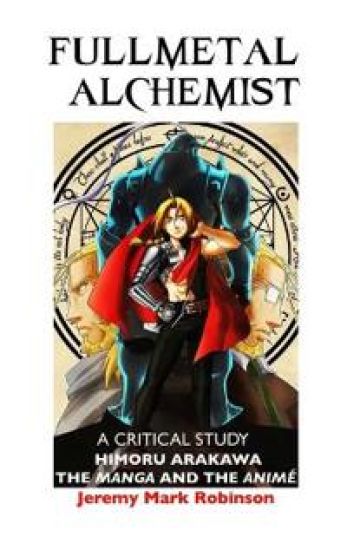
FULLMETAL ALCHEMISTA CRITICAL STUDY: HIMORU ARAKAWA: THE MANGA AND THE ANIMEFullmetal Alchemist (Hagane no Renkinjutsushi, 2001-2010) is a long-running manga by Himoru Arakawa (b. 1973, Hokkaido), a masterwork of narrative art of recent times which led to the production of two truly magnficent anim series in 2003-2004 and 2009-2010. The Fullmetal Alchemist comic and animated series depict a fully realized steam-punk world in which alchemy is a science. The heroes, Ed and Al Elric, are alchemists who commit the ultimate taboo of trying to bring their mother back to life. The story follows their struggle to regain their former, damaged selves, and to save the country of Amestris from the villains, the homunculi. Fullmetal Alchemist may well be the most accomplished and profound manga and anime of recent years. Everything about it works - as absolutely thrilling storytelling, with compelling characters, truly awesome action scenes, and very contemporary political themes. Himoru Arakawa's artwork is sharp, elegant and witty, and her imagination knows no bounds. The two animated TV series render the world of Fullmetal Alchemist in a spectacular fashion. The Fullmetal Alchemist franchise includes movies, video games, soundtracks, audio tracks, light novels, guidebooks, artbooks, and toys. This new study features a complete survey of the Fullmetal Alchemist manga, chapter by chapter; a guide to the two animated TV series, episode by episode; chapters on the Fullmetal Alchemist movies and Original Video Animations; and chapters on Arakawa's other comics and anime (such as Arslan, Heroic Tales and Silver Spoon). This is the most comprehensive exploration of Fullmetal Alchemist anywhere. Fully illustrated with over 170 illustrations. Bibliography, filmography, resources and notes. 632 pages. Hardcover with a full colour case laminate cover. www.crmoon.com
Tsui Hark

Tsui Hark

Jeremy Mark Robinson

CRESCENT MOON PUBLISHING
2023
sidottu
TSUI HARKTHE DRAGON MASTER OF CHINESE CINEMAA Critical StudyBy Jeremy Mark RobinsonTsui Hark is the dragon master of Chinese cinema (Stephen Teo calls Tsui a 'lion dancer among film directors'). Yes - a master, a lion dancer, a sifu, a wizard, a dragon. Tsui Hark is a one-man film industry - as a glance as his list of credits will show, along with setting up his own film company in 1983, Film Workshop. Tsui Hark directs movies like a force of nature. The energy coming off the screen is stupendous. He is a fearless filmmaker, willing to try anything to get a good shot. That feeling of fearlessness, and wildness, coupled with imagination and technical brilliance makes Tsui an incredibly formidable filmmaker. There are very few filmmakers on the scene today with those qualities in such abundance. When you come back to a Tsui Hark picture after looking at other movies for a while, you realize that this guy is so passionate about cinema, so willing to try anything, to experiment, to push the boundaries of what cinema can do, of what cinema can be. This man is on fire. Tsui Hark was born on January 2, 1951 (or February 15; some sources say 1950), in French Cochin China (Saigon, Vietnam). His name was originally Tsui Man-kong (he also been known as Mark Yu). In Cantonese, his name is Chui Hak; in Mandarin, it's Xu Ke. He had sixteen siblings (from three marriages). His father was a pharmacist. Tsui changed his name from 'Tsui Man-kong' to 'Tsui Hark' because he thought it was too soft, and for his 'King Kong' nickname. Tsui grew up in Saigon until the family moved to Hong Kong in 1966 (Tsui said he migrated around the age of 13, which make it 1964; others say he was 14).As a producer, Tsui Hark has been responsible for masterpieces including: the Better Tomorrow series, the Chinese Ghost Story series, the Swordsman series, New Dragon Gate Inn and The Killer, plus a host of hugely enjoyable films, such as: Once Upon a Time in China 4, Once Upon a Time In China 6, Vampire Hunters and Black Mask. Directors often work in contrasts - if they've just done a comedy, they might fancy a drama next. Tsui wanted to do something silly after his first three movies, which were 'very serious and very depressing'. Hence All the Wrong Clues, which was his first commercial hit (in 1981). And since then, Tsui had rarely let a year pass without releasing a movie as a director or producer (sometimes two Sometimes three ). By 2014, Tsui had directed around 43 feature films. They include the Once Upon a Time In China series, the Detective Dee series, Blade, We're Going To Eat You, The Master, Zu: Warriors From the Magic Mountain, A Better Tomorrow 3, Green Snake, The Lovers, Seven Swords, Journey To the West, Shanghai Blues and Peking Opera Blues. Fully illustrated in colour, with over 240 images from the films of Tsui Hark and other Chinese and Hong Kong productions. With filmography, bibliography and notes. 712 pages. Hardcover, with a full colour laminate cover, and a color jacket (flyleaf). www.crmoon.com