Kirjojen hintavertailu. Mukana 12 595 353 kirjaa ja 12 kauppaa.
Kirjailija
Jeremy Miles
Kirjat ja teokset yhdessä paikassa: 9 kirjaa, julkaisuja vuosilta 2000-2019, suosituimpien joukossa Discovering Statistics Using SAS. Vertaile teosten hintoja ja tarkista saatavuus suomalaisista kirjakaupoista.
A poet's journey through a year's worth of open mic performances. The poems consist of a sometimes personal, sometimes humorous, and occasionally insightful look at the world we live in through the eyes of a creative soul with a slightly skewed viewpoint. This work aims to raise as many questions as it answers while provoking the reader to think about their world while being encouraged to enjoy the little things in it. The author felt that the photographs chosen to accompany some of the poems would help to illustrate the meaning and mood of the selections. As with any works of art, the meaning you take away from these works is your own and unique to you. Hopefully you will enjoy what you find within and will be inspired to do the things you dream about; the central theme of many of the poems is the only thing stopping you, is you.
Keeping the uniquely humorous and self-deprecating style that has made students across the world fall in love with Andy Field's books, Discovering Statistics Using R takes students on a journey of statistical discovery using R, a free, flexible and dynamically changing software tool for data analysis that is becoming increasingly popular across the social and behavioural sciences throughout the world. The journey begins by explaining basic statistical and research concepts before a guided tour of the R software environment. Next you discover the importance of exploring and graphing data, before moving onto statistical tests that are the foundations of the rest of the book (for example correlation and regression). You will then stride confidently into intermediate level analyses such as ANOVA, before ending your journey with advanced techniques such as MANOVA and multilevel models. Although there is enough theory to help you gain the necessary conceptual understanding of what you're doing, the emphasis is on applying what you learn to playful and real-world examples that should make the experience more fun than you might expect. Like its sister textbooks, Discovering Statistics Using R is written in an irreverent style and follows the same ground-breaking structure and pedagogical approach. The core material is augmented by a cast of characters to help the reader on their way, together with hundreds of examples, self-assessment tests to consolidate knowledge, and additional website material for those wanting to learn more. Given this book's accessibility, fun spirit, and use of bizarre real-world research it should be essential for anyone wanting to learn about statistics using the freely-available R software.
Keeping the uniquely humorous and self-deprecating style that has made students across the world fall in love with Andy Field's books, Discovering Statistics Using R takes students on a journey of statistical discovery using R, a free, flexible and dynamically changing software tool for data analysis that is becoming increasingly popular across the social and behavioural sciences throughout the world. The journey begins by explaining basic statistical and research concepts before a guided tour of the R software environment. Next you discover the importance of exploring and graphing data, before moving onto statistical tests that are the foundations of the rest of the book (for example correlation and regression). You will then stride confidently into intermediate level analyses such as ANOVA, before ending your journey with advanced techniques such as MANOVA and multilevel models. Although there is enough theory to help you gain the necessary conceptual understanding of what you're doing, the emphasis is on applying what you learn to playful and real-world examples that should make the experience more fun than you might expect. Like its sister textbooks, Discovering Statistics Using R is written in an irreverent style and follows the same ground-breaking structure and pedagogical approach. The core material is augmented by a cast of characters to help the reader on their way, together with hundreds of examples, self-assessment tests to consolidate knowledge, and additional website material for those wanting to learn more. Given this book's accessibility, fun spirit, and use of bizarre real-world research it should be essential for anyone wanting to learn about statistics using the freely-available R software.
Keeping the uniquely humorous and self-deprecating style that has made students across the world fall in love with Andy Field's books, Discovering Statistics Using R takes students on a journey of statistical discovery using R, a free, flexible and dynamically changing software tool for data analysis that is becoming increasingly popular across the social and behavioural sciences throughout the world. The journey begins by explaining basic statistical and research concepts before a guided tour of the R software environment. Next you discover the importance of exploring and graphing data, before moving onto statistical tests that are the foundations of the rest of the book (for example correlation and regression). You will then stride confidently into intermediate level analyses such as ANOVA, before ending your journey with advanced techniques such as MANOVA and multilevel models. Although there is enough theory to help you gain the necessary conceptual understanding of what you're doing, the emphasis is on applying what you learn to playful and real-world examples that should make the experience more fun than you might expect. Like its sister textbooks, Discovering Statistics Using R is written in an irreverent style and follows the same ground-breaking structure and pedagogical approach. The core material is augmented by a cast of characters to help the reader on their way, together with hundreds of examples, self-assessment tests to consolidate knowledge, and additional website material for those wanting to learn more. Given this book's accessibility, fun spirit, and use of bizarre real-world research it should be essential for anyone wanting to learn about statistics using the freely-available R software.
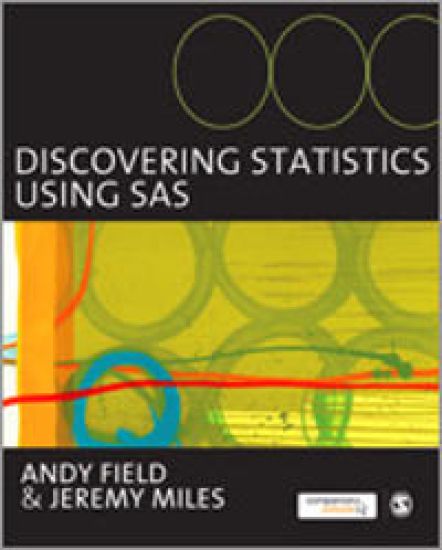
Hot on the heels of the 3rd edition of Andy Field's award-winning Discovering Statistics Using SPSS comes this brand new version for students using SAS®. Andy has teamed up with a co-author, Jeremy Miles, to adapt the book with all the most up-to-date commands and programming language from SAS® 9.2. If you're using SAS®, this is the only book on statistics that you will need! The book provides a comprehensive collection of statistical methods, tests and procedures, covering everything you're likely to need to know for your course, all presented in Andy's accessible and humourous writing style. Suitable for those new to statistics as well as students on intermediate and more advanced courses, the book walks students through from basic to advanced level concepts, all the while reinforcing knowledge through the use of SAS®. A 'cast of characters' supports the learning process throughout the book, from providing tips on how to enter data in SAS® properly to testing knowledge covered in chapters interactively, and 'real world' and invented examples illustrate the concepts and make the techniques come alive. The book's companion website (see link above) provides students with a wide range of invented and real published research datasets. Lecturers can find multiple choice questions and PowerPoint slides for each chapter to support their teaching.
Hot on the heels of the 3rd edition of Andy Field's award-winning Discovering Statistics Using SPSS comes this brand new version for students using SAS®. Andy has teamed up with a co-author, Jeremy Miles, to adapt the book with all the most up-to-date commands and programming language from SAS® 9.2. If you're using SAS®, this is the only book on statistics that you will need! The book provides a comprehensive collection of statistical methods, tests and procedures, covering everything you're likely to need to know for your course, all presented in Andy's accessible and humourous writing style. Suitable for those new to statistics as well as students on intermediate and more advanced courses, the book walks students through from basic to advanced level concepts, all the while reinforcing knowledge through the use of SAS®. A 'cast of characters' supports the learning process throughout the book, from providing tips on how to enter data in SAS® properly to testing knowledge covered in chapters interactively, and 'real world' and invented examples illustrate the concepts and make the techniques come alive. The book's companion website (see link above) provides students with a wide range of invented and real published research datasets. Lecturers can find multiple choice questions and PowerPoint slides for each chapter to support their teaching.
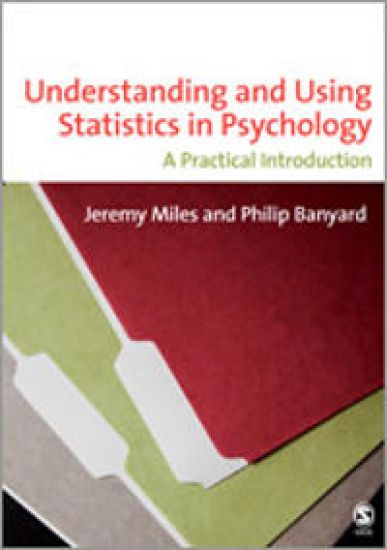
`There are few people who can write about research methods in a lively and engaging way, but Miles and Banyard are amongst them. As well as being an exceptionally clear introduction to research methods, it is full of amusing asides and anecdotes that make you want to read more. A hugely enjoyable book' - Dr Andy Field, University of Sussex Understanding and Using Statistics in Psychology takes the fear out of psychological statistics to help students understand why statistics are carried out, how to choose the best test and how to carry out the tests and understand them. Taking a non-technical approach, it encourages the reader to understand why a particular test is being used and what the results mean in the context of a psychological study, focusing on meaning and understanding rather than mindless numerical calculation. Key features include: - A light and accessible style - Descriptions of the most commonly used statistical tests and the principles that underlie them - Real world examples to aid the understanding of why statistics are valuable - Boxes on common errors, tips and quotes - Test yourself questions The perfect introductory resource, Understanding and Using Statistics in Psychology will guide any student new to statistics effortlessly through the process of test selection and analysis.
`There are few people who can write about research methods in a lively and engaging way, but Miles and Banyard are amongst them. As well as being an exceptionally clear introduction to research methods, it is full of amusing asides and anecdotes that make you want to read more. A hugely enjoyable book' - Dr Andy Field, University of Sussex Understanding and Using Statistics in Psychology takes the fear out of psychological statistics to help students understand why statistics are carried out, how to choose the best test and how to carry out the tests and understand them. Taking a non-technical approach, it encourages the reader to understand why a particular test is being used and what the results mean in the context of a psychological study, focusing on meaning and understanding rather than mindless numerical calculation. Key features include: - A light and accessible style - Descriptions of the most commonly used statistical tests and the principles that underlie them - Real world examples to aid the understanding of why statistics are valuable - Boxes on common errors, tips and quotes - Test yourself questions The perfect introductory resource, Understanding and Using Statistics in Psychology will guide any student new to statistics effortlessly through the process of test selection and analysis.
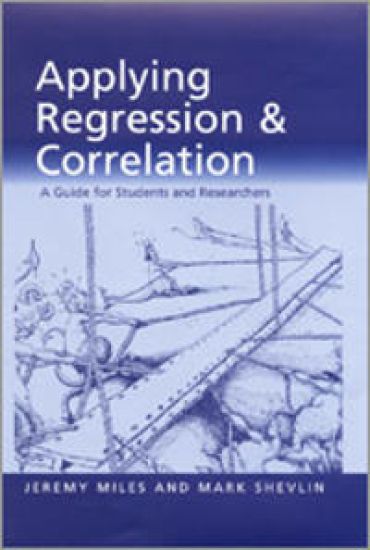
This book takes a fresh look at applying regression analysis in the behavioural sciences by introducing the reader to regression analysis through a simple model-building approach. The authors start with the basics and begin by re-visiting the mean, and the standard deviation, with which most readers will already be familiar, and show that they can be thought of a least squares model. The book then shows that this least squares model is actually a special case of a regression analysis and can be extended to deal with first one, and then more than one independent variable. Extending the model from the mean to a regression analysis provides a powerful, but simple, way of thinking about what students believe are the more complex aspects of regression analysis. The authors gradually extend the model to include aspects of regression analysis such as non-linear regression, logistic regression, and moderator and mediator analysis. These approaches are often presented in terms that are too mathematical for non-statistically inclined students to deal with. Throughout the book maintains a conceptual, non-mathematical focus. Most equations are placed in an appendix, where a detailed explanation is given, to avoid disrupting the flow of the main text. This book will be indispensable for anyone using regression and correlation from undergraduates doing projects to postgraduate and researchers.