Kirjojen hintavertailu. Mukana 12 390 323 kirjaa ja 12 kauppaa.
Kirjailija
Jeremy Musson
Kirjat ja teokset yhdessä paikassa: 8 kirjaa, julkaisuja vuosilta 2010-2025, suosituimpien joukossa Robert Adam. Vertaile teosten hintoja ja tarkista saatavuus suomalaisista kirjakaupoista.
This beautifully produced book celebrates the work of Robert Adam, the great eighteenth-century architect who influenced generations by stamping his distinctive neoclassical aesthetic vision on the English country house interior. Lavish new photography provides a deeply visual exploration of Adam s most important surviving country houses, to which the author and photographer gained unparalleled access. Included are magnificent country houses such as Syon House and Harewood House styled and inspired by the ideal of the neoclassical as well as Adam s castle-style Mellerstain and town houses such as Home House all captured in splendid detail. Original Adam design drawings, from Sir John Soane s Museum, illustrate the boldness of planning, color, and creative interpretation of Adam s domestic interiors. A biographical and contextual account of Adam s life and work describes his unique design process, his patrons, and the legacy of his design achievement. This richly illustrated volume will appeal to designers and homeowners as well as traditional architecture enthusiasts, promising to become an important addition to any architecture and interior design library.
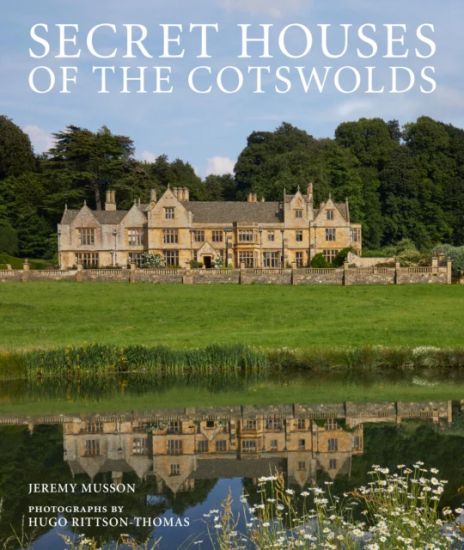
A personal tour of twenty of the UK’s most beguiling houses in this much loved area of western England.Author and architectural historian, Jeremy Musson, and Cotswolds-based photographer Hugo Rittson Thomas, offer privileged access to twenty houses, from castles and manor houses, as well as eighteenth- and nineteenth-century mansions, revealing their history, architecture and interiors, in the company of their devoted owners. In the footsteps of artists and designers including Humphry and George Repton, and Victorian visionary, William Morris, who inspired the arts and crafts movement, and others such as Detmar Blow, Norman Jewson, Clough Williams-Ellis and Oliver Hill, we find a series of fascinating country houses of different sizes and atmospheres, which have shaped the English identity. Each house has their own story, but their distinctive honey-coloured stone walls, set amongst rolling hills, in different ways express the ideals of English life. Most of the houses included here are privately owned and not usually open to the public. In this beautifully produced book, they can now be enjoyed through the eyes of their owners, as well as an experienced architectural historian, and an award-winning photographer.
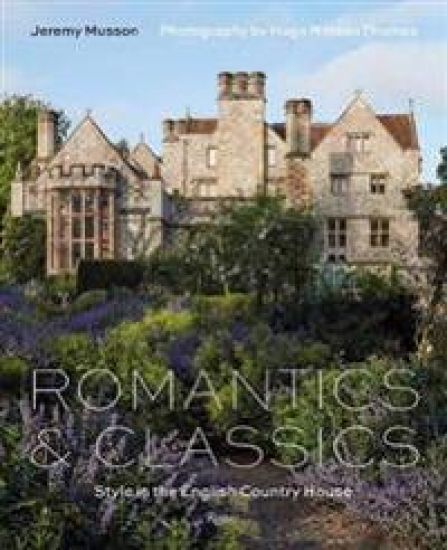
English country house style looms large in the collective imagination, inspiring fantasies of life in a centuries-old manor house, overlooking verdant hills dotted with sheep. This book allows us to enter some of the most exceptional of England s historic houses that are lived in and decorated for today by their imaginative owners and designers. Jeremy Musson and Hugo Rittson Thomas have assembled a stunning collection of twenty charming homes that reveal a remarkable wealth of taste and style inspiration, both inside and out, ranging from traditional and classic to contemporary and bohemian, with examples including Haddon Hall, Smedmore, Court of Noke, and The Laskett. Musson s text illuminates the history of each home, showing how each has become a canvas upon which its owner has deeply imprinted their personality. Essays on furniture, gardens, and color expand upon three essential components of country style. Rittson Thomas s superb photography captures the telling details in natural-lit interiors and exquisite gardens. This volume is sure to appeal to Instagram fanatics and traditionalists alike.
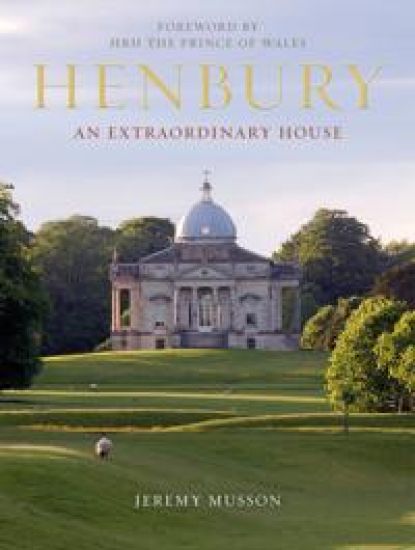
Henbury Hall in Cheshire was described by the diarist James Lees-Milne in 1990 as "stupendous...the whole house is a triumph". This elegant house, built in the 1980s, rises from the rolling contours of it ancient parkland as a Palladian masterpiece of symmetry, elegance and simplicity. Full of intriguing historic references, its form both venerable and familiar, it is unique in the story of late-twentieth-century British architecture. Henbury: An Extraordinary House tells the story of how the house came to be created by Sebastian de Ferranti (1927-2015), drawing on the Palldian tradition and the "ministry of all the talents" he brought together - including painter Felix Kelly, architect Julian Bicknell, interior decorator David Mlinaric and a host of talented and skilled artists and craftsmen. This book, written by celebrated architectural historian Jeremy Musson and including more than 250 superb photographs, is the complementary vision of Sebastian de Ferranti's widow Gilly de Ferranti, her tribute to her husband's creation, and as beautiful and inspiring a book as Henbury Hall is a house.
This volume covers some of the finest landscape and architecture in southern England, much of it set within the South Downs National Park. The county’s small towns and villages feature a pleasing mix of stone, timber, and brick houses of every period. Among numerous atmospheric country houses are the Tudor ruins of Cowdray, the Elizabethan mansion at Parham, and the French-inspired Petworth in its great park, famously captured in Turner’s paintings. On the grandest scale is the mighty Arundel Castle, seat of the Duke of Norfolk, while Chichester, the only city in West Sussex, boasts one of the country’s most important 12th-century cathedrals. Among many major ecclesiastical and educational establishments built in the 19th century, none is more impressive than Lancing College set high above the coast. New research accompanies 130 specially commissioned color photographs in this authoritative and expert guide.
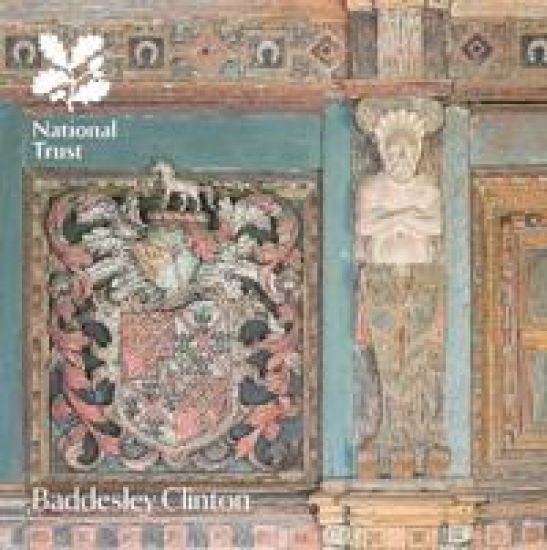
Baddesley Clinton was the home of the Ferrers family for 500 years. This long history can be read in its walls. The model of a medieval moated manor house, Baddesley Clinton has much to tell us about Englands historical architecture, although interpreting all that history can be a challenge. This guidebook is intended as a companion to your visit and also to help you read the trickier-to-read sections of the buildings history. Indeed, Baddesley Clinton is full of intriguing corners and secret hiding places. Constant in their adherence to the Roman Catholic faith, the Ferrers family made their home a sanctuary not only for them, but also for persecuted Catholics who were hidden from priest hunters here during the 1590s. The stories of the house inspired the residents who came later, including Henry Ferrers, a lawyer, diarist and antiquarian. Proud of his familys history, he filled the house with coats of arms in stained glass, carved oak and stone. Later still, a group of artists came to Baddesley Clinton and found it a source of great inspiration; after them a couple who devoted their energies to restoring what you see today, before giving it to the National Trust for safekeeping. This house has inspired people in many ways, and with the devotion to its care now the task of the Trust, its hoped it will inspire many more.
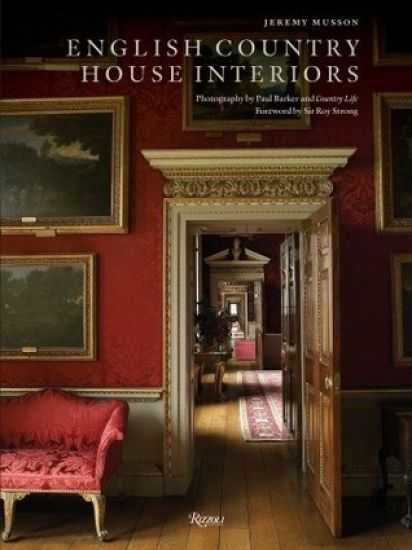
A highly detailed look at the English country house interior, offering unprecedented access to England’s finest rooms. In this splendid book, renowned historian Jeremy Musson explores the interiors and decoration of the great country houses of England, offering a brilliantly detailed presentation of the epitome of style in each period of the country house, including the great Jacobean manor house, the Georgian mansion, and the Gothic Revival castle. For the first time, houses known worldwide for their exquisite architecture and decoration--including Wilton, Chatsworth, and Castle Howard--are seen in unprecedented detail. With intimate views of fabric, gilding, carving, and furnishings, the book will be a source of inspiration to interior designers, architects, and home owners, and a must-have for anglophiles and historic house enthusiasts.The fifteen houses included represent the key periods in the history of English country house decoration and cover the major interior fashions and styles. Stunning new color photographs by Paul Barker-who was given unparalleled access to the houses-offer readers new insights into the enduring English country house style. Supplementing these are unique black-and-white images from the archive of the esteemed Country Life magazine. Among the aspects of these that the book covers are: paneling, textile hangings (silks to cut velvet), mural painting, plasterwork, stone carving, gilding, curtains, pelmets, heraldic decoration, classical imagery, early upholstered furniture, furniture designed by Thomas Chippendale, carved chimney-pieces, lass, use of sculpture, tapestry, carpets, picture hanging, collecting of art and antiques, impact of Grand Tour taste, silver, use of marble, different woods, the importance of mirror glass, boulle work, English Baroque style, Palladian style, neo-Classical style, rooms designed by Robert Adam, Regency, Gothic Revival taste, Baronial style, French 18th century style, and room types such as staircases, libraries, dining rooms, parlors, bedrooms, picture galleries, entrance halls and sculpture galleries.Houses covered include: Hatfield - early 1600s (Jacobean); Wilton - 1630/40s (Inigo Jones); Boughton - 1680/90s (inspired by Versailles); Chatsworth -1690/early 1700s (Baroque); Castle Howard - early 1700s (Vanbrugh); Houghton - 1720s (Kent); Holkham - 1730s-50s (Palladian); Syon Park - 1760s (Adam); Harewood - 1760s/70s (neo-Classical); Goodwood - 1790s/1800s (neo-Classical/Regency); Regency at Chatsworth/Wilton/C Howard etc - 1820/30s; Waddesdon Manor - 1870/80ss (French Chateau style); Arundel Castle -1880s/90s (Gothic Revival); Berkeley Castle - 1920/30s (period recreations and antique collections); Parham House - 1920s/30s (period restorations and antique collections). The range is from the early 17th century to present day, drawn from the authenticated interiors of fifteen great country houses, almost all still in private hands and occupied as private residences still today. The book shows work by twentieth-century designers who have helped evolve the country house look, including Nancy Lancaster, David Hicks, Colefax & Fowler, and David Mlinaric
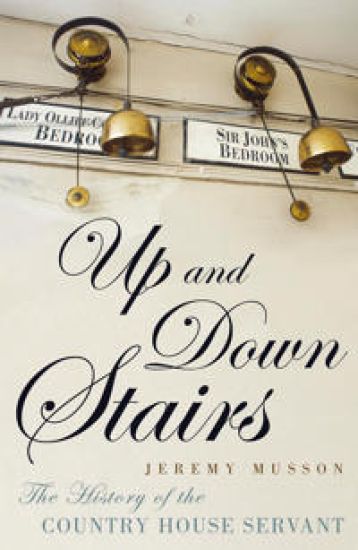
Country houses were reliant on an intricate hierarchy of servants, each of whom provided an essential skill. Up and Down Stairs brings to life this hierarchy and shows how large numbers of people lived together under strict segregation and how sometimes this segregation was broken, as with the famous marriage of a squire to his dairymaid at Uppark. Jeremy Musson captures the voices of the servants who ran these vast houses, and made them work. From unpublished memoirs to letters, wages, newspaper articles, he pieces together their daily lives from the Middle Ages through to the twentieth century. The story of domestic servants is inseparable from the story of the country house as an icon of power, civilisation and luxury. This is particularly true with the great estates such as Chatsworth, Hatfield, Burghley and Wilton. Jeremy Musson looks at how these grand houses were, for centuries, admired and imitated around the world.