Kirjojen hintavertailu. Mukana 12 390 323 kirjaa ja 12 kauppaa.

Kirjailija

Jeremy Tambling

Kirjat ja teokset yhdessä paikassa: 32 kirjaa, julkaisuja vuosilta 1996-2026, suosituimpien joukossa Dickens, Nicholas Nickleby, and the Dance of Death. Vertaile teosten hintoja ja tarkista saatavuus suomalaisista kirjakaupoista.

32 kirjaa

Kirjojen julkaisuhaarukka 1996-2026.

Dickens, Nicholas Nickleby, and the Dance of Death
This study of Nicholas Nickleby takes the Dickens novel which is perhaps the least critically discussed, though it is very popular, and examines its appeal and its significance, and finds it one of the most rewarding and powerful of Dickens’s texts.Nicholas Nickleby deals with the abduction and destruction of children, often with the collusion of their parents. It concentrates on this theme in a way which continues from Oliver Twist, describing such oppression, and the resistance to it, in the language of melodrama, of parody and comedy. With chapters on the school-system that Dickens attacks, and its grotesque embodiment in Squeers, and with discussion of how the novel reshapes eighteenth century literary traditions, and such topics as the novel’s comedy, and the concept of the ‘humorist’; and ‘theatricality’ and its debt to Carlyle,, the book delves into the way that the novel explores madness within the city in those whose lives have been fractured, or ruined, as so many have been, and considers the symptoms of hypocrisy in the lives of the oppressors and the oppressed alike; taking hypocrisy as a Dickensian subject which deserves further examination. Dickens, Nicholas Nickleby, and the Dance of Death explores ways in which Dickens draws on medieval and baroque traditions in how he analyses death and its grotesquerie, especially drawing on the visual tradition of the ‘dance of death’ which is referred to here and which is prevalent throughout Dickens’s novels. It shows these traditions to be at the heart of London, and aims to illuminate a strand within Dickens’s thinking from first to last. Drawing on the critical theory of Walter Benjamin, Freud, Nietzsche and Marx, and with close detailed readings of such well-known figures as Mrs Nickleby, Vincent Crummles and his theatrical troupe, and Mr Mantalini, and attention to Dickens’s description, imagery, irony, and sense of the singular, this book is a major study which will help in the revaluation of Dickens’s early novels.
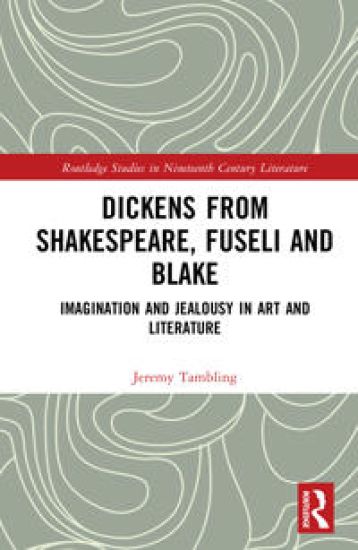
Dickens from Shakespeare, Fuseli and Blake

Dickens from Shakespeare, Fuseli and Blake

Jeremy Tambling

TAYLOR FRANCIS LTD
2026
sidottu
Dickens says he concentrates on 'the romantic side of familiar things', and so highlights the visionary, non-realist, uncanny nature of his writing. This book delves into the sources of that through Shakespeare, and Fuseli, the great artist who imagined scenes from Shakespeare and who created the 'Nightmare', and Blake, friend of Fuseli, and a silent underpresence in nineteenth-century writing. It provides readings of the Christmas Books, David Copperfield, Bleak House, Little Dorrit, Great Expectations, and Our Mutual Friend in the light of Shakespeare, Fuseli, and Blake. While concentrating on the figure of the marginalised beggar, and the criminal, and the vagrant, so finding a social history between Shakespeare and Dickens's time, it reads literary texts in the light of critical theory, using Blanchot, and Derrida, and Deleuze to illuminate the text and the power of writing within Shakespeare, Blake, and Dickens.
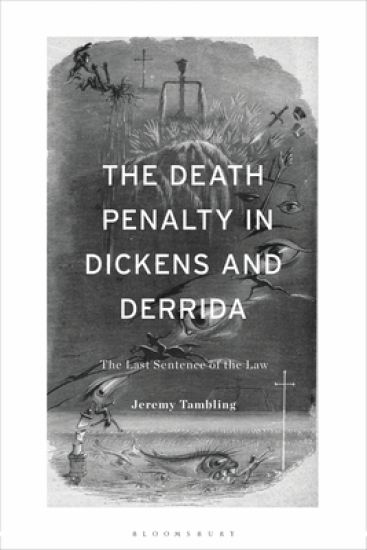
The Death Penalty in Dickens and Derrida

The Death Penalty in Dickens and Derrida

Jeremy Tambling

BLOOMSBURY PUBLISHING PLC
2024
nidottu
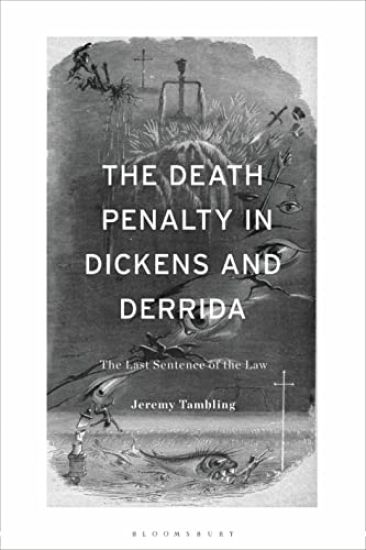
In the nineteenth century, Charles Dickens backed the cause of abolition of the death penalty and wrote comprehensively about it, in public letters and in his novels. At the end of the twentieth century, Jacques Derrida ran two years of seminars on the subject, which were published posthumously. What the novelist and the philosopher of deconstruction discussed independently, this book brings into comparison.Tambling examines crime and punishment in Dickens’s novels Barnaby Rudge, A Tale of Two Cities, Oliver Twist and Bleak House and explores those who influenced Dickens’s work, including Hogarth, Fielding, Godwin and Edgar Allen Poe. This book also looks at those who influenced Derrida – Freud, Nietzsche, Foucault and Blanchot – and considers Derrida’s study on terrorism and the USA as the only major democracy adhering to the death penalty.A comprehensive study of punishment in Dickens, and furthering Derrida’s insights by commenting on Shakespeare and blood, revenge, the French Revolution, and the enduring power of violence and its fascination, this book is a major contribution to literary criticism on Dickens and Derrida. Those interested in literature, criminology, law, gender, and psychoanalysis will find it an essential intervention in a topic still rousing intense argument.
The Death Penalty in Dickens and Derrida

The Death Penalty in Dickens and Derrida

Jeremy Tambling

BLOOMSBURY PUBLISHING PLC
2023
sidottu
In the nineteenth century, Charles Dickens backed the cause of abolition of the death penalty and wrote comprehensively about it, in public letters and in his novels. At the end of the twentieth century, Jacques Derrida ran two years of seminars on the subject, which were published posthumously. What the novelist and the philosopher of deconstruction discussed independently, this book brings into comparison.Tambling examines crime and punishment in Dickens’s novels Barnaby Rudge, A Tale of Two Cities, Oliver Twist and Bleak House and explores those who influenced Dickens’s work, including Hogarth, Fielding, Godwin and Edgar Allen Poe. This book also looks at those who influenced Derrida – Freud, Nietzsche, Foucault and Blanchot – and considers Derrida’s study on terrorism and the USA as the only major democracy adhering to the death penalty.A comprehensive study of punishment in Dickens, and furthering Derrida’s insights by commenting on Shakespeare and blood, revenge, the French Revolution, and the enduring power of violence and its fascination, this book is a major contribution to literary criticism on Dickens and Derrida. Those interested in literature, criminology, law, gender, and psychoanalysis will find it an essential intervention in a topic still rousing intense argument.
The Poetry of Dante's Paradiso

The Poetry of Dante's Paradiso

Jeremy Tambling

Springer Nature Switzerland AG
2022
nidottu
This book argues that Paradiso – Dante’s vision of Heaven – is not simply affirmative. It posits that Paradiso compensates for disappointment rather than fulfils hopes, and where it moves into joy and vision, this also rationalises the experience of exile and the failure of all Dante’s political hopes. The book highlights and addresses a fundamental problem in reading Dante: the assumption that he writes as a Catholic Christian, which can be off-putting and induces an overly theological and partisan reading in some commentary. Accordingly, the study argues that Dante must be read now in a post-Christian modernity. It discusses Dante's Christianity fully, and takes its details as a source of wonder and beauty which need communicating to a modern reader. Yet, the study also argues that we must read for the alterity of Dante’s world from ours.
The Poetry of Dante's Paradiso

The Poetry of Dante's Paradiso

Jeremy Tambling

Springer Nature Switzerland AG
2021
sidottu
This book argues that Paradiso – Dante’s vision of Heaven – is not simply affirmative. It posits that Paradiso compensates for disappointment rather than fulfils hopes, and where it moves into joy and vision, this also rationalises the experience of exile and the failure of all Dante’s political hopes. The book highlights and addresses a fundamental problem in reading Dante: the assumption that he writes as a Catholic Christian, which can be off-putting and induces an overly theological and partisan reading in some commentary. Accordingly, the study argues that Dante must be read now in a post-Christian modernity. It discusses Dante's Christianity fully, and takes its details as a source of wonder and beauty which need communicating to a modern reader. Yet, the study also argues that we must read for the alterity of Dante’s world from ours.
Dickens, Nicholas Nickleby, and the Dance of Death
This study of Nicholas Nickleby takes the Dickens novel which is perhaps the least critically discussed, though it is very popular, and examines its appeal and its significance, and finds it one of the most rewarding and powerful of Dickens’s texts.Nicholas Nickleby deals with the abduction and destruction of children, often with the collusion of their parents. It concentrates on this theme in a way which continues from Oliver Twist, describing such oppression, and the resistance to it, in the language of melodrama, of parody and comedy. With chapters on the school-system that Dickens attacks, and its grotesque embodiment in Squeers, and with discussion of how the novel reshapes eighteenth century literary traditions, and such topics as the novel’s comedy, and the concept of the ‘humorist’; and ‘theatricality’ and its debt to Carlyle,, the book delves into the way that the novel explores madness within the city in those whose lives have been fractured, or ruined, as so many have been, and considers the symptoms of hypocrisy in the lives of the oppressors and the oppressed alike; taking hypocrisy as a Dickensian subject which deserves further examination. Dickens, Nicholas Nickleby, and the Dance of Death explores ways in which Dickens draws on medieval and baroque traditions in how he analyses death and its grotesquerie, especially drawing on the visual tradition of the ‘dance of death’ which is referred to here and which is prevalent throughout Dickens’s novels. It shows these traditions to be at the heart of London, and aims to illuminate a strand within Dickens’s thinking from first to last. Drawing on the critical theory of Walter Benjamin, Freud, Nietzsche and Marx, and with close detailed readings of such well-known figures as Mrs Nickleby, Vincent Crummles and his theatrical troupe, and Mr Mantalini, and attention to Dickens’s description, imagery, irony, and sense of the singular, this book is a major study which will help in the revaluation of Dickens’s early novels.
RE:Verse

RE:Verse

Jeremy Tambling

Routledge
2017
sidottu
Many people are intimidated by poetry, thinking it difficult and high-brow and not for them. But it is still considered an essential part of art and literature. RE:Verse asks; Why and How should we read poetry? This book, aimed at people just starting with literature, takes nothing for granted but opens poetry up to all in a way that makes it both exciting and fresh. Examples are taken from a balanced combination of traditional writers such as Keats, Wordsworth, Blake and Shakespeare, and modern poets such as Seamus Heaney, Jackie Kay and Benjamin Zephaniah. RE:Verse ranges over all periods of literature, and over the many critical theories that attempt to show why poetry matters. It places poems into their historical context, looks at poetry in translation, and discusses why much poetry is so difficult as to seem almost unreadable. It sets the standard for talking about how to read poetry, and what to do when this seems to be impossibly difficult. Ultimately, it is the essential, easy-to-read guide to the subject.
Dickens' Novels as Poetry

Dickens' Novels as Poetry

Jeremy Tambling

Routledge
2017
nidottu
Focusing on the language, style, and poetry of Dickens’ novels, this study breaks new ground in reading Dickens’ novels as a unique form of poetry. Dickens’ writing disallows the statement of single unambiguous truths and shows unconscious processes burrowing within language, disrupting received ideas and modes of living. Arguing that Dickens, within nineteenth-century modernity, sees language as always double, Tambling draws on a wide range of Victorian texts and current critical theory to explore Dickens’ interest in literature and popular song, and what happens in jokes, in caricature, in word-play and punning, and in naming. Working from Dickens’ earliest writings to the latest, deftly combining theory with close analysis of texts, the book examines Dickens’ key novels, such as Pickwick Papers, Martin Chuzzlewit, Dombey and Son, Bleak House, Little Dorrit, Great Expectations, and Our Mutual Friend. It considers Dickens as constructing an urban poetry, alert to language coming from sources beyond the individual, and relating that to the dream-life of characters, who both can and cannot awake to fuller, different consciousness. Drawing on Walter Benjamin, Lacan, and Derrida, Tambling shows how Dickens writes a new and comic poetry of the city, and that the language constitutes an unconscious and secret autobiography. This volume takes Dickens scholarship in exciting new directions and will be of interest to all readers of nineteenth-century literary and cultural studies, and more widely, to all readers of literature.
Histories of the Devil

Histories of the Devil

Jeremy Tambling

Palgrave Macmillan
2017
sidottu
This book is about representations of the devil in English and European literature. Tracing the fascination in literature, philosophy, and theology with the irreducible presence of what may be called evil, or comedy, or the carnivalesque, this book surveys the parts played by the devil in the texts derived from the Faustus legend, looks at Marlowe and Shakespeare, Rabelais, Milton, Blake, Hoffmann, Baudelaire, Goethe, Dostoevsky, Bulgakov, and Mann, historically, speculatively, and from the standpoint of critical theory. It asks: Is there a single meaning to be assigned to the idea of the diabolical? What value lies in thinking diabolically? Is it still the definition of a good poet to be of the devil's party, as Blake argued?
Going Astray

Going Astray

Jeremy Tambling

Routledge
2016
sidottu
Among the numerous books on Dickenss London, Going Astray is unique in combining detailed topography and biography with close textual analysis and theoretically informed critiques of most of the novelists major works. In Jeremy Tamblings intriguing and illuminating synthesis, the London A-Z meets Nietzsche, Benjamin and Derrida. Rick Allen, author of The Moving Pageant: A Literary Sourcebook on London Street-Life, 1700-1914Dickens wrote so insistently about London its streets, its people, its unknown areas that certain parts of the city are forever haunted by him. Going Astray: Dickens and London looks at the novelists delight in losing the self in the labyrinthine city and maps that interest, onto the compulsion to go astray in writing.Drawing on all Dickens published writings (including the journalism but concentrating on the novels), Jeremy Tambling considers the authors kaleidoscopic characterisations of London: as prison and as legal centre; as the heart of empire and of traumatic memory; as the place of the uncanny; as an old curiosity shop. His study examines the relations between narrative and the city, and explores how the metropolis encapsulates the problems of modernity for Dickens as well as suggesting the limits of representation. Combining contemporary literary and cultural theory with historical maps, photographs and contextual detail, Jeremy Tamblings book is an indispensable guide to Dickens, nineteenth- century literature, and the city itself.
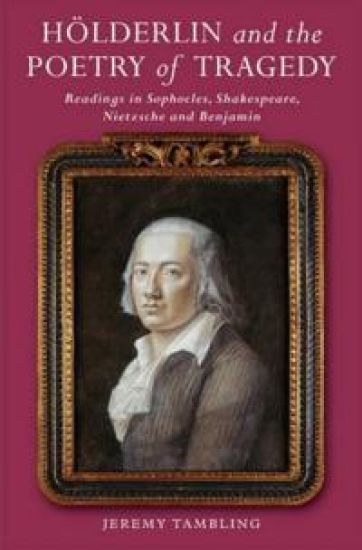
Hölderlin and the Poetry of Tragedy

Hölderlin and the Poetry of Tragedy

Jeremy Tambling

LIVERPOOL UNIVERSITY PRESS
2015
nidottu
Hölderlin (1770-1843) is the magnificent writer whom Nietzsche called 'my favourite poet'. His writings and poetry have been formative throughout the twentieth century, and as influential as those of Hegel, his friend. At the same time, his madness has made his poetry infinitely complex as it engages with tragedy, and irreconcilable breakdown, both political and personal, with anger and with mourning. This study gives a detailed approach to Hölderlin's writings on Greek tragedy, especially Sophocles, whom he translated into German, and gives close attention to his poetry, which is never far from an engagement with tragedy. Hölderlin's writings, always fascinating, enable a consideration of the various meanings of tragedy, and provide a new reading of Shakespeare, particularly Julius Caesar, Hamlet and Macbeth; the work proceeds by opening into discussion of Nietzsche, especially The Birth of Tragedy. Since Hölderlin was such a decisive figure for Modernism, to say nothing of modern Germany, he matters intensely to such differing theorists and philosophers as Walter Benjamin, Theodor Adorno, Martin Heidegger, Maurice Blanchot and Jacques Derrida, all of whose views are discussed herein. Drawing upon the insights of Hegelian philosophy and psychoanalysis, this book gives the English-speaking reader ready access to a magnificent body of poetry and to the poet as a theorist of tragedy and of madness. Hölderlin's poetry is quoted freely, with translations and commentary provided. This book is the first major account of Hölderlin in English to offer the student and general reader a critical account of a vital body of work which matters to any study of poetry and to all who are interested in poetry's relationships to madness. It is essential reading in the understanding of how tragedy pervades literature and politics, and how tragedy has been regarded and written about, from Hegel to Walter Benjamin.
Dickens' Novels as Poetry

Dickens' Novels as Poetry

Jeremy Tambling

Routledge
2014
sidottu
Focusing on the language, style, and poetry of Dickens’ novels, this study breaks new ground in reading Dickens’ novels as a unique form of poetry. Dickens’ writing disallows the statement of single unambiguous truths and shows unconscious processes burrowing within language, disrupting received ideas and modes of living. Arguing that Dickens, within nineteenth-century modernity, sees language as always double, Tambling draws on a wide range of Victorian texts and current critical theory to explore Dickens’ interest in literature and popular song, and what happens in jokes, in caricature, in word-play and punning, and in naming. Working from Dickens’ earliest writings to the latest, deftly combining theory with close analysis of texts, the book examines Dickens’ key novels, such as Pickwick Papers, Martin Chuzzlewit, Dombey and Son, Bleak House, Little Dorrit, Great Expectations, and Our Mutual Friend. It considers Dickens as constructing an urban poetry, alert to language coming from sources beyond the individual, and relating that to the dream-life of characters, who both can and cannot awake to fuller, different consciousness. Drawing on Walter Benjamin, Lacan, and Derrida, Tambling shows how Dickens writes a new and comic poetry of the city, and that the language constitutes an unconscious and secret autobiography. This volume takes Dickens scholarship in exciting new directions and will be of interest to all readers of nineteenth-century literary and cultural studies, and more widely, to all readers of literature.
Hölderlin and the Poetry of Tragedy

Hölderlin and the Poetry of Tragedy

Jeremy Tambling

Sussex Academic Press
2014
sidottu
Hölderlin (1770-1843) is the magnificent writer whom Nietzsche called 'my favourite poet'. His writings and poetry have been formative throughout the twentieth century, and as influential as those of Hegel, his friend. At the same time, his madness has made his poetry infinitely complex as it engages with tragedy, and irreconcilable breakdown, both political and personal, with anger and with mourning. This study gives a detailed approach to Hölderlin's writings on Greek tragedy, especially Sophocles, whom he translated into German, and gives close attention to his poetry, which is never far from an engagement with tragedy. Hölderlin's writings, always fascinating, enable a consideration of the various meanings of tragedy, and provide a new reading of Shakespeare, particularly Julius Caesar, Hamlet and Macbeth; the work proceeds by opening into discussion of Nietzsche, especially The Birth of Tragedy. Since Hölderlin was such a decisive figure for Modernism, to say nothing of modern Germany, he matters intensely to such differing theorists and philosophers as Walter Benjamin, Theodor Adorno, Martin Heidegger, Maurice Blanchot and Jacques Derrida, all of whose views are discussed herein. Drawing upon the insights of Hegelian philosophy and psychoanalysis, this book gives the English-speaking reader ready access to a magnificent body of poetry and to the poet as a theorist of tragedy and of madness. Hölderlin's poetry is quoted freely, with translations and commentary provided. This book is the first major account of Hölderlin in English to offer the student and general reader a critical account of a vital body of work which matters to any study of poetry and to all who are interested in poetry's relationships to madness. It is essential reading in the understanding of how tragedy pervades literature and politics, and how tragedy has been regarded and written about, from Hegel to Walter Benjamin.
Literature and Psychoanalysis

Literature and Psychoanalysis

Jeremy Tambling

Manchester University Press
2012
nidottu
Literature and Psychoanalysis is an exciting, and compulsive working through of what Freud really said, and why it is so important, with a chapter on Melanie Klein and object relations theory, and two chapters on Lacan, and his work on the unconscious as structured like a language. Investigating different forms of literature through a careful examination of Shakespeare, Blake, the Sherlock Holmes stories, and many other examples from literature, the book makes the argument for taking literature and psychoanalysis together, and essential to each other. The book places both literature and psychoanalysis into the context of all that has been said about these subjects in recent debates in the theory of Derrida and Foucault and Žižek, and into the context of gender studies and queer theory.
Literature and Psychoanalysis

Literature and Psychoanalysis

Jeremy Tambling

Manchester University Press
2012
sidottu
Literature and Psychoanalysis is an exciting, and compulsive working through of what Freud really said, and why it is so important, with a chapter on Melanie Klein and object relations theory, and two chapters on Lacan, and his work on the unconscious as structured like a language. Investigating different forms of literature through a careful examination of Shakespeare, Blake, the Sherlock Holmes stories, and many other examples from literature, the book makes the argument for taking literature and psychoanalysis together, and essential to each other. The book places both literature and psychoanalysis into the context of all that has been said about these subjects in recent debates in the theory of Derrida and Foucault and Žižek, and into the context of gender studies and queer theory.
On Reading the Will

On Reading the Will

Jeremy Tambling

Sussex Academic Press
2011
sidottu
This book studies the will, will-power and wilfulness, the will to death or to power, and lack of will. It surveys many texts -- from Augustine, Shakespeare, Dickens, George Eliot and D H Lawrence -- in order to analyse the history of its different concepts: rational/irrational drive, sexual appetite, or just testamentary, so asserting identity beyond death. Drawing on philosophies of the will in Schopenhauer and Nietzsche, the book studies music as the embodied will in Wagner and Verdi. Considering the law and its prohibitions as a form of the will, it sees how these produce a perverse will. Drawing on Freud and Lacan it studies interrelationships between the law which prohibits and the desire which wills, how desire creates the law, and the law desire. What stands out is that the authors studied are fascinated by the will as unknowable and irresistible, as rational and countermanding rationality, as divided and imperious force. Chapters include how wills motivate plots in Shakespeare and the Victorian novel. Discussion of opera and Nietzsche focuses on the will as an unconscious force. With sustained discussion of texts, and supporting arguments through a range of key thinkers in cultural theory, this book is indispensable for readers of literature, law, music and philosophy.
Dante in Purgatory

Dante in Purgatory

Jeremy Tambling

Brepols N.V.
2010
sidottu
This volume provides an advanced survey of Dante studies and offers a new, detailed, and accessible reading of his Purgatorio, making this very rich text freshly available to an English-speaking readership. Through analysis of a variety of emotional states across Dante's three major works - the Purgatorio, Inferno, and Paradiso, and in his minor works, such as the Rime and the Convivio - Dante in Purgatory: States of Affect contends that emotions are historically constructed at different moments. The book also demonstrates that while Dante presents some emotions as defined and distinct, he depicts others as blends of several states of feeling, as emotions which are in process or metamorphosis. In particular, the author examines the seven cardinal vices ('seven deadly sins') amid a wider discussion of states of affect. He argues that the emotional states associated with these vices are different from contemporary conceptions of affective states. He compels us to acknowledge that there is a history of both the emotional states themselves and the methods with which we describe them. Above all, his study shows that there is a history of emotions which is part of the history of a European acquisition of a subjective sense of the self. To historicize emotion thus requires that the 'human' becomes increasingly defined, as the subject is ascribed further interior qualities which must be named. Dante in Purgatory is thus relevant not only to readers of Dante, but also to any reader interested in thinking about emotion and affectual states and how these can be described, and how they can be conceptualized.
On Anachronism

On Anachronism

Jeremy Tambling

Manchester University Press
2010
sidottu
On Anachronism joins together Shakespeare and Proust as the great writers of love to show that love is always anachronistic, and never more so when it is homosexual. Drawing on Nietzsche, Freud, Heidegger, Derrida, Blanchot and Levinas and Deleuze, difficult but essential theorists of the subject of ‘being and time’ and ‘time and the other’ the book examines why speculation on time has become so crucial within modernity. Through the related term ‘anachorism’, it considers how discussion of time always turns into discussion of space, and how this, too, can never be quite defined. It speculates on chance and thinks of ways in which a quality of difference within time – heterogeneity, anachronicity – is essential to think of what is meant by ‘the other’.The book examines how contemporary theory considers the future and its relation to the past as that which is inescapable in the form of trauma. It considers what is meant by ‘the event’, that which is the theme of all post-Nietzschean theory and which breaks in two conceptions of time as chronological.
Allegory

Allegory

Jeremy Tambling

Routledge
2009
sidottu
Indispensable to an understanding of Medieval and Renaissance texts and a topic of controversy for the Romantic poets, allegory remains a site for debate and controversy in the twenty-first-century.In this useful guide, Jeremy Tambling: presents a concise history of allegory, providing numerous examples from Medieval forms to the present dayconsiders the relationship between allegory and symbolism analyses the use of allegory in modernist debate and deconstruction, looking at critics such as Walter Benjamin and Paul de Man provides a full glossary of technical terms and suggestions for further reading.Allegory offers an accessible, clear introduction to the history and use of this complex literary device. It is the ideal tool for all those seeking a greater understanding of texts that make use of allegory and of the significance of allegorical thinking to literature.