Kirjojen hintavertailu. Mukana 12 390 323 kirjaa ja 12 kauppaa.

Kirjailija

Jerome A. Greene

Kirjat ja teokset yhdessä paikassa: 20 kirjaa, julkaisuja vuosilta 1986-2022, suosituimpien joukossa The Guns of Independence. Vertaile teosten hintoja ja tarkista saatavuus suomalaisista kirjakaupoista.

Mukana myös kirjoitusasut: Jerome A Greene

20 kirjaa

Kirjojen julkaisuhaarukka 1986-2022.

Nez Perce Summer, 1877

Nez Perce Summer, 1877

Jerome A. Greene; Alvin M. Josephy Jr.

University of Nebraska Press
2022
pokkari
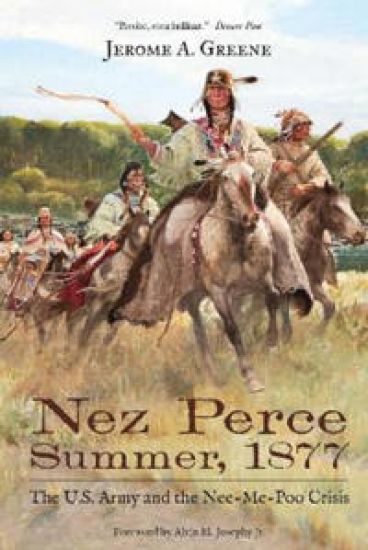
Nez Perce Summer, 1877 tells the story of a people’s epic struggle to survive spiritually, culturally, and physically in the face of unrelenting military force. Written by one of the foremost experts in frontier military history, Jerome A. Greene, and reviewed by members of the Nez Perce tribe, this definitive treatment of the Nez Perce War is the first to incorporate research from all known accounts of Nez Perce and U.S. military participants. Enhanced by sixteen detailed maps and forty-nine historic photographs, Greene’s gripping narrative takes readers on a three-and-one-half month 1,700-mile journey across the wilds of Idaho, Wyoming, and Montana territories. All of the skirmishes and battles of the war receive detailed treatment, which benefits from Greene’s astute analysis of the strategies and decision making on both sides. Between 100 and 150 of the more than 800 Nez Perce men, women, and children who began the trek were killed during the war. Almost as many died in the months following the surrender, after they were exiled to malaria-ridden northeastern Oklahoma. Army deaths numbered 113. The casualties on both sides were an extraordinary price for a war that nobody wanted but whose history has since fascinated generations of Americans.
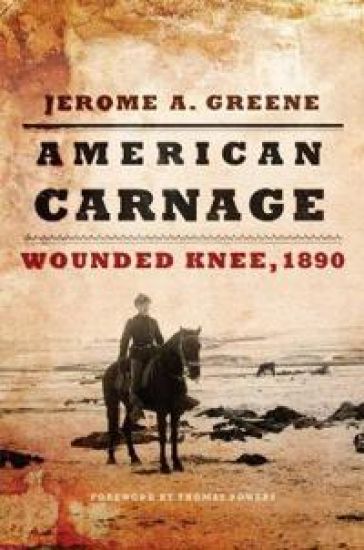
American Carnage

American Carnage

Jerome A. Greene; Thomas Powers

University of Oklahoma Press
2021
nidottu
As the year 1890 wound to a close, a band of more than three hundred Lakota Sioux Indians led by Chief Big Foot made their way toward South Dakota’s Pine Ridge Reservation to join other Lakotas seeking peace. Fearing that Big Foot’s band was headed instead to join “hostile” Lakotas, U.S. troops surrounded the group on Wounded Knee Creek. Tensions mounted, and on the morning of December 29, as the Lakotas prepared to give up their arms, disaster struck. Accounts vary on what triggered the violence as Indians and soldiers unleashed thunderous gunfire at each other, but the consequences were horrific: some 200 innocent Lakota men, women, and children were slaughtered. American Carnage-the first comprehensive account of Wounded Knee to appear in more than fifty years-explores the complex events preceding the tragedy, the killings, and their troubled legacy.In this gripping tale, Jerome A. Greene-renowned specialist on the Indian wars-explores why the bloody engagement happened and demonstrates how it became a brutal massacre. Drawing on a wealth of sources, including previously unknown testimonies, Greene examines the events from both Native and non-Native perspectives, explaining the significance of treaties, white settlement, political disputes, and the Ghost Dance as influential factors in what eventually took place. He addresses controversial questions: Was the action premeditated? Was the Seventh Cavalry motivated by revenge after its humiliating defeat at the Battle of the Little Bighorn? Should soldiers have received Medals of Honor? He also recounts the futile efforts of Lakota survivors and their descendants to gain recognition for their terrible losses.Epic in scope and poignant in its recounting of human suffering, American Carnage presents the reality-and denial-of our nation’s last frontier massacre. It will leave an indelible mark on our understanding of American history.
January Moon

January Moon

Jerome A. Greene

University of Oklahoma Press
2020
sidottu
Historian Jerome A. Greene is renowned for his memorable chronicles of egregious events involving American Indians and the U.S. military, including Sand Creek, Washita, and Wounded Knee. Now, in January Moon, Greene draws from extensive research and fieldwork to explore a signal - and appallingly brutal - event in American history: the desperate flight of Chief Dull Knife's Northern Cheyenne Indians from imprisonment at Fort Robinson, Nebraska. In the wake of the Great Sioux War of 1876-77, the U.S. government expelled most Northern Cheyennes from their northern plains homeland to Indian Territory, in present-day Oklahoma. Following mounting hardships, many of those people, under Chiefs Dull Knife and Little Wolf, broke away, seeking to return north. While Little Wolf's band managed initially to elude pursuing U.S. troops, Dull Knife's people were captured in 1878 and ushered into a makeshift barrack prison at Camp (later Fort) Robinson, where they spent months waiting for government officials to decide their fate. It is here that Greene's riveting narrative edges toward its climax. On the night of January 9, 1879, in a bloody struggle with troops, Dull Knife's people staged a massive breakout from their barrack prison in a last-ditch bid for freedom. Greene paints a vivid picture of their frantic escape, which took place under an unusually brilliant moon that doomed many of those fleeing by silhouetting them against the snow. A climactic engagement at Antelope Creek proved especially devastating, and the helpless people were nearly annihilated. In gripping detail, Greene follows the survivors' dreadful experiences into their aftermath, including creation of the Northern Cheyenne Reservation. Carrying the story to the present day, he describes Cheyenne tribal events commemorating the breakout - all designed to ensure that the injustices of nineteenth-century U.S. government policy will never be forgotten.
Stricken Field

Stricken Field

Jerome A. Greene; Paul L. Hedren

University of Oklahoma Press
2020
nidottu
The Little Bighorn Battlefield National Monument is the site of one of America's most famous armed struggles, but the events surrounding Custer's defeat there in 1876 are only the beginning of the story. As park custodians, American Indians, and others have contested how the site should be preserved and interpreted for posterity, the Little Bighorn has turned into a battlefield in more ways than one. In Stricken Field, one of America's foremost military historians offers the first comprehensive history of the site and its administration in more than half a century.Jerome A. Greene has produced a compelling account of one of the West's most hallowed and controversial attractions, beginning with the battle itself and ending with the establishment of an American Indian memorial early in the twenty-first century. Chronicling successive efforts of the War Department and the National Park Service to oversee the site, Greene describes the principal issues that have confounded its managers, from battle observances and memorials to ongoing maintenance, visitor access, and public use.Stricken Field is a cautionary tale. Greene elucidates the conflict between the Park Service's dual mission to provide public access while preserving the integrity of a historical resource. He also traces the complex events surrounding the site, including Indian protests in the 1970s and 1980s that ultimately contributed to the 2003 dedication of a monument finally recognizing the Lakotas, Northern Cheyennes, and other American Indians who fought there.
Beyond Bear's Paw

Beyond Bear's Paw

Jerome A. Greene

University of Oklahoma Press
2018
nidottu
In the fall of 1877, Nez Perce (Nimiipuu) Indians were desperately fleeing U.S. Army troops. After a 1,700-mile journey across Idaho, Wyoming, and Montana, the Nez Perces headed for the Canadian border, hoping to find refuge in the land of the White Mother, Queen Victoria. But the army caught up with them at the Bear's Paw Mountains in northern Montana, and following a devastating battle, Chief Joseph and most of his people surrendered.The wrenching tale of Chief Joseph and his followers is now legendary, but Bear's Paw is not the entire story. In fact, nearly three hundred Nez Perces escaped the U.S. Army and fled into Canada. Beyond Bear's Paw is the first book to explore the fate of these ""nontreaty"" Indians. Drawing on hitherto unexplored Canadian and U.S. sources, including reminiscences of Nez Perce participants, Jerome A. Greene presents an epic story of human endurance under duress.Greene vividly describes the tortuous journey of the small band who managed to elude Colonel Nelson A. Miles's command. After the escapees crossed the ""Medicine Line"" into the British Possessions, they found only new trauma. Within a few years, most of them stole back to their homelands in Idaho Territory. Those who remained north of the line faced a difficult and uncertain future.In recent years, Nimiipuu descendants from the United States and Canada have revisited their common past and sought reconciliation. Beyond Bear's Paw offers new perspectives on the Nez Perces' struggle for freedom, their hapless rejection, and their ultimate cultural renewal.
American Carnage

American Carnage

Jerome A. Greene; Thomas Powers

University of Oklahoma Press
2014
sidottu
As the year 1890 wound to a close, a band of more than three hundred Lakota Sioux Indians led by Chief Big Foot made their way toward South Dakota's Pine Ridge Reservation to join other Lakotas seeking peace. Fearing that Big Foot's band was headed instead to join ""hostile"" Lakotas, U.S. troops surrounded the group on Wounded Knee Creek. Tensions mounted, and on the morning of December 29, as the Lakotas prepared to give up their arms, disaster struck. Accounts vary on what triggered the violence as Indians and soldiers unleashed thunderous gunfire at each other, but the consequences were horrific: some 200 innocent Lakota men, women, and children were slaughtered. American Carnage - the first comprehensive account of Wounded Knee to appear in more than fifty years - explores the complex events preceding the tragedy, the killings, and their troubled legacy.In this gripping tale, Jerome A. Greene - renowned specialist on the Indian wars - explores why the bloody engagement happened and demonstrates how it became a brutal massacre. Drawing on a wealth of sources, including previously unknown testimonies, Greene examines the events from both Native and non-Native perspectives, explaining the significance of treaties, white settlement, political disputes, and the Ghost Dance as influential factors in what eventually took place. He addresses controversial questions: Was the action premeditated? Was the Seventh Cavalry motivated by revenge after its humiliating defeat at the Battle of the Little Bighorn? Should soldiers have received Medals of Honor? He also recounts the futile efforts of Lakota survivors and their descendants to gain recognition for their terrible losses.Epic in scope and poignant in its recounting of human suffering, American Carnage presents the reality - and denial - of our nation's last frontier massacre. It will leave an indelible mark on our understanding of American history.
Slim Buttes, 1876

Slim Buttes, 1876

Jerome A. Greene

University of Oklahoma Press
2012
nidottu
General George Crook's controversial ""Horsemeat March"" culminating in the battle at Slim Buttes is considered the turning point of the Sioux Wars. After Lieutenant General George A. Custer's shocking defeat at the Little Big Horn River, Montana Territory, in 1876, General Crook and the men of this Big Horn and Yellowstone Expedition were given orders to pursue and subjugate restive tribes of the Northern Cheyenne and Teton Sioux Indians in the area.General Crook, an able and experienced Indian campaigner, insisted that his men travel light and fast. This tactic nearly proved disastrous. Provisions ran out, and, with the nearest settlements still far away in the Black Hills, Crook's troops were forced to abandon, and later to devour, their exhausted and stringy mounts.When a detachment under Captain Anson Mills was dispatched to bring provisions from the settlements ahead, Mills accidentally came across a large Indian village at Slim Buttes. Lured as much by supplies of food in the village as by a desire to subjugate the Indians, Mills attacked, Crook arrived with reinforcements, and by the evening of the second day, September 9, 1876, the battle was over.The climax of General Crook's career and of one of the most arduous military expeditions in American history, this battle was the first of a series of blows that ultimately broke the Indians' resistance and forced their submission.The victory was not without irony. Crook's starvation march, his troops' nearly unanimous criticism of his command, Mill's account of an Indian child's tears over her mother's corpse, and doubts about whether the Indians involved had indeed had anything to do with Custer's defeat combined to steal most of the glory from the victor.Slim Buttes, 1876 presents in vivid detail the grisly realities of the Indian Wars and the suffering experienced by both sides. For the troops who campaigned in the lonely hinterlands of America, it was bloody, dangerous, and exhausting warfare fought, as General Crook said, ""without favor or hope of reward.
Beyond Bear's Paw

Beyond Bear's Paw

Jerome A. Greene

University of Oklahoma Press
2010
sidottu
In the fall of 1877, Nez Perce (Nimiipuu) Indians were desperately fleeing U.S. Army troops. After a 1,700-mile journey across Idaho, Wyoming, and Montana, the Nez Perces headed for the Canadian border, hoping to find refuge in the land of the White Mother, Queen Victoria. But the army caught up with them at the Bear's Paw Mountains in northern Montana, and following a devastating battle, Chief Joseph and most of his people surrendered.The wrenching tale of Chief Joseph and his followers is now legendary, but Bear's Paw is not the entire story. In fact, nearly three hundred Nez Perces escaped the U.S. Army and fled into Canada. Beyond Bear's Paw is the first book to explore the fate of these ""nontreaty"" Indians. Drawing on hitherto unexplored Canadian and U.S. sources, including reminiscences of Nez Perce participants, Jerome A. Greene presents an epic story of human endurance under duress.Greene vividly describes the tortuous journey of the small band who managed to elude Colonel Nelson A. Miles's command. After the escapees crossed the ""Medicine Line"" into the British Possessions, they found only new trauma. Within a few years, most of them stole back to their homelands in Idaho Territory. Those who remained north of the line faced a difficult and uncertain future.In recent years, Nimiipuu descendants from the United States and Canada have revisited their common past and sought reconciliation. Beyond Bear's Paw offers new perspectives on the Nez Perces' struggle for freedom, their hapless rejection, and their ultimate cultural renewal.
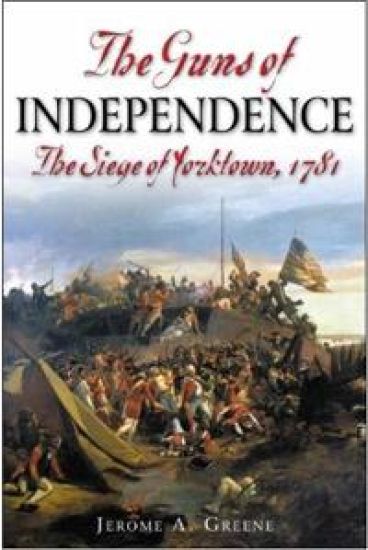
The Guns of Independence

The Guns of Independence

Jerome A. Greene

Savas Beatie
2009
nidottu
The campaign has all the drama any historian could want: the war’s top generals and admirals pitted against one another; decisive naval engagements; cavalry fighting; siege warfare; night bayonet attacks; and more. By the summer of 1781, America had been at war with England for six years. No one believed in 1775 that the colonists would put up such a long and credible struggle. France sided with the colonies in 1778, but it was the dispatch of 5,500 infantry under Rochambeau in the summer of 1780 that shifted the tide of war against the British. In early 1781, after his victories in the Southern Colonies, Lord Cornwallis marched his army north into Virginia. He believed the Americans could be decisively defeated in Virginia and the war brought to an end. George Washington believed Cornwallis’move was a strategic blunder, and he moved vigourously to exploit it. With the assistance of Rochambeau’s infantry and a key French naval victory at the Battle off the Capes in September, Washington trapped Cornwallis on the tip of a narrow Virginia peninsula at a place called Yorktown. And so it began. Operating on the ill-conceived belief that Clinton would arrive with reinforcements, Cornwallis confidently remained within Yorktown’s inadequate defenses. Determined that nothing short of outright surrender would suffice, his opponent laboured day and night to achieve that end. With an almost flawless attack, Washington sealed Cornwallis’s fate. Trapped inside crumbling defenses, he surrendered on October 19, 1781, effectively ending the war in North America. Penned by historian Jerome A. Greene, this book offers a complete and balanced examination of the siege and the participants involved.
Stricken Field

Stricken Field

Jerome A. Greene; Paul L. Hedren

University of Oklahoma Press
2008
sidottu
The Little Bighorn Battlefield National Monument is the site of one of America's most famous armed struggles, but the events surrounding Custer's defeat there in 1876 are only the beginning of the story. As park custodians, American Indians, and others have contested how the site should be preserved and interpreted for posterity, the Little Bighorn has turned into a battlefield in more ways than one. In Stricken Field, one of America's foremost military historians offers the first comprehensive history of the site and its administration in more than half a century.Jerome A. Greene has produced a compelling account of one of the West's most hallowed and controversial attractions, beginning with the battle itself and ending with the establishment of an American Indian memorial early in the twenty-first century. Chronicling successive efforts of the War Department and the National Park Service to oversee the site, Greene describes the principal issues that have confounded its managers, from battle observances and memorials to ongoing maintenance, visitor access, and public use.Stricken Field is a cautionary tale. Greene elucidates the conflict between the Park Service's dual mission to provide public access while preserving the integrity of a historical resource. He also traces the complex events surrounding the site, including Indian protests in the 1970s and 1980s that ultimately contributed to the 2003 dedication of a monument finally recognizing the Lakotas, Northern Cheyennes, and other American Indians who fought there.
Washita

Washita

Jerome A. Greene

University of Oklahoma Press
2008
nidottu
On November 27, 1868, the U.S. Seventh Cavalry under Lt. Col. George Armstrong Custer attacked a Southern Cheyenne village along the Washita River in present-day western Oklahoma. The subsequent U.S. victory signaled the end of the Cheyennes' traditional way of life and resulted in the death of Black Kettle, their most prominent peace chief.In this remarkably balanced history, Jerome A. Greene describes the causes, conduct, and consequences of the event even as he addresses the multiple controversies surrounding the conflict. As Greene explains, the engagement brought both praise and condemnation for Custer and carried long-range implications for his stunning defeat at the Battle of the Little Bighorn eight years later.
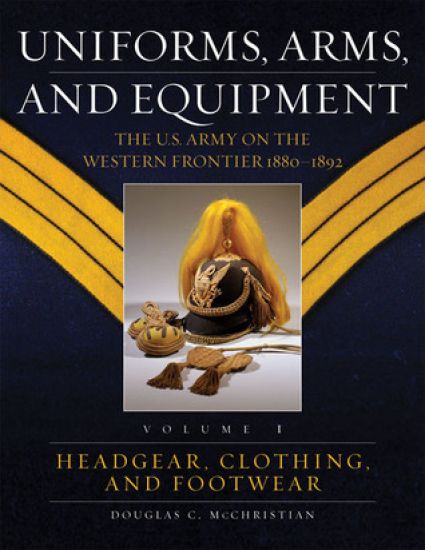
Uniforms, Arms, and Equipment

Uniforms, Arms, and Equipment

Douglas C. McChristian; Jerome A. Greene

University of Oklahoma Press
2007
sidottu
Volume 1: Headgear, Clothing, and FootwearVolume 2: Weapons and AccoutermentsThe definitive two-volume survey of military clothing and equipment during the final years of the U.S.-Indian warsBuilding on the success of his best-selling The U.S. Army in the West, 1870-1880:Uniforms, Arms, and Equipment, Douglas C. McChristian here presents a two-volume comprehensive account of the evolution of military arms and equipment during the years 1880-1892. The volumes are set against the backdrop of the final decade of the Indian campaigns - a key period of transition in United States military history.In Volume 1, McChristian shows how the Quartermaster Department modified the design and manufacturing of uniforms and other clothing to meet the developing needs of troops in the American West. In Volume 2, he focuses on weapons and other accouterments, recounting in detail the army's quest to find a repeating rifle that would serve the needs of both cavalry and infantry across the plains.Drawing on extensive research in public and private collections throughout the United States and lavishly illustrated with more than four hundred color and black-and-white illustrations, these volumes will serve as invaluable references for collectors, curators, and students of militaria and of the frontier era.
Finding Sand Creek

Finding Sand Creek

Jerome A. Greene; Douglas D. Scott; Christine Whitacre

University of Oklahoma Press
2006
nidottu
The 1864 Sand Creek Massacre is one of the most disturbing and controversial events in American history. While its historical significance is undisputed, the exact location of the massacre has been less clear. Because the site is sacred ground for Cheyenne and Arapaho Indians, the question of its location is more than academic; it is intensely personal and spiritual.In 1998 the National Park Service, under congressional direction, began a research program to verify the location of the Sand Creek site. The team consisted of tribal members, Park Service staff and volunteers, and local landowners. In Finding Sand Creek, the project's leading historian, Jerome A. Greene, and its leading archeologist, Douglas D. Scott, tell the story of how this dedicated group of people used a variety of methods to pinpoint the site. Drawing on oral histories, written records, and archeological fieldwork, Greene and Scott present a wealth of evidence to verify their conclusions.Greene and Scott's team study led to legislation in the year 2000 that established the Sand Creek Massacre National Historic Site.
Yellowstone Command

Yellowstone Command

Jerome A. Greene

University of Oklahoma Press
2006
nidottu
Shortly after Custer's defeat in the Battle of the Little Bighorn, Colonel Nelson A. Miles and his Fifth Infantry launched several significant campaigns to destroy the Lakota-Northern Cheyenne coalition in the Yellowstone River basin. Miles's expeditions involved relentless pursuit and attack throughout the winter months, culminating in the Lame Deer Fight of May 1877, the last major engagement of the Great Sioux War.Yellowstone Command is the first detailed account of the harrowing 1876-1877 campaigns. Drawing from Indian testimonies and many previously untapped sources, Jerome A. Greene reconstructs the ambitious battles of Colonel Miles and his foot soldiers. This paperback edition of Yellowstone Command features a new preface by the author.
The Guns of Independence

The Guns of Independence

Jerome A Greene

Spellmount Publishers Ltd
2005
nidottu
This book is a complete examination of the siege and the participants involved from both sides and is based upon archival research and extensive firsthand archaeological investigation of the battlefield - it will satisfy anyone interested in American Revolutionary military, history, artillery, siege tactics and brilliant leadership.
Morning Star Dawn

Morning Star Dawn

Jerome A. Greene

University of Oklahoma Press
2003
sidottu
From a recognized authority on the High Plains Indians wars comes this narrative history blending both American Indian and U.S. Army perspectives on the attack that destroyed the village of Northern Cheyenne chief Morning Star. Of momentous significance for the Cheyennes as well as the army, this November 1876 encounter, coming exactly six months to the day after the Custer debacle at the Little Bighorn, was part of the Powder River Expedition waged by Brigadier General George Crook against the Indians. Vital to the larger context of the Great Sioux War, the attack on Morning Star's village encouraged the eventual surrender of Crazy Horse and his Sioux followers.Unbiased in its delivery, Morning Star Dawn offers the most thorough modern scholarly assessment of the Powder River Expedition. It incorporates previously unsynthesized data from the National Archives, the Library of Congress, the U.S. Army Military History Institute, and other repositories, and provides an examination of all facets of the campaign leading to and following the destruction of Morning Star's village.
Three Years on the Plains

Three Years on the Plains

Edmund B. Tuttle; Jerome A. Greene

University of Oklahoma Press
2003
nidottu
History has its heroes and its villains, but most of all it has its witnesses. As post chaplain at Fort D. A. Russell in Wyoming Territory from 1867 to 1870, the Reverend Edmund B. Tuttle was an eyewitness to the evolving relationship between the U.S. Army and American Indians on the northern high plains, particularly the Lakota (Sioux), the Northern Cheyennes, and the Northern Arapahos. In 1873, he wrote about his experiences, along with events derived from other sources.Tuttle knew many of the individuals involved in the various Indian-Anglo conflicts during the 1860s. His writings and interpretations furnish important information about the military occupation of the Bozeman Trail and about the Fort Laramie ""massacre"" of 1866, when Sioux, Cheyennes, and Arapahos wiped out Captain William J. Fetterman and his command. Tuttle's book also includes more peaceful events, such as Oglala Sioux chief Red Cloud's visit to Washington and New York City and the 1868 negotiations at Fort Phil Kearney. In some cases, Tuttle presents transcriptions of American Indian testimony given at the various meetings between Indian leaders and government officials. Jerome A. Greene's foreword sets Tuttle's writings in historical context.
Lakota and Cheyenne

Lakota and Cheyenne

Jerome A. Greene

University of Oklahoma Press
2000
nidottu
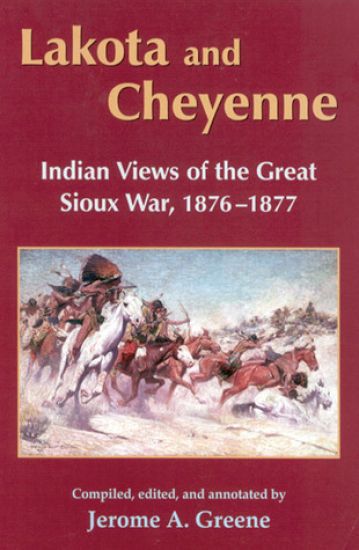
The Great Sioux War of 1876-1877 is memorable to most Americans because of Lieutenant Colonel George A. Custer's last stand at the Battle of the Little Big Horn. But to the Lakotas (Western Sioux) and Northern Cheyennes who won that battle but lost the war, the experience of those fifteen months was truly a ""last stand"" - a cultural catastrophe that led to the reservation experience they had fought so long and hard to avoid.In writings about the history and import of the Great Sioux War, the perspectives of its Native American participants often are ignored and forgotten. In this volume Jerome A. Greene corrects that oversight by presenting a comprehensive overview of America's largest Indian war from the point of view of the Lakotas and Northern Cheyennes. A counterpoint to his earlier volume, which advances the military view of the skirmishes and battles - including the Little Big Horn - this book presents the Indians' report on the actions that ended their traditional way of life for all time. The accounts, by both men and women, afford fresh insights into the war.The Indian recollections provide personal, individualistic descriptions of significant events as the people struggled to protect their homelands, families, and tribal cultures. Most Sioux and Cheyenne accounts of the engagements remained within their own societies for many years. Those that were published during or soon after the war were colored by the defeat and often by mistranslation. This book presents a first-time compilation of the best of the Indians' recollections. The editor's introduction gives readers insight into the significance of Indian testimonial sources. Separate introductions place the Indians' accounts in the context of the war and enable readers to understand interrelationships among the events and thus gain a more complete appreciation of the war and its impact upon the Lakota and Cheyenne people.
Battles and Skirmishes of the Great Sioux War, 1876-1877

Battles and Skirmishes of the Great Sioux War, 1876-1877

Jerome A. Greene

University of Oklahoma Press
1996
nidottu
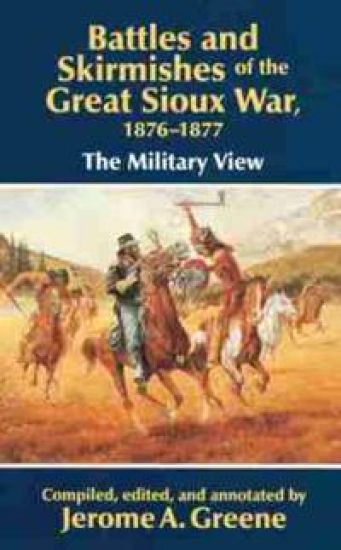
This volume offers accounts of the many battles and skirmishes in the Great Sioux War as they were observed by participating officers, enlisted men, scouts, surgeons, and newspaper correspondents. The selections-some rendered immediately after the encounters and some set down in reminiscences years later - are important and little-known sources of information about the war. By their personal nature, they give a compelling sense of immediacy to the actions.The editor's introduction and commentary on each of the accounts help readers understand the interrelationship of events and appreciate the entire spectrum of the conflict.
U.S. Army Uniforms and Equipment, 1889

U.S. Army Uniforms and Equipment, 1889

Quartermaster General of the Army; Jerome A. Greene

University of Nebraska Press
1986
pokkari
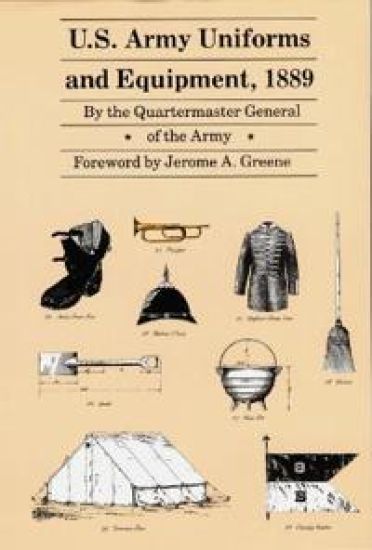
This rare book contains not only complete specifications but detailed line drawings of virtually every item of uniform and equipment issued. It is a valuable reference for articles used during the 1870s and 1880s, the period of the Indian wars.For much of the nineteenth century, the production of military clothing and equipment was geared to national emergencies. During the Mexican and Civil wars, the hardpressed Quartermaster Department was forced to rely on civilian and, later, European suppliers. A contract system too often resulted in profiteering, inferior goods, and administrative confusion. By 1887 reforms in the system were accompanied by strict specifications for matériel, which were published by the War Department in 1889 and distributed to fewer than sixty officers in the Quartermaster Department.Never before reprinted, this rare book contains not only complete specifications but detailed line drawings of virtually every item of uniform and equipment issued, from mosquito bars and tent stoves to overalls for mounted men and uniform coat buttons ("the burnishing to be done in the best manner known to the trade"). This valuable reference for articles used by the army during the period of the Indian wars will be of special interest to collectors, historians, archaeologists, curators, and antique dealers.