Kirjojen hintavertailu. Mukana 12 432 422 kirjaa ja 12 kauppaa.

Kirjailija

Jerome Murphy-O'Connor

Kirjat ja teokset yhdessä paikassa: 14 kirjaa, julkaisuja vuosilta 1991-2012, suosituimpien joukossa Paul. Vertaile teosten hintoja ja tarkista saatavuus suomalaisista kirjakaupoista.

Mukana myös kirjoitusasut: Jerome Murphy-O?Connor

14 kirjaa

Kirjojen julkaisuhaarukka 1991-2012.

Paul

Paul

Jerome Murphy-O'Connor

Oxford University Press
2005
nidottu
For someone who has exercised such a profound influence on Christian theology, Paul remains a shadowy figure behind the barrier of his complicated and difficult biblical letters. Debates about his meaning have deflected attention from his personality, yet his personality is an important key to understanding his theological ideas. This book redresses the balance. Jerome Murphy-O'Connor's disciplined imagination, nourished by a lifetime of research, shapes numerous textual, historical, and archaeological details into a colourful and enjoyable story of which Paul is the flawed but undefeated hero. This chronological narrative offers new insights into Paul's intellectual, emotional, and religious development and puts his travels, mission, and theological ideas into a plausible biographical context. As he changes from an assimilated Jewish teenager in Tarsus to a competitive Pharisee in Jerusalem and then to a driven missionary of Christ, the sometimes contradictory components of Paul's complex personality emerge from the way he interacts with people and problems. His theology was forged in dialogue and becomes more intelligible as our appreciation of his person deepens. In Jerome Murphy-O'Connor's engaging biography, the Apostle comes to life as a complex, intensely human individual.
Paul

Paul

Jerome Murphy-O'Connor

Oxford University Press
2004
sidottu
For someone who has exercised such a profound influence on Christian theology, Paul remains a shadowy figure behind the barrier of his complicated and difficult biblical letters. Debates about his meaning have deflected attention from his personality, yet his personality is an important key to understanding his theological ideas. This book redresses the balance. Jerome Murphy-O'Connor's disciplined imagination, nourished by a lifetime of research, shapes numerous textual, historical, and archaeological details into a colourful and enjoyable story of which Paul is the flawed but undefeated hero. This chronological narrative offers new insights into Paul's intellectual, emotional, and religious development and puts his travels, mission, and theological ideas into a plausible biographical context. As he changes from an assimilated Jewish teenager in Tarsus to a competitive Pharisee in Jerusalem and then to a driven missionary of Christ, the sometimes contradictory components of Paul's complex personality emerge from the way he interacts with people and problems. His theology was forged in dialogue and becomes more intelligible as our appreciation of his person deepens. In Jerome Murphy-O'Connor's engaging biography, the Apostle comes to life as a complex, intensely human individual.
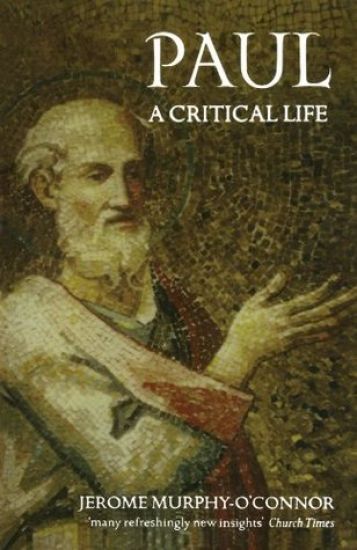
Paul: A Critical Life

Paul: A Critical Life

Jerome Murphy-O'Connor

Oxford University Press
1998
nidottu
Here Jerome Murphy-O'Connor presents a completely new, and much more vivid and dramatic account of the life of Paul than has ever previously been attempted. From his childhood in Tarsus and his years as a student in Jerusalem to the successes and failures of his ministry, this biography has no peer in terms of its detailed reconstructions of Paul's movements and motives. Traditionally, the Acts of the Apostles has provided the framework for the lives of Paul. In recent years, however, the historical value of the Acts has been called into question. Despite the accuracy of many details, they have been linked in ways which reflect the interests of Luke rather than objective reality. Critical assessment is called for if they are to be incorporated into a life of Paul. The prime source for a reconstruction of the Apostle's life must be his own writings. Recent advances in the study of the letters have brought to light new depths which enables them to be used for biographical purposes. The originality of this book lies in the combination of these two approaches, which are reinforced by close attention to the social and cultural aspects of Paul's ministry as revealed by archaeology and contemporary texts--and it transforms a fountain of theological ideas into a human being.
Keys to Galatians

Keys to Galatians

Jerome Murphy-O?Connor

Liturgical Press
2012
pokkari
Over the course of five decades of scholarly work on the New Testament, Jerome Murphy-O'Connor has never been afraid to explore and question ideas that other scholars have simply presumed. In Keys to Galatians, he offers fresh perspectives on a rather neglected New Testament letter.This book includes new thinking on the origins of the letter and new insights into its purpose. The author explains why he dates the letter much earlier than most scholars and why Paul's rhetorical technique should be considered nothing short of remarkable. He also explores illuminating hints about Paul's personality. Murphy-O'Connor recognizes in Paul a notable openness to new ideas and what he calls a daring strategy that would have been unthinkable for one less confident in his rhetorical skills.
Keys to Jerusalem

Keys to Jerusalem

Jerome Murphy-O'Connor

Oxford University Press
2012
sidottu
Jerome Murphy-O'Connor has lived in Jerusalem for 48 years, during which time he has taught graduate students its history and archaeology, and also compiled a bestselling archaeological guidebook for visitors. The current volume provides an initial survey of the history, archaeology and theology of Jerusalem, but the twelve articles that make up the body of the book deal with problems that the author feels have not been given a satisfactory solution. Thus Murphy-O'Connor discusses the precise location of a number of important buildings, i.e. the Temple, the Antonia and the Capitol and also treat of events in the life of Jesus that are located in Jerusalem; his dispute with the money-changers in the Temple, his agony in the garden of Gethsemane, his route from Pilate to Golgotha. The previously unpublished chapters dealing with the Christian Quarter are perhaps the most original. They describe the creation of the Christian Quarter in 1063 and define its limits relative to the present Old City. Its two most important buildings, the Holy Sepulchre and the great Hospital of the Knights of St John, are treated in great detail. The concluding chapter is a classified bibliography of sources for the study of Jerusalem. Thoughtfully illustrated with maps, photographs, and diagrams, this book is a mine of information for specialists working on Jerusalem, and for the interested reader with some prior knowledge of this fascinating and complex city.
Keys to Second Corinthians

Keys to Second Corinthians

Jerome Murphy-O'Connor

Oxford University Press
2010
sidottu
Jerome Murphy-O'Connor's reputation as a recognized expert on the Corinthian correspondence has been built on the original solutions he has offered to perennial problems. Brought together for the first time in one volume, each of the twelve articles anthologised here deals with a complex aspect of interpretation for 2 Corinthians. Whether addressing the interpretation of a particular passage, the question of co-authorship, or the relation of the epistle to other texts, Murphy-O'Connor presents his evidence in a characteristically clear and incisive style. A newly written 'reception history' has been appended to each article to bring the collection up to date with the latest research on the epistle. This is a companion volume to Keys to First Corinthians , also available from Oxford University Press.
Keys to First Corinthians

Keys to First Corinthians

Jerome Murphy-O'Connor

Oxford University Press
2009
sidottu
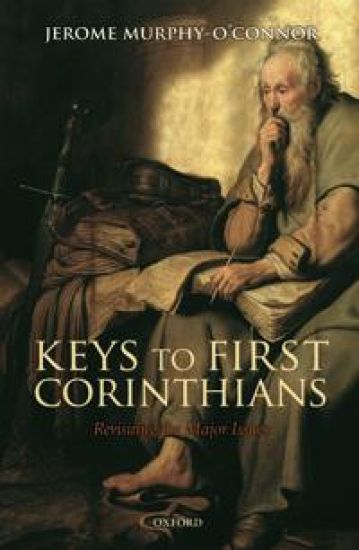
Jerome Murphy-O'Connor's reputation as a recognized expert on the Corinthian correspondence has been built on the original solutions he has offered to perennial problems. Brought together for the first time in one volume, each of the sixteen articles anthologised here deals with one or more verses in 1 Corinthians that have baffled scholars for generations. Throughout the collection the author dialogues with the opinions of colleagues, responding to and building on their accurate observations, and explaining in detail why certain solutions are viable whilst others are implausible. A newly written 'reception history' has been appended to each article to bring the collection completely up to date. Although not a commentary on 1 Corinthians, this volume deals thoroughly with all the major problems of the most interesting of the Pauline letters.
St. Paul?s Ephesus

St. Paul?s Ephesus

Jerome Murphy-O?Connor

Liturgical Press
2008
pokkari
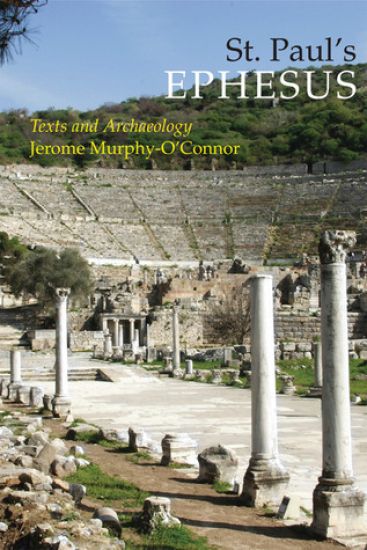
In this new volume, renowned scholar Jerome Murphy-O'Connor does for Ephesus what he did for Corinth in his award-winning St. Paul's Corinth. He combs the works of twenty-six ancient authors for information about ancient Ephesus, from its beginnings to the end of the biblical era. Readers can now picture for themselves this second of the two major centers of Paul's missionary work, with its houses, shops, and monuments, and above al the world-renowned temple of Artemis. After presenting the textual and archaeological evidence, Murphy-O'Connor leads the reader on a walk through St. Paul's Ephesus and describes the history of Paul's years in the city. Although Ephesus has been a ruin for many hundreds of years, readers of this book will find themselves transported back to the days of its flourishing.
The Holy Land

The Holy Land

Jerome Murphy-O'Connor

Oxford University Press
2008
nidottu
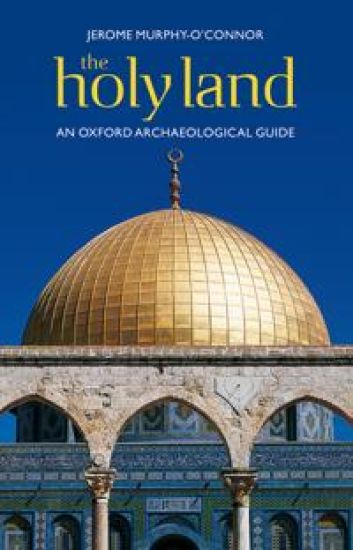
Of immense significance to Judaism, Christianity, and Islam, the Holy Land has been attracting visitors since the fifth century BC. Covering all the main sites both in the city of Jerusalem and throughout the Holy Land and including over 150 high quality site plans, maps, diagrams, and photographs, this book provides the ultimate visitor guide to the rich archaeological heritage of the region. Fully updated with all the latest information, this new edition includes updates on the crucial recent developments at the Holy Sepulchre and on six completely new sites, including a Middle Bronze Age water system in Jerusalem and what may be the original Pool of Siloam.
St. Paul?s Corinth

St. Paul?s Corinth

Jerome Murphy-O?Connor

Liturgical Press
2002
pokkari
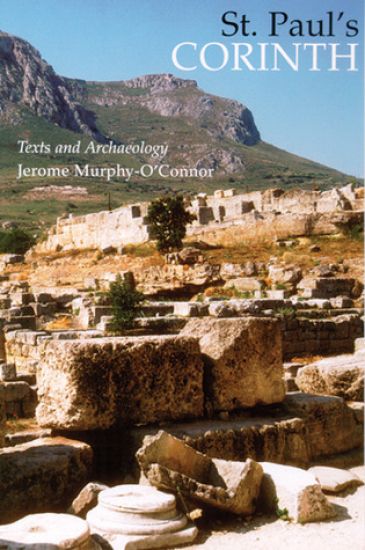
Corinth, one of the most fascinating centers of the early Christian movement, is explored through both literary and archaeological means. In St. Paul's Corinth the evidence of thirty-three Greek and Latin authors is arranged and presented chronologically from the first century B.C.E. to the second century C.E. This third revised and expanded edition includes new textual and archaeological material based on continuing research on Corinth. The text of previous editions has been thoroughly revised in the interest of greater clarity and accuracy. The edition also includes updated maps and plans of the region. St. Paul's Corinth is divided into four parts. Part 1: The Ancient Texts includes "Pausanias," "Antipater of Sidon," "Polystratus," Cicero," "Crinagoras," "Diodorus Siculus," "Strabo," "Livy," "Propertius," "Vitruvius," "Philo," "Inscription Honouring Iunia Theodora," "Petronius Arbiter," "Pliny the Elder," "Epictetus," "Flavius Josephus," "Martial," "Pseudo-Julian," "Dio Chrysostom," "Plutarch," "Juvenal," "Pliny the Younger," "Suetonius," Appian," "Florus," "Aelius Aristides," "Lucian," "Apuleius," Gellius," "Alciphron," "Dio Cassius," "Philostratus," and "Athenaeus." Part 2: Paul in Corinth includes "The Edict of Claudius," "The Proconsul Gallio," and "After the Founding Visit." Part 3: Archaeology includes "House Churches and the Eucharist," "Temple Banquets and the Body," and "The Workplace and the Apostolate." Part 4: Corinthian Bronze includes "The Passion for Possession," "The Value of Corinthian Bronze," "The Origins of Interest in Corinthian Bronze," "Corinthian Bronze in Rome," "How Was Corinthian Bronze Made?" "Recognizing an Authentic Corinthian Bronze," "Corinthian Bronze Statues and Figurines," "Utilitarian but Beautiful," "Bronze Production in Roman Corinth."
Paul the Letter-Writer

Paul the Letter-Writer

Jerome Murphy-O?Connor

Liturgical Press
1994
pokkari
Paul's letters are intensely human documents. In the examination of such basic human questions as What did he write the letters with?" "Did he use a secretary to record them?" and "What was his personal writing style?" much real information can be gathered regarding his thought without intimidating the average reader. Scholar Jerome Murphy-O'Connor has put together such a work, one that, tapping into his knowledge of classical Greek and Latin writings, addresses the physical nature of a first-century letter as well as the actual composition, presentation, and question of authorship collaborative or other of the Pauline letters. The formal features of the letters and their organization show the extent to which Paul adapted current epistolary conventions. At the same time, they draw attention to his mood while writing and his relationship with the recipients. Father Murphy-O'Connor also investigates the question of how these letters, written to widely scattered churches, were brought together to form the Pauline canon. Jerome Murphy-O'Connor, OP (1935-2013), was a professor of New Testament at the famous École Biblique in Jerusalem since 1967. A frequent lecturer in summer sessions in the United States, he had written widely on Paul's life and theology. In addition to his 1 Corinthians and Becoming Human Together: The Pastoral Anthropology of St.Paul, The Liturgical Press has published his St. Paul's Corinth: Texts and Archaeology, which does for Corinth what this book does for the Pauline letters: reveal their character.
The Theology of the Second Letter to the Corinthians

The Theology of the Second Letter to the Corinthians

Jerome Murphy-O'Connor

Cambridge University Press
1991
pokkari
The Second Letter to the Corinthians is one of Paul’s most intriguing epistles. In reality, it comprises two documents. In the first, Paul cautiously attempts to repair the damage done to his relations with the Corinthians by an earlier letter (1 Corinthians) and to deal with the upset caused by the presence in Corinth of rival missionaries from Jerusalem. In the second, he reacts angrily against an unexpected further deterioration of the situation at Corinth. The resonances in the dialogue between Paul and the parties in question cannot be detected easily without some awareness on the reader’s part of the social, religious, and economic situation of the Christian community to which Paul was writing. The aim of this book is to integrate such background information into a flowing exposition of the apostle’s thought, and thus to bring Paul’s theology to life by highlighting the complex interplay of factors which prompted him to write in the way he did. Father Murphy-O’Connor is an experienced New Testament scholar, and his lucid survey - while providing an accessible introduction to the epistle and its central concerns - brings new insights into the relation of Christ to the ministry of the church.
The Theology of the Second Letter to the Corinthians

The Theology of the Second Letter to the Corinthians

Jerome Murphy-O'Connor

Cambridge University Press
1991
sidottu
The Second Letter to the Corinthians is one of Paul's most intriguing epistles. In reality, it comprises two documents. In the first, Paul cautiously attempts to repair the damage done to his relations with the Corinthians by an earlier letter (1 Corinthians) and to deal with the upset caused by the presence in Corinth of rival missionaries from Jerusalem. In the second, he reacts angrily against an unexpected further deterioration of the situation at Corinth. The resonances in the dialogue between Paul and the parties in question cannot be detected easily without some awareness on the reader's part of the social, religious, and economic situation of the Christian community to which Paul was writing. The aim of this book is to integrate such background information into a flowing exposition of the apostle's thought, and thus to bring Paul's theology to life by highlighting the complex interplay of factors which prompted him to write in the way he did. Father Murphy-O'Connor is an experienced New Testament scholar, and his lucid survey - while providing an accessible introduction to the epistle and its central concerns - brings new insights into the relation of Christ to the ministry of the church.