Kirjojen hintavertailu. Mukana 12 595 353 kirjaa ja 12 kauppaa.
Kirjailija
Jerrold Marsden
Kirjat ja teokset yhdessä paikassa: 4 kirjaa, julkaisuja vuosilta 1985-1998, suosituimpien joukossa Calculus I. Vertaile teosten hintoja ja tarkista saatavuus suomalaisista kirjakaupoista.
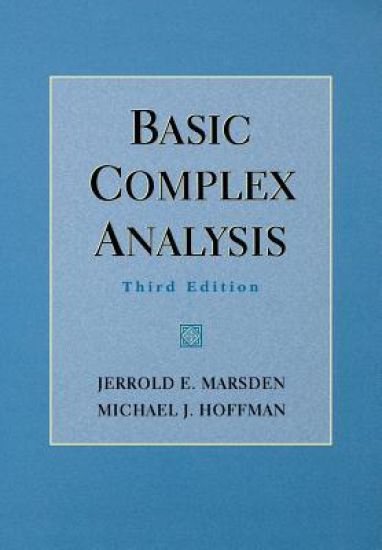
Basic Complex Analysis skillfully combines a clear exposition of core theory with a rich variety of applications. Designed for undergraduates in mathematics, the physical sciences, and engineering who have completed two years of calculus and are taking complex analysis for the first time.
The goal of this text is to help students learn to use calculus intelligently for solving a wide variety of mathematical and physical problems. This book is an outgrowth of our teaching of calculus at Berkeley, and the present edition incorporates many improvements based on our use of the first edition. We list below some of the key features of the book. Examples and Exercises The exercise sets have been carefully constructed to be of maximum use to the students. With few exceptions we adhere to the following policies . • The section exercises are graded into three consecutive groups: (a) The first exercises are routine, modelled almost exactly on the exam ples; these are intended to give students confidence. (b) Next come exercises that are still based directly on the examples and text but which may have variations of wording or which combine different ideas; these are intended to train students to think for themselves. (c) The last exercises in each set are difficult. These are marked with a star (*) and some will challenge even the best studep,ts. Difficult does not necessarily mean theoretical; often a starred problem is an interesting application that requires insight into what calculus is really about. • The exercises come in groups of two and often four similar ones.
The goal of this text is to help students leam to use calculus intelligently for solving a wide variety of mathematical and physical problems. This book is an outgrowth of our teaching of calculus at Berkeley, and the present edition incorporates many improvements based on our use of the first edition. We list below some of the key features of the book. Examples and Exercises The exercise sets have been carefully constructed to be of maximum use to the students. With few exceptions we adhere to the following policies. • The section exercises are graded into three consecutive groups: (a) The first exercises are routine, modelIed almost exactly on the exam pIes; these are intended to give students confidence. (b) Next come exercises that are still based directly on the examples and text but which may have variations of wording or which combine different ideas; these are intended to train students to think for themselves. (c) The last exercises in each set are difficult. These are marked with a star (*) and some will challenge even the best students. Difficult does not necessarily mean theoretical; often a starred problem is an interesting application that requires insight into what calculus is really about. • The exercises come in groups of two and often four similar ones.
The goal of this text is to help students learn to use calculus intelligently for solving a wide variety of mathematical and physical problems. This book is an outgrowth of our teaching of calculus at Berkeley, and the present edition incorporates many improvements based on our use of the first edition. We list below some of the key features of the book. Examples and Exercises The exercise sets have been carefully constructed to be of maximum use to the students. With few exceptions we adhere to the following policies. • The section exercises are graded into three consecutive groups: (a) The first exercises are routine, modelled almost exactly on the exam ples; these are intended to give students confidence. (b) Next come exercises that are still based directly on the examples and text but which may have variations of wording or which combine different ideas; these are intended to train students to think for themselves. (c) The last exercises in each set are difficult. These are marked with a star (*) and some will challenge even the best students. Difficult does not necessarily mean theoretical; often a starred problem is an interesting application that requires insight into what calculus is really about. • The exercises come in groups of two and often four similar ones.