Kirjojen hintavertailu. Mukana 12 595 353 kirjaa ja 12 kauppaa.
Kirjailija
Jerry A. Jacobs
Kirjat ja teokset yhdessä paikassa: 6 kirjaa, julkaisuja vuosilta 2004-2014, suosituimpien joukossa The Time Divide. Vertaile teosten hintoja ja tarkista saatavuus suomalaisista kirjakaupoista.
In a panoramic study that draws on diverse sources, Jerry A. Jacobs and Kathleen Gerson explain why and how time pressures have emerged and what we can do to alleviate them. In contrast to the conventional wisdom that all Americans are overworked, they show that time itself has become a form of social inequality that is dividing Americans in new ways—between the overworked and the underemployed, women and men, parents and non-parents. They piece together a compelling story of the increasing mismatch between our economic system and the needs of American families, sorting out important trends such as the rise of demanding jobs and the emergence of new pressures on dual earner families and single parents. Comparing American workers with their European peers, Jacobs and Gerson also find that policies that are simultaneously family-friendly and gender equitable are not fully realized in any of the countries they examine. As a consequence, they argue that the United States needs to forge a new set of solutions that offer American workers new ways to integrate work and family life.
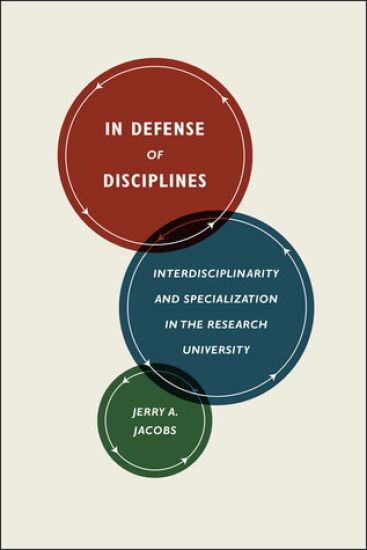
Calls for closer connections among disciplines can be heard throughout the world of scholarly research, from major universities to the National Institutes of Health. In Defense of Disciplines presents a fresh and daring analysis of the argument surrounding interdisciplinarity. Challenging the belief that blurring the boundaries between traditional academic fields promotes more integrated research and effective teaching, Jerry Jacobs contends that the promise of interdisciplinarity is illusory and that critiques of established disciplines are often overstated and misplaced. Drawing on diverse sources of data, Jacobs offers a new theory of liberal arts disciplines such as biology, economics, and history that identifies the organizational sources of their dynamism and breadth. Illustrating his thesis with a wide range of case studies, including the diffusion of ideas between fields, the creation of interdisciplinary scholarly journals, and the rise of new fields that spin off from existing ones, Jacobs upends many of the existing criticisms to mount a powerful defense of the enduring value of liberal arts disciplines. This will become one of the anchors of the case against interdisciplinarity for years to come.
Calls for closer connections among disciplines can be heard throughout the world of scholarly research, from major universities to the National Institutes of Health. In Defense of Disciplines presents a fresh and daring analysis of the argument surrounding interdisciplinarity. Challenging the belief that blurring the boundaries between traditional academic fields promotes more integrated research and effective teaching, Jerry Jacobs contends that the promise of interdisciplinarity is illusory and that critiques of established disciplines are often overstated and misplaced. Drawing on diverse sources of data, Jacobs offers a new theory of liberal arts disciplines such as biology, economics, and history that identifies the organizational sources of their dynamism and breadth. Illustrating his thesis with a wide range of case studies, including the diffusion of ideas between fields, the creation of interdisciplinary scholarly journals, and the rise of new fields that spin off from existing ones, Jacobs upends many of the existing criticisms to mount a powerful defense of the enduring value of liberal arts disciplines. This will become one of the anchors of the case against interdisciplinarity for years to come.
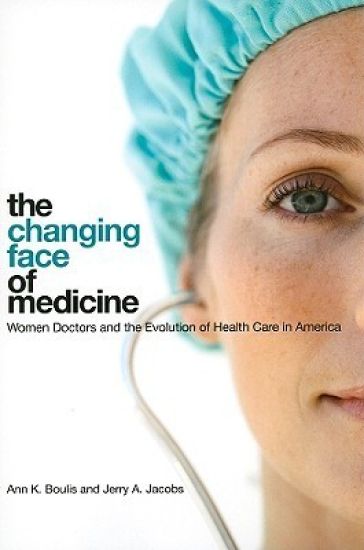
The number of women practicing medicine in the United States has grown steadily since the late 1960s, with women now roughly at parity with men among entering medical students. Why did so many women enter American medicine? How are women faring, professionally and personally, once they become physicians? Are women transforming the way medicine is practiced? To answer these questions, The Changing Face of Medicine draws on a wide array of sources, including interviews with women physicians and surveys of medical students and practitioners. The analysis is set in the twin contexts of a rapidly evolving medical system and profound shifts in gender roles in American society. Throughout the book, Ann K. Boulis and Jerry A. Jacobs critically examine common assumptions about women in medicine. For example, they find that women's entry into medicine has less to do with the decline in status of the profession and more to do with changes in women's roles in contemporary society. Women physicians' families are becoming more and more like those of other working women. Still, disparities in terms of specialty, practice ownership, academic rank, and leadership roles endure, and barriers to opportunity persist. Along the way, Boulis and Jacobs address a host of issues, among them dual-physician marriages, specialty choice, time spent with patients, altruism versus materialism, and how physicians combine work and family. Women's presence in American medicine will continue to grow beyond the 50 percent mark, but the authors question whether this change by itself will make American medicine more caring and more patient centered. The future direction of the profession will depend on whether women doctors will lead the effort to chart a new course for health care delivery in the United States.
The number of women practicing medicine in the United States has grown steadily since the late 1960s, with women now roughly at parity with men among entering medical students. Why did so many women enter American medicine? How are women faring, professionally and personally, once they become physicians? Are women transforming the way medicine is practiced? To answer these questions, The Changing Face of Medicine draws on a wide array of sources, including interviews with women physicians and surveys of medical students and practitioners. The analysis is set in the twin contexts of a rapidly evolving medical system and profound shifts in gender roles in American society. Throughout the book, Ann K. Boulis and Jerry A. Jacobs critically examine common assumptions about women in medicine. For example, they find that women's entry into medicine has less to do with the decline in status of the profession and more to do with changes in women's roles in contemporary society. Women physicians' families are becoming more and more like those of other working women. Still, disparities in terms of specialty, practice ownership, academic rank, and leadership roles endure, and barriers to opportunity persist. Along the way, Boulis and Jacobs address a host of issues, among them dual-physician marriages, specialty choice, time spent with patients, altruism versus materialism, and how physicians combine work and family. Women's presence in American medicine will continue to grow beyond the 50 percent mark, but the authors question whether this change by itself will make American medicine more caring and more patient centered. The future direction of the profession will depend on whether women doctors will lead the effort to chart a new course for health care delivery in the United States.
In the past 30 years, women have made dramatic forays into previously male-dominated professions that have been termed "fast-track jobs"; examples include law, medicine, academe, corporate management, engineering, and financial management. These careers, which typically require long hours and have little flexibility, often have significant impacts on the families of the workers. The work-family issues for parents in these fast-track jobs differ in many ways from those faced by parents employed in lower paying, less demanding jobs. Since these fast-track professions pay well, quality child care is not usually the problem. Instead, the issue is usually a shortage of time. Can women - or men - in fast-track jobs have it all? Or are they being forced into delayed parenthood - or even denied parenthood? Do fast track workers who reduce their hours to accommodate family obligations stay on track, or do they become ineligible for top level promotions? Is the "mommy track" a temporary way station or total derailment? Are organizations and professions foregoing their most talented employees due to these high time demands and scheduling inflexibility? With the increase of women in these fast-track fields, these questions affect more workers, drawing new attention. Recently, scholars from a variety of disciplines have been analyzing how organizational structures affect the career success rates of women or men in fast track jobs who devote more time to their families for a period and also the ability of successful women and men in these jobs to have families. The Alice Paul Center for Research on Women and Gender at the University of Pennsylvania hosted a conference dealing with the new research on families and fast track workers. This special volume of The Annals includes the research papers from that conference. The papers include studies of the professions of academe, law, finance, and medicine. Also included are a study of the history of how college educated women have combined work and family over the last hundred years, and analysis of the forces that have led to inefficiently long hours for fast track workers, a study of fast track women who have dropped out, and discussions of policies and gender-based expectations that could change the capacity of workers to balance work and family obligations.Delving into topics that tap into several disciplines, this compelling issue appeals to scholars, students, and practitioners in the fields of gender studies, family studies, business, and organizational studies and is a valuable resource for those striving to better understand the tremendous challenges of balancing career and family in fast track positions -- both for individuals and organizations.