Kirjojen hintavertailu. Mukana 12 501 049 kirjaa ja 12 kauppaa.

Kirjailija

Jerry Clark

Kirjat ja teokset yhdessä paikassa: 8 kirjaa, julkaisuja vuosilta 2009-2023, suosituimpien joukossa A History of Heists. Vertaile teosten hintoja ja tarkista saatavuus suomalaisista kirjakaupoista.

8 kirjaa

Kirjojen julkaisuhaarukka 2009-2023.

In Search of the Blonde Tigress

In Search of the Blonde Tigress

Silvia Pettem; Jerry Clark; Ed Palattella

ROWMAN LITTLEFIELD
2023
sidottu
Beginning in 1933, Eleanor Jarman was sensationalized by the press as the "blonde tigress" and "the most dangerous woman alive." But a closer look at her life shows that she was an otherwise-ordinary woman who got caught up in a Chicago crime spree, then was convicted as an accomplice to murder and sent to prison. In 1940, Eleanor escaped and managed to live out her life as America's longest-running female fugitive. Follow along with the factors that led up to the murder of an elderly shopkeeper, then take a front-row seat for Eleanor's arrest, trial, conviction, and sentencing. With recently unearthed primary-source documents that include police records, court transcripts and prison files, readers will then follow Eleanor through her prison years. Woven in are comparisons and contrasts between Eleanor's and her escape partner's criminal histories, as well as speculation on their lives on the lam. Whether Eleanor deserved her sentence, or if it was too harsh, is left for the reader to decide. The Legend of the Blonde Tigress also includes Eleanor's grandson's unsuccessful plea, in 1993, in which he publicly advertised for Eleanor to come forward and apply for clemency. Most revealing at the time was Eleanor's alias. With that information (and given the fact that Eleanor, born in 1901, is obviously deceased) the author documents her search for Eleanor's remains –– right up to a visit to her likely grave under the name of Marie Millman..
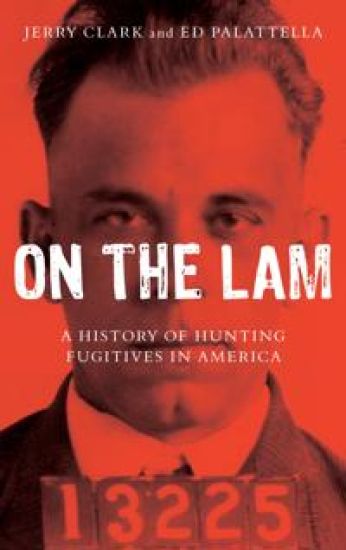
On the Lam

On the Lam

Jerry Clark; Ed Palattella

Rowman Littlefield
2019
sidottu
Fugitives occupy a unique place in the American criminal justice system. They can run and they can hide, but eventually each chase ends. And, in many cases, history is made along the way. John Dillinger’s capture obsessed J. Edgar Hoover and helped create the modern FBI. Violent student radicals who went on the lam in the 1960s reflected the turbulence of the era. The sixteen-year disappearance and sudden arrest of gangster James “Whitey” Bulger in 2011 captivated the nation. Fugitives have become iconic characters in American culture even as they have threatened public safety and the smooth operation of the justice system. They are always on the run, always trying to stay out of reach of the long arm of the law. Also prominent are the men and women who chase fugitives: FBI agents, federal marshals and their deputies, police officers, and bounty hunters. A significant element of the justice system is dedicated to finding those on the run, and the most-wanted posters and true-crime television shows have made fugitives seemingly ubiquitous figures of fear and fascination for the public. In On the Lam, Jerry Clark and Ed Palattella trace the history of fugitives in the United States by looking at the characters – real and fictional – who have played the roles of the hunter and the hunted. They also examine the origins of the bail system and other legal tools, such as most-wanted programs, that are designed to guard against flight.
America's Sherlock Holmes

America's Sherlock Holmes

William R. Hunt; Jerry Clark

The Lyons Press
2019
pokkari
William Burns is best known as ‘America’s Sherlock Holmes’ and became director at the Bureau of Investigation, to be immediately followed by J. Edgar Hoover. But before he became director, Burns had a long, highly publicized career as a government detective for the Secret Service, then as the head of the famed Burns International Detective Agency, which he founded after leaving government service. These successes encouraged Burns to start his own agency and he successfully competed with his hated rival, the Pinkerton Detective Agency. He was a public hero for many years (except among labor union men who remembered his questionable tactics in the notorious McNamara case involving the bombing of the Los Angeles Times). But to the general populace, he was a white knight protecting the public interest until he disgraced his government office.
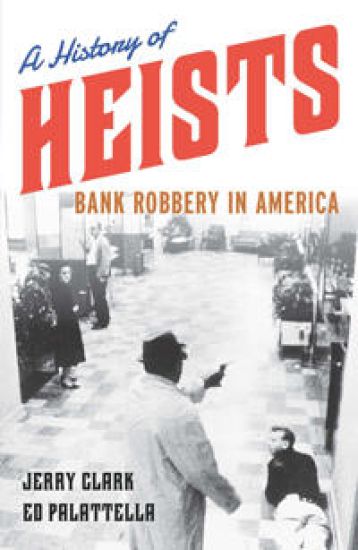
A History of Heists

A History of Heists

Jerry Clark; Ed Palattella

Rowman Littlefield
2018
nidottu
No crime is as synonymous with America as bank robbery. Though the number of bank robberies nationwide has declined, bank robbery continues to captivate the public and jeopardize the safety of banks and their employees. In A History of Heists, Jerry Clark and Ed Palattella explore how bank robbers have influenced American culture as much as they have reflected it. Jesse James, Butch Cassidy, Bonnie and Clyde, John Dillinger, Willie Sutton, and Patty Hearst are among the most famous figures in the history of crime in the United States. Jesse James used his training as a Confederate guerrilla to make bank robbery a political act. John Dillinger capitalized on the public’s scorn of banks during the Great Depression and became America’s first Public Enemy Number One. When she held up a bank with the leftist Symbionese Liberation Army, Patty Hearst fueled the country’s social unrest. Jerry Clark and Ed Palattella delve into the backgrounds and motivations of the robbers, and explore how they are as complex as the nation whose banks they have plundered. But as much as the story of bank robbery in America focuses on the thieves, it is also a story of those who investigate the heists. As bank robbers became more sophisticated, so did the police, the Federal Bureau of Investigation, and other law enforcement agencies. This captivating history showshow bank robbery shaped the modern FBI, and how it continues to cultivate America’s fascination with the noble outlaw: bandits seen, rightly or wrongly, as battling unjust authority.
Mania and Marjorie Diehl-Armstrong

Mania and Marjorie Diehl-Armstrong

Jerry Clark; Ed Palattella

Rowman Littlefield
2017
sidottu
Marjorie Diehl-Armstrong, as one judge described her, was “a coldly calculated criminal recidivist and serial killer.” She had experienced a lifetime of murder, mayhem, and mental illness. She killed two boyfriends, including one whose body was stuffed in a freezer. And she was convicted in one of the Federal Bureau of Investigation’s strangest cases: the Pizza Bomber case, in which a pizza deliveryman died when a bomb locked to his neck exploded after he robbed a bank in 2003 near Erie, Pennsylvania, Diehl-Armstrong’s hometown. Diehl-Armstrong’s life unfolded in an enthralling portrait; a fascinating interplay between mental illness and the law. As a female serial killer, Marjorie Diehl-Armstrong was in a rare category. In the early 1970s, she was a high-achieving graduate student pursuing a career in education but suffered from bipolar disorder. Before her death, she was sentenced to serve life plus thirty years in federal prison. In Mania and Marjorie Diehl-Armstrong, Jerry Clark and Ed Palattella examine female serial killers by focusing on the fascinating and tragic life of one woman. This book also explores mental illness and forensic psychology and provides a history of how American jurisprudence has grappled with such complex and controversial issues as the insanity defense and mental competency to stand trial. The authors’ account shows why Marjorie Diehl-Armstrong was unlike any other criminal – man or woman – in American history. Accounts of Diehl-Armstrong’s travails – her difficult childhood, her murder trials, her hoarding – are interpolated with chapters about mental disorders and the law.
The Road Out of Hell

The Road Out of Hell

Anthony Flacco; Jerry Clark

Diversion Books
2013
pokkari
"And you wonder: How the hell did this guy go on to be a loving father and grandfather? How did he bury all that crap? That's a story in itself." —Clint Eastwood, director of THE CHANGELINGThe film story of young Sanford Clark and his forced participation in the Wineville Murders was covered in Clint Eastwood's movie, THE CHANGELING, but for answers to the questions Eastwood posed after completing the project, turn to the true story of the Wineville murders: Anthony Flacco's THE ROAD OUT OF HELL. The hell part isn't what makes the story important; it's the road out that does.From 1926 to 1928, Gordon Stewart Northcott committed at least 20 murders on a chicken ranch outside of Los Angeles. His nephew, Sanford Clark, was held captive there from the age of 13 to 15, and was the sole surviving victim of the killing spree. Here, acclaimed crime writer Anthony Flacco—using never-before-heard information from Sanford's son, Jerry Clark—tells the real story behind the case that riveted the nation. Forced by Northcott to take part in the murders, Sanford carried tremendous guilt all his life. Yet despite his youth and the trauma, he helped gain some justice for the dead and their families by testifying at Northcott's trial—which led to his conviction and execution. It was a shocking story, but perhaps the most shocking part of all is the extraordinarily ordinary life Clark went on to live as a decorated WWII vet, a devoted husband of 55 years, a loving father, and a productive citizen.In dramatizing one of the darkest cases in American crime, Flacco constructs a riveting psychological drama about how Sanford was able to detoxify himself from the evil he'd encountered, offering the ultimately redemptive story of one man's remarkable ability to survive a nightmare and emerge intact.
Pizza Bomber: The Untold Story of America's Most Shocking Bank Robbery
The bizarre, true story of a robbery gone wrong and the explosive murder that shocked the nation--as seen on Netflix's docuseries Evil Genius. For the first time, two of the people who followed the story from the beginning--Jerry Clark, the lead FBI Special Agent who cracked what became known as the Pizza Bomber case, and investigative reporter Ed Palattella--tell the complete story of what happened on August 28, 2003. In the suburbs of Erie, Pennsylvania, a pizza delivery man named Brian Wells was accosted by several men who locked a time bomb around his neck. They then ordered him to rob a bank. After delivering the money, he would receive clues to help him disarm the bomb. It was one of the most ingenious bank robbery schemes in history, known as Collarbomb by the FBI. It did not go according to plan. Wells, picked up by police shortly after the robbery, never found the clues he needed. Investigating the crime after his grisly death, the FBI soon discovered that Wells was not, in fact, an innocent victim. He was merely the first co-conspirator to fall in a bizarre trail of death following the crime... INCLUDES PHOTOS