Kirjojen hintavertailu. Mukana 12 121 098 kirjaa ja 12 kauppaa.

Kirjailija

Jerry Keenan

Kirjat ja teokset yhdessä paikassa: 9 kirjaa, julkaisuja vuosilta 1997-2017, suosituimpien joukossa Encyclopedia of American Indian Wars. Vertaile teosten hintoja ja tarkista saatavuus suomalaisista kirjakaupoista.

9 kirjaa

Kirjojen julkaisuhaarukka 1997-2017.

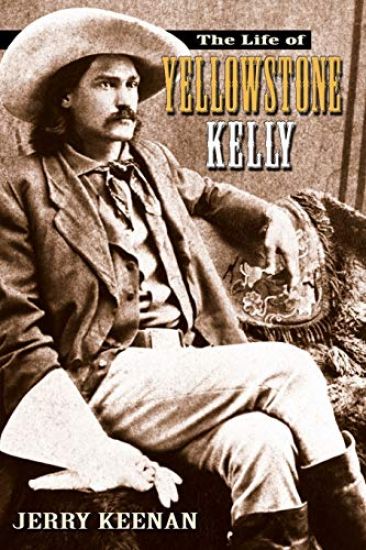
The Life of Yellowstone Kelly

The Life of Yellowstone Kelly

Jerry Keenan

University of New Mexico Press
2017
nidottu
In the first full-length biography of Luther Sage “Yellowstone” Kelly (1849–1928), Jerry Keenan provides a comprehensive look at this extraordinary man of the American West. After joining the army at the close of the Civil War and spending three years at outposts in Minnesota and Dakota, Kelly headed west to begin life as a frontiersman, explorer, and army scout and came to know the Upper Missouri and Yellowstone River valleys. In midlife, he explored Alaska, fought in the Philippines, and served as agent at the San Carlos Apache reservation in Arizona. Later, he prospected in Nevada before finally retiring to the quiet life of a California orchardist.Based on Kelly’s memoirs and personal correspondence, this book offers insight into many of the prominent figures he knew, including George Bird Grinnell, Col. Nelson A. Miles, William F. “Buffalo Bill” Cody, and President Theodore Roosevelt.
The Terrible Indian Wars of the West

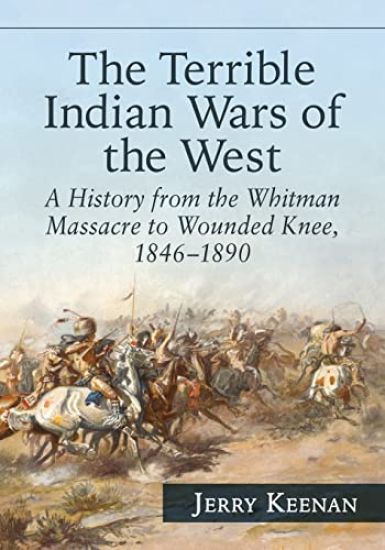
The Terrible Indian Wars of the West

Jerry Keenan

McFarland Co Inc
2016
pokkari
Expansion! The history of the United States might well be summed up in that single word. The Indian Wars of the American West were a continuation of the struggle that began with the arrival of the first Europeans, and escalated as they advanced across the Appalachians before American independence had been won. This history of the Indian Wars of the Trans-Mississippi begins with the earliest clashes between Native Americans and Anglo-European settlers. The author provides a comprehensive narrative of the conflict in eight parts, covering eight geographical regions--the Pacific Northwest; California and Nevada; New Mexico, the Central Plains, the Southern Plains; Iowa, Minnesota and the Northern Plains; the Intermountain West, and the Desert Southwest--with an epilogue on Wounded Knee.
West of Green River

West of Green River

Jerry Keenan

Owl Canyon Press
2011
pokkari
Was Benjamin L. E. Bonneville, captain of the U.S. Army, granted a two-year leave to try his hand as a fur trader in the Rocky Mountain West? Or did his superiors have ulterior motives, tasking Bonneville to spy on the British in the Pacific Northwest? The Bonneville expedition began in Missouri and made its way to the Oregon country, territory at the time shared through mutual agreement by the U.S. and Great Britain. Yet the British presence there caused grave concerns about the geographic boundaries of our nation. This fictional account of the Bonneville expedition brings to life the difficult trek facing Bonneville and his men in their encounters with Native Americans and their struggles against the harsh elements on their westward journey to Oregon.
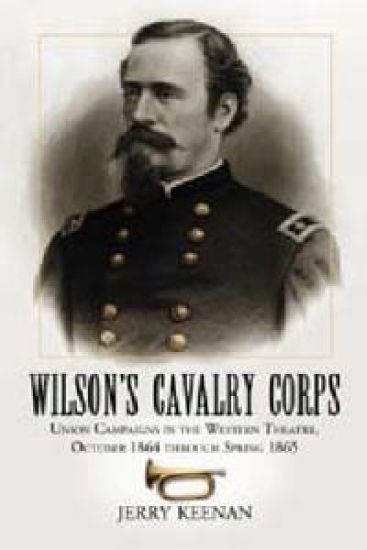
Wilson's Cavalry Corps

Wilson's Cavalry Corps

Jerry Keenan

McFarland Co Inc
2006
pokkari
The famed fighting force of Union General William T. Sherman was plagued by a lack of first-rate cavalry--mostly because of Sherman's belief, after some bad experiences, that the cavalry was largely a waste of good horses. The man Grant sent to change Sherman's mind was James Harrison Wilson, a bright, ambitious, and outspoken young officer with a penchant for organization. Wilson proved the perfect man for the job, transforming a collection of independent regiments and brigades into a fiercely effective mounted unit. Wilson's Cavalry, as it came to be known, played a major role in thwarting Confederate General Hood's 1864 invasion of Tennessee, then moved south for the celebrated capture of Selma, Montgomery, and Columbus. Despite such success, it is this book that is the first overall history of the Cavalry Corps. In addition to meticulous description of military actions, the book affords particular attention to Wilson's outstanding achievement in creating an infrastructure for his corps, even as he covered the Federal flanks in the withdrawal to Franklin and Nashville.
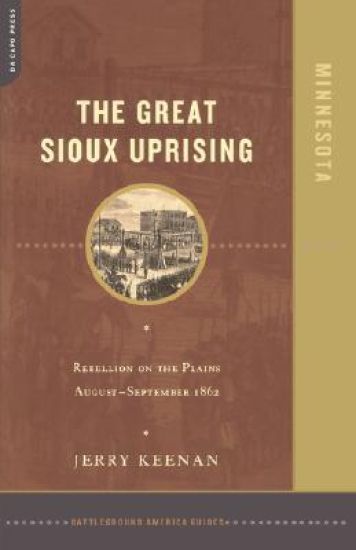
The Great Sioux Uprising

The Great Sioux Uprising

Jerry Keenan

Da Capo Press Inc
2003
nidottu
In August of 1862, the Santee (Dakota) Sioux tribe launched a spontaneous revolt against their white neighbors. Looting and killing, the Santee Sioux ravaged the unprotected countryside and small towns of southern Minnesota. When it was all over, more than five hundred people died. But the killing was not yet over: after a quick trial, thirty-eight Santee Sioux were later hanged to death in the largest mass execution in U.S. history.
Encyclopedia of the Spanish-American and Philippine-American Wars
An A–Z encyclopedia covering the principal battles and campaigns, key military and political figures, and the political maneuvering during the Spanish-American and Philippine-American Wars.America's adventure into colonialism began with the destruction of the U.S. battleship Maine in 1898, presumably by a Spanish mine. The four month war against Spain that followed—the shortest declared war in U.S. history—resulted in the U.S. acquisition of the Philippines, Puerto Rico, and Guam. The young giant of the Western Hemisphere was transformed into a colonial power, and the balance of power in the world was changed forever.In this chronicle of an era that has escaped the attention it deserves, military historian Jerry Keenan explores America's war with Spain and the violence that followed. He shows how the United States muddled the administration of the sprawling Philippine archipelago, guided by a policy that President McKinley called "benevolent assimilation." Within a year, the United States was fighting a war against Philippine nationalists—a three year conflict that would give American soldiers their first bitter taste of counterinsurgency warfare in an Asian jungle.Analyzes all of the campaigns and principal battles of the Spanish-American and Philippine-American wars, along with their political and historical contextProfiles key military and political figures in the United States, Cuba, Spain, and the PhilippinesCharts the chronological development of the confrontations from 1868 to 1903Generously illustrates the discussion with maps, tactical diagrams, and archival photos
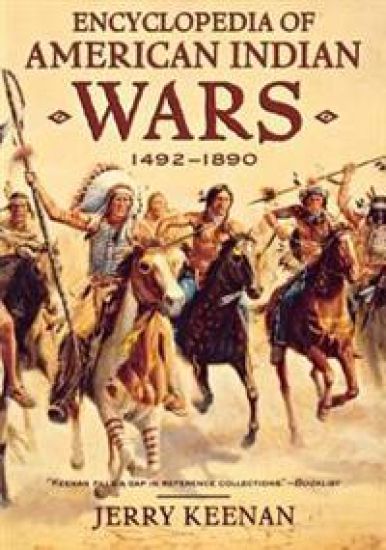
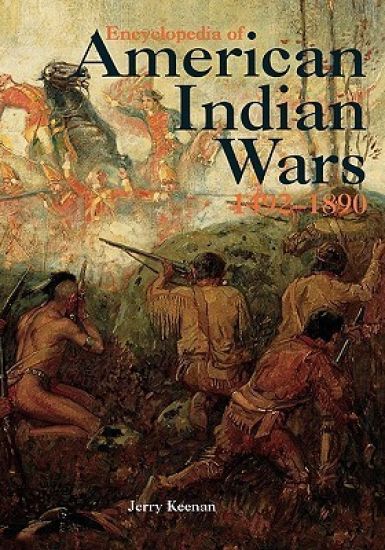
Encyclopedia of American Indian Wars

Encyclopedia of American Indian Wars

Jerry Keenan

W. W. Norton Company
1999
pokkari
While people automatically think of the Revolutionary War or the Civil War as defining moments in American history, the wars with the Indians were strikingly important in shaping the destiny and mythology of the nation. Encyclopedia of American Indian Wars notes the inevitability of conflict between western and native cultures given the great disparity in values and customs, especially with regard to land ownership. It also analyzes the many indirect changes in Indian lifestyles caused by the settlers -- such as the introduction of iron implements and firearms -- which changed the balance of power between traditional enemies. In a wide-ranging panorama of 450 entries and 70 illustrations, this comprehensive volume provides an in-depth analysis of pivotal battles, famous and infamous leaders, and broken treaties. It explores lesser known subjects, such as dog soldiers, ghost dancing, scalping and scalp bounties, staked plains, praying towns, the Galvanized Confederates, and stories of white captives, some of whom preferred life with Indian captors over rescue. Encyclopedia of American Indian Wars paints a complete, objective, and detailed picture of the bloody conflicts that gave birth to the nation -- and their terrible cost. Keenan fills a gap in reference collections. Information on many of the entries can be found in other sources . . . but the Encyclopedia of American Indian Wars pulls them together. Recommended. -- Booklist Clear, concise entries. . . . Fills a niche, bringing together and giving order to a great deal of information about a complex series of interwoven incidents. -- Choice
Encyclopedia of American Indian Wars
An insightful and valuable resource on the major conflicts between American Indian tribes and Euro-American settlers from the arrival of Columbus to the Battle of Wounded Knee. Historians, writers, and students will welcome this extensively illustrated and well-organized volume. An important historical resource, Encyclopedia of American Indian Wars covers the major clashes between American Indian tribes and Euro-American settlers from the arrival of Columbus to the Battle of Wounded Knee, centered mainly within the geographical area that now comprises the contiguous United States. It provides essential information on major battles and military campaigns, treaties, significant sites, American Indian tribes, and notable military and political leaders, both Indian and white, presented in a handy, encyclopedic style.