Kirjojen hintavertailu. Mukana 12 390 323 kirjaa ja 12 kauppaa.

Kirjailija

Jerry Wellington

Kirjat ja teokset yhdessä paikassa: 29 kirjaa, julkaisuja vuosilta 1994-2020, suosituimpien joukossa Succeeding with Your Doctorate. Vertaile teosten hintoja ja tarkista saatavuus suomalaisista kirjakaupoista.

29 kirjaa

Kirjojen julkaisuhaarukka 1994-2020.

Research Methods

Research Methods

Michael Hammond; Jerry Wellington

Routledge
2020
nidottu
This book provides an overview of ninety key concepts which often trouble those who are new to researching within the social sciences. It covers theories of knowledge, methodologies and methods. Each entry offers a definition of a concept, shows how researchers have used that concept in their research and discusses difficulties that the concept presents. The book supports those undertaking their own social research projects by providing detailed critical commentary on key concepts in a particularly accessible way.In exploring these concepts, a wide range of research reports across many different fields are described. These include not only classic accounts, but also a broad selection of recent studies, some written by new researchers. The book will be useful for higher-education students carrying out projects within social science faculties at the end of their first degree or during a master's programme, though it will also be helpful for those undertaking doctoral research, and some entries have been written with the production of a thesis in mind. This second edition of Research Methods: The Key Concepts provides a more comprehensive and up-to-date coverage, as old entries have been updated and 19 new entries added. It helps new researchers to navigate the changing landscape of social research by recognising a) the changes in the ways researchers are thinking about knowledge and acquiring knowledge, b) the increasing use of digital tools to collect data, and c) the desire many contemporary researchers feel to promote social justice through their research.

Research Methods

Research Methods

Michael Hammond; Jerry Wellington

Routledge
2020
sidottu
This book provides an overview of ninety key concepts which often trouble those who are new to researching within the social sciences. It covers theories of knowledge, methodologies and methods. Each entry offers a definition of a concept, shows how researchers have used that concept in their research and discusses difficulties that the concept presents. The book supports those undertaking their own social research projects by providing detailed critical commentary on key concepts in a particularly accessible way.In exploring these concepts, a wide range of research reports across many different fields are described. These include not only classic accounts, but also a broad selection of recent studies, some written by new researchers. The book will be useful for higher-education students carrying out projects within social science faculties at the end of their first degree or during a master's programme, though it will also be helpful for those undertaking doctoral research, and some entries have been written with the production of a thesis in mind. This second edition of Research Methods: The Key Concepts provides a more comprehensive and up-to-date coverage, as old entries have been updated and 19 new entries added. It helps new researchers to navigate the changing landscape of social research by recognising a) the changes in the ways researchers are thinking about knowledge and acquiring knowledge, b) the increasing use of digital tools to collect data, and c) the desire many contemporary researchers feel to promote social justice through their research.
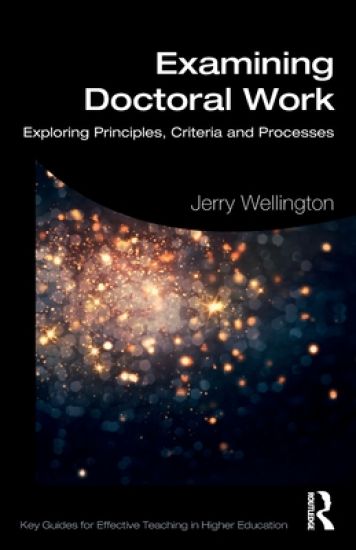
Examining Doctoral Work

Examining Doctoral Work

Jerry Wellington

Routledge
2020
sidottu
Written in clear, straight-forward language, Examining Doctoral Work considers how the practice of doctoral examination can be improved to ensure that both examiners and students can make the most of the assessment process. This book analyses both good and bad practice to promote fair, thorough and productive examination. With insight into how to prepare for a viva, as well as a consideration of the responsibilities afterwards, the book de-mystifies this crucial part of the doctoral examination process to provide a comprehensive overview of the principles, criteria and processes needed to ensure success. Key points covered include: The different forms doctoral submission can take How examiners are chosen Where to begin when reading a thesis Managing your time as an examiner What makes a ‘good’ doctoral thesis? How to prepare for the viva How to develop a preliminary report The role of the supervisor before, during and after the viva Examiners’ roles and responsibilities Working through agreements and disagreements Feeding back both orally and in writing.Drawing from a mixture of personal experience, existing research and anecdote, this book is ideal reading for anyone new to the world of doctoral examination, or equally those looking to improve their practice.
Examining Doctoral Work

Examining Doctoral Work

Jerry Wellington

Routledge
2020
nidottu
Written in clear, straight-forward language, Examining Doctoral Work considers how the practice of doctoral examination can be improved to ensure that both examiners and students can make the most of the assessment process. This book analyses both good and bad practice to promote fair, thorough and productive examination. With insight into how to prepare for a viva, as well as a consideration of the responsibilities afterwards, the book de-mystifies this crucial part of the doctoral examination process to provide a comprehensive overview of the principles, criteria and processes needed to ensure success. Key points covered include: The different forms doctoral submission can take How examiners are chosen Where to begin when reading a thesis Managing your time as an examiner What makes a ‘good’ doctoral thesis? How to prepare for the viva How to develop a preliminary report The role of the supervisor before, during and after the viva Examiners’ roles and responsibilities Working through agreements and disagreements Feeding back both orally and in writing.Drawing from a mixture of personal experience, existing research and anecdote, this book is ideal reading for anyone new to the world of doctoral examination, or equally those looking to improve their practice.
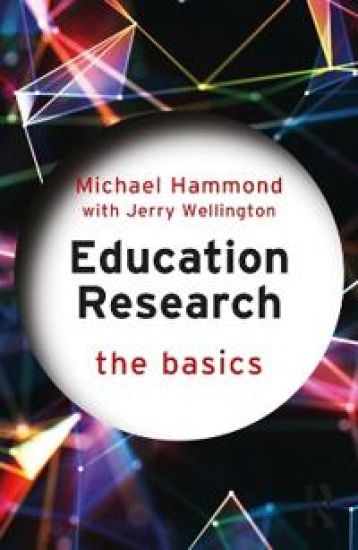
Education Research: The Basics

Education Research: The Basics

Michael Hammond; Jerry Wellington

Routledge
2019
nidottu
Concise, engaging and accessible, Education Research: The Basics discusses key ideas about the nature and purpose of education research: what it can and cannot achieve, how it has been used in the past and where and how it has an impact. Providing crucial insight into the work of education researchers, this book: Offers seven chapters, each representing a way of understanding the goals and methods of research conducted in the field Considers key thinkers in the field, such as Plato, Hirsch, Dewey, Montessori and Freire Explores case studies from a range of perspectives Provides key terms and further reading throughoutThe perfect pocket resource to dip into, Education Research: The Basics provides accessible support for those studying education as a subject, for practitioners concerned with developing their practice and for anyone who wants to know more about education and how it is researched.
Education Research: The Basics

Education Research: The Basics

Michael Hammond; Jerry Wellington

Routledge
2019
sidottu
Concise, engaging and accessible, Education Research: The Basics discusses key ideas about the nature and purpose of education research: what it can and cannot achieve, how it has been used in the past and where and how it has an impact. Providing crucial insight into the work of education researchers, this book: Offers seven chapters, each representing a way of understanding the goals and methods of research conducted in the field Considers key thinkers in the field, such as Plato, Hirsch, Dewey, Montessori and Freire Explores case studies from a range of perspectives Provides key terms and further reading throughoutThe perfect pocket resource to dip into, Education Research: The Basics provides accessible support for those studying education as a subject, for practitioners concerned with developing their practice and for anyone who wants to know more about education and how it is researched.
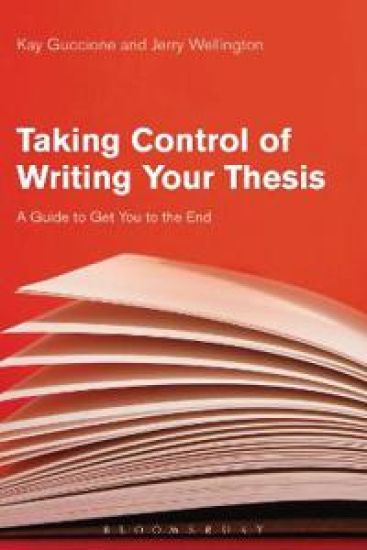
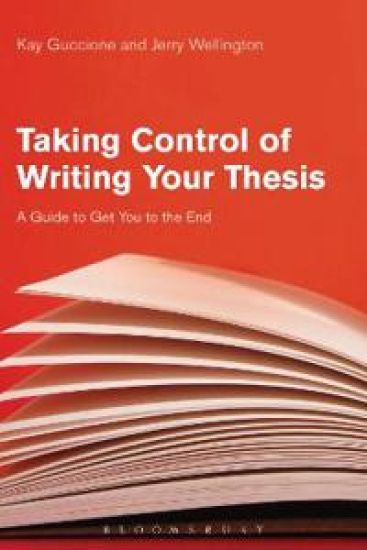
Taking Control of Writing Your Thesis

Taking Control of Writing Your Thesis

Kay Guccione; Jerry Wellington

Bloomsbury Academic
2017
nidottu
Taking Control of Writing Your Thesis offers a clear account of the how, what, why and who of working together to produce, finish and submit a successful thesis. Guccione is a Thesis Coach and Thesis Mentoring Programme Designer and is currently researching the barriers to thesis completion; Wellington has supervised and examined numerous dissertations at MA and doctoral level. They draw on these experiences throughout. They show that planning, writing, and support for thesis writers is a collaborative venture but also one which students can take ownership of and manage. They show that there are ways for students to become more connected to what and who they need, and explore the collegial and peer-support structures that are there to be utilised. They situate the student within an educational context viewing them not as the lone researcher able or not able, skilled or unskilled, but as the navigator of the writing process. The authors draw on their experience to provide ways of thinking, and tools for empowering students to feel more in control of the practices of writing about research. The book explores every aspect of the research journey, including the emotional side of writing, the ground rules of supervision and the use of coaching and mentoring support systems. The inclusion of student voice brings the student perspective to life, making the content especially accessible.
Taking Control of Writing Your Thesis

Taking Control of Writing Your Thesis

Kay Guccione; Jerry Wellington

Bloomsbury Academic
2017
sidottu
Taking Control of Writing Your Thesis offers a clear account of the how, what, why and who of working together so that you can produce, finish and submit a successful thesis. Guccione is a Thesis Coach and Thesis Mentoring Programme Designer and is currently researching the barriers to thesis completion; Wellington has supervised and examined numerous dissertations at MA and doctoral level. They draw on these experiences throughout in providing you with expert guidance for your thesis, informed by real student testimonies and with ‘Points to Ponder’ and a wealth of online resources to support you along the way.Guccione and Wellington show that planning, writing and support for thesis writers is a collaborative venture but also one which you can take ownership of and manage. They show that there are ways to become more connected to what and who you need, and explore the collegial and peer-support structures that are there to be utilised. They situate the student within an educational context viewing them not as the lone researcher able or not able, skilled or unskilled, but as the navigator of the writing process. The authors draw on their experience to provide ways of thinking, and tools for empowering students to feel more in control of the practices of writing about research.
Science Learning, Science Teaching

Science Learning, Science Teaching

Jerry Wellington; Gren Ireson

Routledge
2017
nidottu
Now fully updated in its fourth edition, Science Learning, Science Teaching offers an accessible, practical guide to creative classroom teaching and a comprehensive introduction to contemporary issues in science education. Aiming to encourage and assist professionals with the process of reflection in the science classroom, the new edition re-examines the latest advances in the field and changes to the curriculum, and explores the use of mobile technology and coding, and its impact on ICT in science education.With extra tasks integrated throughout the book and a brand new chapter, ‘Working scientifically’, to help develop learners’ investigative skills, key topics include:• The art and craft of science teaching.• The science curriculum and science in the curriculum.• Planning and managing learning.• Inclusive science education.• Laboratory safety in science learning and teaching.• Language and numeracy in science teaching and learning.• Computers and computing in science education.• Citizenship and sustainability in science education.Including points for reflection and useful information about further reading and recommended websites, Science Learning, Science Teaching is an essential source of support, guidance and inspiration for all students, teachers, mentors and those involved in science education wishing to reflect upon, improve and enrich their practice.
Science Learning, Science Teaching

Science Learning, Science Teaching

Jerry Wellington; Gren Ireson

Routledge
2017
sidottu
Now fully updated in its fourth edition, Science Learning, Science Teaching offers an accessible, practical guide to creative classroom teaching and a comprehensive introduction to contemporary issues in science education. Aiming to encourage and assist professionals with the process of reflection in the science classroom, the new edition re-examines the latest advances in the field and changes to the curriculum, and explores the use of mobile technology and coding, and its impact on ICT in science education.With extra tasks integrated throughout the book and a brand new chapter, ‘Working scientifically’, to help develop learners’ investigative skills, key topics include:• The art and craft of science teaching.• The science curriculum and science in the curriculum.• Planning and managing learning.• Inclusive science education.• Laboratory safety in science learning and teaching.• Language and numeracy in science teaching and learning.• Computers and computing in science education.• Citizenship and sustainability in science education.Including points for reflection and useful information about further reading and recommended websites, Science Learning, Science Teaching is an essential source of support, guidance and inspiration for all students, teachers, mentors and those involved in science education wishing to reflect upon, improve and enrich their practice.
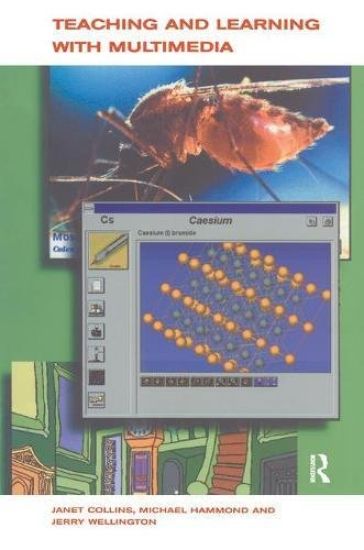
Teaching and Learning with Multimedia

Teaching and Learning with Multimedia

Janet Collins; Michael Hammond; Jerry Wellington

Routledge
2017
sidottu
This book is an introduction to the issues and practicalities of using multimedia in classrooms - both primary and secondary, and across a range of subject areas. The book draws on material from a range of case studies and focuses on areas of concern for teachers and researchers. Using IT effectively continues to be a problem for many teachers, and there is still a long way to go toward organising this properly. The book takes a thorough look at IT in the school, discussing and examining issues such as: IT and the National Curriculum foreign language teaching differing curricular needs opportunities and constraints of groupwork talking books and primary reading ways in which multimedia supports readers. The book also looks at some of the more philosophical issues such as the implications of home-computers and the limits of independent learning, and the notion of "edutainment" - the relationship of motivation and enjoyment to learning. Finally, the book makes comparisons across the curriculum and between primary and secondary sectors and raises questions about the future of IT in schools, arguing that teachers should make a significant contribution to decisions about future development.
Getting Published

Getting Published

Jerry Wellington

Routledge
2016
sidottu
This handy guide for new and practising lecturers and researchers takes a rare insider's look at the activities of writing and publishing. Turning the spotlight inwards, it examines how and why professionals communicate with each other through writing and publishing. Written with great verve and pace, the author succeeds in providing sensible advice bolstered by many illustrative examples, case studies and anecdotes. For the academic needing insight into the serious business of getting published, this book will provide answers to many of their frequent questions: * Why do they write and publish? * Who are they writing for? * What channels of communication are available for their writing? * Who 'controls' these channels? * How can they successfully submit articles and papers to journals and newspapers, contribute chapters to books, or approach publishers with book proposals? Developed from a series of seminars on the subject by the author, this book will be an enjoyable and informative guide to anyone with an interest in getting their work published.
Educational Research

Educational Research

Jerry Wellington

Bloomsbury Academic
2015
sidottu
What is educational research? What are its current approaches, methods and methodologies? How should existing literature be reviewed and evaluated critically? What are the key philosophical debates in and on educational research? How should research in education be conducted and how should it be presented? And what is the value of such research?With this extensively revised edition of a much-admired and engaging guide, Jerry Wellington provides clear and constructive answers to these questions, complete with detailed advice on methods such as interviewing, surveys, documentary research and the use of focus groups. Thoroughly overhauled and updated, this edition includes new case studies, helpful ‘theory summary’ boxes, and a range of activities or ‘points to ponder’ to foster engagement with current issues. Retaining the clarity and concision of the previous edition, and its approachable and practical style, Jerry Wellington provides an invaluable text for all those engaged in educational research.
Educational Research

Educational Research

Jerry Wellington

Bloomsbury Academic
2015
nidottu
What is educational research? What are its current approaches, methods and methodologies? How should existing literature be reviewed and evaluated critically? What are the key philosophical debates in and on educational research? How should research in education be conducted and how should it be presented? And what is the value of such research?With this extensively revised edition of a much-admired and engaging guide, Jerry Wellington provides clear and constructive answers to these questions, complete with detailed advice on methods such as interviewing, surveys, documentary research and the use of focus groups. Thoroughly overhauled and updated, this edition includes new case studies, helpful ‘theory summary’ boxes, and a range of activities or ‘points to ponder’ to foster engagement with current issues. Retaining the clarity and concision of the previous edition, and its approachable and practical style, Jerry Wellington provides an invaluable text for all those engaged in educational research.
Becoming a Successful Early Career Researcher

Becoming a Successful Early Career Researcher

Adrian Eley; Jerry Wellington; Stephanie Pitts; Catherine Biggs

Routledge
2012
nidottu
Not that long ago there were fairly clear divisions between researchers at different stages throughout their career, starting with doctoral students then progressing to postdoctoral workers and finishing with academic staff. However, more recently the term Early Career Researcher (ECR) has been introduced partly as a response to their growing importance which has been reflected by their increased respect and status shown by national, international and funding bodies. There are several common features of an ECR’s job including the need to establish a professional identity and develop into an independent researcher, competing for grants and increasing one’s output of research publications; this book offers proven practical advice to help ECRs kick-start a successful academic career.With advice on:Choosing research topicsMaking best use of a Research Supervisor/MentorDeveloping your research writingGetting published: journals and booksWriting a research grant/fellowshipBecoming a supervisorBecoming a teacher, andDeveloping your career This guide will help academics at the start of their career no matter what discipline they are engaged in… Arts, Humanities, Sciences or Social Sciences. For example, in sciences and engineering, ECRs are commonly part of a large research team and often have to work in collaborative groups; requiring strong interpersonal skills but can lead to tension in the interaction with one’s supervisor or mentor. In contrast, in the arts and humanities and perhaps the social sciences, an ECR is more likely to be an independent scholar with a requirement to work alone, leading to a different type of relationship (but not necessarily any less stressful) with one’s supervisor or mentor.Using case studies from across the subject areas to illustrate key points and give suitable examples this vital guide will help all early career academics.
Becoming a Successful Early Career Researcher

Becoming a Successful Early Career Researcher

Adrian Eley; Jerry Wellington; Stephanie Pitts; Catherine Biggs

Routledge
2012
sidottu
Not that long ago there were fairly clear divisions between researchers at different stages throughout their career, starting with doctoral students then progressing to postdoctoral workers and finishing with academic staff. However, more recently the term Early Career Researcher (ECR) has been introduced partly as a response to their growing importance which has been reflected by their increased respect and status shown by national, international and funding bodies. There are several common features of an ECR’s job including the need to establish a professional identity and develop into an independent researcher, competing for grants and increasing one’s output of research publications; this book offers proven practical advice to help ECRs kick-start a successful academic career.With advice on:Choosing research topicsMaking best use of a Research Supervisor/MentorDeveloping your research writingGetting published: journals and booksWriting a research grant/fellowshipBecoming a supervisorBecoming a teacher, andDeveloping your career This guide will help academics at the start of their career no matter what discipline they are engaged in… Arts, Humanities, Sciences or Social Sciences. For example, in sciences and engineering, ECRs are commonly part of a large research team and often have to work in collaborative groups; requiring strong interpersonal skills but can lead to tension in the interaction with one’s supervisor or mentor. In contrast, in the arts and humanities and perhaps the social sciences, an ECR is more likely to be an independent scholar with a requirement to work alone, leading to a different type of relationship (but not necessarily any less stressful) with one’s supervisor or mentor.Using case studies from across the subject areas to illustrate key points and give suitable examples this vital guide will help all early career academics.
Making Supervision Work for You

Making Supervision Work for You

Jerry Wellington

SAGE Publications Ltd
2010
sidottu
'Amongst the plethora of advice and guidance books and articles now available for postgraduate researchers, I would advise my students to select this one as providing insight not simply on what to do but also on why and how in relation to developing an effective working relationship with their supervisors. Since it addresses most of the new demands emerging in the doctoral world as well as those standard ones that have impacted previously, I would also recommend it to new or less experienced supervisors' - Professor Pam Denicolo, University of Reading Making Supervision Work For You discusses the entire supervision process from the student's perspective, as well as considering the supervisor's viewpoint and constraints. The author covers all phases of the student's 'journey', from induction through to final completion and examination of the thesis and the viva voce. The book illustrates many of the key issues in supervision by drawing upon extensive material from recent interviews with a range of supervisors and students. This book presents new ideas, regulations and codes of practice, and offers practical suggestions for students. It emphasizes students' experiences and needs, whilst also maintaining a focus on the supervisor's perspective and the demands of assessment at post-graduate level. The book is primarily aimed at Post-graduate students but will also be useful for undergraduates in their final year and equally for new or experienced supervisors. SAGE Study Skills are essential study guides for students of all levels. From how to write great essays and succeeding at university, to writing your undergraduate dissertation and doing postgraduate research, SAGE Study Skills help you get the best from your time at university. Visit the SAGE Study Skills hub for tips, quizzes and videos on study success!
Making Supervision Work for You

Making Supervision Work for You

Jerry Wellington

SAGE Publications Ltd
2010
nidottu
'Amongst the plethora of advice and guidance books and articles now available for postgraduate researchers, I would advise my students to select this one as providing insight not simply on what to do but also on why and how in relation to developing an effective working relationship with their supervisors. Since it addresses most of the new demands emerging in the doctoral world as well as those standard ones that have impacted previously, I would also recommend it to new or less experienced supervisors' - Professor Pam Denicolo, University of Reading Making Supervision Work For You discusses the entire supervision process from the student's perspective, as well as considering the supervisor's viewpoint and constraints. The author covers all phases of the student's 'journey', from induction through to final completion and examination of the thesis and the viva voce. The book illustrates many of the key issues in supervision by drawing upon extensive material from recent interviews with a range of supervisors and students. This book presents new ideas, regulations and codes of practice, and offers practical suggestions for students. It emphasizes students' experiences and needs, whilst also maintaining a focus on the supervisor's perspective and the demands of assessment at post-graduate level. The book is primarily aimed at Post-graduate students but will also be useful for undergraduates in their final year and equally for new or experienced supervisors. SAGE Study Skills are essential study guides for students of all levels. From how to write great essays and succeeding at university, to writing your undergraduate dissertation and doing postgraduate research, SAGE Study Skills help you get the best from your time at university. Visit the SAGE Study Skills hub for tips, quizzes and videos on study success!
Research Methods for the Social Sciences

Research Methods for the Social Sciences

Jerry Wellington; Marcin Szczerbinski

Continuum International Publishing Group Ltd.
2007
nidottu
The aim of this book is to provide an introductory but not simplistic guide to research in the social and behavioural sciences. The book sets out to tackle difficult issues and concepts in a scholarly but accessible manner, providing ample guidance and signposts to further reading. We explore a wide range of questions about research and research methods, including: * What counts as good research? * Research approaches, paradigms, methods and methodology: what are they and what is the difference? * What is the so-called qualitative/ quantitative? * When and where is quantitative research indispensable? * If one suggests that research should be scientific what does that mean? * What methods and methodologies are used in social research? * What is the role of statistics in social and behavioural research? How should statistical evidence be interpreted? * What are the ways in which research can, and should, be disseminated and presented? This book is aimed as much at the reflective, researching professional as for the professional researcher.