Kirjojen hintavertailu. Mukana 12 390 323 kirjaa ja 12 kauppaa.

Kirjailija

Jesper Majbom Madsen

Kirjat ja teokset yhdessä paikassa: 6 kirjaa, julkaisuja vuosilta 2009-2024, suosituimpien joukossa Cassius Dio. Vertaile teosten hintoja ja tarkista saatavuus suomalaisista kirjakaupoista.

6 kirjaa

Kirjojen julkaisuhaarukka 2009-2024.

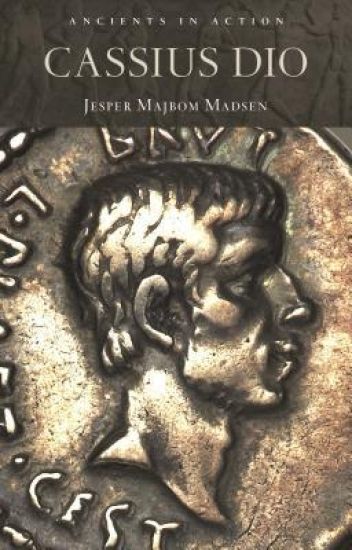
Cassius Dio

Cassius Dio

Jesper Majbom Madsen

Bloomsbury Academic
2019
sidottu
This volume offers an introduction to the life and work of the 3rd-century-AD Greco-Roman senator and historian Cassius Dio, whose work, although imperfectly preserved in 80 books, is of fundamental importance to our understanding of Roman history. It is said that Dio is not one of the best ancient historians and his Roman history, due to its sheer size, is often imprecise and superficial in its analysis. It has also been assumed that there was no political agenda behind the work, and that Dio’s principal value to us is as a reliable copyist, who mediated the works of other, and better sources. This introduction to his life and work offers a different picture. Here, Dio is presented through his Greek cultural lens as a politician with a clear vision for how Roman politics and government should be organized. Carefully selected examples will be the starting points for fresh critical analysis of Dio’s work and its legacy, both in antiquity and through to the Enlightenment. The book assumes no familiarity with Cassius Dio, his writing or context. All text will be translated and suggested further reading will point readers towards avenues for more detailed study.
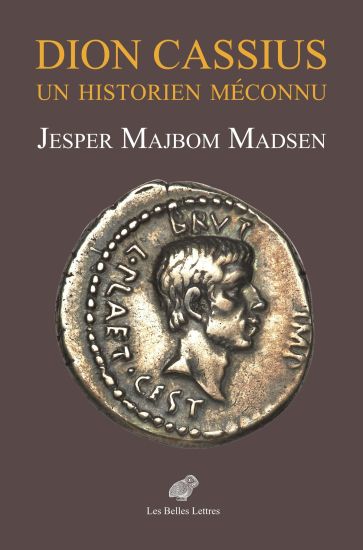
Dion Cassius: Un Historien Meconnu

Dion Cassius: Un Historien Meconnu

Jesper Majbom Madsen

Les Belles Lettres
2024
nidottu
Redige par l'un des meilleurs specialistes actuels, cet ouvrage au style alerte presente la vie d'un historien majeur de la Rome antique et l'originalite de son oeuvre. Dion Cassius, un aristocrate originaire d'Asie mineure devint a Rome haut fonctionnaire et conseiller d'un des empereurs de la dynastie des Severes, au debut du IIIe siecle ap. J.-C., puis rentra dans sa patrie pour y rediger, en grec, une monumentale histoire de Rome, des origines a son propre temps. Des quatre-vingts livres qui la composaient, seule une partie est conservee integralement, mais les fragments qui nous sont parvenus suffisent pour evaluer l'ampleur et l'interet de son projet. Car ce n'est pas seulement un deroule de l'histoire de Rome qu'il propose, mais une analyse ambitieuse des grandes phases de son histoire, envisagee sous l'angle des institutions, en decrivant ses regimes politiques successifs et le comportement de ses dirigeants. Son Histoire romaine est un ouvrage sous-tendu de bout en bout par un fil conducteur explicite: l'idee que seule une monarchie, exercee avec moderation, est a meme de maintenir la paix interieure et la domination mondiale de Rome. Cette coherence de la pensee de Dion, accompagnee de la precision des informations qu'il donne et de l'agrement de la forme, en font un historien precieux qu'il est temps de mieux connaitre.
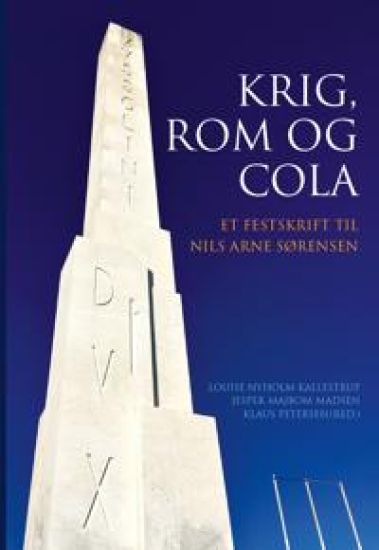
Krig, Rom og Cola

Krig, Rom og Cola

Louise Nyholm Kallestrup; Jesper Majbom Madsen; Klaus Petersen (red.)

-
2021
sidottu
Krig, Rom og Cola er et festskrift til professor Nils Arne Sørensen, Syddansk Universitet, som gennem årtier har været et af historiefagets faglige fyrtårne. Mere end 20 kolleger bidrager med kapitler, som knytter an til Nils Arne Sørensens forskningsinteresser. Det bringer os vidt omkring: Krig, transnationale historier, magt og historiebrug fra oldtiden til nutiden. Fra romerske monumenter over konger, diplomater, kejsere, embedsmænd, russiske soldater, TV-sendemaster, film, politiske partier, dansk og international politik til kapitalisme og velfærd. Bogen er en hyldest til mangfoldighed og nysgerrighed – og hyldest til en god kollega, der om nogen har holdt fast i både nysgerrighed og mangfoldighed gennem sit faglige virke. Historien findes overalt omkring os! Bogens bidragsydere omfatter: Lars Erslev Andersen, Tønnes Bekker-Nielsen, Lars Bisgaard, Per Boje, Michael Bregnsbo, Jesper Carlsen, Sissel Bjerrum Fossat, Karen Gram-Skjoldager, Mogens Kragsig Jensen,, Louise Nyholm Kallestrup, Kristine Kjærsgaard, Erik Kulavig, Karl Christian Lammers, Ulrik Langen, Jesper Majbom Madsen, Rasmus Mariager, Lars Boje Mortensen, Jeppe Nevers, Thorsten Borring Olesen, Niels Wium Olesen, Klaus Petersen, Kim Salomon, Casper Sylvest, Stuart Ward og Uffe Østergård.
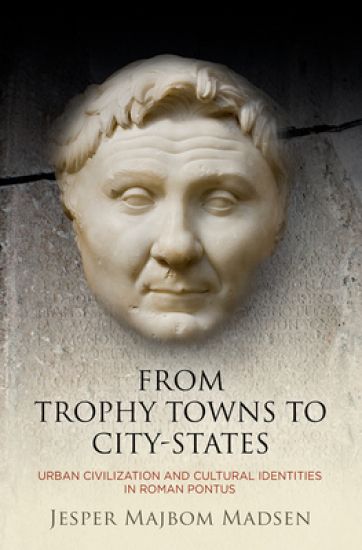
From Trophy Towns to City-States

From Trophy Towns to City-States

Jesper Majbom Madsen

University of Pennsylvania Press
2020
sidottu
In 66 BCE, in the woods of Armenia Minor, Pompey the Great defeated Mithridates VI Eupator, making him one of the most successful Roman generals of all time. The victory presented him with the enormous challenge of organizing not only Mithridates' kingdom but also large parts of Anatolia and the Near East that were now placed under Roman rule. Pompey's solution was to found six new cities and to convert two existing communities, Zela, a temple community dedicated to the goddess Anaïtis, and Amaseia, the former royal residence, into cities as well. There would now be eight city-states, each with the responsibility of administering the territory known to the Romans as Pontus. It has often been argued that in their eastern provinces the Romans based newly founded cities on the model of the Greek city-state and that Roman culture had less influence there than in the West. Jesper Majbom Madsen, however, describes civic development in Roman Pontus as a process by which Roman and Greek elements were introduced simultaneously. He contends that the Pompeian cities were neither traditional Greek poleis nor entirely Roman settlements with Roman laws and legislation; nor were they Greek cities gradually influenced by Roman rule. Instead, they represented a third category, in which a citizen could be an Anatolian, Greek, and Roman at the same time as well as a member of the elite, a priest in the imperial cult and in a cult to Asclepius, a local politician and a member of the Pontic koinon, all without contradiction. Bringing together a wide range of literary, historical, and political sources, From Trophy Towns to City-States examines how Pompey's cities were initially organized, how they developed over time, and how inhabitants in this part of the Roman Empire defined themselves culturally and politically.
Cassius Dio

Cassius Dio

Jesper Majbom Madsen

Bloomsbury Academic
2019
nidottu
This volume offers an introduction to the life and work of the 3rd-century-AD Greco-Roman senator and historian Cassius Dio, whose work, although imperfectly preserved in 80 books, is of fundamental importance to our understanding of Roman history. It is said that Dio is not one of the best ancient historians and his Roman history, due to its sheer size, is often imprecise and superficial in its analysis. It has also been assumed that there was no political agenda behind the work, and that Dio’s principal value to us is as a reliable copyist, who mediated the works of other, and better sources. This introduction to his life and work offers a different picture. Here, Dio is presented through his Greek cultural lens as a politician with a clear vision for how Roman politics and government should be organized. Carefully selected examples will be the starting points for fresh critical analysis of Dio’s work and its legacy, both in antiquity and through to the Enlightenment. The book assumes no familiarity with Cassius Dio, his writing or context. All text will be translated and suggested further reading will point readers towards avenues for more detailed study.
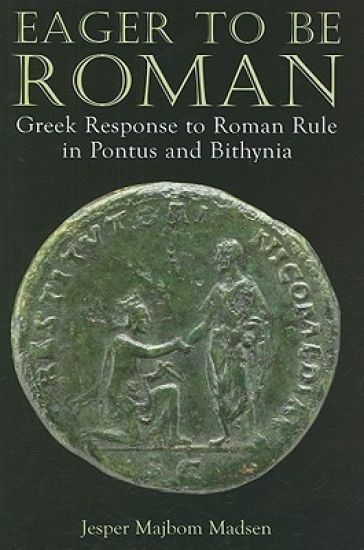
Eager to be Roman

Eager to be Roman

Jesper Majbom Madsen

Bristol Classical Press
2009
sidottu
"Eager to be Roman" is an important investigation into the ways in which the population of Pontus et Bithynia, a Greek province in the northwestern part of Asia Minor (on the southern shore of the Black Sea), engaged culturally with the Roman Empire. Scholars have long presented Greek provincials as highly attached to their Hellenic background and less affected by Rome's influence than Spaniards, Gauls or Britons. More recent studies have acknowledged that some elements of Roman culture and civic life found their way into Greek communities and that members of the Greek elite obtained Roman citizen rights and posts in the imperial administration, though for purely pragmatic reasons. Drawing on a detailed investigation of literary works and epigraphic evidence, Jesper Madsen demonstrates that Greek intellectuals and members of the local elite in this province were in fact keen to identify themselves as Roman, and that imperial connections and Roman culture were prestigious in the eyes of their Greek readers and fellow-citizens.