Kirjojen hintavertailu. Mukana 12 532 159 kirjaa ja 12 kauppaa.

Kirjailija

Jess Browning

Kirjat ja teokset yhdessä paikassa: 53 kirjaa, julkaisuja vuosilta 2012-2018, suosituimpien joukossa J.H.B.: A Silent Man. Vertaile teosten hintoja ja tarkista saatavuus suomalaisista kirjakaupoista.

53 kirjaa

Kirjojen julkaisuhaarukka 2012-2018.

King Arthur: Percivale & Lancelot: Book XIV & Book XV, Volume Two

King Arthur: Percivale & Lancelot: Book XIV & Book XV, Volume Two

Jess Browning

Createspace Independent Publishing Platform
2017
nidottu
Percivale is one of King Arthur's Knights of the Round Table. First made famous by the French author Chretien de Troyes, in the tale Conte du Graal (also known simply as Perceval), his story was allotted to the fictional figure of Peredur son of Efwc in the Welsh adaptation of Chretien's tale called Peredur ab Efrawc. He is most well known for being the original hero in the quest for the Grail before being replaced in later literature by Galahad. Sir Lancelot du Lac is one of the Knights of the Round Table in the Arthurian legend. He is typically featured as King Arthur's greatest companion. His infidelity with Guinevere caused a civil war exploited by his half-brother Mordred which brings about the end of Arthur's kingdom. King Arthur is a legendary British King who, according to medieval histories and romances, led the defense of Britain against Saxon invaders in the late 5th and early 6th centuries AD. The details of Arthur's story are mainly composed of folklore and literary invention and his historical existence is debated and disputed by modern historians. The development of Arthurian legend and the character of Arthur came to light in Le Morte d'Arthur, Thomas Malory's retelling of the entire legend in a single work in English in the late 15th century. Malory based his book on various previous romance versions, Malory's primary source, in particular was the religious The Noble Tale of the Sangreal in the French Vulgate Cycle's La Queste Del Saint Graal. It appears that Malory attempted to create a comprehensive collection of Arthurian stories with various references to the Sangreal (Holy Grail). According to William Claxton, Sir Thomas Malory's original book titled Le Morte D'Arthur (The Death of Arthur) was finished in the ninth year of Edward IV. It was about King Arthur and his Knights of the Round Table. It is considered to be the last important English book written before the introduction of the printing press into England. Claxton's story of how the book was brought to him and why he printed it may be read in his preface in Volume One, Book I. Le Morte D'Arthur was one of the earliest printed books in England, published by William Caxton in 1485. Most of the later works are derivative of Malory's as is this series of books. Claxton's own story of how the book was brought to him and why he printed it may be read in his own preface. From this we learn also that he was not only the printer of the book, but to some extent its editor also, dividing Malory's work into twenty-one books, splitting up the books into chapters. If the reader wants to read all the books in Volume One and/or Volume Two they may be purchased at a significantly reduced price as listed under the title "Times and Death of King Arthur." The original text from the introduction to chapters in Malory's books is added below chapter titles in this book to help give a flavor to how things were written in the fifteenth century. This book is an edition based on Caxton's Books XIV and XV, Volume Two. They were combined since they were small and consecutive. They were translated into English from French in the late 1400s. The books have been upgraded with modern words and spelling which make it easier to read.

King Arthur & Sir Lancelot: Book XII, Volume Two

King Arthur & Sir Lancelot: Book XII, Volume Two

Jess Browning

Createspace Independent Publishing Platform
2017
nidottu
Sir Lancelot du Lac is one of the Knights of the Round Table in the Arthurian legend. He is typically featured as King Arthur's greatest companion. He is the lord of the village and castle called Joyous Gard and he is the greatest swordsman and jouster of his age until his adultery with Queen Guinevere is discovered. His infidelity with Guinevere caused a civil war exploited by his half-brother Mordred which brings about the end of Arthur's kingdom. King Arthur is a legendary British King who, according to medieval histories and romances, led the defense of Britain against Saxon invaders in the late 5th and early 6th centuries AD. The details of Arthur's story are mainly composed of folklore and literary invention and his historical existence is debated and disputed by modern historians. The development of Arthurian legend and the character of Arthur came to light in Le Morte d'Arthur, Thomas Malory's retelling of the entire legend in a single work in English in the late 15th century. Malory based his book on various previous romance versions, Malory's primary source, in particular was the religious The Noble Tale of the Sangreal in the French Vulgate Cycle's La Queste Del Saint Graal. It appears that Malory attempted to create a comprehensive collection of Arthurian stories with various references to the Sangreal (Holy Grail). According to William Caxton, Sir Thomas Malory's original book titled Le Morte D'Arthur (The Death of Arthur) was finished in the ninth year of Edward IV. It was about King Arthur and his Knights of the Round Table. A knight is usually a large, mighty man that has a huge reputation to live up to. He is granted the title of knighthood by a monarch or other leader for service to the monarch or country, especially in a military capacity. Historically, in Europe, knighthood was conferred upon mounted warriors. During the Medieval era, knighthood was considered to be a class of moderate nobility. The lords trusted the knights, who were skilled in battle on horseback; they needed to be proficient in jousting with a spear and sword. The modern female equivalent in the United Kingdom is Dame although in medieval times it meant noble lady. If the reader wishes to purchase a compendium of all the books in Volumes One and Two they are listed under the title "Life and Death of King Arthur." The intent of his work has been retained while making it easier for the reader to follow the story using modern English and updated spelling. Book XII, Volume Two.
King Arthur & Sir Gawaine: Book XVI, Volume Two

King Arthur & Sir Gawaine: Book XVI, Volume Two

Jess Browning

Createspace Independent Publishing Platform
2017
nidottu
Gawain is King Arthur's nephew and a Knight of the Round Table in the Arthurian legend. He appears very early in the legend's development, being mentioned in some of the earliest Welsh Arthurian sources and is famous for fighting the Green Knight. He is one of a select number as one of the greatest knights. In this book he battles Sir Lancelot who mistakenly killed his brother Sir Gareth. King Arthur is a legendary British King who, according to medieval histories and romances, led the defense of Britain against Saxon invaders in the late 5th and early 6th centuries AD. The details of Arthur's story are mainly composed of folklore and literary invention and his historical existence is debated and disputed by modern historians. King Arthur, according to medieval histories and romances, led the defense of Britain against Saxon invaders in the late 5th and early 6th centuries AD. The details of Arthur's story are mainly composed of folklore and literary invention and his historical existence is debated and disputed by modern historians. Le Morte D'Arthur was one of the earliest printed books in England, published by William Caxton in 1485. Most of the later works are derivative of Malory's as is this series of books. Claxton's own story of how the book was brought to him and why he printed it may be read in his own preface. From this we learn also that he was not only the printer of the book, but to some extent its editor also, dividing Malory's work into twenty-one books, splitting up the books into chapters. If the reader wants to read all the books in Volume One and/or Volume Two they may be purchased at a significantly reduced price as listed under the title "Times and Death of King Arthur." The original text from the introduction to chapters in Malory's books is added below chapter titles in this book to help give a flavor to how things were written in the fifteenth century. This book is an edition based on Caxton's Book XVI, Volume Two which was translated into English from Malory's work in French in the late 1400s. The book has been upgraded with modern words and spelling which make it easier to read.

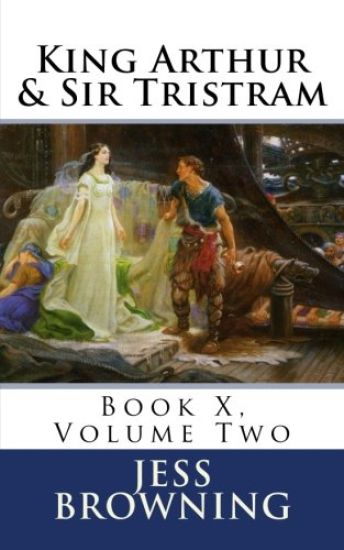
King Arthur & Sir Tristram: Book X, Volume Two

King Arthur & Sir Tristram: Book X, Volume Two

Jess Browning

Createspace Independent Publishing Platform
2017
nidottu
Tristram, is the hero of the Arthurian Tristran and Isoud story. He was a Cornish knight of the Round Table and is the son of Isabelle and Meliodas and the nephew of King Mark of Cornwall. He was sent to fetch Isoud back from Ireland to wed the king, however, he and Isoud accidentally consume a love potion while enroute and fall helplessly in love. The pair undergo numerous trials that test their secret affair. A knight is usually a large, mighty man that has a huge reputation to live up to. He is granted the title of knighthood by a monarch or other leader for service to the monarch or country, especially in a military capacity. Historically, in Europe, knighthood was conferred upon mounted warriors. During the Medieval era, knighthood was considered to be a class of moderate nobility. The lords trusted the knights, who were skilled in battle on horseback, They needed to be proficient in jousting with a spear and sword. The modern female equivalent in the United Kingdom is Dame although in medieval times it meant noble lady. King Arthur is a legendary British King who, according to medieval histories and romances, led the defense of Britain against Saxon invaders in the late 5th and early 6th centuries AD. The details of Arthur's story are mainly composed of folklore and literary invention and his historical existence is debated and disputed by modern historians. The development of Arthurian legend and the character of Arthur came to light in Le Morte d'Arthur, Thomas Malory's retelling of the entire legend in a single work in English in the late 15th century. Malory based his book on various previous romance versions, Malory's primary source, in particular was the religious The Noble Tale of the Sangreal in the French Vulgate Cycle's La Queste Del Saint Graal. It appears that Malory attempted to create a comprehensive collection of Arthurian stories with various references to the Sangreal (Holy Grail). According to William Claxton, Sir Thomas Malory's original book titled Le Morte D'Arthur (The Death of Arthur) was finished in the ninth year of Edward IV. It was about King Arthur and his Knights of the Round Table. It is considered to be the last important English book written before the introduction of the printing press into England. Claxton's story of how the book was brought to him and why he printed it may be read in his preface in Volume One, Book I. Le Morte D'Arthur was one of the earliest printed books in England, published by William Caxton in 1485. Most of the later works are derivative of Malory's as is this series of books. Claxton's own story of how the book was brought to him and why he printed it may be read in his own preface. From this we learn also that he was not only the printer of the book, but to some extent its editor also, dividing Malory's work into twenty-one books, splitting up the books into chapters. If the reader wants to read all the books in Volume One and/or Volume Two they may be purchased at a significantly reduced price as listed under the title "Times and Death of King Arthur." The original text from the introduction to chapters in Malory's books is added below chapter titles in this book to help give a flavor to how things were written in the fifteenth century. This edition retains the chapters of Caxton's Book X, Volume Two and an attempt has been made to retain his work while making it easier for the reader to follow the story using modern English and updated spelling.
War vs Police: Decisions

War vs Police: Decisions

Jess Browning

Createspace Independent Publishing Platform
2017
nidottu
Decisions, decisions They often have to be made by various of our leaders. Sometimes they are right on but unfortunately some are way off the mark. Decisions that are not well thought out can be very troubling if not down right dangerous. About every generation, leaders of a country decide to enter an armed conflict such as the Civil War, the Spanish American War, World War I, World War II, the Korean War, the Vietnam War, and most recently the War on Terror. A conflict like "war" usually pits nation against nation or allies against allies. This implies that a nation's welfare is at stake and that the nation's population is concerned enough, so that they are willing to fight for their nation's sovereignty - to go to war. This classifies those that that are willing to fight for their country are "Warriors." Not every conflict that is termed "War" means that a nation's sovereignty is at stake. Take for example the most recent conflict that is termed "War on Terror". President H. W. Bush used this term following the aircraft attack on the World Trade Center in New York and the Pentagon in Washington, D. C. The problem with a statement such as that implies that "Warriors" are inflicting terror on various sovereign entities. This kind of terminology is, unintentionally, giving a "Terrorist" too much credit ' Terrorist are not "Warriors." They are, for the most part, murderers. They are common "thugs" or "criminals" and should be treated as such. Rather than calling criminals "Warriors", as the term "War on Terror" implies, shouldn't we be treating the terrorist as criminals and refer to the conflict as to what it should really be, a "Police Action?" For practicle purposes in this book, the author focuses on "Islamic Terrorist" since they are recently the most active. That is not to say that we are willing to ignore the many, many organizations and individuals who use terror as a weapon to foster their ideas about politics, religion or crazy ideas.
King Arthur & Knights: Lovers and Fighters

King Arthur & Knights: Lovers and Fighters

Jess Browning

Createspace Independent Publishing Platform
2017
nidottu
Sir Gawain is King Arthur's nephew and a Knight of the Round Table in the Arthurian legend. He appears very early in the legend's development, being mentioned in some of the earliest Welsh Arthurian sources and is famous for fighting the Green Knight. He is one of a select number as one of the greatest knights. In this book he battles Sir Lancelot who mistakenly killed his brother Sir Gareth. King Arthur is a legendary British King who, according to medieval histories and romances, led the defense of Britain against Saxon invaders in the late 5th and early 6th centuries AD. The details of Arthur's story are mainly composed of folklore and literary invention and his historical existence is debated and disputed by modern historians. According to William Claxton, Sir Thomas Malory's original book titled Le Morte D'Arthur (The Death of Arthur) was finished in the ninth year of Edward IV. It was about King Arthur and his Knights of the Round Table. It is considered to be the last important English book written before the introduction of the printing press into England. Caxton's story of how the book was brought to him and why he printed it may be read in his preface in Volume One, Book One. If the reader wishes to purchase a compendium of all the books in Volumes One and Two they are listed under the title "Life and Death of King Arthur." Le Morte D'Arthur was one of the earliest printed books in England, published by William Caxton in 1485. Most of the later works are derivatives of Caxton and Malory's as is this series of books. The original text from the introduction to chapters in Malory's books is added below chapter titles in this book to help give a flavor to how things were written in the fifteenth century. This edition retains the chapters of Malory's Book IV, Volume I, and an attempt has been made to retain his work while making it easier for the reader to follow the story using modern English and updated spelling. Book IV, Volume One
King Arthur & Sir Tristram: The Fighter

King Arthur & Sir Tristram: The Fighter

Jess Browning

Createspace Independent Publishing Platform
2017
nidottu
Tristram, is the hero of the Arthurian Tristran and Isoud story. He was a Cornish knight of the Round Table and is the son of Isabelle and Meliodas and the nephew of King Mark of Cornwall. He was sent to fetch Isoud back from Ireland to wed the king, however, he and Isoud accidentally consume a love potion while enroute and fall helplessly in love. The pair undergo numerous trials that test their secret affair. A knight is usually a large, mighty man that has a huge reputation to live up to. He is granted the title of knighthood by a monarch or other leader for service to the monarch or country, especially in a military capacity. Historically, in Europe, knighthood was conferred upon mounted warriors. During the Medieval era, knighthood was considered to be a class of moderate nobility. The lords trusted the knights, who were skilled in battle on horseback, They needed to be proficient in jousting with a spear and sword. The modern female equivalent in the United Kingdom is Dame although in medieval times it meant noble lady. King Arthur is a legendary British King who, according to medieval histories and romances, led the defense of Britain against Saxon invaders in the late 5th and early 6th centuries AD. The details of Arthur's story are mainly composed of folklore and literary invention and his historical existence is debated and disputed by modern historians. The development of Arthurian legend and the character of Arthur came to light in Le Morte d'Arthur, Thomas Malory's retelling of the entire legend in a single work in English in the late 15th century. Malory based his book on various previous romance versions, Malory's primary source, in particular was the religious The Noble Tale of the Sangreal in the French Vulgate Cycle's La Queste Del Saint Graal. It appears that Malory attempted to create a comprehensive collection of Arthurian stories with various references to the Sangreal (Holy Grail). According to William Claxton, Sir Thomas Malory's original book titled Le Morte D'Arthur (The Death of Arthur) was finished in the ninth year of Edward IV. It was about King Arthur and his Knights of the Round Table. It is considered to be the last important English book written before the introduction of the printing press into England. Claxton's story of how the book was brought to him and why he printed it may be read in his preface in Volume One, Book I. Le Morte D'Arthur was one of the earliest printed books in England, published by William Caxton in 1485. Most of the later works are derivative of Malory's as is this series of books. Claxton's own story of how the book was brought to him and why he printed it may be read in his own preface. From this we learn also that he was not only the printer of the book, but to some extent its editor also, dividing Malory's work into twenty-one books, splitting up the books into chapters. If the reader wants to read all the books in Volume One and/or Volume Two they may be purchased at a significantly reduced price as listed under the title "Times and Death of King Arthur." The original text from the introduction to chapters in Malory's books is added below chapter titles in this book to help give a flavor to how things were written in the fifteenth century. This book is an edition based on Caxton's Book VIII, Volume One which was translated into English from French in the late 1400s. The book has been upgraded with modern words and spelling which make it easier to read.
King Arthur & Launcelot: Their Fights and Affairs

King Arthur & Launcelot: Their Fights and Affairs

Jess Browning

Createspace Independent Publishing Platform
2017
nidottu
Sir Lancelot du Lac is one of the Knights of the Round Table in the Arthurian legend. He is typically featured as King Arthur's greatest companion. He is the lord of the village and castle called Joyous Gard and he is the greatest swordsman and jouster of his age until his adultery with Queen Guinevere is discovered. His infidelity with Guinevere caused a civil war exploited by his half-brother Mordred which brings about the end of Arthur's kingdom. The development of Arthurian legend and the character of Arthur came to light in Le Morte d'Arthur, Thomas Malory's retelling of the entire legend in a single work in English in the late 15th century. Malory based his book on various previous romance versions, Malory's primary source, in particular was the religious The Noble Tale of the Sangreal in the French Vulgate Cycle's La Queste Del Saint Graal. It appears that Malory attempted to create a comprehensive collection of Arthurian stories with various references to the Sangreal (Holy Grail). According to William Caxton, Sir Thomas Malory's original book titled Le Morte D'Arthur (The Death of Arthur) was finished in the ninth year of Edward IV. It was about King Arthur and his Knights of the Round Table. This edition retains the chapters of Malory's Book V, Volume One. The intent of his work has been retained while making it easier for the reader to follow the story using modern English and updated spelling. If the reader wishes to purchase a compendium of all the books in Volumes One and Two they are listed under the title "Life and Death of King Arthur." Book VI, Volume One
King Arthur & Rome: Ambassadors Demand Tribute

King Arthur & Rome: Ambassadors Demand Tribute

Jess Browning

Createspace Independent Publishing Platform
2017
nidottu
It is thought that the Pope in 467AD was Pope Hilarius who was thought to be in control of the Western Roman Empire, although it was actually ruled by the Emperor and controlled by various regional governors. The Pope would not gain the political power to grant lands and other comparable privileges until centuries later. Arthur was loyal to Rome and was a devout religious person, but he had the belief that original sin did not taint human nature and that mortal will is still capable of choosing good or evil without special divine aid, which many of his subjects considered heretical. It has been suggested that the character of King Arthur was based on one Lucius Artorius Castus, a career Roman soldier of the late 2nd century or early 3rd century. The person that Malory termed emperor may have been several Lucius' who were Roman Emperors in the second and third centuries AD. He and his men fought against native Britons who are rebels against Roman rule, led by the mysterious Merlin. In fact, King Arthur is a legendary British King who, according to medieval histories and romances, led the defense of Britain against Saxon invaders in the late 5th and early 6th centuries AD. The details of Arthur's story are mainly composed of folklore and literary invention and his historical existence is debated and disputed by modern historians. According to William Claxton, Sir Thomas Malory's original book titled Le Morte D'Arthur (The Death of Arthur) was finished in the ninth year of Edward IV. It was about King Arthur and his Knights of the Round Table. It is considered to be the last important English book written before the introduction of the printing press into England. Claxton's story of how the book was brought to him and why he printed it may be read in his preface in Volume One, Book I. Claxton's own story of how the book was brought to him and why he printed it may be read in his own preface. From this we learn also that he was not only the printer of the book, but to some extent its editor also, dividing Malory's work into twenty-one books, splitting up the books into chapters. If the reader wants to read all the books in Volume One and/or Volume Two they may be purchased under the title "Times and Death of King Arthur" at a substantially lower cost. The original text from the introduction to chapters in Malory's books is added below chapter titles in this book to help give a flavor to how things were written in the fifteenth century. This edition retains the chapters of Malory's Book V, Volume One, and an attempt has been made to retain his work while making it easier for the reader to follow the story using modern English and updated spelling.
King Arthur & Gareth: A Kitchen Boy

King Arthur & Gareth: A Kitchen Boy

Jess Browning

Createspace Independent Publishing Platform
2017
nidottu
Sir Gareth is a Knight of the Round Table in Arthurian legend, nicknamed "Beaumains". He was the youngest son of King Lot and of Morgan, King Arthur's half-sister, thus making him Arthur's nephew, as well as brother to Gawain (Agravain, Gaheris) and half-brother to Mordred. According to Malory, Gareth comes to Camelot as a kitchen boy and is set to work by Kay, who always gives him difficult work, teases him as a lowly kitchen boy and nicknames him Beaumains or Good Hands. Gareth goes to the aid of Lynette to save her sister Lyonesse from the Red Knight. Le Morte D'Arthur was one of the earliest printed books in England, published by William Caxton in 1485. Most of the later works are derivative of Malory's as is this series of books. Claxton's own story of how the book was brought to him and why he printed it may be read in his own preface. From this we learn also that he was not only the printer of the book, but to some extent its editor also, dividing Malory's work into twenty-one books, splitting up the books into chapters. If the reader wants to read all the books in Volume One and/or Volume Two they may be purchased at a significantly reduced price as listed under the title "Times and Death of King Arthur." The original text from the introduction to chapters in Malory's books is added below chapter titles in this book to help give a flavor to how things were written in the fifteenth century. This book is an edition based on Caxton's Book VII, Volume One which was translated into English from French in the late 1400s. The book has been upgraded with modern words and spelling which make it easier to read.

King Arthur & Mordred: A Young King in Waiting

King Arthur & Mordred: A Young King in Waiting

Jess Browning

Createspace Independent Publishing Platform
2017
nidottu
Mordred is known as a notorious traitor who fought King Arthur at a Battle described later where he was killed and Arthur was fatally wounded. Tradition varies on his relationship to Arthur, but he is best known as Arthur's illegitimate son resulting from an incestuous relationship with his half-sister Morgan le Fay. King Arthur is a legendary British King who, according to medieval histories and romances, led the defense of Britain against Saxon invaders in the late 5th and early 6th centuries AD. The details of Arthur's story are mainly composed of folklore and literary invention and his historical existence is debated and disputed by modern historians. Le Morte D'Arthur was one of the earliest printed books in England, published by William Caxton in 1485. Most of the later works are derivative of Malory's as is this series of books. According to William Caxton, Sir Thomas Malory's original book titled Le Morte D'Arthur (The Death of Arthur) was finished in the ninth year of Edward IV. It was about King Arthur and his Knights of the Round Table. This book is an edition based on Caxton's work which was translated into English from Sir Malory's French in the late 1400s. Claxton's own story of how the book was brought to him and why he printed it may be read in his own preface. From this we learn also that he was not only the printer of the book, but to some extent its editor also, dividing Malory's work into twenty-one books, splitting up the books into chapters. The book has been upgrade with modern words and spelling which make it easier to read. If the reader wants to read all the books in Volume One and/or Volume Two they may be purchased as listed under the title "Times and Death of King Arthur." Book I, Volume One

King Arthur & Pellianore: A Father of Knights

King Arthur & Pellianore: A Father of Knights

Jess Browning

Createspace Independent Publishing Platform
2017
nidottu
King Pellinore in Arthurian legend, is the king of the medieval kingdom of Listenoise. He was the Son of King Pellam and brother of Kings Pelles and Alain, he is most famous for his endless hunt of the Questing Beast, which he is tracking when King Arthur first meets him. Pellinore beats King Arthur after three jousts and breaks the sword Arthur had withdrawn from the stone. He gets another sword from the Lady of the Lake soon after that is called Excalibur. Merlin puts a spell of enchantment on Pellinore to save Arthur's life. Arthur praises Pellinore's skill, and they soon become friends, with Arthur inviting him to join the Knights of the Round Table. He has many sons: Tor, Aglovale, Lamorak, Dornar, and Percival all eventually join the Round Table as well. His daughter is thought to be a servant of the Holy Grail and helps Percival, Galahad and Bors achieve the mystical objective. King Arthur is a legendary British King who, according to medieval histories and romances, led the defense of Britain against Saxon invaders in the late 5th and early 6th centuries AD. The details of Arthur's story are mainly composed of folklore and literary invention and his historical existence is debated and disputed by modern historians. According to William Claxton, Sir Thomas Malory's original book titled Le Morte D'Arthur (The Death of Arthur) was finished in the ninth year of Edward IV. It was about King Arthur and his Knights of the Round Table. It is considered to be the last important English book written before the introduction of the printing press into England. Claxton's story of how the book was brought to him and why he printed it may be read in his preface in Volume One, Book I. Claxton's own story of how the book was brought to him and why he printed it may be read in his own preface. From this we learn also that he was not only the printer of the book, but to some extent its editor also, dividing Malory's work into twenty-one books, splitting up the books into chapters. If the reader wants to read all the books in Volume One and/or Volume Two they may be purchased at a significantly reduced price as listed under the title "Times and Death of King Arthur." The original text from the introduction to chapters in Malory's books is added below chapter titles in this book to help give a flavor to how things were written in the fifteenth century. This edition retains the chapters of Caxton's Book III, Volume One. An attempt has been made to retain his work while making it easier for the reader to follow the story using modern English and updated spelling.
King Arthur & Balin: A Knight with Two Swords

King Arthur & Balin: A Knight with Two Swords

Jess Browning

Createspace Independent Publishing Platform
2017
nidottu
Sir Balin is a character in the Arthurian legend. He could have been King Arthurs best and bravest knight at one time. He was a knight before the Round Table was formed, While the king is virile and strong at the beginning of his reign, Balin was a poor knight to start. His destiny is sealed by the arrival of a mysterious damsel bearing a sword that only the most virtuous knight in King Arthur's court will be able to draw which Balin draws with ease. He is so good at combat, he got into trouble several times. Eventually, he is killed in combat against his brother fulfilling a prophecy about the destiny of one who bears the damsel's sword. King Arthur is a legendary British King who, according to medieval histories and romances, led the defense of Britain against Saxon invaders in the late 5th and early 6th centuries AD. The details of Arthur's story are mainly composed of folklore and literary invention and his historical existence is debated and disputed by modern historians. Le Morte D'Arthur was one of the earliest printed books in England, published by William Caxton in 1485. Most of the later works are derivative of Malory's as is this series of books. According to William Caxton, Sir Thomas Malory's original book titled Le Morte D'Arthur (The Death of Arthur) was finished in the ninth year of Edward IV. It was about King Arthur and his Knights of the Round Table. Claxton's own story of how the book was brought to him and why he printed it may be read in his own preface. From this we learn also that he was not only the printer of the book, but to some extent its editor also, dividing Malory's work into twenty-one books, splitting up the books into chapters. If the reader wants to read all the books in Volume One and/or Volume Two they may be purchased under the title "Times and Death of King Arthur." This book is an edition based on Caxton's work which was translated into English from Sir Maloy's French in the late 1400s. This edition retains the chapters of Malory's Book II, Volume One and it is easier for the reader to follow the story using modern English and updated spelling.
King Arthur & Gawaine: Their Adventures

King Arthur & Gawaine: Their Adventures

Jess Browning

Createspace Independent Publishing Platform
2017
nidottu
Sir Gawain is King Arthur's nephew and a Knight of the Round Table in the Arthurian legend. He appears very early in the legend's development, being mentioned in some of the earliest Welsh Arthurian sources and is famous for fighting the Green Knight. He is one of a select number as one of the greatest knights. In this book he battles Sir Lancelot who mistakenly killed his brother Sir Gareth. King Arthur is a legendary British King who, according to medieval histories and romances, led the defense of Britain against Saxon invaders in the late 5th and early 6th centuries AD. The details of Arthur's story are mainly composed of folklore and literary invention and his historical existence is debated and disputed by modern historians. Le Morte D'Arthur was one of the earliest printed books in England, published by William Caxton in 1485. Most of the later works are derivative of Malory's as is this series of books. According to William Claxton, Sir Thomas Malory's original book titled Le Morte D'Arthur (The Death of Arthur) was finished in the ninth year of Edward IV. It was about King Arthur and his Knights of the Round Table. It is considered to be the last important English book written before the introduction of the printing press into England. Caxton's story of how the book was brought to him and why he printed it may be read in his preface in Volume One, Book One. Claxton's own story of how the book was brought to him and why he printed it may be read in his own preface. From this we learn also that he was not only the printer of the book, but to some extent its editor also, dividing Malory's work into twenty-one books, splitting up the books into chapters. If the reader wants to read all the books in Volume One and/or Volume Two they may be purchased under the title "Times and Death of King Arthur." The original text from the introduction to chapters in Malory's books is added below chapter titles in this book to help give a flavor to how things were written in the fifteenth century. This edition retains the chapters of Malory's Book IV, Volume I, and an attempt has been made to retain his work while making it easier for the reader to follow the story using modern English and updated spelling.
Ancient European Ancestors: The DNA, Archaeological, Historic, and Linguistic Evidence
This book was converted from a book of color to one of black and white and shade of grey of the same name on April 8, 2016. Many records, both ancient and more recent, have been examined to see where the majority of Europeans, and their descendant originated. There have been many studies suggesting that the origin of Europeans goes back to the Near East and before that to the plains of Eurasia. This study has examined primary sources of information as well as secondary and tertiary sources and compared that information to current DNA analysis of Europeans and their ancestors. Primary sources are documents, correspondence, and diaries; secondary sources are interpretations and written history; and tertiary sources are textbooks and encyclopedias. While this study does not try to prove a theory, it proceeds as though one is offered but it is up to the reader to draw his or her own conclusions. The work contains many maps, pictures and records along with a table of contents, index and references. This work is followed by a fictional account titled "The Nomads: Their Migration Experiences" that is the beginning of a series that helps to explain the evolution of some European Ancestor's families.
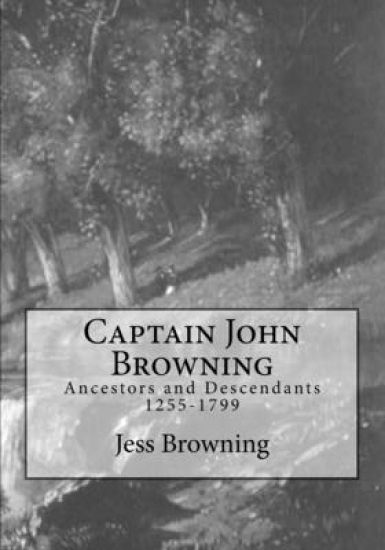
Captain John Browning: Ancestors and Descendants 1255-1799

Captain John Browning: Ancestors and Descendants 1255-1799

Jess Browning

Createspace Independent Publishing Platform
2016
nidottu
This book was converted from color, of a book of the same name, to grey tones April 7, 2016. Captain John Browning was born about 1588 in England, and died about 1662. He allegedly married about the year 1614. Children were George and William in addition to accounts of other children including a Thomas. Sometime around the year 1621, he and his family left England for Virginia where his descendants supposedly established a line of descendants that could be found throughout America. His ancestors go back hundreds of years, primarily in the counties of Gloucestershire and Dorset in England. The interesting thing about him is that there is more speculation and less known about him than of many people in history. This Second Edition is much enlarged and its index contains full names of thousands persons other than Browning as well as subject names. The endnotes reference many of the sources. The Gloucestershire Berkeley family had a large influence on Browning's both in England and Virginia and this work should be viewed as a theory of family history or historical fiction (sometimes hysterical fiction). It is sad that thousands of genealogical records are based on bad information. It is hoped that any citations of this work be done with the proper caveats. Since so little is known about Captain John Browning's private life, a fictional account of his activities is presented in the book "Captain John: From England to Virginia." There is also a fictional account of the private lives of his descendants in the books "Francis', "Caleb", "William T.", and "Jeb."