Kirjojen hintavertailu. Mukana 12 156 144 kirjaa ja 12 kauppaa.

Kirjailija

Jess Nevins

Kirjat ja teokset yhdessä paikassa: 10 kirjaa, julkaisuja vuosilta 2007-2023, suosituimpien joukossa Sphinx. Vertaile teosten hintoja ja tarkista saatavuus suomalaisista kirjakaupoista.

10 kirjaa

Kirjojen julkaisuhaarukka 2007-2023.

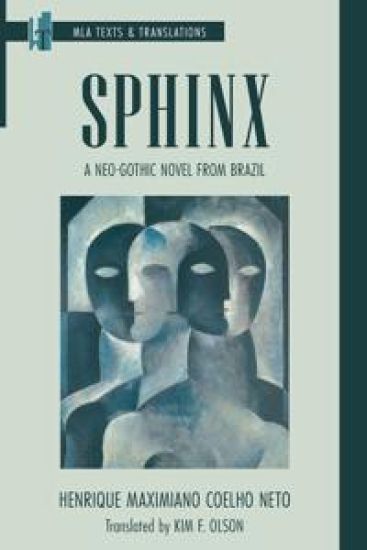
Sphinx

Sphinx

Henrique Maximiano Coelho Neto; Jess Nevins

Modern Language Association of America
2023
pokkari
A work of supernatural fantasy that questions gender divisions.At his boardinghouse in Rio de Janeiro, the Englishman James Marian is seen as handsome but eccentric. Then another boarder learns Marian's secret: a fusion of a female head and a male body, Marian is the creation of a surgeon with occult powers. Despite his wealth and mysterious abilities, Marian is unable to live fully as either a man or a woman, traveling the world in order to repress his sexual desire and withdraw from society.Sphinx (Esfinge) explores the binaries of science and magic, body and spirit, male and female, attraction and horror, presenting its sexually ambiguous protagonist with sympathy. Ornately descriptive, this 1908 neo-gothic novel exemplifies the era's taste for the sensual and the fantastic. With echoes of Mary Shelley's Frankenstein, it stands as a classic of Brazilian science fiction.
Esfinge

Esfinge

Henrique Maximiano Coelho Neto; Jess Nevins

Modern Language Association of America
2023
pokkari
A work of supernatural fantasy that questions gender divisions.At his boardinghouse in Rio de Janeiro, the Englishman James Marian is seen as handsome but eccentric. Then another boarder learns Marian's secret: a fusion of a female head and a male body, Marian is the creation of a surgeon with occult powers. Despite his wealth and mysterious abilities, Marian is unable to live fully as either a man or a woman, traveling the world in order to repress his sexual desire and withdraw from society.Sphinx (Esfinge) explores the binaries of science and magic, body and spirit, male and female, attraction and horror, presenting its sexually ambiguous protagonist with sympathy. Ornately descriptive, this 1908 neo-gothic novel exemplifies the era's taste for the sensual and the fantastic. With echoes of Mary Shelley's Frankenstein, it stands as a classic of Brazilian science fiction.
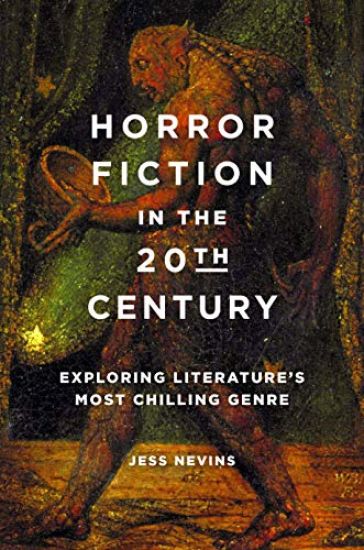
Horror Fiction in the 20th Century

Horror Fiction in the 20th Century

Jess Nevins

Praeger Publishers Inc
2020
sidottu
Providing an indispensable resource for academics as well as readers interested in the evolution of horror fiction in the 20th century, this book provides a readable yet critical guide to global horror fiction and authors.Horror Fiction in the 20th Century encompasses the world of 20th-century horror literature and explores it in a critical but balanced fashion. Readers will be exposed to the world of horror literature, a truly global phenomenon during the 20th century. Beginning with the modern genre's roots in the 19th century, the book proceeds to cover 20th-century horror literature in all of its manifestations, whether in comics, pulps, paperbacks, hardcover novels, or mainstream magazines, and from every country that produced it. The major horror authors of the century receive their due, but the works of many authors who are less well-known or who have been forgotten are also described and analyzed. In addition to providing critical assessments and judgments of individual authors and works, the book describes the evolution of the genre and the major movements within it. Horror Fiction in the 20th Century stands out from its competitors and will be of interest to its readers because of its informed critical analysis, its unprecedented coverage of female authors and writers of color, and its concise historical overview.
Horror Needs No Passport: 20th Century Horror Literature Outside the U.S. and U.K.
The first book to cover global horror fiction during the twentieth century, the decades in which the horror genre matured and came of age, HORROR NEEDS NO PASSPORT covers hundreds of authors and stories and novels from 72 countries. The great majority of these works have never been translated into English and are mentioned only slightly, if at all, in the standard horror genre reference books. Yet these stories and novels contain a wealth of high quality horror, whether written by Angolan authors or Uruguayan authors. It's a shame that nearly all of these horror stories and novels are unknown to readers in the United States and the United Kingdom, as they would enjoy these works greatly if they could read them. The book does not contain an over-arching narrative; the horror literatures of the world are far too varied for any one narrative to fit. Instead, each author gets their own one or two paragraph entry, placing them in the context of their time and place and describing what their horror fiction is about, why their horror fiction matters, and whether or not their horror fiction is worth reading. The following, about the fantastic Belgian horror writer Thomas Owen, is typical of the entries: "A much different writer from Ghelderode was Thomas Owen, a lawyer, plant manager, and art critic who became interested in writing following a meeting with detective writer Stanislas-Andr Steeman. From 1941-1943 Owen wrote detective novels, but in 1942, inspired by and perhaps jealous of the success of his friend Jean Ray, Owen began writing fantastika, primarily horror of l'ecole belge de l'etrange variety. In his lifetime Owen would write two dozen novels and over 300 short stories, most of which were fantastika. Owen would become (with Jean Ray) the most important Belgian writer of fantastika and horror, and arguably its best writer and stylist. Jean Ray never produced Art (and never bothered to try), while Owen routinely achieved it. Owen had obsessions distinctive to himself: morbid eroticism, perversity, and the animalistic. And Owen's characters were usually present to create the effect of horror in the reader rather than existing as sympathetic beings. But Owen's style-evocative, precise, restrained, clear and cold-overwhelmed these flaws, and the doomed atmosphere, erotically macabre imagery, and general existential dread Owen generates in the stories make them memorably frightening. Owen's brand of terror has been called "intimate horror," as it focuses closely on ordinary lives rent by the moral and emotional ambiguities of life to the point that Owen's protagonists are vulnerable to supernatural assault. "Owen refined the tale of supernatural horror to an almost anachronistic degree of economy and purity...his unsettling work has been compared to that of Poe and Buzzati." Other reference books about horror fiction cover a scant handful of the authors and works described and analyzed in HORROR NEEDS NO PASSPORT and rarely venture outside Western Europe, Japan, and parts of Latin America. HORROR NEEDS NO PASSPORT covers multiple countries from every continent, going back to at least the turn of the twentieth century and in some cases well into the nineteenth century. Written for both casual readers and interested academics, HORROR NEEDS NO PASSPORT is unlike anything else on the market.
The Astounding Illustrated History of Science Fiction

The Astounding Illustrated History of Science Fiction

Pat Mills; Dave Golder; Jess Nevins; Russ Thorne; Sarah Dobbs

Flame Tree Publishing
2017
sidottu
A truly astonishing, illustrated history of Science fiction, covering fantasy, and horror, with forays into crime, mystery and the gothic. Using timelines, online links, illustrations, posters, movie stills, book covers, and more, this amazing new book propels us into the well of modern imagination, from its roots in Frankenstein, through Verne, H.G. Wells, the late gothic and weird horror of Lovecraft to the mass market sensationalism of the Pulp magazines. The Pulps then invoked a new generation of writers (such as Ray Bradbury and Robert Bloch) of the Golden Age before many transitioned to screenwriting for the movies and early TV (Psycho, Star Trek, Twilight Zone), inspiring, in turn, the invasion of superheroes, gigantic spaceships, and dystopian landscapes onto our data-streaming tablets and computers. The book explores the interplay between great writers, (Asimov and Arthur C. Clarke) and story-telling directors (Kubrick, James Cameron, Ridley Scott, Christopher Nolan, George Lucas) who create powerful Sci-Fi, reflecting and challenging the developments of technology, science and society. Each have played a major role in this all-consuming, speculative form of world-building, from its early manifestation as a shocking literary event, to the mass market sensation is today.
Jess Nevins' Encyclopedia of Golden Age Superheroes
This unique, one-volume encyclopedia contains entries on the more than 2000 superheroes, private eyes, cowboys, pilots, and adventure heroes who appeared in comics during the Golden Age (1935-1949) of superhero comics. Every heroic character from the Golden Age has been included; no one has been left out. Each entry contains a description of the hero, their significant villains, their creator credits, their finrst appearance, and their number of appearances in comics of the Golden Age. The Encyclopedia of Golden Age Superheroes is a one-of-a-kind compendium of superheroes that no fan of comics or superhero gaming should be without.
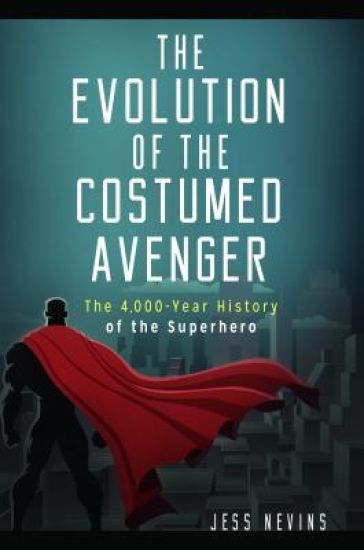
The Evolution of the Costumed Avenger

The Evolution of the Costumed Avenger

Jess Nevins

Praeger Publishers Inc
2017
sidottu
Using a broad array of historical and literary sources, this book presents an unprecedented detailed history of the superhero and its development across the course of human history.How has the concept of the superhero developed over time? How has humanity's idealization of heroes with superhuman powers changed across millennia—and what superhero themes remain constant? Why does the idea of a superhero remain so powerful and relevant in the modern context, when our real-life technological capabilities arguably surpass the imagined superpowers of superheroes of the past? The Evolution of the Costumed Avenger: The 4,000-Year History of the Superhero is the first complete history of superheroes that thoroughly traces the development of superheroes, from their beginning in 2100 B.C.E. with the Epic of Gilgamesh to their fully entrenched status in modern pop culture and the comic book and graphic novel worlds. The book documents how the two modern superhero archetypes—the Costumed Avengers and the superhuman Supermen—can be traced back more than two centuries; turns a critical, evaluative eye upon the post-Superman history of the superhero; and shows how modern superheroes were created and influenced by sources as various as Egyptian poems, biblical heroes, medieval epics, Elizabethan urban legends, Jacobean masques, Gothic novels, dime novels, the Molly Maguires, the Ku Klux Klan, and pulp magazines. This work serves undergraduate or graduate students writing papers, professors or independent scholars, and anyone interested in learning about superheroes.
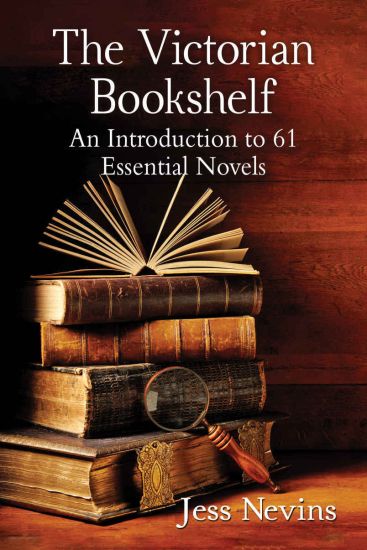
The Victorian Bookshelf

The Victorian Bookshelf

Jess Nevins

McFarland Co Inc
2016
pokkari
This introductory guide to the canon of Victorian literature covers 61 novels by authors from Jane Austen to Emile Zola. Brief critical essays describe what each book is about and argue for its cultural, historical and literary importance. Literary canons remain a subject of debate but critics, readers and students continue to find them useful as overviews--and examinations--of the great works within a given period or culture. The Victorian canon is particularly rich with splendid novels that educate, enlighten and entertain. Instructors considering this book for use in a course may request an examination copy here.
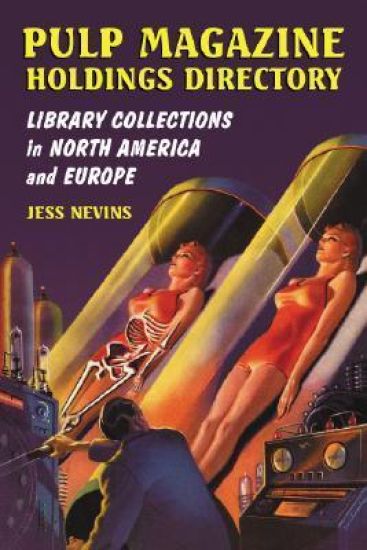
Pulp Magazine Holdings Directory

Pulp Magazine Holdings Directory

Jess Nevins

McFarland Co Inc
2007
pokkari
"This work is a comprehensive index of American pulp magazines. Entries are organized alphabetically by magazine title, and offer bibliographic data including author, volume/issue numbers, dates of publication, publisher, and a brief categorization. Eachentry also includes a helpful list of current library holdings, if any, among American, Canadian, and European libraries"--Provided by publisher.