Kirjojen hintavertailu. Mukana 12 390 323 kirjaa ja 12 kauppaa.

Kirjailija

Jessica Keyes

Kirjat ja teokset yhdessä paikassa: 26 kirjaa, julkaisuja vuosilta 1998-2026, suosituimpien joukossa The Enterprise PMO Governance Toolkit. Vertaile teosten hintoja ja tarkista saatavuus suomalaisista kirjakaupoista.

26 kirjaa

Kirjojen julkaisuhaarukka 1998-2026.

Marketing IT Products and Services

Marketing IT Products and Services

Jessica Keyes

CRC Press Inc
2009
sidottu
Characterized by lightning quick innovation, abrupt shifts in technology, and shorter lifecycles, the marketing of IT products and services presents a unique set of challenges and often requires IT managers and developers to get involved in the marketing process. Marketing IT Products and Services is written to help busy IT managers and marketing managers get up to speed quickly and easily on what’s needed to develop effective marketing strategies and campaigns. Focusing on the unique issues involved, this one-stop resource provides everything needed to understand the roles, responsibilities, and management techniques essential for the development of successful strategies. It covers strategic market planning, targeting markets, researching markets, understanding the competition, integrating market and sales strategies, nuances of global markets, developing marketing budgets, pricing, and implementing marketing campaigns. A plethora of appendices included on the book’s downloadable resources allow you to get up and running right away. Aside from a complete marketing glossary, two complete marketing plans—one for a hardware product; the other for a software product—enable you to bypass the "scut" work of developing a marketing plan so you can focus on the creative aspects of marketing. Because a marketing plan is closely aligned with an organization’s business and strategic plans, this book provides you with templates for both of these, as well as a template for that all-important business plan executive summary. The downloadable resources also feature loads of fill-in templates including customer and competitor analysis surveys, sample press releases, letters of agreement, demographic and target market worksheets, and cost benefit forms. If you have a marketing need, this book has an effective template to meet that need.
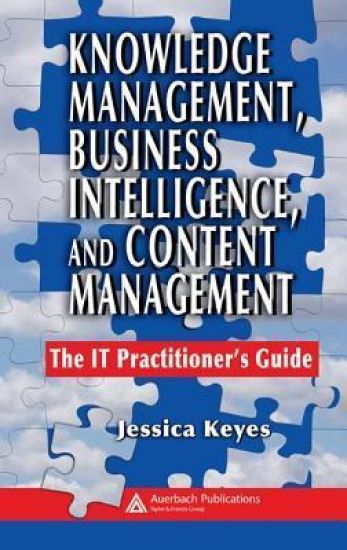
Knowledge Management, Business Intelligence, and Content Management
Knowledge management (KM) is the identification and analysis of available and required knowledge, and the subsequent planning and control of actions, to develop "knowledge assets" that enable businesses to generate profits and improve their competitive positions. This volume provides the framework for the strategic use of the information intelligence processes - business intelligence, content management, and knowledge management. In nine detailed chapters, the author explains every facet of these three subjects, enabling you to understand these sophisticated business concepts within the framework of information technology. Knowledge Management, Business Intelligence, and Content Management: The IT Practitioner's Guide discusses creation, protection, development, sharing, and management of information and intellectual assets through the use of business intelligence and other knowledge sharing and analytical techniques. About the Author Jessica Keyes is president of New Art Technologies, Inc., a high-technology and management consultancy, and is also founding partner of Manhattan Technology Group. Often a keynote speaker on the topics of competitive strategy, productivity, and quality, she is a founding board of directors member of the New York Software Industry Association, and has recently completed a 2-year term on the Mayor of New York City's Small Business Advisory Council. A noted columnist and correspondent, Keyes is the author of 19 books, including Auerbach Publications' Software Engineering Handbook, Software Configuration Management, and Implementing the IT Balanced Scorecard.
Implementing the IT Balanced Scorecard

Implementing the IT Balanced Scorecard

Jessica Keyes

Auerbach Publishers Inc.
2005
sidottu
The goals of an IT balanced scorecard include the alignment of IT plans with business objectives, the establishment of measures of IT effectiveness, the directing of employee efforts toward IT objectives, the improved performance of technology, and the achievement of balanced results across stakeholder groups. CIOs, CTOs, and other technical managers can achieve these goals by considering multiple perspectives, long- and short-term objectives, and how the IT scorecard is linked to other scorecards throughout their organizations. Implementing the IT Balanced Scorecard: Aligning IT with Corporate Strategy lays the groundwork for implementing the scorecard approach, and successfully integrating it with corporate strategy. This volume thoroughly explains the concept of the scorecard framework from both the corporate and IT perspectives. It provides examples, case histories, and current research for critical issues such as performance measurement and management, continuous process improvement, benchmarking, metrics selection, and people management. The book also discusses how to integrate these issues with the four perspectives of the balanced scorecard: customer, business processes, learning, and innovation and financial.
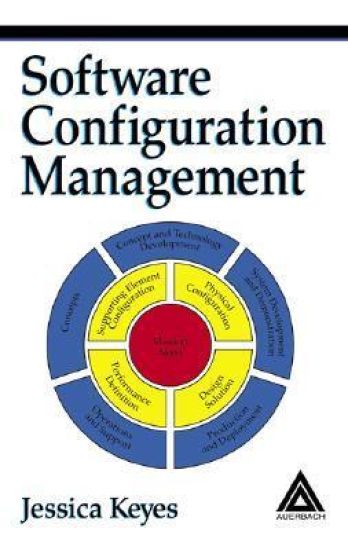
Software Configuration Management

Software Configuration Management

Jessica Keyes

Auerbach Publishers Inc.
2004
sidottu
An effective systems development and design process is far easier to explain than it is to implement. A framework is needed that organizes the life cycle activities that form the process. This framework is Configuration Management (CM). Software Configuration Management discusses the framework from a standards viewpoint, using the original DoD MIL-STD-973 and EIA-649 standards to describe the elements of configuration management within a software engineering perspective. Divided into two parts, the first section is composed of 14 chapters that explain every facet of configuration management related to software engineering. The second section consists of 25 appendices that contain many valuable real world CM templates. The content is extensive and inclusive, covering everything from CM planning to configuration identification, verification, and auditing. Although it is vendor-neutral, it offers a serious discussion of what to look for in a CM tool and lists toolsets for review. This volume is a sourcebook of techniques, templates, and best practices in the field, providing software engineers and systems developers with what they need to run a successful CM program.
Software Engineering Handbook

Software Engineering Handbook

Jessica Keyes

Auerbach Publishers Inc.
2002
sidottu
Unfortunately, much of what has been written about software engineering comes from an academic perspective which does not always address the everyday concerns that software developers and managers face. With decreasing software budgets and increasing demands from users and senior management, technology directors need a complete guide to the subject of software engineering. The successor to the bestselling Software Engineering Productivity Handbook, this book fulfills that need. Written by an expert with over 25 years of practical experience in building systems, The Software Engineering Handbook covers the full spectrum of software engineering methodologies, techniques, and tools and provides details on how to reach the goals of quality management in a software-engineering environment. It includes a wide variety of information, from the guidelines for the Malcom Baldridge Quality Award to the IEEE measures for reliable software. 65 field-tested how-to chapters provide techniques, guidelines, and philosophies that will assist developers in implementing quality and productivity programs. The author provides readers with a wealth of information and advice in a multitude of areas including management of resources, methods, quality, and metrics. The book concludes with 19 appendices filled with guides, templates, forms, and examples that illustrate important software engineering techniques such as: software requirement specification, software design specification, and a complete test plan including use of automated estimation tools.
Handbook of Technology in Financial Services

Handbook of Technology in Financial Services

Jessica Keyes

Auerbach Publishers Inc.
1998
sidottu
The calculus of IT support for the banking, securities and insurance industries has changed dramatically and rapidly over the past few years. Unheard of just a few years ago, corporate intranets are now used for everything from job postings to enhanced team communications. Whole new departments are being created to support e-commerce. And the Internet/Intranet/Extranet triple-whammy is the most critical component of most financial IT shops. At the same time, new intelligent agents stand ready to take on such diverse functions as customer profiling and data mining.Get a handle on all these new and newer ripples with Handbook of Technology in Financial Services. Here, in this exhaustive new guide and reference book, industry guru Jessica Keyes gives you the no-nonsense scoop on not just the tried and true IT tools of today, but also the up-and-coming "hot" technologies of tomorrow, and how to plan for them. Keyes gives you extensive, example-driven explanations of such topicsas:digital check imaging and Internet-based billing e-commerce and Internet banking portfolio management systems for the 21st century GIS technology in financial services and much more.Focusing on problems from both a technology perspective and a business perspective, the Handbook also addresses challenges and solutions associated with: supporting the self-service revolution by servicing kiosks and ATMs efficiently and economically straight-through processing for the securities industry outsourcing business communications in the insurance industry distributed integration as a cost-effective alternative to data warehousing and putting inbound fax automation to work in financial organizations.Packed with real-world case-studies and practical solutions to problems confronting financial services IT managers every day of the week, Handbook of Technology in Financial Services covers everything from system security to IT support for the Web marketing of financial services. In short, it is a compendium of essential information no professional can afford to be without.