Kirjojen hintavertailu. Mukana 12 390 323 kirjaa ja 12 kauppaa.

Kirjailija

Jessica Pykett

Kirjat ja teokset yhdessä paikassa: 8 kirjaa, julkaisuja vuosilta 2013-2026, suosituimpien joukossa Governing Global Emotions. Vertaile teosten hintoja ja tarkista saatavuus suomalaisista kirjakaupoista.

8 kirjaa

Kirjojen julkaisuhaarukka 2013-2026.

Governing Global Emotions

Governing Global Emotions

Jessica Pykett

PRINCETON UNIVERSITY PRESS
2026
pokkari
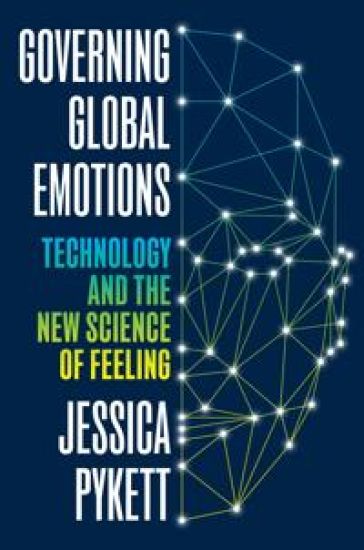
What goes wrong when emotions get turned into digital data to be measured, monitored and managed. Data from facial emotion recognition, brain-computer interfaces, virtual reality, global emotion surveys and sentiment analysis offer an extraordinary new terrain for scientific exploration. Emotion sensing promises to decode and even to augment and control the very essence of human experience. But what if the science and technology of emotion measurement get emotions wrong? In Governing Global Emotions, Jessica Pykett argues that we must shift our thinking on digital emotional governance and calls for a radical reassessment of the fundamental claims of emotion science. Pykett offers a groundbreaking account of how emotions are defined, used and governed through emerging digital technologies, arguing that emotions, senses and feelings have become a crucial new arena for political, economic and cultural struggles. She describes how technologies create emotional data, how smart cities use sensors to monitor residents’ feelings and how global economies measure happiness. Drawing on twenty years of interdisciplinary social science, Pykett documents how emotion science continues to delve deeper, as researchers look for evolutionary continuity, biological certainty and neuroscientific consensus. What she finds instead is a divided field vulnerable to significant criticism. Pykett concludes that standardised, universal and instrumentalised scientific accounts of emotions are machinic, and when divorced from context, they can never be global.
Governing Global Emotions

Governing Global Emotions

Jessica Pykett

PRINCETON UNIVERSITY PRESS
2026
sidottu
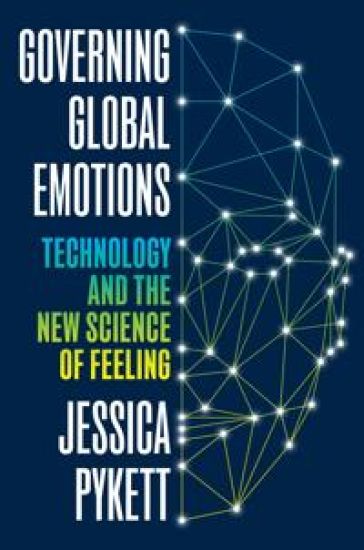
What goes wrong when emotions get turned into digital data to be measured, monitored and managed. Data from facial emotion recognition, brain-computer interfaces, virtual reality, global emotion surveys and sentiment analysis offer an extraordinary new terrain for scientific exploration. Emotion sensing promises to decode and even to augment and control the very essence of human experience. But what if the science and technology of emotion measurement get emotions wrong? In Governing Global Emotions, Jessica Pykett argues that we must shift our thinking on digital emotional governance and calls for a radical reassessment of the fundamental claims of emotion science. Pykett offers a groundbreaking account of how emotions are defined, used and governed through emerging digital technologies, arguing that emotions, senses and feelings have become a crucial new arena for political, economic and cultural struggles. She describes how technologies create emotional data, how smart cities use sensors to monitor residents’ feelings and how global economies measure happiness. Drawing on twenty years of interdisciplinary social science, Pykett documents how emotion science continues to delve deeper, as researchers look for evolutionary continuity, biological certainty and neuroscientific consensus. What she finds instead is a divided field vulnerable to significant criticism. Pykett concludes that standardised, universal and instrumentalised scientific accounts of emotions are machinic, and when divorced from context, they can never be global.

Brain Culture

Brain Culture

Jessica Pykett

Policy Press
2017
nidottu
This unique book offers a timely analysis of the impact of rapidly advancing knowledge about the brain, mind and behaviour on contemporary public policy and practice. Examining developments in behaviour change policies, neuroscience, architecture and urban design, education, and workplace training programmes the book analyses the global spread of research agendas, policy experiments and everyday practice informed by ‘brain culture’. It offers an alternative, geographically informed set of explanations for what matters in explaining how people behave and how citizens’ behaviour should be governed. It will be of interest to students and academics across the social and behavioural sciences.
Brain Culture

Brain Culture

Jessica Pykett

Policy Press
2015
sidottu
This unique book offers a timely analysis of the impact of rapidly advancing knowledge about the brain, mind and behaviour on contemporary public policy and practice. Examining developments in behaviour change policies, neuroscience, architecture and urban design, education, and workplace training programmes the book analyses the global spread of research agendas, policy experiments and everyday practice informed by ‘brain culture’. It offers an alternative, geographically informed set of explanations for what matters in explaining how people behave and how citizens’ behaviour should be governed. It will be of interest to students and academics across the social and behavioural sciences.
Changing Behaviours

Changing Behaviours

Rhys Jones; Jessica Pykett; Mark Whitehead

Edward Elgar Publishing Ltd
2014
nidottu
Changing Behaviours charts the emergence of the behavior change agenda in UK based public policy making since the late 1990s.By tracing the influence of the behavioural sciences on Whitehall policy makers, the authors explore a new psychological orthodoxy in the practices of governing. Drawing on original empirical material, chapters examine the impact of behavior change policies in the fields of health, personal finance and the environment. This topical and insightful book analyses how the nature of the human subject itself is re-imagined through behavior change, and develops an analytical framework for evaluating the ethics, efficacy and potential empowerment of behavior change.This unique book will be of interest to advanced undergraduates, postgraduates and academics in a range of different disciplines. In particular, its inter-disciplinary focus on key themes in the social sciences - the state, citizenship, the meaning and scope of government - will make it essential reading for students of political science, sociology, anthropology, geography, policy studies and public administration. In addition, the book s focus on the practical use of psychological and behavioral insights by politicians and policy makers should lead to considerable interest in psychology and behavioural economics.Contents: Preface 1. Changing Behaviours and 'New Models of Man' 2. The Rise of the Psychological State in the UK 3. In the Heat of the Moment: Gambling and Saving Behaviours 4. Replanning the Street: Changing Behaviours by Spatial Design 5. Governing the Body: Addressing the Temptations of Food and Alcohol 6. Greening the Brain: The Pro-Environmental Behaviour Change Agenda Conclusion: Nudge, Think, Steer, Punch! Searching for the Real Third Way References Index
Changing Behaviours

Changing Behaviours

Rhys Jones; Jessica Pykett; Mark Whitehead

Edward Elgar Publishing Ltd
2013
sidottu
Changing Behaviours charts the emergence of the behavior change agenda in UK based public policy making since the late 1990s.By tracing the influence of the behavioural sciences on Whitehall policy makers, the authors explore a new psychological orthodoxy in the practices of governing. Drawing on original empirical material, chapters examine the impact of behavior change policies in the fields of health, personal finance and the environment. This topical and insightful book analyses how the nature of the human subject itself is re-imagined through behavior change, and develops an analytical framework for evaluating the ethics, efficacy and potential empowerment of behavior change.This unique book will be of interest to advanced undergraduates, postgraduates and academics in a range of different disciplines. In particular, its inter-disciplinary focus on key themes in the social sciences - the state, citizenship, the meaning and scope of government - will make it essential reading for students of political science, sociology, anthropology, geography, policy studies and public administration. In addition, the book s focus on the practical use of psychological and behavioral insights by politicians and policy makers should lead to considerable interest in psychology and behavioural economics.Contents: Preface 1. Changing Behaviours and 'New Models of Man' 2. The Rise of the Psychological State in the UK 3. In the Heat of the Moment: Gambling and Saving Behaviours 4. Replanning the Street: Changing Behaviours by Spatial Design 5. Governing the Body: Addressing the Temptations of Food and Alcohol 6. Greening the Brain: The Pro-Environmental Behaviour Change Agenda Conclusion: Nudge, Think, Steer, Punch! Searching for the Real Third Way References Index
Neuroliberalism

Neuroliberalism

Mark Whitehead; Rhys Jones; Rachel Lilley; Jessica Pykett; Rachel Howell

Routledge
2017
sidottu
Many governments in the developed world can now best be described as ‘neuroliberal’: having a combination of neoliberal principles with policy initiatives derived from insights in the behavioural sciences. Neuroliberalism presents the results of the first critical global study of the impacts of the behavioural sciences on public policy and government actions, including behavioural economics, behavioural psychology and neuroeconomics. Drawing on interviews with leading behaviour change experts, organizations and policy-makers, and discussed in alignment with a series of international case studies, this volume provides a critical analysis of the ethical, economic, political and constitutional implications of behaviourally oriented government. It explores the impacts of the behavioural sciences on everyday life through a series of themes, including: understandings of the human subject; interpretations of freedom; the changing form and function of the state; the changing role of the corporation in society; and the design of everyday environments and technologies. The research presented in this volume reveals a diverse set of neuroliberal approaches to government that offer policy-makers and behaviour change professionals a real choice in relation to the systems of behavioural government they can implement. This book also argues that the behavioural sciences have the potential to support much more effective systems of government, but also generate new ethical concerns that policy-makers should be aware of.
Neuroliberalism

Neuroliberalism

Mark Whitehead; Rhys Jones; Rachel Lilley; Jessica Pykett; Rachel Howell

Routledge
2017
nidottu
Many governments in the developed world can now best be described as ‘neuroliberal’: having a combination of neoliberal principles with policy initiatives derived from insights in the behavioural sciences. Neuroliberalism presents the results of the first critical global study of the impacts of the behavioural sciences on public policy and government actions, including behavioural economics, behavioural psychology and neuroeconomics. Drawing on interviews with leading behaviour change experts, organizations and policy-makers, and discussed in alignment with a series of international case studies, this volume provides a critical analysis of the ethical, economic, political and constitutional implications of behaviourally oriented government. It explores the impacts of the behavioural sciences on everyday life through a series of themes, including: understandings of the human subject; interpretations of freedom; the changing form and function of the state; the changing role of the corporation in society; and the design of everyday environments and technologies. The research presented in this volume reveals a diverse set of neuroliberal approaches to government that offer policy-makers and behaviour change professionals a real choice in relation to the systems of behavioural government they can implement. This book also argues that the behavioural sciences have the potential to support much more effective systems of government, but also generate new ethical concerns that policy-makers should be aware of.