Kirjailija
Jieun Kiaer
Kirjat ja teokset yhdessä paikassa: 64 kirjaa, julkaisuja vuosilta 2012-2026, suosituimpien joukossa Missionary Translators. Vertaile teosten hintoja ja tarkista saatavuus suomalaisista kirjakaupoista.
64 kirjaa
Kirjojen julkaisuhaarukka 2012-2026.
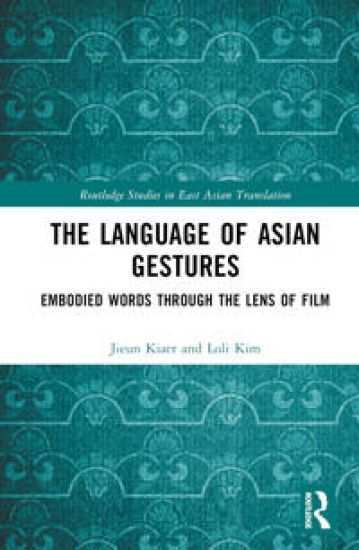
The Language of Asian Gestures explores Asian gestures as a non-verbal language within the context of films and dramas.This book provides a cross-cultural Asian perspective on a range of important common gestures and their meanings, covering a range of Asian regions including Korea, China, Hong Kong, Japan, Taiwan, Vietnam, Singapore, Thailand, Indonesia, the Philippines, India, and Pakistan. While most studies focus on text-based communication, gestures find themselves overshadowed by text and speech. Asian gestures, too, often reside in the shadow of Eurocentric viewpoints. This book will shift this dynamic and amplify the voices that have typically been marginalised within 20th-century Eurocentric discussions.The book will be informative for students and researchers interested in Asian languages, cultures, film studies, and pragmatics. It bridges the gap between words and gestures, unveiling a world of concealed meanings and enriching our understanding of diverse forms of expression.
An exhilarating new account of the English language, from British colonialism to the age of social media, emphasizing dynamism and democratization Whose language is English? Although we often think of it as native to one place, today there are many Englishes. About seventy-five countries are now using English as their official or first language, and the number of people speaking it around the world continues to rise. But the makeup of the English-speaking population is changing. The proportion of speakers for whom English is a first language, for instance, is decreasing, due to the explosion in popularity of English as a second language. In this ambitious book, Jieun Kiaer explores the lives of English words in the twenty-first century, when the creation and use of language has become an increasingly dynamic, interactive, and diverse process in which ordinary people have taken leading roles—offering such coinages as “flexitarian,” “MeToo,” “glow up,” and “shitizen” to “No sabo kids” and beyond. As English language grows ever more diverse, Kiaer believes, we need a paradigm shift. We must acknowledge that all varieties of English are languages in their own right when they are used by a community of speakers. English is a language that belongs to everyone. Considering the effects of social media, the Covid-19 pandemic, virtual work, globalization, and artificial intelligence, Kiaer paints a compelling portrait of a diffuse, rapidly evolving language characterized by creativity and democratization.
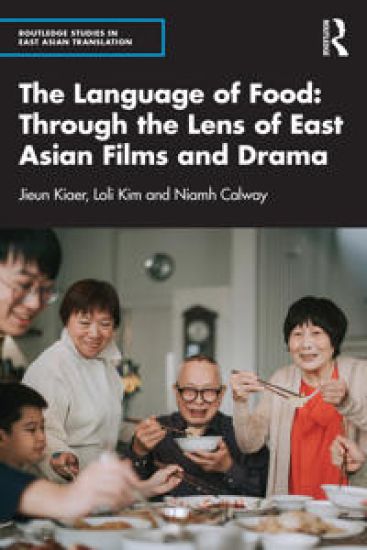
The Language of Food: Through the Lens of East Asian Films and Drama
Jieun Kiaer; Loli Kim; Niamh Calway
TAYLOR FRANCIS LTD
2024
nidottu
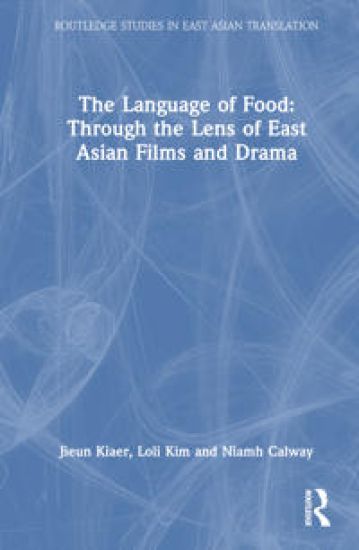
The Language of Food: Through the Lens of East Asian Films and Drama invites readers into the fascinating world where food culture and language intersect, revealing how each dish communicates beyond mere taste.Through East Asian films and television shows, this book uncovers the rich tapestry of 'food languages' embedded within East Asian cultures. Divided into three parts – Base, Ingredients, and Seasoning – this book provides a structured exploration of this phenomenon. The Base section offers philosophical and historical context, while the Ingredients section delves deeper into specific themes, using examples from film and television drama to illustrate the nuanced communication inherent in food culture. Finally, the book is 'seasoned' with linguistic insights and a practical food words glossary, aiding readers in navigating the intricate verbal and cultural nuances at play. This illuminating resource goes beyond the realm of food itself, offering a profound understanding of how each dish carries its language, enriching communication and deepening cultural connections.This book will captivate students and researchers of East Asian languages, media studies, film studies, food studies, and Korean Wave studies and anyone intrigued by the intricate relationship between food and language.
The Language of Food: Through the Lens of East Asian Films and Drama
Jieun Kiaer; Loli Kim; Niamh Calway
TAYLOR FRANCIS LTD
2024
sidottu
The Language of Food: Through the Lens of East Asian Films and Drama invites readers into the fascinating world where food culture and language intersect, revealing how each dish communicates beyond mere taste.Through East Asian films and television shows, this book uncovers the rich tapestry of 'food languages' embedded within East Asian cultures. Divided into three parts – Base, Ingredients, and Seasoning – this book provides a structured exploration of this phenomenon. The Base section offers philosophical and historical context, while the Ingredients section delves deeper into specific themes, using examples from film and television drama to illustrate the nuanced communication inherent in food culture. Finally, the book is 'seasoned' with linguistic insights and a practical food words glossary, aiding readers in navigating the intricate verbal and cultural nuances at play. This illuminating resource goes beyond the realm of food itself, offering a profound understanding of how each dish carries its language, enriching communication and deepening cultural connections.This book will captivate students and researchers of East Asian languages, media studies, film studies, food studies, and Korean Wave studies and anyone intrigued by the intricate relationship between food and language.
The Language of Asian Gestures explores Asian gestures as a non-verbal language within the context of films and dramas.This book provides a cross-cultural Asian perspective on a range of important common gestures and their meanings, covering a range of Asian regions including Korea, China, Hong Kong, Japan, Taiwan, Vietnam, Singapore, Thailand, Indonesia, the Philippines, India, and Pakistan. While most studies focus on text-based communication, gestures find themselves overshadowed by text and speech. Asian gestures, too, often reside in the shadow of Eurocentric viewpoints. This book will shift this dynamic and amplify the voices that have typically been marginalised within 20th-century Eurocentric discussions.The book will be informative for students and researchers interested in Asian languages, cultures, film studies, and pragmatics. It bridges the gap between words and gestures, unveiling a world of concealed meanings and enriching our understanding of diverse forms of expression.
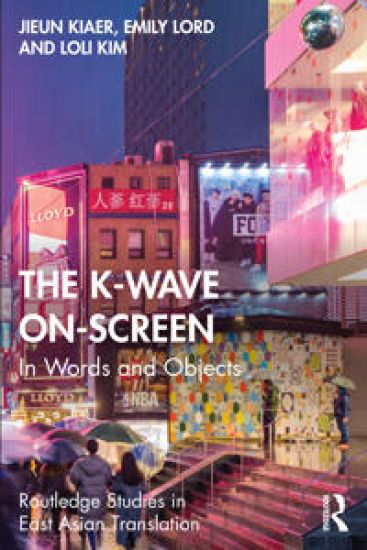
The K-Wave On-Screen provides an engaging and accessible exploration of the meaning of ‘K-’ through the lens of words and objects in K-dramas and K-films. Once a small subculture known only to South Korea’s East Asian neighbours, the Korean Wave has exploded in popularity around the globe in the last decade. Its success has been fuelled by social media and the advanced technological capabilities of South Korea. With #KpopTwitter having amassed 7.8 billion tweets and with K-films receiving acclaim from major award ceremonies, the K-wave is now a global cultural phenomenon. This book touches on globally popular productions, such as Parasite (2019), Squid Game (2021), Pachinko (2022), SKY Castle (2018), and Kim Ji-young: Born 1982 (2019) to highlight that K- has departed from the traditional meaning of ‘Korean-ness’ to become a new, globally-informed, and hybrid entity.This book will be of interest to students in East Asian studies, and those engaged with Korean language learning. The book will also appeal to those interested in Korean culture and media.
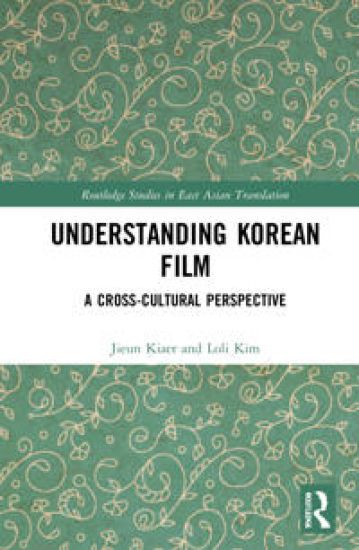
Film viewing presents a unique situation in which the film viewer is unwittingly placed in the role of a multimodal translator, finding themselves entirely responsible for interpreting multifaceted meanings at the mercy of their own semiotic repertoire. Yet, researchers have made little attempt, as they have for literary texts, to explain the gap in translation when it comes to multimodality. It is no wonder then that, in an era of informed consumerism, film viewers have been trying to develop their own toolboxes for the tasks that they are faced with when viewing foreign language films by sharing information online. This is particularly the case with South Korean film, which has drawn the interest of foreign viewers who want to understand these untranslatable meanings and even go as far as learning the Korean language to do so. Understanding Korean Film: A Cross-Cultural Perspective breaks this long-awaited ground by explaining the meaning potential of a selection of common Korean verbal and non-verbal expressions in a range of contexts in South Korean film that are often untranslatable for English-speaking Western viewers. Through the selection of expressions provided in the text, readers become familiar with a system that can be extended more generally to understanding expressions in South Korean films. Formal analyses are presented in the form of in-depth discursive deconstructions of verbal and non-verbal expressions within the context of South Korea’s Confucian traditions. Our case studies thus illustrate, in a more systematic way, how various meaning potentials can be inferred in particular narrative contexts.
Missionary Translators
Jieun Kiaer; Alessandro Bianchi; Giulia Falato; Pia Jolliffe; Kazue Mino; Kyungmin Yu
TAYLOR FRANCIS LTD
2023
nidottu
Exploring the history of missionary translation of Christian texts in East Asia, Missionary Translators offers a comparative perspective between the features of East Asian languages and the historical context of the translation. Focusing on the Bible and Christian theological works, it looks at the intersection of linguistics, translation studies and history. This book discusses the real-life challenges faced by missionary translators in producing Christian texts in East Asian languages. Students, historians, scholars and those interested in the study of East Asian cultures or translation will find this book to be an insightful and invaluable resource.
A Linguistic Image of Womanhood in South Korea
Jieun Kiaer; Jiyoung Shin
TAYLOR FRANCIS LTD
2022
sidottu
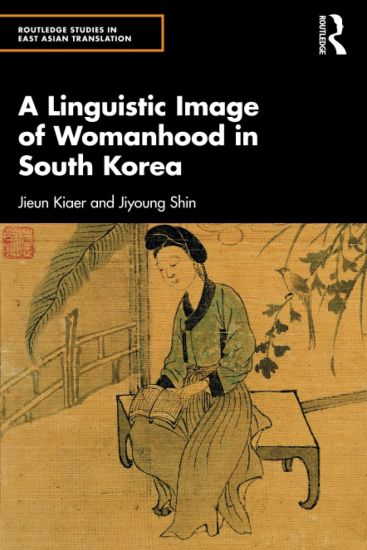
A Linguistic Image of Womanhood in South Korea examines the verbal and non-verbal techniques used by contemporary South Korean women to navigate their society.South Korea is extremely hierarchical, and this is expressed through a complex array of different politeness levels in words, gestures, and behaviours. These hierarchies were formed over 500 years ago with the introduction of Neo-Confucianism from China, but patriarchal and paternalistic values still linger in contemporary Korean society. In this book, the authors have coined the term ‘language cosmetics’ to describe how women in South Korea modify their language and behaviour to conform to social expectations. The book examines womanhood and femininity as seen in popular Korean films, K-dramas, and K-pop. The authors note that feminine language and behaviour are not limited to women (as seen by the practice of aegyo or ‘acting cute’ within Korean boy bands), and they describe the tensions between gender hierarchy and socioeconomic status (as seen in the powerful and elegant samonim ladies of K-drama).This book will be informative for those studying and researching in the fields of Asian studies, cultural studies, linguistics, and East Asian languages, particularly those analysing how society and gender have an impact upon language.
A Linguistic Image of Womanhood in South Korea
Jieun Kiaer; Jiyoung Shin
TAYLOR FRANCIS LTD
2022
nidottu
A Linguistic Image of Womanhood in South Korea examines the verbal and non-verbal techniques used by contemporary South Korean women to navigate their society.South Korea is extremely hierarchical, and this is expressed through a complex array of different politeness levels in words, gestures, and behaviours. These hierarchies were formed over 500 years ago with the introduction of Neo-Confucianism from China, but patriarchal and paternalistic values still linger in contemporary Korean society. In this book, the authors have coined the term ‘language cosmetics’ to describe how women in South Korea modify their language and behaviour to conform to social expectations. The book examines womanhood and femininity as seen in popular Korean films, K-dramas, and K-pop. The authors note that feminine language and behaviour are not limited to women (as seen by the practice of aegyo or ‘acting cute’ within Korean boy bands), and they describe the tensions between gender hierarchy and socioeconomic status (as seen in the powerful and elegant samonim ladies of K-drama).This book will be informative for those studying and researching in the fields of Asian studies, cultural studies, linguistics, and East Asian languages, particularly those analysing how society and gender have an impact upon language.
As societies across the globe are becoming increasingly interwoven at an unprecedented speed and across an impressive scope, so too is the world of food, allowing the English language to develop an ever-widening culinary vocabulary. This book examines the lives of such words in today’s discourse on eating and drinking, focusing on foreign - particularly East Asian - influences on culinary terms in English, and how words are born and evolve in a modern transcultural environment. Through the lens of culinary words, this book demonstrates that foreign-origin and hybrid words, previously considered marginal, have become a main source of new imports into our daily lexicon.With case studies from Japan to Mongolia, Hong Kong to Korea, China to Vietnam, and beyond, this book examines how more and more words are becoming borderless and forming their own new global identities. By showcasing some lesser-known regional cuisines, alongside staple dishes that many of us already know and love, this book offers a wide range of examples in order to illustrate the metamorphosis of the manner in which we engage with food words. This book will be of interest to general readers, as well as those who are engaged in East Asian studies, English linguistics, intercultural communication studies, translation studies, and lexicography.
Film viewing presents a unique situation in which the film viewer is unwittingly placed in the role of a multimodal translator, finding themselves entirely responsible for interpreting multifaceted meanings at the mercy of their own semiotic repertoire. Yet, researchers have made little attempt, as they have for literary texts, to explain the gap in translation when it comes to multimodality. It is no wonder then that, in an era of informed consumerism, film viewers have been trying to develop their own toolboxes for the tasks that they are faced with when viewing foreign language films by sharing information online. This is particularly the case with South Korean film, which has drawn the interest of foreign viewers who want to understand these untranslatable meanings and even go as far as learning the Korean language to do so. Understanding Korean Film: A Cross-Cultural Perspective breaks this long-awaited ground by explaining the meaning potential of a selection of common Korean verbal and non-verbal expressions in a range of contexts in South Korean film that are often untranslatable for English-speaking Western viewers. Through the selection of expressions provided in the text, readers become familiar with a system that can be extended more generally to understanding expressions in South Korean films. Formal analyses are presented in the form of in-depth discursive deconstructions of verbal and non-verbal expressions within the context of South Korea’s Confucian traditions. Our case studies thus illustrate, in a more systematic way, how various meaning potentials can be inferred in particular narrative contexts.
Missionary Translators
Jieun Kiaer; Alessandro Bianchi; Giulia Falato; Pia Jolliffe; Kazue Mino; Kyungmin Yu
Routledge
2021
sidottu
Exploring the history of missionary translation of Christian texts in East Asia, Missionary Translators offers a comparative perspective between the features of East Asian languages and the historical context of the translation. Focusing on the Bible and Christian theological works, it looks at the intersection of linguistics, translation studies and history. This book discusses the real-life challenges faced by missionary translators in producing Christian texts in East Asian languages. Students, historians, scholars and those interested in the study of East Asian cultures or translation will find this book to be an insightful and invaluable resource.
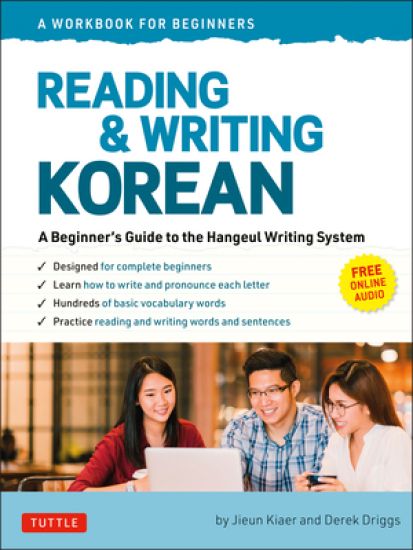
Reading and Writing Korean: A Workbook for Self-Study
Jieun Kiaer; Derek Driggs
Tuttle Publishing
2021
nidottu
The easy way to learn the Korean Hangeul writing system!Fans of K-Pop and Korean dramas as well as beginning students of Korean will love this handy guide to the Korean Hangeul alphabet. Designed for both self-study students and use in a classroom, no prior knowledge of Korean is needed. With this workbook, you'll quickly learn to read, write and pronounce the letters and hundreds of useful Korean words and phrases.Reading and Writing Korean includes:Free online audio recordings to teach you to pronounce all the sounds of the language correctlyFun exercises to help you memorize a broad range of vocabulary—from numbers and Korean foods to pop culture and social mediaA set of free downloadable flash cards to help you memorize letters and wordsA complete answer key for all the exercisesMnemonic illustrations to help memorize the sounds of the lettersOxford University instructors Jieun Kiaer and Derek Driggs present the vowels, consonants, syllables and words in a systematic, step-by-step approach which takes you from tracing and copying individual letters to writing complete words and sentences in no time at all!
On Translating Modern Korean Poetry
Jieun Kiaer; Anna Yates-Lu; Mattho Mandersloot
Routledge
2021
sidottu
On Translating Modern Korean Poetry is a research monograph exploring the intricacies and complexities of translating modern Korean poetry.This monograph highlights the difficulties entailed in translating Korean poetry, due to the lexical, structural, social, expressive and attitudinal levels with which the translator must be engaged. Featuring all-new translations, this book explores the question of what exactly modern Korean poetry is, increases the representation of female poets and includes poems addressing modern historical events, globalization, diaspora and mental health. Each chapter provides commentary on both the original and translated texts and looks at some of the issues that arose during the translation process. By doing so the authors draw attention to the intricate, trans-cultural and trans-creational process of Korean poetry translation.Collating contemporary Korean poetry and intricately exploring the translation process, this book is ideal for researchers and advanced level students of Korean Studies, Translation Studies and Literature with an interest in translation.
Study Abroad in Korea prepares students for study in Korean by providing the reader with key expressions and guidance on certain aspects of culture and language idiosyncratic to Korea, focusing on everyday scenarios. Key features include: Key expressions throughout the book, providing practical linguistic knowledge with jargon-free explanations.Exposes readers to contextualised, real-life situations through dialogues between two characters, one of whom is bilingual and teaching in Korea; the other is a student studying abroad.Discussions of important historical events and social issues accompany relevant chapters.Features a variety of dialects and varieties of spoken Korean to help students acclimatise to the diverse types of spoken Korean they will encounter.Aimed at those who possess a basic knowledge of Korean who wish to develop their linguistic knowledge in preparation for relocation to Korea, this book is ideal for lower-intermediate and A2-level students of Korean or for self-study.
Translingual Words is a detailed case study on lexical integration, or mediation, occurring between East Asian languages and English(es). In Part I, specific examples from global linguistic corpora are used to discuss the issues involved in lexical interaction between East Asia and the English-speaking world. Part II explores the spread of East Asian words in English, while Part III discusses English words which can be found in East Asian languages. Translingual Words presents a novel approach on hybrid words by challenging the orthodox ideas on lexical borrowing and explaining the dynamic growth of new words based on translingualism and transculturalism.
As societies across the globe are becoming increasingly interwoven at an unprecedented speed and across an impressive scope, so too is the world of food, allowing the English language to develop an ever-widening culinary vocabulary. This book examines the lives of such words in today’s discourse on eating and drinking, focusing on foreign - particularly East Asian - influences on culinary terms in English, and how words are born and evolve in a modern transcultural environment. Through the lens of culinary words, this book demonstrates that foreign-origin and hybrid words, previously considered marginal, have become a main source of new imports into our daily lexicon.With case studies from Japan to Mongolia, Hong Kong to Korea, China to Vietnam, and beyond, this book examines how more and more words are becoming borderless and forming their own new global identities. By showcasing some lesser-known regional cuisines, alongside staple dishes that many of us already know and love, this book offers a wide range of examples in order to illustrate the metamorphosis of the manner in which we engage with food words. This book will be of interest to general readers, as well as those who are engaged in East Asian studies, English linguistics, intercultural communication studies, translation studies, and lexicography.
Korean Literature Through the Korean Wave engages with the rising interest in both the Korean Wave and Korean language learning by incorporating Korean Wave cultural content, especially K-dramas, films and songs, to underline and support the teaching of Korean literature. It combines both premodern and modern texts, including poetry, novels, philosophical treatises, and even comics, to showcase the diversity of Korean literature. Particular care has been taken to include the voices of those marginalised in the often male, elite-dominated discourse on Korean literature. In particular, this book also distinguishes itself by extending the usual breadth of what is considered modern Korean literature up until the present day, including texts published as recently as 2017. Many of these texts are very relevant for recent discourse in Korean affairs, such as the obsession with physical appearance, the #MeToo movement and multiculturalism. This textbook is aimed at B1-B2 level and Intermediate-Mid students of Korean. On the one hand the textbook introduces students to seeing beyond Korean literature as a monolithic entity, giving a taste of its wonderful richness and diversity. On the other hand, it provides an entry point into discussions on Korean contemporary society, in which the text (and associated media extracts) provides the catalyst for more in-depth analysis and debate.