Kirjojen hintavertailu. Mukana 12 390 323 kirjaa ja 12 kauppaa.

Kirjailija

Jihoon Kim

Kirjat ja teokset yhdessä paikassa: 6 kirjaa, julkaisuja vuosilta 2016-2024, suosituimpien joukossa Between Film, Video, and the Digital. Vertaile teosten hintoja ja tarkista saatavuus suomalaisista kirjakaupoista.

6 kirjaa

Kirjojen julkaisuhaarukka 2016-2024.

Activism and Post-activism

Activism and Post-activism

Jihoon Kim

OXFORD UNIVERSITY PRESS INC
2024
nidottu
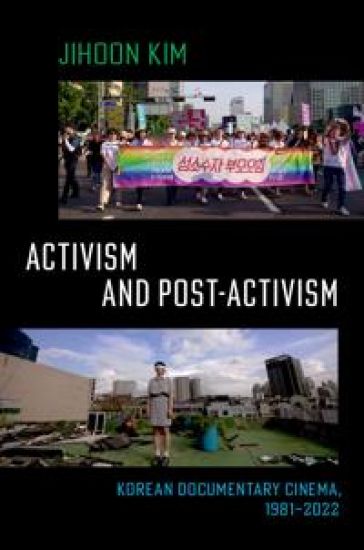
Activism and Post-activism: Korean Documentary Cinema, 1981--2022 is a new book about nonfiction filmmaking in the private and independent sectors of South Korean cinema and media from the early 1980s to the present day. Drawing on the methodologies of documentary studies, experimental film and video, digital cinema, local discourses on independent documentary, and the literature on the social changes of South Korea, author Jihoon Kim historicizes the formation and development of Korean independent documentary in close dialogue with South Korea's social movements. From the 1980s mass anti-dictatorship movement to twenty-first-century labor issues, feminism, LGBT rights, environmental justice, and key events such as the Sewol Ferry disaster and the Candlelight Protests, Kim offers a comprehensive history of Korean social change documentaries in terms of their activist tradition. At the same time, Kim also maps out the formal and aesthetic divergences of twenty-first-century Korean documentary cinema beyond the activist tradition, while also demonstrating how they have inherited and dynamically renewed the tradition's engagement with contested reality and history. Making the tripartite connections between the socio-political history of South Korea, documentary's aesthetics and politics, and the shifting institutional and technological evolution of documentary production and distribution, the book argues that what is unique about this forty-year history of South Korean documentary cinema is the intensive and compressed coevolution of its two interlocked tendencies: activism and post-activism.
Activism and Post-activism

Activism and Post-activism

Jihoon Kim

OXFORD UNIVERSITY PRESS INC
2024
sidottu
Activism and Post-activism: Korean Documentary Cinema, 1981--2022 is a new book about nonfiction filmmaking in the private and independent sectors of South Korean cinema and media from the early 1980s to the present day. Drawing on the methodologies of documentary studies, experimental film and video, digital cinema, local discourses on independent documentary, and the literature on the social changes of South Korea, author Jihoon Kim historicizes the formation and development of Korean independent documentary in close dialogue with South Korea's social movements. From the 1980s mass anti-dictatorship movement to twenty-first-century labor issues, feminism, LGBT rights, environmental justice, and key events such as the Sewol Ferry disaster and the Candlelight Protests, Kim offers a comprehensive history of Korean social change documentaries in terms of their activist tradition. At the same time, Kim also maps out the formal and aesthetic divergences of twenty-first-century Korean documentary cinema beyond the activist tradition, while also demonstrating how they have inherited and dynamically renewed the tradition's engagement with contested reality and history. Making the tripartite connections between the socio-political history of South Korea, documentary's aesthetics and politics, and the shifting institutional and technological evolution of documentary production and distribution, the book argues that what is unique about this forty-year history of South Korean documentary cinema is the intensive and compressed coevolution of its two interlocked tendencies: activism and post-activism.
Documentary's Expanded Fields

Documentary's Expanded Fields

Jihoon Kim

OXFORD UNIVERSITY PRESS INC
2022
nidottu
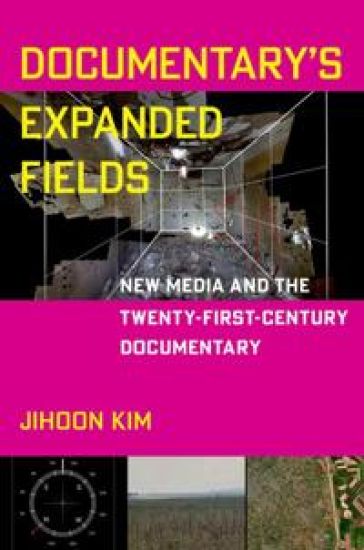
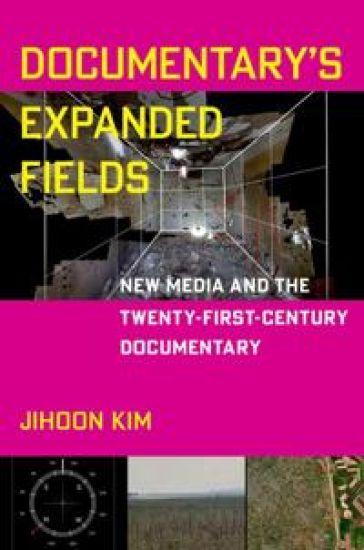
Documentary's Expanded Fields: New Media and the Twenty-First-Century Documentary offers a theoretical mapping of contemporary non-standard documentary practices enabled by the proliferation of new digital imaging, lightweight and non-operator digital cameras, multiscreen and interactive interfaces, and web 2.0 platforms. These emergent practices encompass digital data visualizations, digital films that experiment with the deliberate manipulation of photographic records, documentaries based on drone cameras, GoPros, and virtual reality (VR) interfaces, documentary installations in the gallery, interactive documentary (i-doc), citizens' vernacular online videos that document scenes of the protests such as the Arab Spring, the Hong Kong Protests, and the Black Lives Matter Movements, and new activist films, videos, and archiving projects that respond to those political upheavals. Building on the interdisciplinary framework of documentary studies, digital media studies, and contemporary art criticism, Jihoon Kim investigates the ways in which these practices both challenge and update the aesthetic, epistemological, political, and ethical assumptions of traditional film-based documentary. Providing a diverse range of case studies that classify and examine these practices, the book argues that the new media technologies and the experiential platforms outside the movie theater, such as the gallery, the world wide web, and social media services, expand five horizons of documentary cinema: image, vision, dispositif, archive, and activism. This reconfiguration of these five horizons demonstrates that documentary cinema in the age of new media and platforms, which Kim labels as the 'twenty-first-century documentary,' dynamically changes its boundaries while also exploring new experiences of reality and history in times of the contemporary crises across the globe, including the COVID-19 pandemic.
Documentary's Expanded Fields

Documentary's Expanded Fields

Jihoon Kim

OXFORD UNIVERSITY PRESS INC
2022
sidottu
Documentary's Expanded Fields: New Media and the Twenty-First-Century Documentary offers a theoretical mapping of contemporary non-standard documentary practices enabled by the proliferation of new digital imaging, lightweight and non-operator digital cameras, multiscreen and interactive interfaces, and web 2.0 platforms. These emergent practices encompass digital data visualizations, digital films that experiment with the deliberate manipulation of photographic records, documentaries based on drone cameras, GoPros, and virtual reality (VR) interfaces, documentary installations in the gallery, interactive documentary (i-doc), citizens' vernacular online videos that document scenes of the protests such as the Arab Spring, the Hong Kong Protests, and the Black Lives Matter Movements, and new activist films, videos, and archiving projects that respond to those political upheavals. Building on the interdisciplinary framework of documentary studies, digital media studies, and contemporary art criticism, Jihoon Kim investigates the ways in which these practices both challenge and update the aesthetic, epistemological, political, and ethical assumptions of traditional film-based documentary. Providing a diverse range of case studies that classify and examine these practices, the book argues that the new media technologies and the experiential platforms outside the movie theater, such as the gallery, the world wide web, and social media services, expand five horizons of documentary cinema: image, vision, dispositif, archive, and activism. This reconfiguration of these five horizons demonstrates that documentary cinema in the age of new media and platforms, which Kim labels as the 'twenty-first-century documentary,' dynamically changes its boundaries while also exploring new experiences of reality and history in times of the contemporary crises across the globe, including the COVID-19 pandemic.
Between Film, Video, and the Digital

Between Film, Video, and the Digital

Jihoon Kim

Bloomsbury Academic USA
2018
nidottu
Encompassing experimental film and video, essay film, gallery-based installation art, and digital art, Jihoon Kim establishes the concept of hybrid moving images as an array of impure images shaped by the encounters and negotiations between different media, while also using it to explore various theoretical issues, such as stillness and movement, indexicality, abstraction, materiality, afterlives of the celluloid cinema, archive, memory, apparatus, and the concept of medium as such. Grounding its study in interdisciplinary framework of film studies, media studies, and contemporary art criticism, Between Film, Video, and the Digital offers a fresh insight on the post-media conditions of film and video under the pervasive influences of digital technologies, as well as on the crucial roles of media hybridity in the creative processes of giving birth to the emerging forms of the moving image. Incorporating in-depth readings of recent works by more than thirty artists and filmmakers, including Jim Campbell, Bill Viola, Sam Taylor-Johnson, David Claerbout, Fiona Tan, Takeshi Murata, Jennifer West, Ken Jacobs, Christoph Girardet and Matthias Müller, Hito Steyerl, Lynne Sachs, Harun Farocki, Doug Aitken, Douglas Gordon, Stan Douglas, Candice Breitz, among others, the book is the essential scholarly monograph for understanding how digital technologies simultaneously depend on and differ film previous time-based media, and how this juncture of similarities and differences signals a new regime of the art of the moving image.
Between Film, Video, and the Digital

Between Film, Video, and the Digital

Jihoon Kim

Bloomsbury Academic USA
2016
sidottu
Encompassing experimental film and video, essay film, gallery-based installation art, and digital art, Jihoon Kim establishes the concept of hybrid moving images as an array of impure images shaped by the encounters and negotiations between different media, while also using it to explore various theoretical issues, such as stillness and movement, indexicality, abstraction, materiality, afterlives of the celluloid cinema, archive, memory, apparatus, and the concept of medium as such. Grounding its study in interdisciplinary framework of film studies, media studies, and contemporary art criticism, Between Film, Video, and the Digital offers a fresh insight on the post-media conditions of film and video under the pervasive influences of digital technologies, as well as on the crucial roles of media hybridity in the creative processes of giving birth to the emerging forms of the moving image. Incorporating in-depth readings of recent works by more than thirty artists and filmmakers, including Jim Campbell, Bill Viola, Sam Taylor-Johnson, David Claerbout, Fiona Tan, Takeshi Murata, Jennifer West, Ken Jacobs, Christoph Girardet and Matthias Müller, Hito Steyerl, Lynne Sachs, Harun Farocki, Doug Aitken, Douglas Gordon, Stan Douglas, Candice Breitz, among others, the book is the essential scholarly monograph for understanding how digital technologies simultaneously depend on and differ film previous time-based media, and how this juncture of similarities and differences signals a new regime of the art of the moving image.