Kirjojen hintavertailu. Mukana 12 390 323 kirjaa ja 12 kauppaa.

Kirjailija

Jihye Lee

Kirjat ja teokset yhdessä paikassa: 4 kirjaa, julkaisuja vuosilta 2021-2024, suosituimpien joukossa A Jewish Apocalyptic Framework of Eschatology in the Epistle to the Hebrews. Vertaile teosten hintoja ja tarkista saatavuus suomalaisista kirjakaupoista.

4 kirjaa

Kirjojen julkaisuhaarukka 2021-2024.

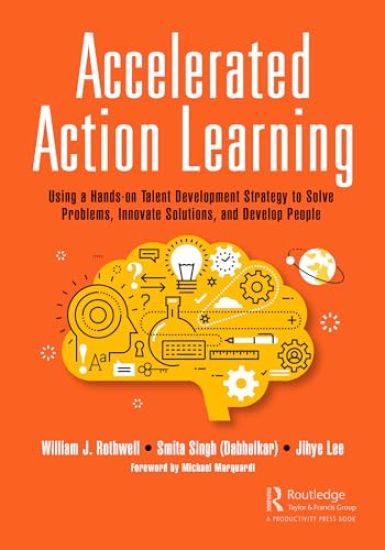
Accelerated Action Learning

Accelerated Action Learning

William J. Rothwell; Smita Singh (Dabholkar); Jihye Lee

TAYLOR FRANCIS LTD
2024
nidottu
In a knowledge-based society, people should not simply collect knowledge but should utilize and apply it to solve a problem. Action learning makes organizational members learn while solving real problems in the workplace. However, traditional action learning might not be effective for rapidly changing environments, because it is typically a process that requires substantial time. Therefore, this book provides a guideline on how to apply action learning quickly in workplaces—especially in virtual settings. Action learning allows the organization to develop people while, at the same time, getting work done. It is an alternative to classroom-based and online learning programs. In addition, it can also be an alternative to the instructional systems design (ISD) model or the successive approximation model (SAM) as a means of developing planned instruction if used for that purpose. Action learning can be an effective tool for Web 2.0 learning. Many organizations are now using self-directed teams and other team formats for work. It makes sense to revisit planned on-the-job training and learning with an emphasis on teams. Action learning is a process involving a small group with facilitators and action-learning process managers, so it is one of the best options for team-based problem-solving. This book provides real action learning cases. There are needs that have emerged in these post-pandemic times. There is a need to explain how action learning can be applied to various settings, issues, and challenges. Since COVID-19 occurred, many people must work in virtual or hybrid settings. This book gives trainers—who could be HR managers, operating managers, or learning and development professionals—guidelines that can be used in virtual settings to meet the new needs. Essentially, this book is written for team facilitators, supervisors, managers, or team members who wish to plan action-oriented, problem-based, and work-related learning experiences in real time. Because many action-learning books are written for an academic audience, it is not easy to put action learning into practice. Therefore, the goal of this book is to provide guidelines on how action learning starts, what basic principles should be considered, and what tools and techniques are needed for rapid action learning. The book is intended to be a primer on how to facilitate a planned learning project in a team or workgroup.
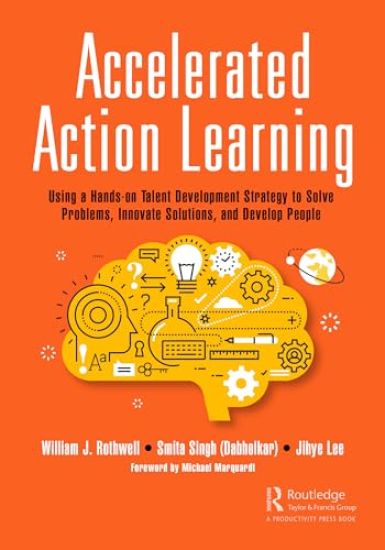
Accelerated Action Learning

Accelerated Action Learning

William J. Rothwell; Smita Singh (Dabholkar); Jihye Lee

TAYLOR FRANCIS LTD
2024
sidottu
In a knowledge-based society, people should not simply collect knowledge but should utilize and apply it to solve a problem. Action learning makes organizational members learn while solving real problems in the workplace. However, traditional action learning might not be effective for rapidly changing environments, because it is typically a process that requires substantial time. Therefore, this book provides a guideline on how to apply action learning quickly in workplaces—especially in virtual settings. Action learning allows the organization to develop people while, at the same time, getting work done. It is an alternative to classroom-based and online learning programs. In addition, it can also be an alternative to the instructional systems design (ISD) model or the successive approximation model (SAM) as a means of developing planned instruction if used for that purpose. Action learning can be an effective tool for Web 2.0 learning. Many organizations are now using self-directed teams and other team formats for work. It makes sense to revisit planned on-the-job training and learning with an emphasis on teams. Action learning is a process involving a small group with facilitators and action-learning process managers, so it is one of the best options for team-based problem-solving. This book provides real action learning cases. There are needs that have emerged in these post-pandemic times. There is a need to explain how action learning can be applied to various settings, issues, and challenges. Since COVID-19 occurred, many people must work in virtual or hybrid settings. This book gives trainers—who could be HR managers, operating managers, or learning and development professionals—guidelines that can be used in virtual settings to meet the new needs. Essentially, this book is written for team facilitators, supervisors, managers, or team members who wish to plan action-oriented, problem-based, and work-related learning experiences in real time. Because many action-learning books are written for an academic audience, it is not easy to put action learning into practice. Therefore, the goal of this book is to provide guidelines on how action learning starts, what basic principles should be considered, and what tools and techniques are needed for rapid action learning. The book is intended to be a primer on how to facilitate a planned learning project in a team or workgroup.
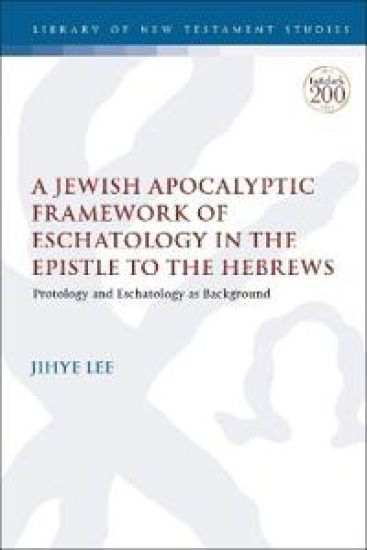
A Jewish Apocalyptic Framework of Eschatology in the Epistle to the Hebrews
In contrast to scholarly belief that the author of the Epistle to the Hebrews envisions the transcendent, heavenly world as the eschatological inheritance of God’s people, Jihye Lee argues that a version of an Urzeit-Endzeit eschatological framework - as observed in some Jewish apocalyptic texts - provides a plausible background against which the arguments of Hebrews are most comprehensively explained. Instead of transcendence to the heavenly world that will come after the destruction of the shakable creation, Lee suggests the possibility of a more dualistic new world.By first defining Urzeit-Endzeit eschatology, Lee is then able to explore its place in both pre and post 70 CE Second Temple Judaism. In examining Enoch, the Qumran Texts, Jubilees, the Liber Antiquitatum Biblicarum, 4 Ezra and 2 Baruch and finally the Book of Revelation, Lee compares a multitude of eschatological visions and the different depictions of the transformation of the world, judgement and the new world to come. Bringing these texts together to analyse the issue of God’s Rest in Hebrews, and the nature of the Unshakable Kingdom, Lee concludes that Hebrews envisions the kingdom as consisting of both the revealed heavenly world and the renewed creation as the eschatological venue of God’s dwelling place with his people.
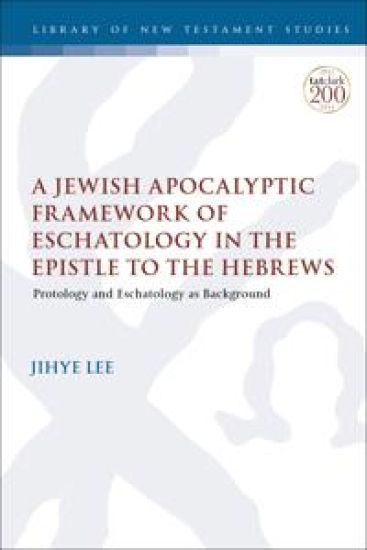
A Jewish Apocalyptic Framework of Eschatology in the Epistle to the Hebrews
In contrast to scholarly belief that the author of the Epistle to the Hebrews envisions the transcendent, heavenly world as the eschatological inheritance of God’s people, Jihye Lee argues that a version of an Urzeit-Endzeit eschatological framework - as observed in some Jewish apocalyptic texts - provides a plausible background against which the arguments of Hebrews are most comprehensively explained. Instead of transcendence to the heavenly world that will come after the destruction of the shakable creation, Lee suggests the possibility of a more dualistic new world.By first defining Urzeit-Endzeit eschatology, Lee is then able to explore its place in both pre and post 70 CE Second Temple Judaism. In examining Enoch, the Qumran Texts, Jubilees, the Liber Antiquitatum Biblicarum, 4 Ezra and 2 Baruch and finally the Book of Revelation, Lee compares a multitude of eschatological visions and the different depictions of the transformation of the world, judgement and the new world to come. Bringing these texts together to analyse the issue of God’s Rest in Hebrews, and the nature of the Unshakable Kingdom, Lee concludes that Hebrews envisions the kingdom as consisting of both the revealed heavenly world and the renewed creation as the eschatological venue of God’s dwelling place with his people.