

Kirjailija
Jill Massino
Kirjat ja teokset yhdessä paikassa: 6 kirjaa, julkaisuja vuosilta 2019-2025, suosituimpien joukossa Eastern Europe. Vertaile teosten hintoja ja tarkista saatavuus suomalaisista kirjakaupoista.
6 kirjaa
Kirjojen julkaisuhaarukka 2019-2025.

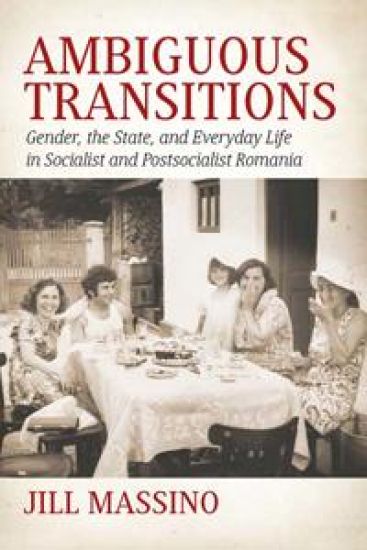
Focusing on youth, family, work, and consumption, Ambiguous Transitions analyzes the interplay between gender and citizenship postwar Romania. By juxtaposing official sources with oral histories and socialist policies with everyday practices, Jill Massino illuminates the gendered dimensions of socialist modernization and its complex effects on women’s roles, relationships, and identities. Analyzing women as subjects and agents, the book examines how they negotiated the challenges that arose as Romanian society modernized, even as it clung to traditional ideas about gender. Massino concludes by exploring the ambiguities of postsocialism, highlighting how the legacies of the past have shaped politics and women’s lived experiences since 1989.

Eastern Europe since 1939 is a detailed exploration of the region’s history from the outbreak of the Second World War until now. Focusing on social history, the book examines life under the socialist dictatorships which dominated the region and how the legacy of these regimes has and, in some cases, has not shaped Eastern European societies in more recent times. The book takes a comparative approach in its analysis of key topics, such as the legacy of the Second World War, Stalinism, the 1989 revolutions and the post-socialist experience. It then masterfully places the turbulent political events in a wider social context so significant social subjects like gender, class, minorities, popular religion, culture and leisure can be discussed in depth. This updated and expanded 2nd edition includes: * A brand new chapter covering the period from 2000 to the present day * More local case studies, biographies, sketches of individuals and detail on individual countries * Historiographical updates throughout, as well as new passages and chapter subheadings for easier navigation * 30 images, several maps and a glossary Of immense value to students and scholars alike, this is an essential text for anyone wanting to understand the human history of Eastern Europe in the last 70 years.

Eastern Europe since 1939 is a detailed exploration of the region’s history from the outbreak of the Second World War until now. Focusing on social history, the book examines life under the socialist dictatorships which dominated the region and how the legacy of these regimes has and, in some cases, has not shaped Eastern European societies in more recent times. The book takes a comparative approach in its analysis of key topics, such as the legacy of the Second World War, Stalinism, the 1989 revolutions and the post-socialist experience. It then masterfully places the turbulent political events in a wider social context so significant social subjects like gender, class, minorities, popular religion, culture and leisure can be discussed in depth. This updated and expanded 2nd edition includes: * A brand new chapter covering the period from 2000 to the present day * More local case studies, biographies, sketches of individuals and detail on individual countries * Historiographical updates throughout, as well as new passages and chapter subheadings for easier navigation * 30 images, several maps and a glossary Of immense value to students and scholars alike, this is an essential text for anyone wanting to understand the human history of Eastern Europe in the last 70 years.
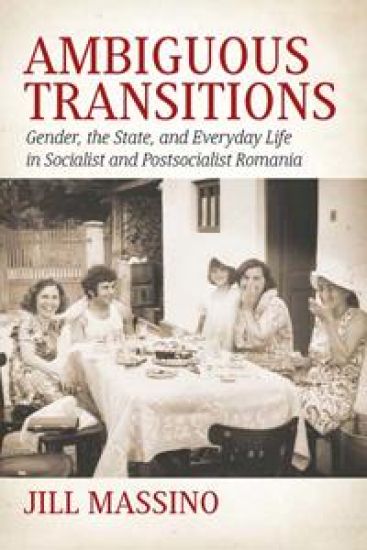
Focusing on youth, family, work, and consumption, Ambiguous Transitions analyzes the interplay between gender and citizenship postwar Romania. By juxtaposing official sources with oral histories and socialist policies with everyday practices, Jill Massino illuminates the gendered dimensions of socialist modernization and its complex effects on women’s roles, relationships, and identities. Analyzing women as subjects and agents, the book examines how they negotiated the challenges that arose as Romanian society modernized, even as it clung to traditional ideas about gender. Massino concludes by exploring the ambiguities of postsocialism, highlighting how the legacies of the past have shaped politics and women’s lived experiences since 1989.