Kirjojen hintavertailu. Mukana 12 595 353 kirjaa ja 12 kauppaa.

Kirjailija

Jim Bradbury

Kirjat ja teokset yhdessä paikassa: 13 kirjaa, julkaisuja vuosilta 1992-2025, suosituimpien joukossa The Battle of Hastings: The Fall of the Anglo-Saxons and the Rise of the Normans. Vertaile teosten hintoja ja tarkista saatavuus suomalaisista kirjakaupoista.

13 kirjaa

Kirjojen julkaisuhaarukka 1992-2025.

Medieval Warfare Illustrated Atlas

Medieval Warfare Illustrated Atlas

Matthew Bennett; Kelly DeVries; Iain Dickie; Jim Bradbury; Phyllis G Jestice

AMBER BOOKS LTD
2025
sidottu
Why were Welsh longbowmen and Italian mercenaries more effective in battle than French armoured knights? How able were the crusaders? What is the difference between chain mail and scale mail? Medieval Warfare Illustrated Atlas describes combat in what has been characterised as the ‘age of chivalry’. The book explores the tactics and strategy required to win battles with the technology available and points out how the development of such weapons technology changed the face of the battlefield. Divided into five sections, the text begins with the foot soldier and the mounted soldier, the equipment they wore and used, and how they fought together as a unit. The third section discusses how these units were used together on the battlefield, and the importance of a general correctly disposing his troops before the battle began. The fourth section looks at siege warfare, while the final chapter covers naval warfare, from the ships to the weapons the soldiers carried to the major encounters of the period. Using specially commissioned artworks to illustrate the battles, equipment and tactics of the era, Medieval Warfare Illustrated Atlas shows in detail the methods by which armies gained and lost ascendancy on the battlefield. This is an essential companion for any reader interested in medieval warfare.
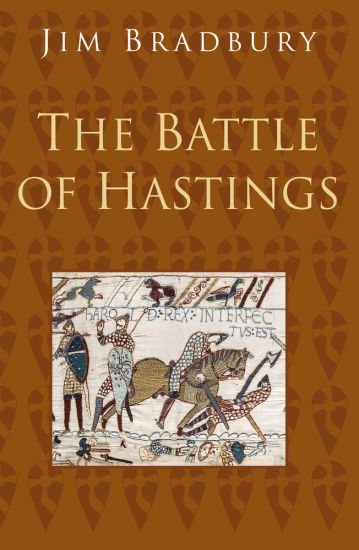
The Battle of Hastings

The Battle of Hastings

Jim Bradbury

Pegasus Books
2022
sidottu
The effects of the Battle of Hastings were deeply felt at the time, causing a lasting shift in British cultural identity and national pride. Jim Bradbury explores the full military background of the battle and investigates both what actually happened on that fateful day in 1066 and the role that the battle plays in the British national myth.The Battle of Hastings starts by looking at the Normans-who they were, where they came from-and the career of William the Conqueror before 1066. Next, the narrative turns to the Saxons in England, and to Harold Godwineson, successor to Edward the Confessor, and his attempts to create unity in the divided kingdom. This provides the background to an examination of the military development of the two sides up to 1066, detailing differences in tactics, arms, and armor. The core of the book is a move-by-move reconstruction of the battle itself, including the advance planning, the site, the composition of the two armies, and the use of archers, feigned retreats, and the death of Harold Godwineson.In looking at the consequences of the battle, Jim Bradbury deals with the conquest of England and the ongoing resistance to the Normans. The effects of the conquest are also seen in the creation of castles and developments in feudalism, and in links with Normandy that revealed themselves particularly in church appointments. This is the first time a military historian has attempted to make accessible to the general reader all that is known about the Battle of Hastings and to present as detailed a reconstruction as is possible. Furthermore, the author places the battle in the military context of eleventh-century Europe, painting a vivid picture of the combatants themselves-soldiery, cavalry, and their horses-as they struggled for victory. This is a book that any reader interested in England's history will find indispensable.
The Battle of Hastings: The Fall of the Anglo-Saxons and the Rise of the Normans
A rousing historical narrative of the best-known and arguably most significant battle in English history. The effects of the Battle of Hastings were deeply felt at the time, causing a lasting shift in British cultural identity and national pride. Jim Bradbury explores the full military background of the battle and investigates both what actually happened on that fateful day in 1066 and the role that the battle plays in the British national myth. The Battle of Hastings starts by looking at the Normans--who they were, where they came from--and the career of William the Conqueror before 1066. Next, the narrative turns to the Saxons in England, and to Harold Godwineson, successor to Edward the Confessor, and his attempts to create unity in the divided kingdom. This provides the background to an examination of the military development of the two sides up to 1066, detailing differences in tactics, arms, and armor. The core of the book is a move-by-move reconstruction of the battle itself, including the advance planning, the site, the composition of the two armies, and the use of archers, feigned retreats, and the death of Harold Godwineson. In looking at the consequences of the battle, Jim Bradbury deals with the conquest of England and the ongoing resistance to the Normans. The effects of the conquest are also seen in the creation of castles and developments in feudalism, and in links with Normandy that revealed themselves particularly in church appointments. This is the first time a military historian has attempted to make accessible to the general reader all that is known about the Battle of Hastings and to present as detailed a reconstruction as is possible. Furthermore, the author places the battle in the military context of eleventh-century Europe, painting a vivid picture of the combatants themselves--soldiery, cavalry, and their horses--as they struggled for victory. This is a book that any reader interested in England's history will find indispensable.
The Battle of Hastings: Classic Histories Series

The Battle of Hastings: Classic Histories Series

Jim Bradbury

The History Press Ltd
2020
pokkari
The Battle of Hastings is probably the best-known and perhaps the most significant battle in English history. Its effects were deeply felt at the time, causing a lasting shift in cultural identity and national pride. Jim Bradbury here explores the full military background to the battle and investigates both the sources for our knowledge of what actually happened in 1066 and the role that the battle plays in national myth.The Battle of Hastings starts by looking at the Normans - who they were, where they came from - and the career of William before 1066. Next, Jim Bradbury turns to the Saxons in England, and to Harold Godwineson, successor to Edward the Confessor, and his attempts to create unity in the divided kingdom. This provides the background to an examination of the military development of the two sides up to 1066, detailing differences in tactics, arms and armour. The core of the book is a move-by-move reconstruction of the battle, including the advance planning, the site, the composition of the two armies and the use of archers, feigned flights and the death of Harold. This is a book that anyone interested in England's most famous battle will find indispensable.
Philip Augustus

Philip Augustus

Jim Bradbury

Routledge
2016
sidottu
This is the first major study in English of the reign of Philip Augustus who ruled France from 1180 - 1223. Outshone for posterity, by his flamboyant contemporaries, the Angevin family of Henry II and his feuding sons, Philip was in fact far more successful than any of them, astutely playing them off against each other and recovering for the French crown their vast estates in Northern France including Normandy itself. As well as reasserting the power of the Capetian monarchy, he was also leader of the Third Crusade. Drawing together all the threads in the life of one of France's most forceful rulers, this new study offers a study of the nature of monarchy in late medieval Europe as well as an insight into a subtle and secretive personality.
The Capetians

The Capetians

Jim Bradbury

BLOOMSBURY PUBLISHING PLC
2007
sidottu
Following the demise of the Carolingian dynasty in 987 the French lords chose Hugh Capet as their king. He was the founder of a dynasty that lasted until 1328. Although for much of this time, the French kings were weak, and the kingdom of France was much smaller than it later became, the Capetians nevertheless had considerable achievements and also produced outstanding rulers, including Philip Augustus and St Louis. This wide-ranging book throws fascinating light on the history of Medieval France and the development of European monarchy.
The Routledge Companion to Medieval Warfare
Providing easily accessible factual material, and covering the whole geographical area of medieval Europe, including Eastern Europe, this comprehensive volume is the perfect companion to all aspects of medieval warfare.Setting the Companion in themed, illustrated sections, each preceded by a narrative outline offering a brief introduction, Jim Bradbury presents clear information on battles and sieges, and generals and leaders. Practical topics examined include:castle architecture, with examinations of specific castlesship building techniquesimprovements in armourspecific weaponsdevelopments in areas such as arms and armour fortifications, tactics and supply.Readable and engaging, this detailed volume provides students with an excellent collection of archaeological information and clear discussions of controversial issues.
Fighting Techniques of the Medieval World AD 500 to AD 1500

Fighting Techniques of the Medieval World AD 500 to AD 1500

Matthew Bennett; Jim Bradbury; Kelly DeVries; Iain Dickie; Phyllis G. Jestice

Spellmount Publishers Ltd
2005
sidottu
This informative book describes the fighting techniques of soldiers in what has been characterised as the 'age of chivalry' and it shows in detail the methods by which armies gained and lost ascendancy on the battlefield. Examined firstly are the individual components of the medieval army, the foot soldier and the mounted soldier and the equipment they wore and used and how they fought together as a unit. Certain types of unit are described - like Welsh longbowmen and Italian mercenaries - and why they were more effective than others, such as the French armoured knights at Agincourt. The third section discusses how these units were used together on the battlefield and the importance of a general correctly disposing his troops before the battle began - key battles such as Lincoln, Bannockburn and Crecy are examined - and also the contrasting tactics of both sides during crusades and the various shortcomings of the crusaders and their leaders. The fourth part looks at the specialist techniques and equipment developed for siege warfare - a common event in this era of fortification. The last section covers naval warfare, from the ships in which the men fought to the weapons they carried and the major battles of the period including the battle of Meloria in the Mediterranean.
Stephen and Matilda

Stephen and Matilda

Jim Bradbury

The History Press Ltd
2005
nidottu
Stephen's reign was one of the darkest periods of English history. He had promised Henry I that he would support the king's daughter, Matilda, as the rightful heir to the English throne, but when Henry dies in December 1135 he broke his promise and quickly made himself king. Like many of the nobles, he was unwilling to yield the crown to a woman. Civil wars and the battle for the English Crown dominated his reign, and this fascinating book examines the conflict between Stephen and his cousin. The campaigns, battles and sieges of England's first civil war are explored, including the two major battles at the Standard adn Lincoln, which show that Stephen always held more ground than his opponents and was mostly on the offensive. The two sides finally reached a compromise, after 14 years, with the Treaty of Wallingford - Stephen would rule unopposed until his death but the throne would then pass to Henry of Anjou, Matilda's son. Full of colourful characters, this is a fascinating story of rivalry for the English throne which throws new light on a neglected aspect of Stephen's reign.
The Routledge Companion to Medieval Warfare
This comprehensive volume provides easily-accessible factual material on all major areas of warfare in the medieval west. The whole geographical area of medieval Europe, including eastern Europe, is covered, including essential elements from outside Europe such as Byzantine warfare, nomadic horde invasions and the Crusades. Progressing chronologically, the work is presented in themed, illustrated sections, with a narrative outline offering a brief introduction to the area. Within each chronological section, Jim Bradbury presents clear and informative pieces on battles, sieges, and generals. The author examines practical topics including:castle architecture, with examinations of specific castlesship building techniquesimprovements in armourspecific weaponsdevelopments in areas such as arms and armour, fortifications, tactics and supply.Readable and engaging, this detailed provides students with an excellent collection of archaeological information and clear discussions of controversial issues.
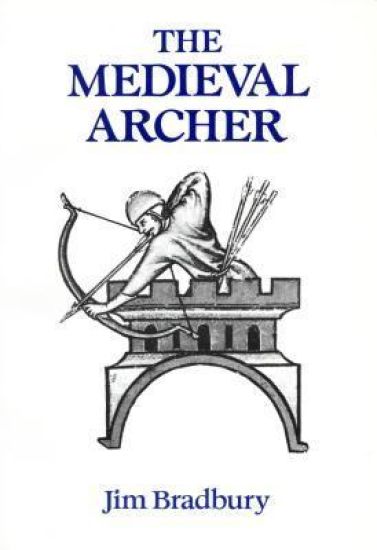
The Medieval Archer

The Medieval Archer

Jim Bradbury

The Boydell Press
1996
pokkari
A study of the archer and his weapon from the 11th to the 15th century, focusing on military tactics but also exploring the archer's position in society. It is a delight to read a book which recognises the importance of warfare in medieval times...also...discusses the changing role of the archer in medieval society. SIR STEVEN RUNCIMAN This book traces the historyof the archer in the medieval period, from the Norman Conquest to the Wars of the Roses. From a close study of early evidence, the author shows that the archer's role before the time of Edward I was an important but rarely documented one, and that his new prominence in the fourteenth century was the result of changes in development of military tactics rather than the introduction of the famous "longbow". A second thread of the book examines the archer's role in society, with particular reference to that most famous of all archers, Robin Hood. The final chapters look at the archer in the early fifteenth century and then chronicle the rise of the handgun as the major infantryweapon at the bow's expense. JIM BRADBURY writes and lectures on battles and warfare in England and France in the Middle Ages.
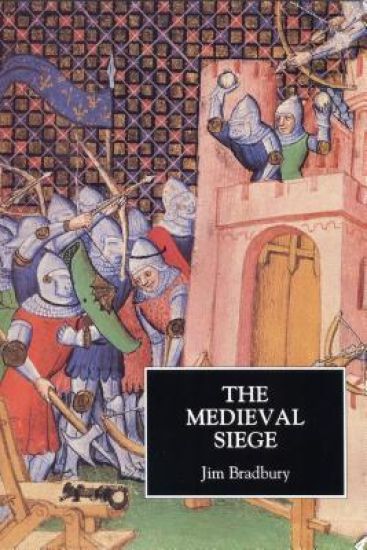
The Medieval Siege

The Medieval Siege

Jim Bradbury

The Boydell Press
1992
pokkari
A guide to sieges that took place in Europe and the Near East between 450 and 1565. The chapter on weaponry is descriptive and there are excellent drawings as well as contemporary illustrations. Equally, the final chapter on the conduct of sieges is admirably forthright... the index is particularly good. TIMES LITERARY SUPPLEMENT In medieval warfare, the siege predominated: for every battle, there were hundreds of sieges. Yet the rich and vivid history of siege warfare has been consistently neglected. Jim Bradbury's panoramic survey takes the history of siege warfare in Europe from the late Roman Empire to the 16th century, and includes sieges in Byzantium, Eastern Europe and the areas affected by the Crusades. Within this broad sweep of time and place, he finds, not that enormous changes occurred, but that the rules and methods of siege warfare remained remarkably constant. Included are detailed studies of some of the major sieges including Constantinople and Chateau-Gaillard. Throughout, Bradbury supports his narrative with chronicles and letters. irst-hand accounts of danger, famine and endurance bring the acute reality of siege warfare clearly before the reader. JIM BRADBURY is the author of The Medieval Archer; he writes and lectures on battles and warfare in England and France in the middle ages.
Robin Hood

Robin Hood

Jim Bradbury

Amberley Publishing
2012
pokkari
Robin Hood - the legendary outlaw who stole from the rich to give to the poor. From the medieval era to the present day, we have sung about him, listened to tales, watched him and his Merry Men in plays, on TV and even on the silver screen. We really are fascinated with this heroic archer. But what do we really know about the man and the origins of the legend? Experienced author and historian Jim Bradbury goes in search of the truth, looking at the historical sources, the real-life candidates, his appearances in popular culture over the centuries, and his continuing popularity.