Kirjailija
Jim DeFelice
Kirjat ja teokset yhdessä paikassa: 47 kirjaa, julkaisuja vuosilta 2001-2026, suosituimpien joukossa Dale Brown's Dreamland. Vertaile teosten hintoja ja tarkista saatavuus suomalaisista kirjakaupoista.
47 kirjaa
Kirjojen julkaisuhaarukka 2001-2026.
This novel by a former pilot mixes technology and action. It concerns "Dreamland", America's most advanced weapons laboratory, and its crack commando group codenamed "Whiplash", the first team the President must turn to if he wants to prevent the next war from wiping out half of the planet.
The First In-Depth Biography of America's Last Five-Star General--with a New Introduction He was known as "the G.I. General"-- humble, self-effacing, hard-working, reflecting the small-town virtues of the America whose uniform he wore. But those very virtues have led historians to neglect General Omar Bradley--until now. Bestselling author Jim DeFelice, in this, the first-ever in-depth biography of America's last five-star general, tells Bradley's full story, and argues that the neglected G.I. General did more than any other to defeat Hitler in World War II. While General George S. Patton has garnered much of the glory, General Dwight David Eisenhower has claimed much of the world's respect, and British General Bernard Montgomery has kept the Union Jack flying, as DeFelice proves, it was the unassuming Bradley who actually developed the strategy and the tactics that won the war in Europe. Meticulously researched, using previously untapped documents and unpublished diaries and notes, Omar Bradley: General at War reveals: Why Bradley, not Patton, deserves most of the credit for America's victories in North Africa How Bradley--first Patton's subordinate, then his superior--was one of Patton's great defenders, while also recognizing his weaknesses, and tried to cover up the infamous slapping incident How Eisenhower panicked--when Bradley didn't--during the early stages of the Battle of the Bulge, delaying an American counterattack that could have saved thousands of lives Why Bradley was a radical innovator in the use of combined air, armor, and infantry power How Bradley, contrary to those who like to portray him as a staid counterpart to Patton, was one of the most ardent practitioners of fast-moving offensives Why Bradley expected the Germans might use radiological weapons at Normandy Provocative, thorough, original, Jim DeFelice's Omar Bradley: General at War deserves a place on the shelf of every reader of World War II history.
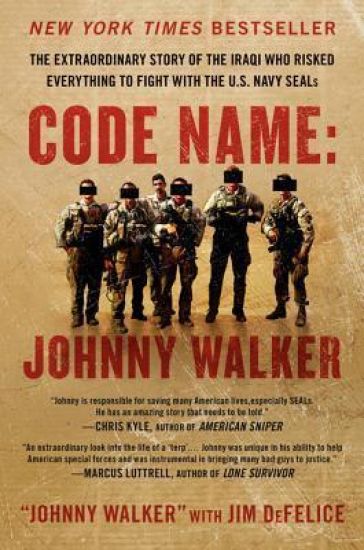
Night after night, he guided the U.S. Navy SEALs through Iraq's most dangerous regions. A translator operating under the code name "Johnny Walker," he risked his life on more than a thousand missions and became a legend in the U.S. special-ops community. But in the eyes of Iraq's terrorists and insurgents, he and his family were marked for death because he worked with the Americans. Fearing for Johnny's safety, the SEALs heroically took it upon themselves to bring him and his family to the United States. With inside details on SEAL operations and a deeply personal understanding of the tragic price paid by ordinary Iraqis, Code Name: Johnny Walker is a gripping and unforgettable true story that reveals a side of the war that has never been told before. Includes a new afterword on the rise of ISIS
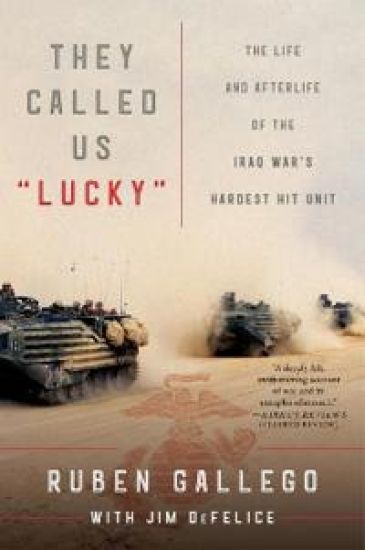
From the Arizona Congressman, a "powerful" and "searing" (PW) chronicle of the eternal bonds forged between the Marines of Lima Company, the hardest-hit unit of the Iraq WarAt first, they were “Lucky Lima.” Infantryman Ruben Gallego and his brothers in Lima Company—3rd Battalion, 25th Marines, young men drawn from blue-collar towns, immigrant households, Navajo reservations—returned unscathed on patrol after patrol through the increasingly violent al Anbar region of Iraq, looking for weapons caches and insurgents trying to destabilize the nascent Iraqi government. After two months in Iraq, Lima didn't have a casualty, not a single Purple Heart, no injury worse than a blister. Lucky Lima.Then, in May 2005, Lima’s fortunes flipped. Unknown to Ruben and his fellow grunts, al Anbar had recently become a haven for al Qaeda in Mesopotamia. The bin Laden-sponsored group had recruited radicals from all over the world for jihad against the Americans. On one fateful day, they were lured into a death house; the ambush cost the lives of two men, including a platoon sergeant. Two days later, Ruben’s best friend, Jonathon Grant, died in an IED attack, along with several others. Events worsened from there. A disastrous operation in Haditha in August claimed the lives of thirteen Marines when an IED destroyed their amphibious vehicle. It was the worst single-day loss for the Marines since the 1983 Beirut bombings. By the time 3/25 went home in November, it had lost more men than any other single unit in the war. Forty-six Marines and two Navy Corpsmen serving with the battalion in Iraq were killed in action during their roughly nine-month activation.They Called Us “Lucky” details Ruben Gallego’s journey and includes harrowing accounts of some of the war’s most costly battles. It details the struggles and the successes of Ruben—now a member of Congress—and the rest of Lima Company following Iraq, examining the complicated matter of PTSD. And it serves as a tribute to Ruben’s fallen comrades, who made the ultimate sacrifice for their country. With its gripping accounts of some of the war's most costly battles, They Called Us 'Lucky' is a must-read for anyone interested in military history and the politics of war. It offers a firsthand perspective on the Iraq War and the struggles faced by soldiers like Ruben Gallego, who served in the hardest hit company of the hardest hit battalion of the war and occupation.
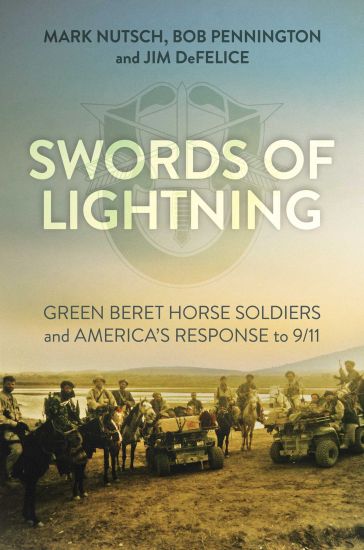
The first-person account of how a small band of Green Berets used horses and laser-guided bombs to overthrow the Taliban and al-Qaeda in Afghanistan after 9/11. They landed in a dust storm so thick the chopper pilot used dead reckoning and a guess to find the ground. Welcomed by a band of heavily armed militiamen, they climbed a mountain on horseback to meet the most ferocious warlord in Asia. They plotted a war of nineteenth-century maneuvers against a twenty-first-century foe. They trekked through minefields, sometimes past the mangled bodies of local tribesmen who’d shared food with them hours before. They saved babies and treated fractures, sewed up wounded who’d been transported from the battlefield by donkey. They found their enemy hiding in thick bunkers, dodged bullets from machine-gun-laden pickup trucks, and survived mass rocket attacks from vintage Soviet-era launchers. They battled the Taliban while mediating blood feuds between rival allies. They fought with everything they had, from smart bombs to AK-47s.The men they helped called them brothers. Hollywood called them the Horse Soldiers. They called themselves Green Berets—Special Forces ODA 595.
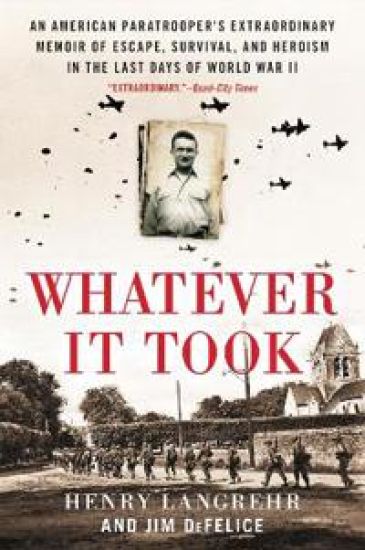
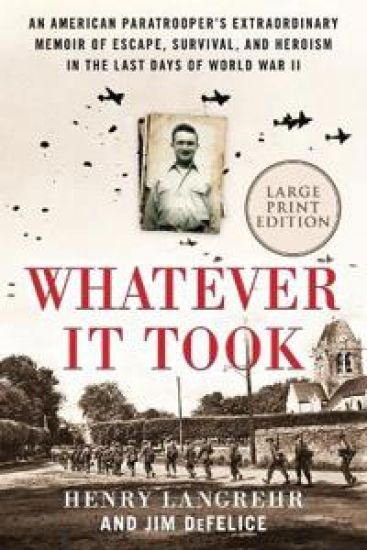
Published to mark the 75th anniversary of VE Day, an unforgettable never-before-told first-person account of World War II: the true story of an American paratrooper who survived D-Day, was captured and imprisoned in a Nazi work camp, and made a daring escape to freedom. Now at 95, one of the few living members of the Greatest Generation shares his experiences at last in one of the most remarkable World War II stories ever told. As the Allied Invasion of Normandy launched in the pre-dawn hours of June 6, 1944, Henry Langrehr, an American paratrooper with the 82nd Airborne, was among the thousands of Allies who parachuted into occupied France. Surviving heavy anti-aircraft fire, he crashed through the glass roof of a greenhouse in Sainte-Mère-Église. While many of the soldiers in his unit died, Henry and other surviving troops valiantly battled enemy tanks to a standstill. Then, on June 29th, Henry was captured by the Nazis. The next phase of his incredible journey was beginning.Kept for a week in the outer ring of a death camp, Henry witnessed the Nazis’ unspeakable brutality—the so-called Final Solution, with people marched to their deaths, their bodies discarded like cords of wood. Transported to a work camp, he endured horrors of his own when he was forced to live in unbelievable squalor and labor in a coal mine with other POWs. Knowing they would be worked to death, he and a friend made a desperate escape. When a German soldier cornered them in a barn, the friend was fatally shot; Henry struggled with the soldier, killing him and taking his gun. Perilously traveling westward toward Allied controlled land on foot, Henry faced the great ethical and moral dilemmas of war firsthand, needing to do whatever it took to survive. Finally, after two weeks behind enemy lines, he found an American unit and was rescued.Awaiting him at home was Arlene, who, like millions of other American women, went to work in factories and offices to build the armaments Henry and the Allies needed for victory. Whatever It Took is her story, too, bringing to life the hopes and fears of those on the homefront awaiting their loved ones to return.A tale of heroism, hope, and survival featuring 30 photographs, Whatever It Took is a timely reminder of the human cost of freedom and a tribute to unbreakable human courage and spirit in the darkest of times.
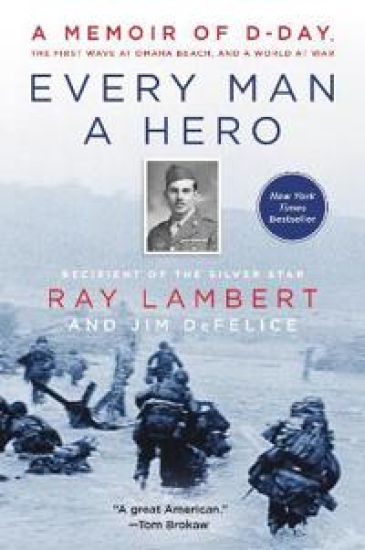
The New York Times Bestseller | Winner of the Army Historical Foundation Distinguished Writing Award Omaha Beach legend Ray Lambert's unforgettable firsthand account of D-Day “Lambert landed on [Omaha Beach] as a 23-year-old Army medic. ... As the bullets cut down his comrades, he raced repeatedly back into the sea to drag out wounded soldiers.” —New York TimesSeventy-five years ago, he hit Omaha Beach with the first wave. Now D-Day legend Ray Lambert (1920-2021) delivers one of the most remarkable memoirs of our time, a tour-de-force of remembrance evoking his role as a decorated World War II medic who risked his life to save the heroes of Normandy. At five a.m. on June 6, 1944, U.S. Army Staff Sergeant Ray Lambert worked his way through a throng of nervous soldiers to a wind-swept deck on a troopship off the coast of Normandy, France. A familiar voice cut through the wind and rumble of the ship’s engines. “Ray!” called his brother, Bill. Ray, head of a medical team for the First Division’s famed 16th Infantry Regiment, had already won a silver star in 1943 for running through German lines to rescue trapped men, one of countless rescues he’d made in North Africa and Sicily. “This is going to be the worst yet,” Ray told his brother, who served alongside him throughout the war.“If I don’t make it,” said Bill, “take care of my family.”“I will,” said Ray. He thought about his wife and son–a boy he had yet to see. “Same for me.” The words were barely out of Ray’s mouth when a shout came from below.To the landing craft!The brothers parted. Their destinies lay ten miles away, on the bloodiest shore of Normandy, a plot of Omaha Beach ironically code named “Easy Red.”Less than five hours later, after saving dozens of lives and being wounded at least three separate times, Ray would lose consciousness in the shallow water of the beach under heavy fire. He would wake on the deck of a landing ship to find his battered brother clinging to life next to him.Every Man a Hero is the unforgettable story not only of what happened in the incredible and desperate hours on Omaha Beach, but of the bravery and courage that preceded them, throughout the Second World War—from the sands of Africa, through the treacherous mountain passes of Sicily, and beyond to the greatest military victory the world has ever known.
Published to mark the 75th anniversary of VE Day, an unforgettable never-before-told first-person account of World War II: the true story of an American paratrooper who survived D-Day, was captured and imprisoned in a Nazi work camp, and made a daring escape to freedom. Now at 95, one of the few living members of the Greatest Generation shares his experiences at last in one of the most remarkable World War II stories ever told. As the Allied Invasion of Normandy launched in the pre-dawn hours of June 6, 1944, Henry Langrehr, an American paratrooper with the 82nd Airborne, was among the thousands of Allies who parachuted into occupied France. Surviving heavy anti-aircraft fire, he crashed through the glass roof of a greenhouse in Sainte-Mère-Église. While many of the soldiers in his unit died, Henry and other surviving troops valiantly battled enemy tanks to a standstill. Then, on June 29th, Henry was captured by the Nazis. The next phase of his incredible journey was beginning.Kept for a week in the outer ring of a death camp, Henry witnessed the Nazis’ unspeakable brutality—the so-called Final Solution, with people marched to their deaths, their bodies discarded like cords of wood. Transported to a work camp, he endured horrors of his own when he was forced to live in unbelievable squalor and labor in a coal mine with other POWs. Knowing they would be worked to death, he and a friend made a desperate escape. When a German soldier cornered them in a barn, the friend was fatally shot; Henry struggled with the soldier, killing him and taking his gun. Perilously traveling westward toward Allied controlled land on foot, Henry faced the great ethical and moral dilemmas of war firsthand, needing to do whatever it took to survive. Finally, after two weeks behind enemy lines, he found an American unit and was rescued.Awaiting him at home was Arlene, who, like millions of other American women, went to work in factories and offices to build the armaments Henry and the Allies needed for victory. Whatever It Took is her story, too, bringing to life the hopes and fears of those on the homefront awaiting their loved ones to return.A tale of heroism, hope, and survival featuring 30 photographs, Whatever It Took is a timely reminder of the human cost of freedom and a tribute to unbreakable human courage and spirit in the darkest of times.
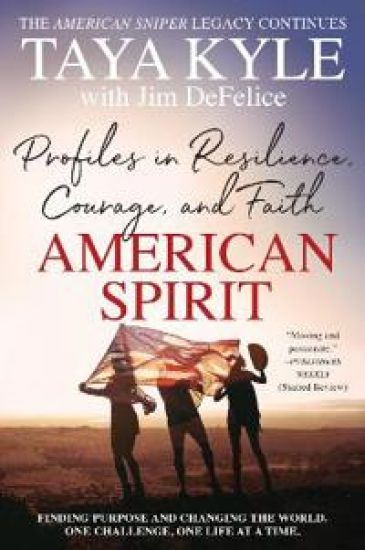
The "American Sniper" legacy continues: Taya Kyle celebrates the American Spirit in her inspiring new bookLife leads us through difficult terrain. But what happens if you use challenge as an opportunity to discover your PURPOSE? These Americans did and are changing the world. After losing her husband, "American Sniper" Chris Kyle, bestselling author Taya Kyle entered a period of deep grief. And yet the experience served as a catalyst for profound growth. Taya found her own reserve of strength with the help of the generous love and support of family and friends—and also many strangers across America, who selflessly shared their own stories of suffering, survival, and triumph. Inspired by her experience, Taya discovered her calling: spreading a message of how love, passion, and service can combine to help us persevere over personal pain and heal our communities. Working with trusted collaborator Jim DeFelice (coauthor of American Sniper and American Wife), Taya tells her own story, as well as those of other Americans who have built extraordinary lives after traveling down life’s most difficult roads—through loss, illness, all manner of setback. They embody the “American spirit” of resilience, faith, togetherness that has built the nation. American Spirit profiles more than 30 individuals, young and old, rich and not-so-rich, famous and unknown, who have overcome hardship and done extraordinary things for their communities and for the nation at large. The 9/11 survivor, badly burned over 60% of his body, who asked himself What debt do I owe to God? And to my fellow human beings? What am I supposed to do with this miracle of survival? The man with the hole in his heart who runs ultramarathons. The young cancer victim whose lemonade stand inspired a revolutionary new model for fighting cancer. The blind cyclist; the pastor who became an undercover investigator, and more. In the end, these stories teach us how to find purpose and heal the world, no matter the difficulty. “Every action, big or small,” Taya writes, “has the potential to spark someone else’s movement.”
Published to mark the 75th anniversary of VE Day, an unforgettable never-before-told first-person account of World War II: the true story of an American paratrooper who survived D-Day, was captured and imprisoned in a Nazi work camp, and made a daring escape to freedom. Now at 95, one of the few living members of the Greatest Generation shares his experiences at last in one of the most remarkable World War II stories ever told. As the Allied Invasion of Normandy launched in the pre-dawn hours of June 6, 1944, Henry Langrehr, an American paratrooper with the 82nd Airborne, was among the thousands of Allies who parachuted into occupied France. Surviving heavy anti-aircraft fire, he crashed through the glass roof of a greenhouse in Sainte-M re- glise. While many of the soldiers in his unit died, Henry and other surviving troops valiantly battled enemy tanks to a standstill. Then, on June 29th, Henry was captured by the Nazis. The next phase of his incredible journey was beginning.Kept for a week in the outer ring of a death camp, Henry witnessed the Nazis' unspeakable brutality--the so-called Final Solution, with people marched to their deaths, their bodies discarded like cords of wood. Transported to a work camp, he endured horrors of his own when he was forced to live in unbelievable squalor and labor in a coal mine with other POWs. Knowing they would be worked to death, he and a friend made a desperate escape. When a German soldier cornered them in a barn, the friend was fatally shot; Henry struggled with the soldier, killing him and taking his gun. Perilously traveling westward toward Allied controlled land on foot, Henry faced the great ethical and moral dilemmas of war firsthand, needing to do whatever it took to survive. Finally, after two weeks behind enemy lines, he found an American unit and was rescued.Awaiting him at home was Arlene, who, like millions of other American women, went to work in factories and offices to build the armaments Henry and the Allies needed for victory. Whatever It Took is her story, too, bringing to life the hopes and fears of those on the homefront awaiting their loved ones to return.A tale of heroism, hope, and survival featuring 30 photographs, Whatever It Took is a timely reminder of the human cost of freedom and a tribute to unbreakable human courage and spirit in the darkest of times.
Whatever It Took: An American Paratrooper's Extraordinary Memoir of Escape, Survival, and Heroism in the Last Days of World War II
Jim DeFelice
Harpercollins
2020
mp3 cd-levyllä
Published to mark the 75th anniversary of VE Day, an unforgettable never-before-told first-person account of World War II: the true story of an American paratrooper who survived D-Day, was captured and imprisoned in a Nazi work camp, and made a daring escape to freedom. Now at 95, one of the few living members of the Greatest Generation shares his experiences at last in one of the most remarkable World War II stories ever told. As the Allied Invasion of Normandy launched in the pre-dawn hours of June 6, 1944, Henry Langrehr, an American paratrooper with the 82nd Airborne, was among the thousands of Allies who parachuted into occupied France. Surviving heavy anti-aircraft fire, he crashed through the glass roof of a greenhouse in Sainte-M re- glise. While many of the soldiers in his unit died, Henry and other surviving troops valiantly battled enemy tanks to a standstill. Then, on June 29th, Henry was captured by the Nazis. The next phase of his incredible journey was beginning.Kept for a week in the outer ring of a death camp, Henry witnessed the Nazis' unspeakable brutality--the so-called Final Solution, with people marched to their deaths, their bodies discarded like cords of wood. Transported to a work camp, he endured horrors of his own when he was forced to live in unbelievable squalor and labor in a coal mine with other POWs. Knowing they would be worked to death, he and a friend made a desperate escape. When a German soldier cornered them in a barn, the friend was fatally shot; Henry struggled with the soldier, killing him and taking his gun. Perilously traveling westward toward Allied controlled land on foot, Henry faced the great ethical and moral dilemmas of war firsthand, needing to do whatever it took to survive. Finally, after two weeks behind enemy lines, he found an American unit and was rescued.Awaiting him at home was Arlene, who, like millions of other American women, went to work in factories and offices to build the armaments Henry and the Allies needed for victory. Whatever It Took is her story, too, bringing to life the hopes and fears of those on the homefront awaiting their loved ones to return.A tale of heroism, hope, and survival featuring 30 photographs, Whatever It Took is a timely reminder of the human cost of freedom and a tribute to unbreakable human courage and spirit in the darkest of times. Supplemental enhancement PDF accompanies the audiobook.
Whatever It Took: An American Paratrooper's Extraordinary Memoir of Escape, Survival, and Heroism in the Last Days of World War II
Jim DeFelice
Harpercollins
2020
cd
Published to mark the 75th anniversary of VE Day, an unforgettable never-before-told first-person account of World War II: the true story of an American paratrooper who survived D-Day, was captured and imprisoned in a Nazi work camp, and made a daring escape to freedom. Now at 95, one of the few living members of the Greatest Generation shares his experiences at last in one of the most remarkable World War II stories ever told. As the Allied Invasion of Normandy launched in the pre-dawn hours of June 6, 1944, Henry Langrehr, an American paratrooper with the 82nd Airborne, was among the thousands of Allies who parachuted into occupied France. Surviving heavy anti-aircraft fire, he crashed through the glass roof of a greenhouse in Sainte-M re- glise. While many of the soldiers in his unit died, Henry and other surviving troops valiantly battled enemy tanks to a standstill. Then, on June 29th, Henry was captured by the Nazis. The next phase of his incredible journey was beginning.Kept for a week in the outer ring of a death camp, Henry witnessed the Nazis' unspeakable brutality--the so-called Final Solution, with people marched to their deaths, their bodies discarded like cords of wood. Transported to a work camp, he endured horrors of his own when he was forced to live in unbelievable squalor and labor in a coal mine with other POWs. Knowing they would be worked to death, he and a friend made a desperate escape. When a German soldier cornered them in a barn, the friend was fatally shot; Henry struggled with the soldier, killing him and taking his gun. Perilously traveling westward toward Allied controlled land on foot, Henry faced the great ethical and moral dilemmas of war firsthand, needing to do whatever it took to survive. Finally, after two weeks behind enemy lines, he found an American unit and was rescued.Awaiting him at home was Arlene, who, like millions of other American women, went to work in factories and offices to build the armaments Henry and the Allies needed for victory. Whatever It Took is her story, too, bringing to life the hopes and fears of those on the homefront awaiting their loved ones to return.A tale of heroism, hope, and survival featuring 30 photographs, Whatever It Took is a timely reminder of the human cost of freedom and a tribute to unbreakable human courage and spirit in the darkest of times. Supplemental enhancement PDF accompanies the audiobook.
Western Writers of America Spur Awards Finalist, Best Western Historical Nonfiction"A GROUNDBREAKING WORK. ... The first comprehensive history of the legendary transcontinental experiment in mail delivery in sixty years." —True West"This rollicking account of the daring enterprise known as the Pony Express brings its era and its legendary characters to life." —San Francisco ChronicleThe new definitive history of the Pony Express by the #1 bestselling coauthor of American Sniper, illustrated with 50 images On the eve of the Civil War, three American businessmen launched an audacious plan to create a financial empire by transforming communications across the hostile territory between the nation’s two coasts. In the process, they created one of the most enduring icons of the American West: the Pony Express. Daring young men with colorful names like “Bronco Charlie” and “Sawed-Off Jim” galloped at speed over a vast and unforgiving landscape, etching an irresistible tale that passed into myth almost instantly. Equally an improbable success and a business disaster, the Pony Express came and went in just eighteen months, but not before uniting and captivating a nation on the brink of being torn apart. Jim DeFelice’s brilliantly entertaining West Like Lightning is the first major history of the Pony Express to put its birth, life, and legacy into the full context of the American story.The Central Overland California and Pikes Peak Express Company—or “Pony Express,” as it came to be known—was part of a plan by William Russell, Alexander Majors, and William Waddell to create the next American Express, a transportation and financial juggernaut that already dominated commerce back east. All that stood in their way were almost two thousand miles of uninhabited desert, ice-capped mountains, oceanic plains roamed by Indian tribes, whitewater-choked rivers, and harsh, unsettled wilderness.The Pony used a relay system of courageous horseback riders to ferry mail halfway across a continent in just ten days. The challenges the riders faced were enormous, yet the Pony Express succeeded, delivering thousands of letters at record speed. The service instantly became the most direct means of communication between the eastern United States and its far western territories, helping to firmly connect them to the Union.Populated with cast of characters including Abraham Lincoln (news of whose electoral victory the Express delivered to California), Wild Bill Hickock, Buffalo Bill Cody (who fed the legend of the Express in his Wild West Show), and Mark Twain (who celebrated the riders in Roughing It), West Like Lightning masterfully traces the development of the Pony Express and follows it from its start in St. Joseph, Missouri—the edge of the civilized world—west to Sacramento, the capital of California, then booming from the gold rush. Jim DeFelice, who traveled the Pony’s route in his research, plumbs the legends, myths, and surprising truth of the service, exploring its lasting relevance today as a symbol of American enterprise, audacity, and daring.
The thrilling narrative history of one of the most enduring icons of the American West, the Pony Express, from the #1 New York Times bestselling co-author of American Sniper-an exciting tale of daring young men pushing limits to the extremes across the vast, rugged, and unsettled American West. In the spring of 1860 on the eve of a civil war that threatened to tear the country apart, two Americans conceived of an audacious plan for linking the nation's two coasts, thereby joining its present with its future. All that stood in the way was a 1,900 miles of uninhabited desert, ice-capped mountains, oceanic plains roamed by hostile Indian tribes, whitewater-choked rivers, and rugged, unsettled frontier wilderness where civilized" men where outnumbered a million to one by grizzlies, mountain lions, wolves, bison, rattlesnakes, and more. Many deemed their revolutionary scheme impossible. Run by the Central Overland California and Pikes Peak Express Company, the Pony Express as it came to be known, would use a relay system of daring horseback riders to ferry mail and small packages halfway across a continent in just ten days. The challenges they faced were enormous, yet the Pony Express succeeded, delivering tens of thousands of letters at record speed. The service would quickly become the most direct means of communication between the Eastern United States and its Western territories, helping to firmly connect them to the Union. West Like Lightning traces the development of the Pony Express and follows it from its start in St. Joseph, Missouri-the edge of the civilized world in the mid-nineteenth century-1,500 miles west to Sacramento. Jim DeFelice-who traveled the Express's route in his research-plumbs the legends, myths, and true facts of the service, viewing it within the context of the American story and exploring its lasting relevance today. Though the Pony Express was eclipsed by the telegraph in less than two years, it remains today an enduring symbol of American values: rugged individualism, perseverance, and speed.
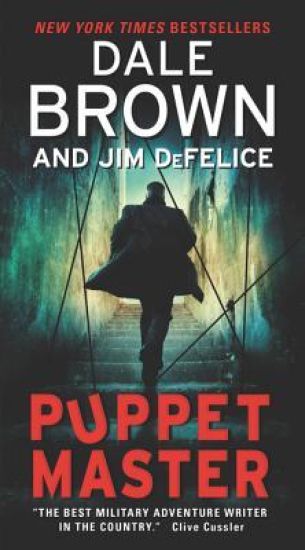
When terrorists attack Boston, Louis Massina races against time to save the city with a high-tech counteroffensive . . . On Easter Sunday morning, the city of Boston is struck by a widespread and coordinated series of terrorist attacks: an explosion in the T, a suicide bomber at Back Bay Police Station, and heavily armed gunmen taking hostages at the Patriot Hotel. For robotics innovator Louis Massina, aka the Puppet Master, this is far more personal than a savage act of political terrorism. Boston is his city--and one of his employees, Chelsea Goodman, is among the hostages facing certain death. As Chelsea fights from the inside, Massina leads his team of tech geniuses at Smart Metal to deploy every bot, drone, and cyber weapon at their disposal to defeat the fanatics and save his city and friend. That's step one. Step two: Find the twisted mastermind behind the attacks and make him pay.
In Dale Brown's Puppet Master, intelligent machines take center stage as America battles the Russian mafia in Eastern EuropeLouis Massina is revolutionizing the field of robotics. His technological wonders are capable of locating disaster survivors, preventing nuclear meltdowns, and replacing missing limbs. After one of Massina's creations makes a miraculous rescue, an FBI agent recruits him to pursue criminals running a massive financial scam--and not coincidentally, suspected of killing the agent's brother. Massina agrees to deploy a surveillance "bot" that uses artificial intelligence to follow its target. But when he's thrust into a dangerous conspiracy, the billionaire inventor decides to take matters into his own hands, unleashing the greatest cyber-weapons in the world and becoming the Puppet Master.
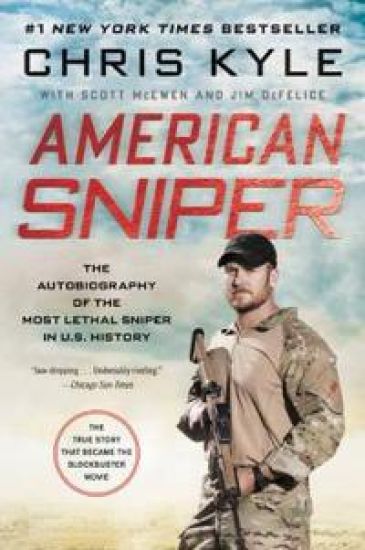
The #1 New York Times bestselling memoir of U.S. Navy Seal Chris Kyle, and the source for Clint Eastwood's blockbuster movie which was nominated for six academy awards, including best picture. From 1999 to 2009, U.S. Navy SEAL Chris Kyle recorded the most career sniper kills in United States military history. His fellow American warriors, whom he protected with deadly precision from rooftops and stealth positions during the Iraq War, called him "The Legend"; meanwhile, the enemy feared him so much they named him al-Shaitan ("the devil") and placed a bounty on his head. Kyle, who was tragically killed in 2013, writes honestly about the pain of war-including the deaths of two close SEAL teammates-and in moving first-person passages throughout, his wife, Taya, speaks openly about the strains of war on their family, as well as on Chris. Gripping and unforgettable, Kyle's masterful account of his extraordinary battlefield experiences ranks as one of the great war memoirs of all time.