

Kirjailija
Jim Kershner
Kirjat ja teokset yhdessä paikassa: 4 kirjaa, julkaisuja vuosilta 2012-2019, suosituimpien joukossa Carl Maxey. Vertaile teosten hintoja ja tarkista saatavuus suomalaisista kirjakaupoista.
4 kirjaa
Kirjojen julkaisuhaarukka 2012-2019.
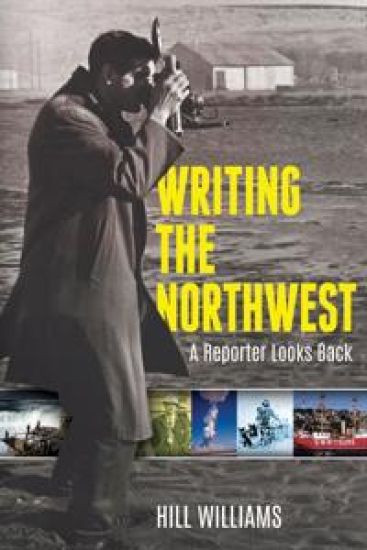
Hill Williams reported Northwest news for decades. Now, in his memoir, he transforms his favorite and most memorable stories into inviting, candid narratives that bestow a remarkable gift--a window into the heart of an affable and seasoned regional journalist.Employing a genuine, homespun style with a hint of nostalgia, he reminisces about unforgettable people, places, and events he covered, natural and human history, and a vanished time in his chosen profession. He writes about Hanford and a Coast Guard officer's heroism. He recounts interviews about whale-hunting in canoes, studying salmon at the University of Washington, and a famous dog-sled run. He captures what it was like to grow up on the dry side of Washington during the 1930s and 1940s and to work before computers became ubiquitous. He shares his own eyewitness accounts--the flooding of Celilo Falls, the first water flowing from the Columbia Irrigation Project, a 1952 nuclear test in Nevada, the sulfur emanating from the crater atop Mount St. Helens, and a mysterious, massive chunk of earth in the middle of the scablands.

Carl Maxey was, in his own words, "a guy who started from scratch - black scratch." He was sent, at age five, to the scandal-ridden Spokane Children's Home and then kicked out at age eleven with the only other "colored" orphan. Yet Maxey managed to make a national name for himself, first as an NCAA championship boxer at Gonzaga University, and then as eastern Washington's first prominent black lawyer and a renowned civil rights attorney who always fought for the underdog.During the tumultuous civil rights and Vietnam War eras, Carl Maxey fought to break down color barriers in his hometown of Spokane and throughout the nation. As a defense lawyer, he made national headlines working on lurid murder cases and war-protest trials, including the notorious Seattle Seven trial. He even took his commitment to justice and antiwar causes to the political arena, running for the U.S. Senate against powerhouse senator Henry M. Jackson.In Carl Maxey: A Fighting Life, Jim Kershner explores the sources of Maxey's passions as well as the price he ultimately paid for his struggles. The result is a moving portrait of a man called a "Type-A Gandhi" by the New York Times, whose own personal misfortune spurred his lifelong, tireless crusade against injustice.
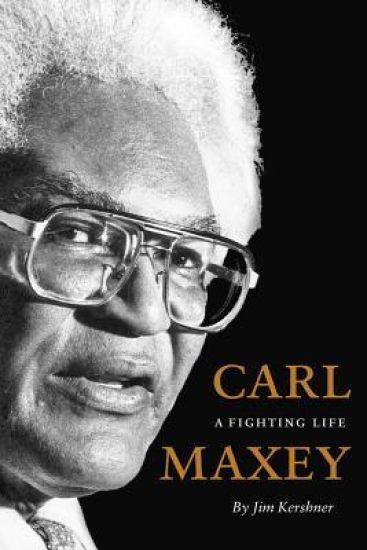
Carl Maxey was, in his own words, "a guy who started from scratch - black scratch." He was sent, at age five, to the scandal-ridden Spokane Children's Home and then kicked out at age eleven with the only other "colored" orphan. Yet Maxey managed to make a national name for himself, first as an NCAA championship boxer at Gonzaga University, and then as eastern Washington's first prominent black lawyer and a renowned civil rights attorney who always fought for the underdog.During the tumultuous civil rights and Vietnam War eras, Carl Maxey fought to break down color barriers in his hometown of Spokane and throughout the nation. As a defense lawyer, he made national headlines working on lurid murder cases and war-protest trials, including the notorious Seattle Seven trial. He even took his commitment to justice and antiwar causes to the political arena, running for the U.S. Senate against powerhouse senator Henry M. Jackson.In Carl Maxey: A Fighting Life, Jim Kershner explores the sources of Maxey's passions as well as the price he ultimately paid for his struggles. The result is a moving portrait of a man called a "Type-A Gandhi" by the New York Times, whose own personal misfortune spurred his lifelong, tireless crusade against injustice.