Kirjojen hintavertailu. Mukana 12 595 353 kirjaa ja 12 kauppaa.

Kirjailija

Jim Leftwich

Kirjat ja teokset yhdessä paikassa: 5 kirjaa, julkaisuja vuosilta 2018-2025, suosituimpien joukossa Lunic Panzemes. Vertaile teosten hintoja ja tarkista saatavuus suomalaisista kirjakaupoista.

5 kirjaa

Kirjojen julkaisuhaarukka 2018-2025.

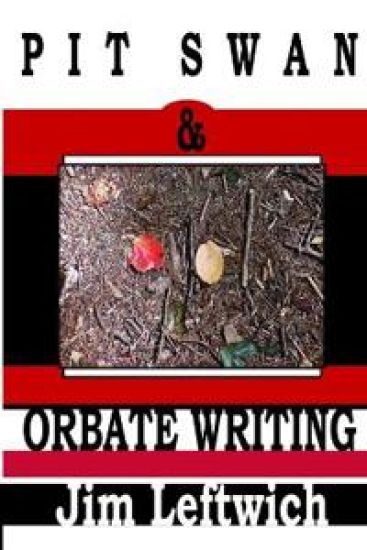
Pit Swan & Orbate Writing

Pit Swan & Orbate Writing

Jim Leftwich

Lulu.com
2025
pokkari
You could spend your whole day in one of these poems and anywhere in it. Living spending spending living. You could live physically in the poem. What choice does the body have? I dig the "listing" of things that riff and rhyme. This "method" explores, rather than having a title that would frame/explain at onset, we have here a title that "explains" nothing. None of it, no line in it, necessitates anything that follows it, no questions begged; if a summation or ending's prized, possibly eyes're on it, but there's much in one's lap or in the foreground, arms-length away, to be sifted and reckoned with. Like it doesn't matter just what's said, hashing and hammering might result in some slashed flatness, here are particulars overrun on the way there. None of it "filler" and all of it, "bundles of murk" to "training heals" to "oatmeat" as vital, indispensable, invaluable. The "stuff of life" rather than the confabbed frictions that life's arguably stuffed of. This poem could go on forever, a ticker tape of particulars, up for grabs, going once. Turning out hammered out vital stats, a line-stack of lines running vertically thru time. Italicized lines counterpoints as connectors, hinges, summations, concurrent poetic bizness conducted, parallel series, commentary. And places where the poem can fold and stack, maintaining their spacing even when the poem's been folded and stacked, a cube on the desk, in the air, in the mind. Parallel poesy. - from Preface by John Crouse
Lunic Panzemes

Lunic Panzemes

Jim Leftwich

Lulu.com
2024
pokkari
This is a book of readings of readings. It is not analysis, it is not a critical discussion, it is not the application of a theory or ideology to texts, but a record of the conscious/unconscious experiences of reading and engaging with that reading. It is an approach I have advocated for decades: that to "understand" a text, especially one that seems strange or unusual, the best approach is to pay attention to one's own reactions - somatic, linguistic, visual, etc. - and then to discuss and think about those reactions. Leftwich, in his many volumes and articles about new literatures, has developed this approach better than anyone I know, including myself. It is perfect for the kinds of experimental and avant-garde writing Leftwich both practices and reads, a kind of writing that is opaque to current trends of literary analysis. It is both a guide for potential readers, and an act of love and empathy toward the texts and toward the art of writing and reading them. As he says in a conversation about my chapbook "shat on a tool", "Finding meaning isn't a matter of translating the poem into prose, it's a matter of paying attention to what the poet is doing with the language". - John M. Bennett Leftwich's "magnetic nerve valve of gravity," his "cluster of dendrites thinking spacetime" dismantles atoms' going-once-again-and-again "cluster of observa" to molecular rewriting's "pulsing shifters" for rerouting peptide sequences and reversing rivers, recombining a day's word orders per moments' quantum entanglements, "counting the syllables one more time." Whether by "glitched letterforms" or "paragraph iron," or whether it's by Leftwich "anvil ing] at least a few of his popcorn brutal," LUNIC PANZEMES revives the memor ies] of "unread conferences of songbirds. - John Crouse
Poetry makes things happen

Poetry makes things happen

Jim Leftwich

Luna Bisonte Prods
2020
pokkari
For Jim Leftwich, the boundary between poetry and criticism, or more accurately, between poetry and writing about poetry, is extremely porous. This book should make that very clear; in fact, here it is sometimes hard to tell whether a text is "original poetry" or his writing "about poetry". Which suggests that the distinction may not be all that important. (Another such book is one he wrote focused on my own work, or using my work as a springboard, Containers Projecting Multitudes: Expositions on the Poetry of John M. Bennett, 2019.) This is perhaps an outgrowth of his practice of making "hacks" of others' poetry and texts, which is in itself a means of entering into, and remaking aspects of, another's work, using a wide variety of processes ranging from the arbitrary and deliberate, to the improvisational and purely intuitive. What this does is to turn the process of writing about poetry on its head. Instead of applying a preordained critical method or theory to a text, Leftwich presents, as it were in "real time", an account of what it was like, of what happened, when he read the text. We thus have a narration of a real experience of reading. For me, and for many of us in this new literary avant garde, this is vastly more interesting and useful than the use of a text to support or illustrate a particular literary (or other) ideology. Leftwich's work in this regard is unique, exciting, and represents real progress in the "problem" of "how to read poetry", and of how to write it as well.-¬ John M. Bennett