Kirjojen hintavertailu. Mukana 12 165 968 kirjaa ja 12 kauppaa.
Kirjailija
Jim Wallis
Kirjat ja teokset yhdessä paikassa: 27 kirjaa, julkaisuja vuosilta 1995-2025, suosituimpien joukossa Seeing Gray in a World of Black and White. Vertaile teosten hintoja ja tarkista saatavuus suomalaisista kirjakaupoista.
NOW A NEW YORK TIMES AND A USA TODAY BESTSELLER "Everyone who claims to be 'Christian' or else claims to be upset by 'Christianity' needs to read this book, especially politicians using people's supposed faith for their own ends." --Margaret E. Atwood"Jim Wallis calls the nation to grow up and he calls us all to fight the love battle to save the soul of America." --From the Foreword by Eddie S. Glaude, Jr. A New York Times bestseller, arguing that the answer to bad religion is true faith that will help re-found democracy It is time says Jim Wallis, to call out genuine faith--specifically the "Christian" in White Christian Nationalism--inviting all who can be persuaded to reject and help dismantle a false gospel that propagates white supremacy and autocracy. Wallis turns our attention to six iconic texts at the heart of what genuine biblical faith means and what Jesus, in the gospels, has called us to do. It is time to ask anew: do we believe these teachings or not? This book isn't only for Christians but for all faith traditions, and even those with no faith at all. When we see a civic promotion of fear, hate, and violence for the trajectory of our politics, we need a civic faith of love, healing, and hope to defeat it. And that must involve all of us-religious or not. Learning to practice a politics of neighbor love will be central to the future of democracy in America. And more than ever, the words of Jesus ring, "You will know the truth, and the truth will set you free."
NOW A NEW YORK TIMES AND A USA TODAY BESTSELLER "Everyone who claims to be 'Christian' or else claims to be upset by 'Christianity' needs to read this book, especially politicians using people's supposed faith for their own ends." --Margaret E. Atwood"Jim Wallis calls the nation to grow up and he calls us all to fight the love battle to save the soul of America." --From the Foreword by Eddie S. Glaude, Jr. A major new work by the New York Times bestselling author, arguing that the answer to bad religion is true faith that will help refound democracy It is time says Jim Wallis, to call out genuine faith--specifically the "Christian" in White Christian Nationalism--inviting all who can be persuaded to reject and help dismantle a false gospel that propagates white supremacy and autocracy. We need-to raise up the faith of all of us, and help those who are oblivious, stuck, and captive to the ideology and idolatry of White Christian Nationalism that is leading us to such great danger. Wallis turns our attention to six iconic texts at the heart of what genuine biblical faith means and what Jesus, in the gospels, has called us to do. It is time to ask anew: do we believe these teachings or not? This book isn't only for Christians but for all faith traditions, and even those with no faith at all. When we see a civic promotion of fear, hate, and violence for the trajectory of our politics, we need a civic faith of love, healing, and hope to defeat it. And that must involve all of us-religious or not. Learning to practice a politics of neighbor love will be central to the future of democracy in America. And more than ever, the words of Jesus ring, "You will know the truth, and the truth will set you free."
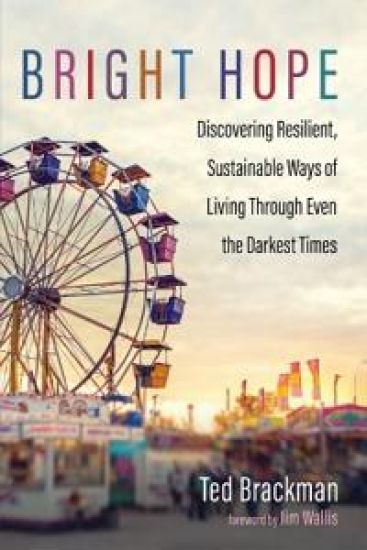
Hope is not an attitude--it's a way of life. Therapist Ted Brackman, a colleague of Jim Wallis in the early Sojourners community, mines psychological, theological, and sociological insights in this practical and compassionate guide for ""living well while ill."" Ted's work was deepened by his eleven years with pancreatic cancer (after a nine-month prognosis). He developed and lived out a way of life animated by hope in the transcendent reality of God's future coming to us in the present. In his writing, he is an honest, inspiring companion: - for those who struggle to face the next hour with courage and strength. - for those who feel defeated and need a new way forward that reframes the present. - for caregivers and advocates who need new tools for replenishing both internal and external resources. - for communities of faith seeking to bring change to, and empowering hope within, marginalized populations. For all those ready to find a new way of living when false hopes and distractions are stripped away, to learn how to build a foundation for personal, communal, and social thriving . . . Ted Brackman offers Bright Hope.
Our health system doesn't work for the most vulnerable. It's time for people of faith to respond with concrete action to demonstrate God's love and effect real change. Here's how. The dialogue on how to fix US health care is mired in partisan policy debates. Rather than idly waiting for the gridlock to resolve, people of faith can live into their call to care for the underserved right now. Drawing from his experience as medical doctor, pastor, and founder and CEO of the nation's largest charitably funded faith-based health-care center, Scott Morris sheds light on how we can live out a crucial aspect of discipleship by ministering to the vulnerable and underserved among us. Through the stories of people too often ignored or dehumanized, Dr. Morris addresses the financial and social barriers to health care for low-income and undocumented individuals, the lack of affordable medications, the challenges of chronic disease and behavioral health issues, and the promising outcomes of faith-based care that treats the whole person. As we continue to reckon with the effects of the Covid-19 pandemic and the inequities in our health systems it has highlighted, Dr. Morris's book calls readers to awareness, action, and advocacy in their local communities on behalf of those who have no one else to turn to for quality care.
Named One of the 50 Best Spiritual Books of 2020 by Spirituality & Practice What is materiality?Jesus practiced materiality when he healed the bodies of the sick, proclaimed Jubilee to the poor, and fed the five thousand. He practiced materiality over materialism. In Materiality as Resistance, Walter Brueggemann defines materiality as the use of the material aspects of the Christian faith, as opposed to materialism, which places possessions and physical comfort over spiritual values. In this concise volume, Brueggemann lays out how we as Christians may reengage our materiality for the common good. How does materiality inform our faith when it comes to food, money, the body, time, and place? How does it force us to act? Likewise, how is the church obligated to use its time, money, abundance of food, the care and use of our bodies, observance of Sabbath, and stewardship of our world and those with whom we share it? With a foreword from Jim Wallis, Materiality as Resistance serves as a manifesto of Walter Brueggemann's most important work and as an engaging call to action. It is suited for group or individual study.
America’s unique and often fractious relationship between church and state is, if anything, more relevant to who we are as a nation than when Diana Butler Bass’ examination of it in Broken We Kneelwas first published 16 years ago. This second edition contains a new foreword and introduction, as well as a new conclusion outlining her vision for the future. Born in the tumultuous aftermath of 9/11 and now a spiritual classic, the book draws on both her personal experience and her knowledge of religious history. Bass looks at Christian identity, patriotism, citizenship, and congregational life in an attempt to answer the central question that so many are struggling with today: “To whom do Christians owe deepest allegiance? God or country?” In writing both impassioned and historically informed, Bass reflects on current events, personal experiences, and political questions that have sharpened the tensions between serious faith and national imperatives. The book incorporates the author’s own experience of faith, as writer, teacher, wife, mother, and churchgoer into a larger conversation about Christian practice and contemporary political issues. Broken We Kneel is a call to remember that the core of Christian identity is not always compatible with national political policies.
Writing in response to our current “constitutional crisis,” New York Times bestselling author and Christian activist Jim Wallis urges America to return to the tenets of Jesus once again as the means to save us from the polarizing bitterness and anger of our tribal nation.In Christ in Crisis Jim Wallis provides a path of spiritual healing and solidarity to help us heal the divide separating Americans today. Building on “Reclaiming Jesus”—the declaration he and other church leaders wrote in May 2018 to address America’s current crisis—Wallis argues that Christians have become disconnected from Jesus and need to revisit their spiritual foundations. By pointing to eight questions Jesus asked or is asked, Wallis provides a means to measure whether we are truly aligned with the moral and spiritual foundations of our Christian faith. “Christians have often remembered, re-discovered, and returned to their obedient discipleship of Jesus Christ—both personal and public—in times of trouble. It’s called coming home,” Wallis reminds us. While he addresses the dividing lines and dangers facing our nation, the religious and cultural commentator’s focus isn’t politics; it’s faith.As he has done throughout his career, Wallis offers comfort, empathy, and a practical roadmap. Christ in Crisis is a constructive field guide for all those involved in resistance and renewal initiatives in faith communities in the post-2016 political context.
Writing in response to our current "constitutional crisis," New York Times bestselling author and Christian activist Jim Wallis urges America to return to the tenets of Jesus once again as the means to save us from the polarizing bitterness and anger of our tribal nation.In Christ in Crisis Jim Wallis provides a path of spiritual healing and solidarity to help us heal the divide separating Americans today. Building on "Reclaiming Jesus"--the declaration he and other church leaders wrote in May 2018 to address America's current crisis--Wallis argues that Christians have become disconnected from Jesus and need to revisit their spiritual foundations. By pointing to eight questions Jesus asked or is asked, Wallis provides a means to measure whether we are truly aligned with the moral and spiritual foundations of our Christian faith. "Christians have often remembered, re-discovered, and returned to their obedient discipleship of Jesus Christ--both personal and public--in times of trouble. It's called coming home," Wallis reminds us. While he addresses the dividing lines and dangers facing our nation, the religious and cultural commentator's focus isn't politics; it's faith.As he has done throughout his career, Wallis offers comfort, empathy, and a practical roadmap. Christ in Crisis is a constructive field guide for all those involved in resistance and renewal initiatives in faith communities in the post-2016 political context.
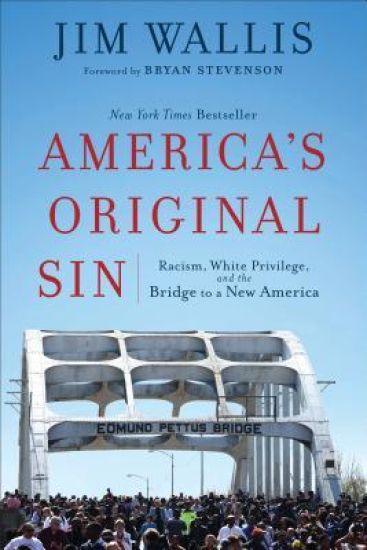
America's problem with race has deep roots, with the country's foundation tied to the near extermination of one race of people and the enslavement of another. Racism is truly our nation's original sin."It's time we right this unacceptable wrong," says bestselling author and leading Christian activist Jim Wallis. Fifty years ago, Wallis was driven away from his faith by a white church that considered dealing with racism to be taboo. His participation in the civil rights movement brought him back when he discovered a faith that commands racial justice. Yet as recent tragedies confirm, we continue to suffer from the legacy of racism. The old patterns of white privilege are colliding with the changing demographics of a diverse nation. The church has been slow to respond, and Sunday morning is still the most segregated hour of the week.In America's Original Sin, Wallis offers a prophetic and deeply personal call to action in overcoming the racism so ingrained in American society. He speaks candidly to Christians--particularly white Christians--urging them to cross a new bridge toward racial justice and healing.Whenever divided cultures and gridlocked power structures fail to end systemic sin, faith communities can help lead the way to grassroots change. Probing yet positive, biblically rooted yet highly practical, this book shows people of faith how they can work together to overcome the embedded racism in America, galvanizing a movement to cross the bridge to a multiracial church and a new America.
An unflinching look at the failure to achieve an equitable society with faith-based approaches to a meaningful racial reconciliation. While the dream of post-racial America remains unfulfilled and the current turmoil (George Floyd and Breonna Taylor, to name a few), this examination of racism is more relevant and consequential than ever. Living into God’s Dream combines frontline personal stories with theoretical and theological reflections. It aims to forge new and truthful conversations on race and doesn’t shy away from difficult discussions, such as reasons for the failure of past efforts to achieve genuine racial reconciliation and the necessity to honor rage and grief in the process of moving to forgiveness and racial healing. This collection of nine essays is honest, pragmatic, and courageous in its real-world view of racism and how people of faith and conscience can work together to “dismantle racism.” Review questions at the end of the book, appropriate for individual or group study, can engender deeper discussions and reflections.
In today's political environment, who speaks for whom is not always clear. Over the past couple of decades, evangelical Christians have tended to be associated with the religious right and the most conservative positions of the Republican Party. Rebelling against this designation are those who prefer to be called Red Letter Christians, desiring to live out Jesus's words in the New Testament. Believing that Jesus is neither a Republican nor a Democrat, Red Letter Christians want to jumpstart a religious movement that will transcend partisan politics and concentrate on issues such as fighting poverty, caring for the environment, advancing peace, promoting strong families, and supporting a consistent ethic of life, all viewed as critical moral and biblical values. Into this arena of thought steps Tony Campolo, the powerful evangelist known for his passionate and prophetic sharing of the radical message of Jesus. In this book, Campolo examines many of the hot-button issues facing evangelicals from the perspective of Jesus's red-letter words in the Bible. No matter where you fall on the political spectrum, Campolo will make you think, pray, and act.
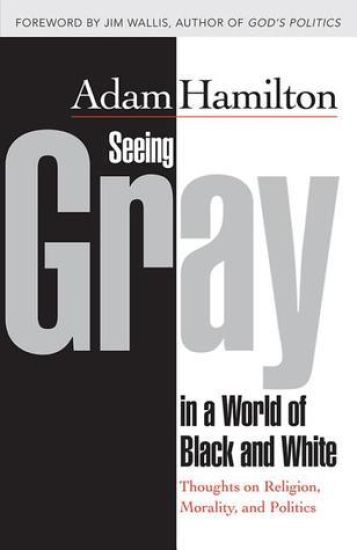
Everyone agrees that America is polarized, with ever-hardening positions held by people less and less willing to listen to one another. No one agrees on what to do about it. One solution that hasn't yet been tried, says Adam Hamilton, is for thinking persons of faith to model for the rest of the country a richer, more thoughtful conversation on the political, moral, and religious issues that divide us. Hamilton rejects the easy assumptions and sloppy analysis of black and white thinking, seeking instead the truth that resides on all sides of the issues, and offering a faithful and compassionate way forward. He writes, "I don't expect you to agree with everything I've written. I expect that in the future even I won't agree with everything I've written here. The point is not to get you to agree with me, but to encourage you to think about what you believe. In the end I will be inviting those of you who find this book resonates with what you feel is true, to join the movement to pursue a middle way between the left and the right - to make your voices heard - and to model for our nation and for the church, how we can listen, learn, see truth as multi-sided, and love those with whom we disagree." Read more about this title Adam Hamilton's Seeing Gray Blog Now available Seeing Gray in a World of Black and White - DVD UPC: 843504001902 A five-session video resource featuring Adam Hamilton teaching these concepts on DVD for group or individual study. Includes leader's guide as well as bonus video. Click below to view a preview of each video session. Where Faith and Politics Meet Christ Christians and the Culture Wars How should we live, The Ethics of Jesus Spiritual Maturity and Seeing Gray What Would Jesus Say to America?
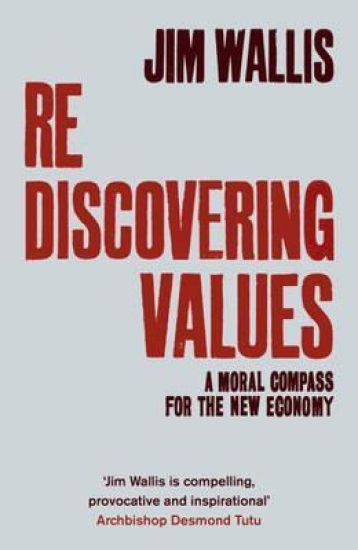
When we start with the wrong question, no matter how good an answer we get, it won't give us the result we want. Rather than asking, 'When will this economic crisis be over?' Jim Wallis says the right question to ask is 'How will this crisis change us?'. The worst thing we can do now, Wallis tells us, is to go back to normal. Normal is what got us into this situation. We need a new normal, and now, in the midst of a crisis affecting every part of society, is the time to discover it. These are some of the principles Wallis suggests we should consider-Spending money we don't have on things we don't need is a bad foundation for an economy or a family-It's time to stop keeping up with the Joneses and start making sure the Joneses are okay-The values of adverts and billboards are not the things we want to teach our children-Caring for the poor is not just a moral duty but is critical for the common good-A healthy society is a balanced society in which markets, the government, and our communities all play a role-The operating principle of God's economy says that there is enough if we share itIn REDISCOVERING VALUES, Wallis equips us with a new moral compass for the future - one that draws on some of our oldest and best values and one that will guide us in the City, our towns and our neighbourhoods.
Now in paperback: the bestselling author of God's Politics revives our hope in a politics that reflects our highest common values and offers a roadmap for solving our biggest social problems.
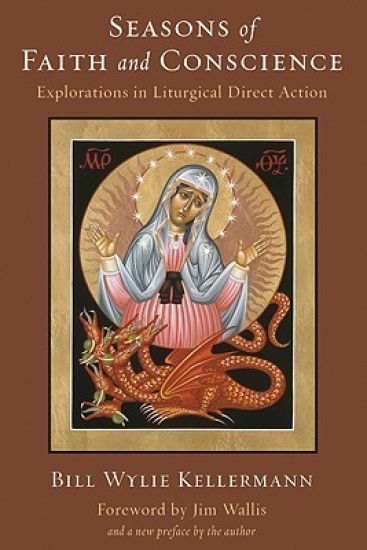
Seasons of Faith and Conscience challenges religious activists and the wider church with an answer to the question: What is the connection between faith and politics? ""Every act of worship,"" Kellermann says, ""every occasion where the sovereignty of the word of God is acknowledged, is always and everywhere expressly political."" In a profound biblical and theological reflection, Kellermann begins by investigating the political implications of worship and liturgy, both in the Hebrew Bible and in the New Testament. He goes on to review the history of ""confessional politics,"" those situations in which Christians have felt their historical situation to be so grave as to call into question the very identity of the church. Recent examples include the Confessing Church in Nazi Germany and the Kairos document from South Africa. Kellermann explores analogies in our own situation--the continuing arms buildup, the international debt system, and the ""war against the poor"" in the Third World. Seasons of Faith and Conscience concludes with a series of moving meditations on the key seasons and events of the liturgical calendar: Advent, Christmas, Epiphany, Lent, Easter, and Pentecost. ""Here is a book which reclaims the Christian faith in all of its stunning, radical beauty. . . . Of particular interest for pastors are the] sermons at the end of the book in which he articulates, in a clear, evocative, and thoroughly applicable way, this theology of radical discipleship."" --William H. Willimon, Bishop in the United Methodist Church, currently serving in North Alabama ""A daring piece of expose and a powerful invitation . . . a nervy affirmation that, in a world of brutalizing power and uncaring technology, human sacramental action can matter decisively."" --Walter Brueggemann, Columbia Theological Seminary, Emeritus ""An important and thought-provoking book. Anyone concerned with the vital issues of faith and action will find ample material here for fruitful reflection."" --Shelley M. Douglass, Mary's House Catholic Worker ""Quietly, and at high personal cost, a few people have been exploring new liturgical forms for engaging the Powers That Be. This book is the fruit of that effort: a delight to read, a theological feast and practical guide, a challenge to action."" --Walter Wink, Auburn Theological Seminary, Emeritus Bill Wylie Kellermann is a United Methodist pastor who has served city parishes in Detroit, Michigan, and is currently director of Graduate Theological Urban Studies for the Seminary Consortium for Urban Pastoral Education of Chicago, Illinois. A graduate of Union Theological Seminary in New York City, he is also a frequent contributor to Sojourners and other publications, often on topics framed biblically by ""the principalities and powers.""
In Seven Ways to Change the World, Jim Wallis argues that politics has failed to solve the biggest issues of our time: extreme and needless poverty, global warming and environmental degradation, terrorism and the endless cycle of violence, racism, human trafficking, health and education, respect for human life and the crisis in families and parenting. Whatever happened to the 'common good'? Writing out of a US context but applicable to the wider world, Wallis helps us rediscover our moral centre and infuses us with the inspiration and passion we need to chart a new course and build the kind of movements that change politics.
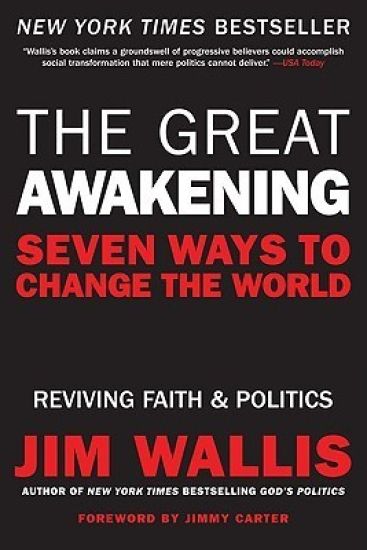
What will it take to solve the biggest issues of our time: extreme and needless poverty, global warming and environmental degradation, terrorism and the endless cycle of violence, racism, human trafficking, health care and education, and other pressing problems? While Washington offers only the politics of blame and fear, Jim Wallis, the man who changed the conversation about faith and politics, has traveled the country and found a nation hungry for a politics of solutions and hope. He shows us that a revival is happening, as people of faith and moral conviction seek common ground for change. Wallis also reminds us that religious faith was a driving force behind our greatest national reforms, such as the abolition of slavery and the civil rights movement. These "great awakenings" happened periodically at crucial times in our nation's history to propel us toward the common good. The time is ripe for another movement that will transform this country. With The Great Awakening, Wallis helps us rediscover our moral center and provides both the needed inspiration and a concrete plan to hold politics accountable and find solutions to our greatest challenges.
2008 Catholic Press Association Honorable Mention! For decades, the Catholic Church and historical peace churches such as the Mennonites have come together in ecumenical discussions about war and peace. The dividing point has always been between pacifism, the view held by Mennonites and other peace churches, and the just war theory that dominates Catholic thinking on the issue. Given the transformation of global relations over this period—increased interdependency and communication as well as the fall of the Soviet Union, emerging nationalism movements, and the slow development of international courts—the time is right to rethink the Christian response to war. Gerald Schlabach has proposed just policing theory as a way to narrow the gap between just war and pacifist traditions. If the world can address problems of violence through a police model instead of a conventional military model, there may be a role for Christians from all traditions. In this volume, Schlabach presents his theory and has invited a number of scholars representing Catholic, Mennonite, and other traditions to respond to the theory and address a number of key questions: What do we mean by policing? Can policing solve conflicts beyond one’s own borders? How does just policing theory address terrorism? Is international policing possible, and what would it look like? Is just policing a Christian solution that meets the criteria of both traditions? This important volume offers a fresh and meaningful discussion to help Christians of all traditions navigate the difficult questions of how to live in these times of violence and war.