Kirjojen hintavertailu. Mukana 12 390 323 kirjaa ja 12 kauppaa.

Kirjailija

Jim Webber

Kirjat ja teokset yhdessä paikassa: 11 kirjaa, julkaisuja vuosilta 2010-2025, suosituimpien joukossa Building Knowledge Graphs. Vertaile teosten hintoja ja tarkista saatavuus suomalaisista kirjakaupoista.

11 kirjaa

Kirjojen julkaisuhaarukka 2010-2025.

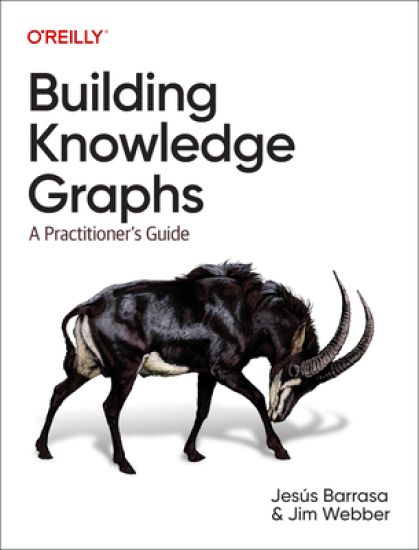
Building Knowledge Graphs

Building Knowledge Graphs

Jesus Barrasa; Jim Webber

O'Reilly Media
2023
nidottu
Incredibly useful, knowledge graphs help organizations keep track of medical research, cybersecurity threat intelligence, GDPR compliance, web user engagement, and much more. They do so by saving interlinked descriptions of entities (objects, events, situations, or abstract concepts) while encoding the semantics underlying the terminology. How do you create a knowledge graph? And how do you move it from theory into practice? Using hands-on examples, this practical book shows data scientists and data practitioners how to build their own custom knowledge graphs. Authors Jesus Barrasa and Jim Webber from Neo4j illustrate patterns commonly used for building knowledge graphs that solve many of today's pressing problems. You'll quickly discover how these graphs become exponentially more useful as you add more data. Learn the organizing principles necessary to build a knowledge graph Explore how graph databases serve as a foundation for knowledge graphs Understand how to import structured and unstructured data into your graph Follow examples to build integration-and-search knowledge graphs Understand what pattern detection knowledge graphs help you accomplish Explore dependency knowledge graphs through examples Use examples of natural language knowledge graphs and chatbots

Judy's Scary Little Christmas

Judy's Scary Little Christmas

David Church; Jim Webber; Joe Patrick Ward

Samuel French, Inc
2010
pokkari
Holiday Musical Comedy / Characters: 7m, 6f / Simple Set Judy Garland is primed for her biggest comeback ever - the dazzling star of her own TV special, broadcast live on Christmas Eve, 1959. Judy's guests include Bing Crosby (making some holiday "grog"), Ethel Merman (plugging her Hawaiian album), and Liberace (with a handsome sailor in tow). However, mysterious snafus behind the scenes and cameo appearances by commie-baiting Vice President Richard Nixon (who performs a magic act) and blacklisted writer, Lillian Hellman, (who's forced to read "Children's Letter to Santa" with a puppet) throw Judy's program off course. The surprises climax when the arrival of Joan Crawford is interrupted by the spectral figure of...Death. The evening takes a detour into the twilight zone as the celebrities are forced to confront the lies behind their legends. Devastated and alone, Judy meets a special fan who ultimately proves that, despite her flaws, her shining legacy still endures. "Magical! A side-splitting musical parody...wickedly funny!" - Los Angeles Times "Fascinating, hilarious and wildly entertaining!" - Gerard Alessandrini, Creator of Forbidden Broadway "Wonderfully strange...a true holiday treat! " - Hollywood Reporter "A non-stop hoot!" - Back Stage West "Hilarious! A surreal snow globe highball; a Hollywood Christmas card from beyond the grave!" - Portland Mercury
An Alternate Pragmatism for Going Public

An Alternate Pragmatism for Going Public

Jim Webber

Utah State University Press
2018
nidottu
An Alternate Pragmatism for Going Public interrogates composition's most prominent responses to contemporary K-16 education reform. By "going public," teachers, scholars, and administrators rightfully reassert their expertise against corporate-political standards and assessments like the Common Core, Complete College America, and the Collegiate Learning Assessment. However, author Jim Webber shows that composition's professional imperative for self-defense only partly fulfils the broader aims of "going public," which include fostering public participation that can assess and potentially affirm the public good of professional judgment.Drawing on the pragmatic/democratic tradition, Webber envisions an alternate rhetoric of professionalism, one that not only reasserts compositionists' expertise but also expands opportunities for publics to authorize this expertise. While this public inquiry and engagement may not safeguard professional standing against neoliberal reform, it reorients composition toward an equally important goal, enabling publics to gauge the adequacy of the educational standardization so often advocated by contemporary reform.An Alternate Pragmatism for Going Public shows how public engagement can serve composition's efforts related to "going public."
Graph Databases 2e

Graph Databases 2e

Ian Robinson; Jim Webber; Emil Elfrem

O'Reilly Media, Inc, USA
2015
nidottu
Discover how graph databases can help you manage and query highly connected data. With this practical book, you'll learn how to design and implement a graph database that brings the power of graphs to bear on a broad range of problem domains. Whether you want to speed up your response to user queries or build a database that can adapt as your business evolves, this book shows you how to apply the schema-free graph model to real-world problems.This second edition includes new code samples and diagrams, using the latest Neo4j syntax, as well as information on new functionality. Learn how different organizations are using graph databases to outperform their competitors. With this book's data modeling, query, and code examples, you'll quickly be able to implement your own solution.Model data with the Cypher query language and property graph modelLearn best practices and common pitfalls when modeling with graphsPlan and implement a graph database solution in test-driven fashionExplore real-world examples to learn how and why organizations use a graph databaseUnderstand common patterns and components of graph database architectureUse analytical techniques and algorithms to mine graph database information
REST in Practise

REST in Practise

Jim Webber

O'Reilly Media, Inc, USA
2010
nidottu
Why don't typical enterprise projects go as smoothly as projects you develop for the Web? Does the REST architectural style really present a viable alternative for building distributed systems and enterprise-class applications? In this insightful book, three SOA experts provide a down-to-earth explanation of REST and demonstrate how you can develop simple and elegant distributed hypermedia systems by applying the Web's guiding principles to common enterprise computing problems. You'll learn techniques for implementing specific Web technologies and patterns to solve the needs of a typical company as it grows from modest beginnings to become a global enterprise. Learn basic Web techniques for application integration Use HTTP and the Web's infrastructure to build scalable, fault-tolerant enterprise applications Discover the Create, Read, Update, Delete (CRUD) pattern for manipulating resources Build RESTful services that use hypermedia to model state transitions and describe business protocols Learn how to make Web-based solutions secure and interoperable Extend integration patterns for event-driven computing with the Atom Syndication Format and implement multi-party interactions in AtomPub Understand how the Semantic Web will impact systems design