Kirjailija
Jimmy Carter
Kirjat ja teokset yhdessä paikassa: 53 kirjaa, julkaisuja vuosilta 1991-2025, suosituimpien joukossa Kenny. Vertaile teosten hintoja ja tarkista saatavuus suomalaisista kirjakaupoista.
53 kirjaa
Kirjojen julkaisuhaarukka 1991-2025.
Zbigniew Brzezinski's multifaceted career dealing with U.S. security and foreign policy has led him from the halls of academia to multiple terms in public service, including a stint as President Jimmy Carter's National Security Advisor from 1977 to 1981. He is a renowned policy analyst and author who frequently appears as a commentator on popular talk shows, and his strategic vision continues to carry a great deal of gravitas. in Zbig, Charles Gati has enlisted many of the top foreign policy players of the past thirty years to reflect on and analyze Brzezinski and his work. A senior scholar in Eastern European and Russian studies, Gati observed firsthand much of the history and politics surrounding Brzezinski's career. His vibrant introduction and concluding interview with Brzezinski frame this critical assessment of a major statesman's accomplishments. Contributors: Justin Vaisse, David C. Engerman, Mark Kramer, David J. Rothkopf, Warren I. Cohen and Nancy Bernkopf Tucker, Robert A. Pastor, William B. Quandt, Robert Hunter, James Thomson, Patrick Vaughan, Marin Strmecki, James Mann, David Ignatius, Adam Garfinkle, Stephen F. Szabo, Francis Fukuyama, Charles Gati
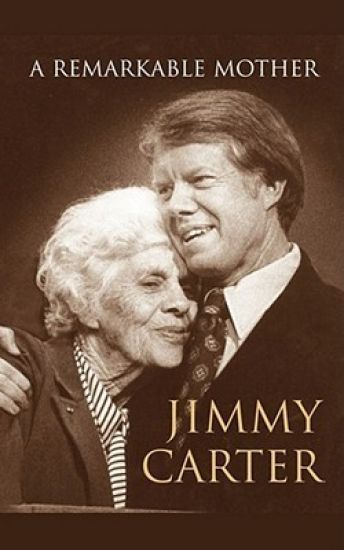
"A Remarkable Mother"is President Carter's loving, admiring, wry homage to Miss Lillian Carter, who championed the underdog always, even when her son was president. A registered nurse, pecan grower, university housemother, Peace Corps volunteer, public speaker, and renowned raconteur, Miss Lillian ignored the mores and prejudices of the racially segregated South of the Great Depression years. She was an avid supporter of the Brooklyn Dodgers (because she happened to attend the first major league baseball game in which Jackie Robinson, from Cairo, Georgia, played), was a favored guest on television talk shows (usually able to "steal the microphone" from hosts such as Johnny Carson and Walter Cronkite), and an important role model for the nation. Jimmy Carter's mother emerges from this portrait as redoubtable, generous, and forward-looking. He ascribes to her the inspiration for his own life's work of commitment and faith.
In this urgent, balanced, and passionate book, Nobel Peace Laureate and former President Jimmy Carter argues that the present moment is a unique time for achieving peace in the Middle East--and he offers a bold and comprehensive plan to do just that. President Carter has been a student of the biblical Holy Land all his life. For the last three decades, as president of the United States and as founder of The Carter Center, he has studied the complex and interrelated issues of the region's conflicts and has been actively involved in reconciling them. He knows the leaders of all factions in the region who will need to play key roles, and he sees encouraging signs among them. Carter describes the history of previous peace efforts and why they fell short. He argues persuasively that the road to a peace agreement is now open and that it has broad international and regional support. Most of all, since there will be no progress without courageous and sustained U.S. leadership, he says the time for progress is now. This is President Carter's call for action, and he lays out a practical and doable path to peace.
Out of My Life and Thought
Albert Schweitzer; Jimmy Carter; Lachlan Forrow
Johns Hopkins University Press
2009
pokkari
Published to commemorate Albert Schweitzer's only visit to the United States 60 years ago, this anniversary edition of his autobiography gives 21st-century readers a unique and authoritative account of the man John F. Kennedy called "one of the transcendent moral influences of our century." Schweitzer is celebrated around the world as a European pioneer of medical service in Africa, a groundbreaking philosopher and musical scholar, and a catalyst of environmental and peace activism. Yet people most revere Schweitzer for his dedication to serving others and his profound and influential ethic of reverence for life. For Schweitzer, reverence for life was not a theory or a philosophy but a discovery-a recognition that the capacity to experience and act on a reverence for all life is a fundamental part of human nature, a characteristic that sets human beings apart from the rest of the natural world. This anniversary edition coincides with several high profile celebrations of his 1949 visit, as well as the release of a new feature film starring Jeroen Krabbe and Barbara Hershey. In addition to a foreword by Nobel Laureate and former U.S. President Jimmy Carter, this edition features a new foreword by Lachlan Forrow, president of The Albert Schweitzer Fellowship.
Starved for Science
Robert Paarlberg; Norman E. Borlaug; Jimmy Carter
Harvard University Press
2009
nidottu
Listen to a short interview with Robert PaarlbergHost: Chris Gondek | Producer: Heron & CraneHeading upcountry in Africa to visit small farms is absolutely exhilarating given the dramatic beauty of big skies, red soil, and arid vistas, but eventually the two-lane tarmac narrows to rutted dirt, and the journey must continue on foot. The farmers you eventually meet are mostly women, hardworking but visibly poor. They have no improved seeds, no chemical fertilizers, no irrigation, and with their meager crops they earn less than a dollar a day. Many are malnourished. Nearly two-thirds of Africans are employed in agriculture, yet on a per-capita basis they produce roughly 20 percent less than they did in 1970. Although modern agricultural science was the key to reducing rural poverty in Asia, modern farm science—including biotechnology—has recently been kept out of Africa. In Starved for Science Robert Paarlberg explains why poor African farmers are denied access to productive technologies, particularly genetically engineered seeds with improved resistance to insects and drought. He traces this obstacle to the current opposition to farm science in prosperous countries. Having embraced agricultural science to become well-fed themselves, those in wealthy countries are now instructing Africans—on the most dubious grounds—not to do the same. In a book sure to generate intense debate, Paarlberg details how this cultural turn against agricultural science among affluent societies is now being exported, inappropriately, to Africa. Those who are opposed to the use of agricultural technologies are telling African farmers that, in effect, it would be just as well for them to remain poor.
Beyond the White House: Waging Peace, Fighting Disease, Building Hope
Jimmy Carter
SIMON SCHUSTER
2008
nidottu
The president's personal and passionate account of his twenty-five years in the service of humanitarian effort that won him the Nobel Peace Prize was received with the admiring respect of reviewers and readers and it will stand as the record of his brilliant post-presidential career. This is the story of President Jimmy Carter's post-presidency, the most admired and productive in the nation's history. Through The Carter Center, which he and Rosalynn Carter founded in 1982, he has fought neglected diseases, waged peace in war zones, and built hope among some of the most forgotten and needy people in the world. Serving in more than seventy nations, Carter has led peacekeeping efforts for Ethiopia, North Korea, Haiti, Bosnia and Herzegovina, Uganda, and Sudan. With his colleagues from The Carter Center, he has monitored more than sixty-five elections in troubled nations, from Palestine to Indonesia. Carter's bold initiatives, undertaken with dedicated colleagues, have eliminated, prevented, or cured an array of diseases that have been characterized as "neglected" by the World Health Organization and that afflict tens of millions of people unnecessarily. The Carter Center has taught millions of African families how to increase the production of food grains, and Rosalynn Carter has led a vigorous war against the stigma of mental illness around the world. "Immersing ourselves among these deprived and suffering people has been a great blessing as it stretched our minds and hearts," Jimmy Carter writes. "The principles of The Carter Center have been the same ones that should characterize our nation, or any individual. They are the beliefs inherent in all the great world religions, including commitments to peace, justice, freedom, humility, forgiveness or an attempt to find accommodation with potential foes, generosity, human rights or fair treatment of others, protection of the environment, and the alleviation of suffering. This is our agenda for the future."
In The Blood of Abraham, originally published in 1985 with updates to the afterword in 1993 and 2007, President Carter explains his understanding of the Middle East and seeks to provide an enlightening and reconciling vision for greater peace in the region.
Across the Tibetan Plateau
Robert L. Fleming; Dorje Tsering; Liu Wulin; Jimmy Carter
WW Norton Co
2007
sidottu
Here is the most comprehensive photography to date of a little-known and seldom-visited land whose area equals western Europe. The beauty and diversity of Tibet is staggering: from Mount Everest to the world’s deepest gorge, from tropical jungles to arctic-like tundra, from trees twenty feet in diameter to vast herds and solitary specimens of some of the least-known animals on the planet. Certain photographs, such as those of a newborn Tibetan antelope or the elusive red ghoral, are among the first ever taken of these subjects. The book brings American, Tibetan, and Chinese scholarship to bear on the natural history of Tibet, and it also describes an extraordinary conservation accomplishment that has gone virtually unnoticed by the outside world. Where else has 40 percent of the land been set aside in nature preserves in twenty years? As a result of this effort, the animals and landscapes shown here will be saved for future generations.
In A Quiet Revolution, renowned civil rights activist Mary Elizabeth King questions the prevailing wisdom that the first Palestinian Intifada was defined by violence. She argues that initially, the uprising was characterized by a massive nonviolent social mobilization, rooted in popular committees often steered by women. These committees adopted strategies that began to lead to political results , among them the beginnings of a negotiated settlement. King traces the tragic movement away from peaceful protest following the killing of four Palestinian labourers in Gaza, and charts the PLOs increasing contempt for nonviolent struggle. She details the complicity of the media in this escalation of violence , TV crews would not cover peaceful protests, but Palestinian boys throwing rocks at Israeli soldiers would attract foreign cameras. King draws upon the history of non-violent movements and argues that only through nonviolent strategies can a negotiated peace be achieved with Israel. King believes that the residual knowledge of the power of nonviolent resistance from the first Intifada will provide the bedrock upon which to build this eventual, lasting peace.
Here is great angling writing from the best writers in the business?from Tom McGuane to John McPhee to Lefty Kreh. With proceeds going to FishAmerica, to help keep waters and fish healthy, and the Future Fisherman Foundation for education programs for children, these articles include Joan Wulff’s look at the stages in an angler’s lifetime; John McPhee’s passage on our country’s ?Founding Fish”?the American Shad; Dave Barry's not-so-reverent take on fishing; Dave DiBenedetto on migrating stripers; Monte Burke on record bass; President Jimmy Carter on his youth; and Ted Williams on the environment. And there are many more, every one a joy to read.
The Health Care Mess
Julius B. Richmond M.D.; Rashi Fein Ph.D.; Jimmy Carter
Harvard University Press
2007
nidottu
If we can decode the human genome and fashion working machines out of atoms, why can't we navigate the quagmire that is our health care system? In this important new book, Julius Richmond and Rashi Fein recount the fraught history of health care in America since the 1960s. After the advent of Medicare and Medicaid and with the progressive goal to make advances in medical care available to all, medical costs began their upward spiral. Cost control measures failed and led to the HMO revolution, turning patients into consumers and doctors into providers. The swelling ranks of Americans without any insurance at all dragged the United States to the bottom of the list of industrialized nations.Over the last century medical education was also profoundly transformed into today's powerful triumvirate of academic medical centers, schools of medicine and public health, and research programs, all of which have shaped medical practice and medical care. The authors show how the promises of medical advances have not been matched either by financing or by delivery of care.As a new crisis looms, and the existing patchwork of insurance is poised to unravel, American leaders must again take up the question of health care. This book brings the voice of reason and the promise of compromise to that debate.
President Carter's words are as relevant today as when first spoken. This first address of the Carl Vinson Memorial Lecture Series at Mercer University is a masterful assessment of the difficulties of resolving disputes. President Carter's guidelines for establishing a more stable peace in the world are concise and imaginative without sacrificing their essential practicality."We need . . .bright thinking, unanticipated approaches, and unorthodox ideas to achieve the ancient goals of better justice and peace in the world." - President Jimmy Carter
President Jimmy Carter offers a passionate defense of separation of church and state. He warns that fundamentalists are deliberately blurring the lines between politics and religion. As a believing Christian, Carter takes on issues that are under fierce debate -- women's rights, terrorism, homosexuality, civil liberties, abortion, the death penalty, science and religion, environmental degradation, nuclear arsenals, preemptive war, and America's global image.
A big sweeping historical novel of the American South and the War of Independence - the first work of fiction by a President of the United States
Following his New York Times bestselling classics comes this sparkling account of the joys of sharing the simple pleasures of life from Jimmy Carter. In this wonderfully evocative volume, Jimmy Carter writes about the things that matter most, the simple relaxed days and nights that he has enjoyed with family and friends through the years and across the generations. Here are lively, witty accounts of exploring the outdoors with his father and with black playmates; making furniture; painting; pursuing new adventures and going places with children, grandchildren, and friends; and sharing life with his wife, Rosalynn. Sharing Good Times is an inspirational guide for anyone desiring to stretch mind and heart and to combine work and pleasure.
Substance of Faith and Other Cotton Patch Sermons
Clarence Jordan; Jimmy Carter
Wipf Stock Publishers
2005
pokkari
In a sequel to An Hour Before Daylight, the former president continues his account of his early boyhood years, recalling with fondness the Christmas holidays of his youth and later years and recreating the simplicity of community and celebration with friends and family. Reprint. 100,000 first printing.
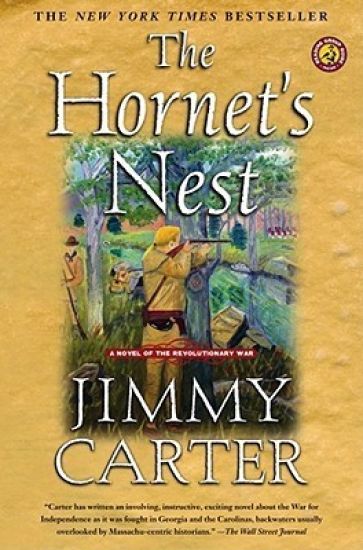
The first work of fiction by a President of the United States--a sweeping novel of the American South and the War of Independence. In his ambitious and deeply rewarding novel, Jimmy Carter brings to life the Revolutionary War as it was fought in the Deep South; it is a saga that will change the way we think about the conflict. He reminds us that much of the fight for independence took place in that region and that it was a struggle of both great and small battles and of terrible brutality, with neighbor turned against neighbor, the Indians' support sought by both sides, and no quarter asked or given. The Hornet's Nest follows a cast of characters and their loved ones on both sides of this violent conflict--including some who are based on the author's ancestors. At the heart of the story is Ethan Pratt, who in 1766 moves with his wife, Epsey, from Philadelphia to North Carolina and then to Georgia in 1771, in the company of Quakers. On their homesteads in Georgia, Ethan and his wife form a friendship with neighbors Kindred Morris and his wife, Mavis. Through Kindred and his young Indian friend Newota, Ethan learns about the frontier and the Native American tribes who are being continually pressed farther inland by settlers. As the eight-year war develops, Ethan and Kindred find themselves in life-and-death combat with opposing forces. With its moving love story, vivid action, and the suspense of a war fought with increasing ferocity and stealth, The Hornet's Nest is historical fiction at its best, in the tradition of such major classics as The Last of the Mohicans.