Kirjojen hintavertailu. Mukana 12 390 323 kirjaa ja 12 kauppaa.

Kirjailija

Jimmy Packham

Kirjat ja teokset yhdessä paikassa: 5 kirjaa, julkaisuja vuosilta 2021-2026, suosituimpien joukossa The Seabed. Vertaile teosten hintoja ja tarkista saatavuus suomalaisista kirjakaupoista.

5 kirjaa

Kirjojen julkaisuhaarukka 2021-2026.

The Seabed

The Seabed

Jimmy Packham; Laurence Publicover

THE UNIVERSITY OF CHICAGO PRESS
2026
nidottu
Uncovers human histories, cultures, and politics on the ocean floor. While often characterized as an alien realm, the seabed has long been fundamental to human life. As new technologies offer ever greater access to this environment, the bottom of the ocean is key to debates about our future—and yet we are poorly equipped to understand our relation to it. The Seabed plumbs the ocean’s depths to reveal a rich and complex history of human activity at the seafloor, a history that extends from the classical world to the present. Jimmy Packham and Laurence Publicover highlight the literary significance of the seabed, examining works by writers including Aphra Behn, Anton Chekhov, Euripides, Herman Melville, M. NourbeSe Philip, William Shakespeare, Derek Walcott, and H. G. Wells, as well as lesser-known authors who have imagined this dark and mysterious realm. Putting these in dialogue with the science writing of Rachel Carson, Sylvia Earle, and others, and with visual art, politics, and historical case studies, they show how imaginative speculations concerning the ocean floor have influenced, and continue to inform, human activity on the seabed itself. Through chapters that explore sea burial and seafloor memorials, scientific exploration, deep-sea infrastructure, salvage from the seabed, and deep-sea extraction, the book reveals that the ocean floor’s cultural visibility has fluctuated over time. But longstanding visions of the seabed continue to shape our relationship with this place, a site for undersea cables and—in the near future—deep-sea mining. The bottom of the ocean is closer than we think. Understanding our history there is crucial to assessing the present and imagining our future.

The Seabed

The Seabed

Jimmy Packham; Laurence Publicover

THE UNIVERSITY OF CHICAGO PRESS
2026
sidottu
Uncovers human histories, cultures, and politics on the ocean floor. While often characterized as an alien realm, the seabed has long been fundamental to human life. As new technologies offer ever greater access to this environment, the bottom of the ocean is key to debates about our future—and yet we are poorly equipped to understand our relation to it. The Seabed plumbs the ocean’s depths to reveal a rich and complex history of human activity at the seafloor, a history that extends from the classical world to the present. Jimmy Packham and Laurence Publicover highlight the literary significance of the seabed, examining works by writers including Aphra Behn, Anton Chekhov, Euripides, Herman Melville, M. NourbeSe Philip, William Shakespeare, Derek Walcott, and H. G. Wells, as well as lesser-known authors who have imagined this dark and mysterious realm. Putting these in dialogue with the science writing of Rachel Carson, Sylvia Earle, and others, and with visual art, politics, and historical case studies, they show how imaginative speculations concerning the ocean floor have influenced, and continue to inform, human activity on the seabed itself. Through chapters that explore sea burial and seafloor memorials, scientific exploration, deep-sea infrastructure, salvage from the seabed, and deep-sea extraction, the book reveals that the ocean floor’s cultural visibility has fluctuated over time. But longstanding visions of the seabed continue to shape our relationship with this place, a site for undersea cables and—in the near future—deep-sea mining. The bottom of the ocean is closer than we think. Understanding our history there is crucial to assessing the present and imagining our future.
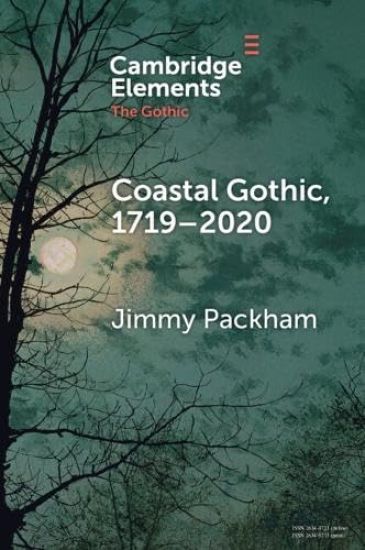
Coastal Gothic, 1719–2020

Coastal Gothic, 1719–2020

Jimmy Packham

Cambridge University Press
2026
sidottu
Littoral zones such as haunted shorelines, oppressively expansive beaches, and the crumbling edgelands around coastal cliffs have been an indelible feature of the Gothic literary tradition since the eighteenth century. They are frequently portrayed as strange, interstitial realms, sites of epistemic and existential precarity, of wreckage and uncanny returns, poised between the homely and unhomely, whose intense openness to the world(s) beyond contend uneasily (yet valuably) with the imagined integrity of selves and nations: it is a region, above all, of unsettlement. Coastal Gothic, 1719–2020 offers the first long-form examination of the coastal Gothic. Focusing on British and Irish Gothic authors and on the fraught political and human histories of the coastline, this Element examines the function of littoral terror, hauntings, and uncanny encounters as a means of unsettling pervasive conceptions of identity at national, regional, and individual levels.
Coastal Gothic, 1719–2020

Coastal Gothic, 1719–2020

Jimmy Packham

Cambridge University Press
2026
nidottu
Littoral zones such as haunted shorelines, oppressively expansive beaches, and the crumbling edgelands around coastal cliffs have been an indelible feature of the Gothic literary tradition since the eighteenth century. They are frequently portrayed as strange, interstitial realms, sites of epistemic and existential precarity, of wreckage and uncanny returns, poised between the homely and unhomely, whose intense openness to the world(s) beyond contend uneasily (yet valuably) with the imagined integrity of selves and nations: it is a region, above all, of unsettlement. Coastal Gothic, 1719–2020 offers the first long-form examination of the coastal Gothic. Focusing on British and Irish Gothic authors and on the fraught political and human histories of the coastline, this Element examines the function of littoral terror, hauntings, and uncanny encounters as a means of unsettling pervasive conceptions of identity at national, regional, and individual levels.
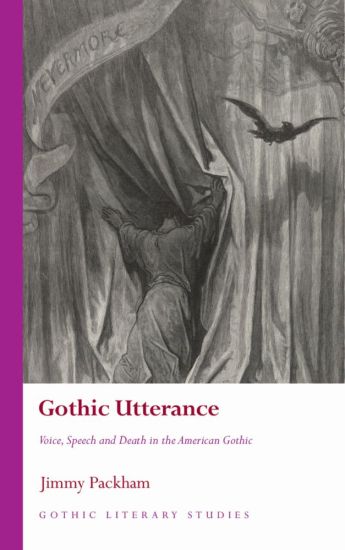
Gothic Utterance

Gothic Utterance

Jimmy Packham

University of Wales Press
2021
sidottu
The Gothic has always been interested in strange utterances and unsettling voices: from half-heard ghostly murmurings and the admonitions of the dead, to the terrible cries of the monstrous nonhuman. Gothic Utterance offers the first book-length study of the role such voices play in the Gothic tradition, exploring their prominence and importance in the American literature produced between the Revolutionary War and the close of the nineteenth century. This book argues that the American Gothic foregrounds the overpowering affect and distressing significations of the voices of the dead, dying, abjected, marginalised or nonhuman, in order to undertake a sustained interrogation of what it means to be and speak as an American in this period. The American Gothic imagines new forms of relation between speaking subjects, positing more inclusive and expansive forms of community. Gothic Utterance also emphasises the ethical demands attending our encounters with Gothic voices: the Gothic suggests that how we choose to hear and respond to these voices says much about our relationship with the world around us, its inhabitants - dead or otherwise - and the limits of our own subjectivity and empathy.