Kirjojen hintavertailu. Mukana 12 390 323 kirjaa ja 12 kauppaa.

Kirjailija

Jisha Menon

Kirjat ja teokset yhdessä paikassa: 3 kirjaa, julkaisuja vuosilta 2018-2021, suosituimpien joukossa The Performance of Nationalism. Vertaile teosten hintoja ja tarkista saatavuus suomalaisista kirjakaupoista.

3 kirjaa

Kirjojen julkaisuhaarukka 2018-2021.

Brutal Beauty

Brutal Beauty

Jisha Menon

Northwestern University Press
2021
nidottu
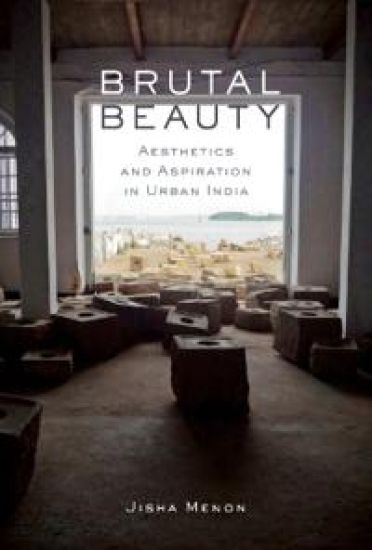
Brutal Beauty: Aesthetics and Aspiration in Urban India follows a postcolonial city as it transforms into a bustling global metropolis after the liberalization of the Indian economy. Taking the once idyllic “garden city” of Bangalore in southern India as its point of departure, the book explores how artists across India and beyond foreground neoliberalism as a “structure of feeling” permeating aesthetics, selfhood, and everyday life. Jisha Menon conveys the affective life of the city through multiple aesthetic projects that expresss a range of urban feelings, including aspiration, panic, and obsolescence. As developers and policymakers remodel the city through tumultuous construction projects, urban beautification, privatization, and other templated features of “world-class cities,” urban citizens are also changing—transformed by nostalgia, narcissism, shame, and the spaces where they dwell and work. Sketching out scenes of urban aspiration and its dark underbelly, Menon delineates the creative and destructive potential of India’s lurch into contemporary capitalism, uncovering the interconnectedness of local and global power structures as well as art’s capacity to absorb and critique liberalization’s discontents. She argues that neoliberalism isn’t just an economic, social, and political phenomenon; neoliberalism is also a profoundly aesthetic project.
Brutal Beauty

Brutal Beauty

Jisha Menon

Northwestern University Press
2021
sidottu
Brutal Beauty: Aesthetics and Aspiration in Urban India follows a postcolonial city as it transforms into a bustling global metropolis after the liberalization of the Indian economy. Taking the once idyllic “garden city” of Bangalore in southern India as its point of departure, the book explores how artists across India and beyond foreground neoliberalism as a “structure of feeling” permeating aesthetics, selfhood, and everyday life. Jisha Menon conveys the affective life of the city through multiple aesthetic projects that expresss a range of urban feelings, including aspiration, panic, and obsolescence. As developers and policymakers remodel the city through tumultuous construction projects, urban beautification, privatization, and other templated features of “world-class cities,” urban citizens are also changing—transformed by nostalgia, narcissism, shame, and the spaces where they dwell and work. Sketching out scenes of urban aspiration and its dark underbelly, Menon delineates the creative and destructive potential of India’s lurch into contemporary capitalism, uncovering the interconnectedness of local and global power structures as well as art’s capacity to absorb and critique liberalization’s discontents. She argues that neoliberalism isn’t just an economic, social, and political phenomenon; neoliberalism is also a profoundly aesthetic project.
The Performance of Nationalism

The Performance of Nationalism

Jisha Menon

Cambridge University Press
2018
pokkari
Imagine the patriotic camaraderie of national day parades. How crucial is performance for the sustenance of the nation? The Performance of Nationalism considers the formation of the Indian and Pakistani nation, in the wake of the most violent chapter of its history: the partition of the subcontinent. In the process, Jisha Menon offers a fresh analysis of nationalism from the perspective of performance. Menon recuperates the manifold valences of 'mimesis' as aesthetic representation, as the constitution of a community of witnesses, and as the mimetic relationality that underlies the encounter between India and Pakistan. The particular performances considered here range from Wagah border ceremonies to the partition theatre of Asghar Wajahat, Kirti Jain, M. K. Raina, and the cinema of Ritwik Ghatak and M. S. Sathyu. By pointing to the tropes of twins, doubles, and doppelgängers that suffuse these performances, this study troubles the idea of two insular, autonomous nation-states of India and Pakistan. In the process, Menon recovers mimetic modes of thinking that unsettle the reified categories of identity politics.