Kirjojen hintavertailu. Mukana 12 595 353 kirjaa ja 12 kauppaa.

Kirjailija

Jitendra Patel

Kirjat ja teokset yhdessä paikassa: 12 kirjaa, julkaisuja vuosilta 1994-2025, suosituimpien joukossa Formulação e Avaliação do Filme de Dissolução Rápida de Lamotrigina. Vertaile teosten hintoja ja tarkista saatavuus suomalaisista kirjakaupoista.

12 kirjaa

Kirjojen julkaisuhaarukka 1994-2025.

Formulação e Avaliação do Filme de Dissolução Rápida de Lamotrigina

Formulação e Avaliação do Filme de Dissolução Rápida de Lamotrigina

Hemangi Patel; Jitendra Patel

Edicoes Nosso Conhecimento
2025
pokkari
O livro intitulado Formula o e Avalia o do Filme de Dissolu o R pida de Lamotrigina inclui O filme de dissolu o r pida um filme oral destinado a ser dissolvido na boca para garantir a libera o r pida do medicamento. O filme de dissolu o r pida do medicamento antiepil ptico Lamotrigina libera o medicamento em um segundo para tratar condi es de emerg ncia causadas pela epilepsia. A o mais r pida na doen a bipolar e em condi es epil pticas.

Formulazione e valutazione del film a dissoluzione rapida di lamotrigina
Il libro intitolato Formulazione e valutazione del film a dissoluzione rapida di lamotrigina includeva Il film a dissoluzione rapida un film orale destinato a dissolversi in bocca per garantire un rapido rilascio del farmaco. Il film a dissoluzione rapida del farmaco antiepilettico lamotrigina rilascia il farmaco in un secondo per trattare le condizioni di emergenza causate dall'epilessia. Azione pi rapida nella malattia bipolare e nelle condizioni epilettiche.
Formulation et évaluation d'un film à dissolution rapide de lamotrigine

Formulation et évaluation d'un film à dissolution rapide de lamotrigine

Hemangi Patel; Jitendra Patel

Editions Notre Savoir
2025
pokkari
Le livre intitul Formulation et valuation d'un film dissolution rapide de lamotrigine comprend Le film dissolution rapide est un film oral destin se dissoudre dans la bouche afin d'assurer une lib ration rapide du m dicament. Le film dissolution rapide du m dicament anti pileptique lamotrigine lib re le m dicament en une seconde pour traiter les situations d'urgence li es l' pilepsie. Action plus rapide dans les cas de troubles bipolaires et d' pilepsie.
Formulierung und Bewertung eines schnell löslichen Films von Lamotrigin

Formulierung und Bewertung eines schnell löslichen Films von Lamotrigin

Hemangi Patel; Jitendra Patel

Verlag Unser Wissen
2025
pokkari
Das Buch mit dem Titel "Formulierung und Bewertung eines schnell l slichen Films von Lamotrigin" enth lt Schnell l slicher Film ist ein oraler Film, der im Mund aufgel st wird, um eine schnelle Freisetzung des Wirkstoffs zu gew hrleisten. Schnell l slicher Film des Antiepileptikums Lamotrigin, das den Wirkstoff innerhalb einer Sekunde freisetzt, um Notf lle aufgrund von Epilepsie zu behandeln. Schnellere Wirkungsentfaltung bei bipolaren St rungen und epileptischen Zust nden.
Opracowanie i ocena szybko rozpuszczalnej folii lamotryginy

Opracowanie i ocena szybko rozpuszczalnej folii lamotryginy

Hemangi Patel; Jitendra Patel

Wydawnictwo Nasza Wiedza
2025
pokkari
Książka zatytulowana "Opracowanie i ocena szybko rozpuszczalnej folii lamotryginy" zawierala informacje na temat szybko rozpuszczalnej folii, kt ra jest folią doustną przeznaczoną do rozpuszczenia w ustach w celu zapewnienia szybkiego uwalniania leku. Szybko rozpuszczalna folia leku przeciwpadaczkowego lamotryginy uwalnia lek w ciągu sekundy w celu leczenia stan w naglych spowodowanych padaczką. Szybsze dzialanie w chorobie afektywnej dwubiegunowej i padaczce.
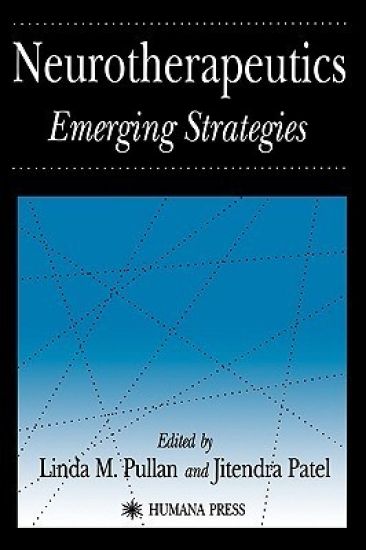
Neurotherapeutics

Neurotherapeutics

Linda M. Pullan; Jitendra Patel

Humana Press Inc.
2013
nidottu
Neuroscience's inherent complexity and rapid growth mean that no one can keep abreast of all the changes across the field. We each bring a necessarily narrow perspective. Neurotherapeutics: Emerg­ ing Strategies is an attempt to provide some diverse perspectives within the hunt for new drugs to treat central nervous system diseases. The book's premise is that the search for new drugs is based on an understanding ofboth clinical and basic sciences. Neurotherapeu­ tics: Emerging Strategies begins with psychiatry and concludes with neurological disorders. Each chapter examines a disease, including clinical features and existing treatments, but the emphasis is on current concepts of underlying causes and novel strategies for drug discovery arising from these possible mechanisms. Participating authors include basic neuroscientists, industry-based pharmacolo­ gists and chemists, and clinicians. The chapters describe the status of the existing disease treat­ ments, and when treatments are lacking, the approach is more basic science oriented. When there is a long history of treatment, there is greater emphasis on those therapies. However, all the chapters seem to reflect the benefits of cloning, since the availability of receptor subtypes now promises the opportunity for greater specificity of drug effects. Modulation of second messengers is another new and recur­ ring theme. And in the chapter on cachexia, cytokines are explored both as drugs and drug targets. Neurotherapeutics: Emerging Strategies reflects the complex­ ity of the nervous system, but the overriding message is hope for new and better drugs to treat those diseases that rob us of ourselves.
The Metabotropic Glutamate Receptors

The Metabotropic Glutamate Receptors

P. Jeffrey Conn; Jitendra Patel

Humana Press Inc.
2010
nidottu
It is the goal of The Metabotropic Glutamate Receptors to provide acomprehensive and forward-thinking review ofthe tremen- dous advances that have occurred in less than a decade of metabotropic glutamate receptors (mGluR) research. Virtually every areaof mGluR research is covered, including the molecular biology, pharmacology, anatomical distribution, and physiological and pathological roles of mGluRs. It is our intention that this volume not only summarize what is now known about the mGluRs, but also illuminate the areas in which there is the greatest need for focused research. Glutamic acid is an amino acid that has long been known to play several important metabolic roles in central and peripheral tissues and to be a component of several naturally occurring molecules. The first evidence that glutamate mayaIso serve as a neurotransmitter in the central nervous system (CNS) came in the late 1950s and early 1960s when glutamate and other acidic amino acids were found to induce behavioral convulsions when topically applied to the cortex and to excite a wide variety of central neurons. These findings spurred a massive research effort that quickly established glutamate as the pri- mary excitatory neurotransmitter in the vertebrate CNS. One of the most striking characteristics of glutamate that was quickly recognized was its ubiquitous role in serving as the neurotransmitter at the vast majority of excitatory synapses in the brain. It is now clear that most central neuronal circuits involve glutamatergic neurotransmission at some level.
Neurotherapeutics

Neurotherapeutics

Linda M. Pullan; Jitendra Patel

Humana Press Inc.
1995
sidottu
Neuroscience's inherent complexity and rapid growth mean that no one can keep abreast of all the changes across the field. We each bring a necessarily narrow perspective. Neurotherapeutics: Emerg­ ing Strategies is an attempt to provide some diverse perspectives within the hunt for new drugs to treat central nervous system diseases. The book's premise is that the search for new drugs is based on an understanding ofboth clinical and basic sciences. Neurotherapeu­ tics: Emerging Strategies begins with psychiatry and concludes with neurological disorders. Each chapter examines a disease, including clinical features and existing treatments, but the emphasis is on current concepts of underlying causes and novel strategies for drug discovery arising from these possible mechanisms. Participating authors include basic neuroscientists, industry-based pharmacolo­ gists and chemists, and clinicians. The chapters describe the status of the existing disease treat­ ments, and when treatments are lacking, the approach is more basic science oriented. When there is a long history of treatment, there is greater emphasis on those therapies. However, all the chapters seem to reflect the benefits of cloning, since the availability of receptor subtypes now promises the opportunity for greater specificity of drug effects. Modulation of second messengers is another new and recur­ ring theme. And in the chapter on cachexia, cytokines are explored both as drugs and drug targets. Neurotherapeutics: Emerging Strategies reflects the complex­ ity of the nervous system, but the overriding message is hope for new and better drugs to treat those diseases that rob us of ourselves.
The Metabotropic Glutamate Receptors

The Metabotropic Glutamate Receptors

P. Jeffrey Conn; Jitendra Patel

Humana Press Inc.
1994
sidottu
It is the goal of The Metabotropic Glutamate Receptors to provide acomprehensive and forward-thinking review ofthe tremen- dous advances that have occurred in less than a decade of metabotropic glutamate receptors (mGluR) research. Virtually every areaof mGluR research is covered, including the molecular biology, pharmacology, anatomical distribution, and physiological and pathological roles of mGluRs. It is our intention that this volume not only summarize what is now known about the mGluRs, but also illuminate the areas in which there is the greatest need for focused research. Glutamic acid is an amino acid that has long been known to play several important metabolic roles in central and peripheral tissues and to be a component of several naturally occurring molecules. The first evidence that glutamate mayaIso serve as a neurotransmitter in the central nervous system (CNS) came in the late 1950s and early 1960s when glutamate and other acidic amino acids were found to induce behavioral convulsions when topically applied to the cortex and to excite a wide variety of central neurons. These findings spurred a massive research effort that quickly established glutamate as the pri- mary excitatory neurotransmitter in the vertebrate CNS. One of the most striking characteristics of glutamate that was quickly recognized was its ubiquitous role in serving as the neurotransmitter at the vast majority of excitatory synapses in the brain. It is now clear that most central neuronal circuits involve glutamatergic neurotransmission at some level.