Kirjojen hintavertailu. Mukana 12 595 353 kirjaa ja 12 kauppaa.

Kirjailija

Jo Tacchi

Kirjat ja teokset yhdessä paikassa: 5 kirjaa, julkaisuja vuosilta 2008-2015, suosituimpien joukossa Digital Ethnography. Vertaile teosten hintoja ja tarkista saatavuus suomalaisista kirjakaupoista.

5 kirjaa

Kirjojen julkaisuhaarukka 2008-2015.

Digital Ethnography

Digital Ethnography

Sarah Pink; Heather Horst; John Postill; Larissa Hjorth; Tania Lewis; Jo Tacchi

SAGE Publications Ltd
2015
sidottu
This sharp, innovative book champions the rising significance of ethnographic research on the use of digital resources around the world. It contextualises digital and pre-digital ethnographic research and demonstrates how the methodological, practical and theoretical dimensions are increasingly intertwined. Digital ethnography is central to our understanding of the social world; it can shape methodology and methods, and provides the technological tools needed to research society. The authoritative team of authors clearly set out how to research localities, objects and events as well as providing insights into exploring individuals’ or communities’ lived experiences, practices and relationships. The book: Defines a series of central concepts in this new branch of social and cultural researchChallenges existing conceptual and analytical categoriesShowcases new and innovative methodsTheorises the digital world in new waysEncourages us to rethink pre-digital practices, media and environments This is the ideal introduction for anyone intending to conduct ethnographic research in today’s digital society.
Digital Ethnography

Digital Ethnography

Sarah Pink; Heather Horst; John Postill; Larissa Hjorth; Tania Lewis; Jo Tacchi

SAGE Publications Ltd
2015
nidottu
This sharp, innovative book champions the rising significance of ethnographic research on the use of digital resources around the world. It contextualises digital and pre-digital ethnographic research and demonstrates how the methodological, practical and theoretical dimensions are increasingly intertwined. Digital ethnography is central to our understanding of the social world; it can shape methodology and methods, and provides the technological tools needed to research society. The authoritative team of authors clearly set out how to research localities, objects and events as well as providing insights into exploring individuals’ or communities’ lived experiences, practices and relationships. The book: Defines a series of central concepts in this new branch of social and cultural researchChallenges existing conceptual and analytical categoriesShowcases new and innovative methodsTheorises the digital world in new waysEncourages us to rethink pre-digital practices, media and environments This is the ideal introduction for anyone intending to conduct ethnographic research in today’s digital society.
Evaluating Communication for Development

Evaluating Communication for Development

June Lennie; Jo Tacchi

Routledge
2012
sidottu
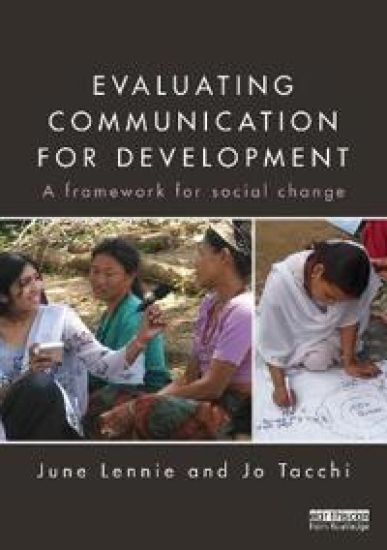
Evaluating Communication for Development presents a comprehensive framework for evaluating communication for development (C4D). This framework combines the latest thinking from a number of fields in new ways. It critiques dominant instrumental, accountability-based approaches to development and evaluation and offers an alternative holistic, participatory, mixed methods approach based on systems and complexity thinking and other key concepts. It maintains a focus on power, gender and other differences and social norms. The authors have designed the framework as a way to focus on achieving sustainable social change and to continually improve and develop C4D initiatives. The benefits and rigour of this approach are supported by examples and case studies from a number of action research and evaluation capacity development projects undertaken by the authors over the past fifteen years.Building on current arguments within the fields of C4D and development, the authors reinforce the case for effective communication being a central and vital component of participatory forms of development, something that needs to be appreciated by decision makers. They also consider ways of increasing the effectiveness of evaluation capacity development from grassroots to management level in the development context, an issue of growing importance to improving the quality, effectiveness and utilisation of monitoring and evaluation studies in this field.The book includes a critical review of the key approaches, methodologies and methods that are considered effective for planning evaluation, assessing the outcomes of C4D, and engaging in continuous learning. This rigorous book is of immense theoretical and practical value to students, scholars, and professionals researching or working in development, communication and media, applied anthropology, and evaluation and program planning.
Evaluating Communication for Development

Evaluating Communication for Development

June Lennie; Jo Tacchi

Routledge
2012
nidottu
Evaluating Communication for Development presents a comprehensive framework for evaluating communication for development (C4D). This framework combines the latest thinking from a number of fields in new ways. It critiques dominant instrumental, accountability-based approaches to development and evaluation and offers an alternative holistic, participatory, mixed methods approach based on systems and complexity thinking and other key concepts. It maintains a focus on power, gender and other differences and social norms. The authors have designed the framework as a way to focus on achieving sustainable social change and to continually improve and develop C4D initiatives. The benefits and rigour of this approach are supported by examples and case studies from a number of action research and evaluation capacity development projects undertaken by the authors over the past fifteen years.Building on current arguments within the fields of C4D and development, the authors reinforce the case for effective communication being a central and vital component of participatory forms of development, something that needs to be appreciated by decision makers. They also consider ways of increasing the effectiveness of evaluation capacity development from grassroots to management level in the development context, an issue of growing importance to improving the quality, effectiveness and utilisation of monitoring and evaluation studies in this field.The book includes a critical review of the key approaches, methodologies and methods that are considered effective for planning evaluation, assessing the outcomes of C4D, and engaging in continuous learning. This rigorous book is of immense theoretical and practical value to students, scholars, and professionals researching or working in development, communication and media, applied anthropology, and evaluation and program planning.