Kirjojen hintavertailu. Mukana 12 595 353 kirjaa ja 12 kauppaa.

Kirjailija

Joachim Schmid

Kirjat ja teokset yhdessä paikassa: 6 kirjaa, julkaisuja vuosilta 2001-2022, suosituimpien joukossa Java and the Java Virtual Machine. Vertaile teosten hintoja ja tarkista saatavuus suomalaisista kirjakaupoista.

6 kirjaa

Kirjojen julkaisuhaarukka 2001-2022.

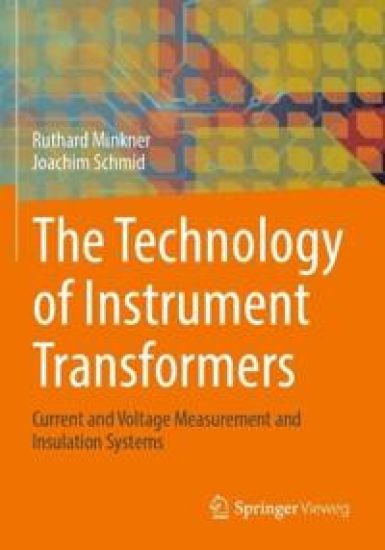
The Technology of Instrument Transformers

The Technology of Instrument Transformers

Ruthard Minkner; Joachim Schmid

Springer Fachmedien Wiesbaden
2022
nidottu
Existing instrument transformer technologies as well as new measuring principles for current and voltage measurement are described in this book. The properties of conventional current and voltage transformer as well as the dimensioning are discussed in details out of the long experience of the authors. Especially the dielectric dimensioning and the used materials are discussed. Beside this an overview over new modern measuring principles is given and the technology of low-power instrument transformer, and RC-dividers are shown.
The Technology of Instrument Transformers

The Technology of Instrument Transformers

Ruthard Minkner; Joachim Schmid

Springer Fachmedien Wiesbaden
2021
sidottu
Existing instrument transformer technologies as well as new measuring principles for current and voltage measurement are described in this book. The properties of conventional current and voltage transformer as well as the dimensioning are discussed in details out of the long experience of the authors. Especially the dielectric dimensioning and the used materials are discussed. Beside this an overview over new modern measuring principles is given and the technology of low-power instrument transformer, and RC-dividers are shown.

Technologie der Messwandler

Technologie der Messwandler

Ruthard Minkner; Joachim Schmid

Springer Fachmedien Wiesbaden
2020
sidottu
In diesem Buch werden die bestehenden Wandlertechnologien, sowie neue Messprinzipien für die Messung von Strom und Spannung in Energieübertagungs- und Energieverteilsystemen beschrieben. Die Eigenschaften der konventionellen Stromwandler und Spannungswandler sowie deren Dimensionierung werden aus der Sicht der langjährigen Erfahrung der Autoren detailliert besprochen. Dabei wird vor allem auch auf die dielektrische Auslegung und die eingesetzten Materialien eingegangen. Daneben wird ein Überblick moderner neuer Messprinzipien gegeben und die Technologie der Kleinsignalstromwandler und RC-Teiler detailliert dargestellt.
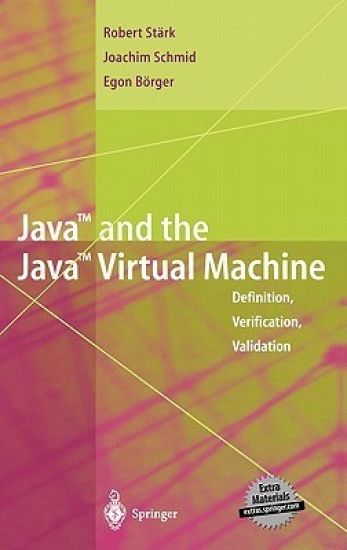
Java and the Java Virtual Machine

Java and the Java Virtual Machine

Robert F. Stärk; Joachim Schmid; Egon Börger

Springer-Verlag Berlin and Heidelberg GmbH Co. K
2014
nidottu
The origin of this book goes back to the Dagstuhl seminar on Logic for System Engineering, organized during the first week of March 1997 by S. Jiihnichen, J. Loeckx, and M. Wirsing. During that seminar, after Egon Borger's talk on How to Use Abstract State Machines in Software Engineering, Wolfram Schulte, at the time a research assistant at the University of Ulm, Germany, questioned whether ASMs provide anything special as a scientifically well­ founded and rigorous yet simple and industrially viable framework for high­ level design and analysis of complex systems, and for natural refinements of models to executable code. Wolfram Schulte argued, referring to his work with K. Achatz on A Formal Object-Oriented Method Inspired by Fusion and Object-Z [1], that with current techniques of functional programming and of axiomatic specification, one can achieve the same result. An intensive and long debate arose from this discussion. At the end of the week, it led Egon Borger to propose a collaboration on a real-life specification project of Wolfram Schulte's choice, as a comparative field test of purely functional­ declarative methods and of their enhancement within an integrated abstract state-based operational (ASM) approach. After some hesitation, in May 1997 Wolfram Schulte accepted the offer and chose as the theme a high-level specification of Java and of the Java Virtual Machine.
Java and the Java Virtual Machine

Java and the Java Virtual Machine

Robert F. Stärk; Joachim Schmid; Egon Börger

Springer-Verlag Berlin and Heidelberg GmbH Co. K
2001
sidottu
The origin of this book goes back to the Dagstuhl seminar on Logic for System Engineering, organized during the first week of March 1997 by S. Jiihnichen, J. Loeckx, and M. Wirsing. During that seminar, after Egon Borger's talk on How to Use Abstract State Machines in Software Engineering, Wolfram Schulte, at the time a research assistant at the University of Ulm, Germany, questioned whether ASMs provide anything special as a scientifically well­ founded and rigorous yet simple and industrially viable framework for high­ level design and analysis of complex systems, and for natural refinements of models to executable code. Wolfram Schulte argued, referring to his work with K. Achatz on A Formal Object-Oriented Method Inspired by Fusion and Object-Z [1], that with current techniques of functional programming and of axiomatic specification, one can achieve the same result. An intensive and long debate arose from this discussion. At the end of the week, it led Egon Borger to propose a collaboration on a real-life specification project of Wolfram Schulte's choice, as a comparative field test of purely functional­ declarative methods and of their enhancement within an integrated abstract state-based operational (ASM) approach. After some hesitation, in May 1997 Wolfram Schulte accepted the offer and chose as the theme a high-level specification of Java and of the Java Virtual Machine.