Kirjojen hintavertailu. Mukana 12 390 323 kirjaa ja 12 kauppaa.

Kirjailija

Joan Hawkins

Kirjat ja teokset yhdessä paikassa: 6 kirjaa, julkaisuja vuosilta 2000-2022, suosituimpien joukossa Bailey. Vertaile teosten hintoja ja tarkista saatavuus suomalaisista kirjakaupoista.

6 kirjaa

Kirjojen julkaisuhaarukka 2000-2022.

Bailey

Bailey

Joan Hawkins

Landon Books
2012
nidottu
A moving and often harrowing account of one young woman's struggle against her childhood demons, Bailey explores the idea of self, and how the psyche can lose its way in a labyrinth of memory, fear and desire. Confined in an asylum, Bailey seeks to emerge from a hazy, tormented existence in which the only solid entity is Jim, her fellow inmate. The problem is that Jim is a creature as haunted as Bailey herself, and their respective pasts cloud a secret that makes their friendship more than a chance encounter. With its themes of social snobbery, family dysfunction and ultimate redemption, Bailey is a passionate, daring novel that reveals the underbelly of a society that presents itself as the epitome of respectability. For more, see: www.joanhawkins.net
Trespass

Trespass

Joan Hawkins

Landon Books
2013
nidottu
A novel of greed, love and family. When Helen Reed, a wealthy widow, engages young masseur, David Sweeney, to alleviate the pain of her final days, her voracious brood move in with other plans. Trespass is a fascinating portrait of a family, of a moribund, spirited woman living life to the full for as long as she has it. It's the tale of a young girl coming of age, of a musician's fear of failure, an artist's quest for success and about the financial collapse of a man whose city career has just fallen apart. Joan Hawkins' third novel is set in an idyllic New England haven, where a newly-constructed swimming pool in the leafy grounds of Helen's home becomes a symbol of her independence and of her family's deepest resentments. While masseur David Sweeney brings relief and calm to the widow's pain, the underbelly of Helen Reed's summer cottage cannot be brushed under the Persian carpet. Its quagmire of misguided dreams, desires and betrayals make truth and beauty as elusive as the ripples across the pool in her yard. For more please see: www.joanhawkins.net
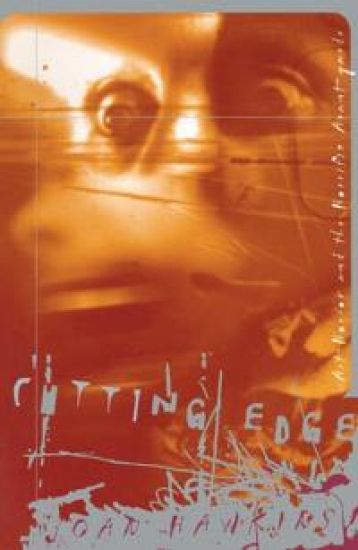
Cutting Edge

Cutting Edge

Joan Hawkins

University of Minnesota Press
2000
nidottu
Explores what horror movies tell us about issues of taste.Even before Jean-Luc Godard and other members of the French New Wave championed Hollywood B movies, aesthetes and cineasts relished the raw emotions of genre films. This contradiction has been particularly true of horror cinema, in which the same images and themes found in exploitation and splatter movies are also found in avant-garde and experimental films, blurring boundaries of taste and calling into question traditional distinctions between high and low culture. In Cutting Edge, Joan Hawkins offers an original and provocative discussion of taste, trash aesthetics, and avant-garde culture of the 1960s and 1970s to reveal horror’s subversiveness as a genre. In her treatment of what she terms "art-horror" films, Hawkins examines home viewing, video collection catalogs, and fanzines for insights into what draws audiences to transgressive films. Cutting Edge provides the first extended political critique of Yoko Ono’s rarely seen Rape and shows how a film such as Franju’s Eyes without a Face can work simultaneously as an art, political, and splatter film. The rediscovery of Tod Browning’s Freaks as an art film, the "eurotrash" cinema of Jess Franco, camp cults like the one around Maria Montez, and the "cross-over" reception of Andy Warhol’s Frankenstein are all studied for what they reveal about cultural hierarchies. Looking at the low aspects of high culture and the high aspects of low culture, Hawkins scrutinizes the privilege habitually accorded "high" art-a tendency, she argues, that lets highbrow culture off the hook and removes it from the kinds of ethical and critical social discussions that have plagued horror and porn. Full of unexpected insights, Cutting Edge calls for a rethinking of high/low distinctions-and a reassigning of labels at the video store.