Kirjojen hintavertailu. Mukana 12 290 406 kirjaa ja 12 kauppaa.

Kirjailija

Joan Robinson

Kirjat ja teokset yhdessä paikassa: 15 kirjaa, julkaisuja vuosilta 1962-2025, suosituimpien joukossa Essays In The Theory Of Employment. Vertaile teosten hintoja ja tarkista saatavuus suomalaisista kirjakaupoista.

15 kirjaa

Kirjojen julkaisuhaarukka 1962-2025.

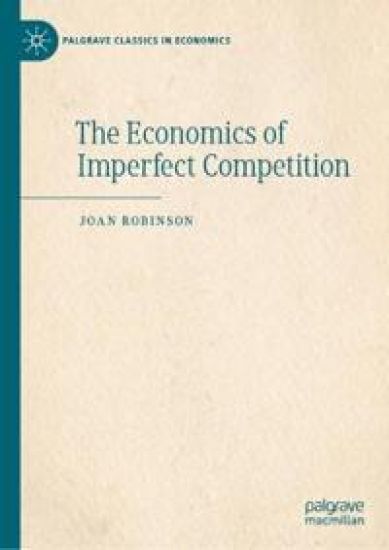
The Economics of Imperfect Competition

The Economics of Imperfect Competition

Joan Robinson

Springer International Publishing AG
2025
sidottu
This classic and highly influential book provides unique insight into ideas of competition and the theory of the firm. First published in 1933, it builds upon the work of Alfred Marshall and Arthur Cecil Pigou and highlights both the real world application and limitations of economics, with a particular emphasis on the risk of providing misleading information to individuals. By setting out ways in which economic practices and tools can be refined, the importance of stating assumptions and finding suitable answers is highlighted. Broader topics, including monopoly equilibrium, the supply curve, price discrimination, marginal net productivity, and monopsony, are also discussed.This book is an important milestone in the history of economics and the development of key economic concepts. It will be relevant to students, researchers, and general readers interested in economic theory and microeconomics.Includes a new foreword from John Eatwell.
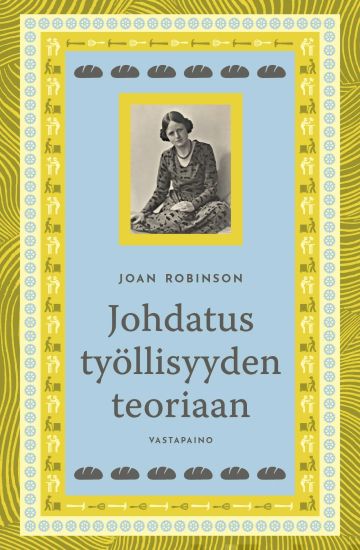
Johdatus työllisyyden teoriaan

Johdatus työllisyyden teoriaan

Joan Robinson

VASTAPAINO
2023
sidottu
Joan Robinson (1903-1983) oli brittiläinen ekonomisti, joka toimi professorina Cambridgen yliopistossa. Robinson oli ensimmäisten taloustieteilijöiden joukossa kehittelemässä teoriaa epätäydellisestä kilpailusta ja sen merkityksestä taloudellisessa kehityksessä. Hänet muistetaan myös makrotaloustieteellisistä Cambridgen pääomakiistoista, joissa Robinson esiintyi keskeisenä valtavirtaisen kasvuteorian kriitikkona.Robinson toimi 1930-luvun alussa niin sanotussa Cambridge Circus -ryhmässä, joka sparrasi John Maynard Keynesiä hänen pääteoksensa General Theory of Employment, Interest and Money valmistelussa. Robinsonin vuonna 1937 julkaistu klassikko Introduction to the Theory of Employment esittelee Keynesin teorian ydinkohdat laajalle yleisölle. Kirjalla on edelleen paljon annettavaa tämän päivän makrotalouspoliittisen keskustelun ymmärtämiseen. Monet kirjan oivallukset ja tiivistykset tuntuvat hämmentävänkin ajankohtaisilta.Robinsonin kirjanen tarjoaa yksinkertaisen esityksen keynesiläisen työllisyyden teorian pääkohdista. Teoriassa yrittäjien päätöksillä ja heidän kohtaamallaan kysynnällä on keskeinen merkitys: ”Tavaroiden ja palveluiden tuotanto riippuu niihin kohdistuvasta kysynnästä. 'Kysynnällä' tarkoitetaan tässä rahamääräistä menoa, ei halua tai tarvetta. Vaikka ihminen tarvitsisi kuinka paljon tavaroita ruokkiakseen, vaatettaakseen ja viihdyttääkseen itseään, hän ei saa ketään kiinnostumaan näiden asioiden tuottamisesta itselleen, ellei hänellä ole rahaa millä maksaa. Eli tarpeista ei synny 'kysyntää', ellei niihin liity myös menoja.”
Economic Philosophy

Economic Philosophy

Joan Robinson; Sheila Dow

Routledge
2021
sidottu
Joan Robinson (1903-1983) was one of the greatest economists of the twentieth century and a fearless critic of free-market capitalism. A major figure in the controversial ‘Cambridge School’ of economics in the post-war period, she made fundamental contributions to the economics of international trade and development. In Economic Philosophy Robinson looks behind the curtain of economics to reveal a constant battle between economics as a science and economics as ideology, which she argued was integral to economics. In her customary vivid and pellucid style, she criticizes early economists Adam Smith and David Ricardo, and neo-classical economists Alfred Marshall, Stanley Jevons and Leon Walras, over the question of value. She shows that what they respectively considered to be the generators of value - labour-time, marginal utility or preferences - are not scientific but ‘metaphysical’, and that it is frequently in ideology, not science, that we find the reason for the rejection of economic theories. She also weighs up the implications of the Keynesian revolution in economics, particularly whether Keynes’s theories are applicable to developing economies. Robinson concludes with a prophetic lesson that resonates in today’s turbulent and unequal economy: that the task of the economist is to combat the idea that the only values that count are those that can be measured in terms of money.This Routledge Classics edition includes a new foreword by Sheila Dow.
Economic Philosophy

Economic Philosophy

Joan Robinson; Sheila Dow

Routledge
2021
nidottu
Joan Robinson (1903-1983) was one of the greatest economists of the twentieth century and a fearless critic of free-market capitalism. A major figure in the controversial ‘Cambridge School’ of economics in the post-war period, she made fundamental contributions to the economics of international trade and development. In Economic Philosophy Robinson looks behind the curtain of economics to reveal a constant battle between economics as a science and economics as ideology, which she argued was integral to economics. In her customary vivid and pellucid style, she criticizes early economists Adam Smith and David Ricardo, and neo-classical economists Alfred Marshall, Stanley Jevons and Leon Walras, over the question of value. She shows that what they respectively considered to be the generators of value - labour-time, marginal utility or preferences - are not scientific but ‘metaphysical’, and that it is frequently in ideology, not science, that we find the reason for the rejection of economic theories. She also weighs up the implications of the Keynesian revolution in economics, particularly whether Keynes’s theories are applicable to developing economies. Robinson concludes with a prophetic lesson that resonates in today’s turbulent and unequal economy: that the task of the economist is to combat the idea that the only values that count are those that can be measured in terms of money.This Routledge Classics edition includes a new foreword by Sheila Dow.
Economics

Economics

Joan Robinson

Routledge
2018
nidottu
Originally published in 1966, this book has enduring validity. In analysing the economic situation of the late 1960s Joan Robinson discusses the contradictions which arise from the need to readjust the organisation of society to the fantastic capacity for producing material wealth that capital accumulation and progress in technology have made possible. She maintains that the late twentieth century economic system is just an awkward corner in a continuing process of historical development .
Freedom and Necessity

Freedom and Necessity

Joan Robinson

Routledge
2018
nidottu
Originally published in 1970, this book examines the origins of social organizations, the development of Robinson Crusoe economies and the conception of property or rightful ownership, as well as the origins of agriculture, race and class. Discussing commerce and the nation state, capitalist expansion and war between industrial power, the book is a concise yet comprehensive survey of the evolution of the structures of the world’s economies and of the ideas which underlie them.
Economics

Economics

Joan Robinson

Routledge
2016
sidottu
Originally published in 1966, this book has enduring validity. In analysing the economic situation of the late 1960s Joan Robinson discusses the contradictions which arise from the need to readjust the organisation of society to the fantastic capacity for producing material wealth that capital accumulation and progress in technology have made possible. She maintains that the late twentieth century economic system is just an awkward corner in a continuing process of historical development .
Freedom and Necessity

Freedom and Necessity

Joan Robinson

Routledge
2016
sidottu
Originally published in 1970, this book examines the origins of social organizations, the development of Robinson Crusoe economies and the conception of property or rightful ownership, as well as the origins of agriculture, race and class. Discussing commerce and the nation state, capitalist expansion and war between industrial power, the book is a concise yet comprehensive survey of the evolution of the structures of the world’s economies and of the ideas which underlie them.
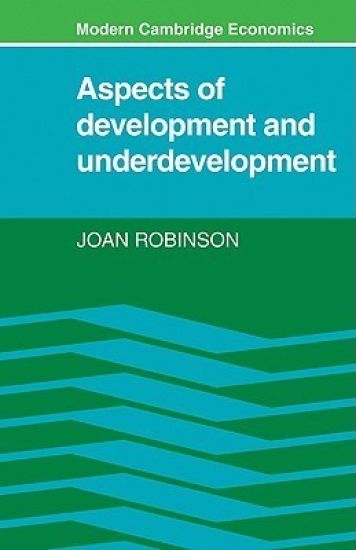
Aspects of Development and Underdevelopment

Aspects of Development and Underdevelopment

Joan Robinson

Cambridge University Press
1979
pokkari
Joan Robinson shows how the economic mechanisms that produce wealth in the midst of growing misery can be understood. For this purpose she uses the classical theory of accumulation and the modern theory of international trade and finance. Her simple but penetrating analysis illuminates the problems of poverty, accumulation, industrialization and trade, while exposing misleading conceptions of the Third World. Throughout the book, general principles are demonstrated with particular examples, making those principles both clearer and more relevant. The book's conclusion is that the economic problems of the Third World remain rooted in deep-seated political conflicts of national and international interests.