Kirjojen hintavertailu. Mukana 12 383 505 kirjaa ja 12 kauppaa.

Kirjailija

Joan Thirsk

Kirjat ja teokset yhdessä paikassa: 9 kirjaa, julkaisuja vuosilta 1978-2013, suosituimpien joukossa English Peasant Farming. Vertaile teosten hintoja ja tarkista saatavuus suomalaisista kirjakaupoista.

9 kirjaa

Kirjojen julkaisuhaarukka 1978-2013.

English Peasant Farming

English Peasant Farming

Joan Thirsk

Routledge
2013
nidottu
English society until the mid-eighteenth century was a predominantly rural and a peasant society. Yet we know surprisingly little about peasant life. This volume originally published in 1957, presents the agrarian history of Lincolnshire from Tudor to recent times.
Food in Early Modern England

Food in Early Modern England

Joan Thirsk

Continuum International Publishing Group Ltd.
2009
nidottu
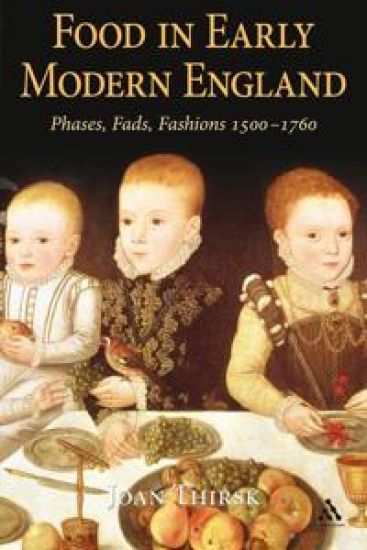
This book explores changes in the English diet and the specific differences between each generation. What did ordinary people eat and drink five hundred years ago? How much did they talk about food? Did their eating habits change much? Our knowledge is mostly superficial on such commonplace routines, but this book digs deep and finds surprising answers to these questions. We learn that food fads and fashions resembled those of our own day. Commercial, scientific and intellectual movements were closely entwined with changing attitudes and dealings about food. In short, food holds a mirror to a lively world of cultural change stretching from the Renaissance to the industrial Revolution. This book also strongly challenges the assumption that ordinary folk ate dull and monotonous meals.
Food in Early Modern England

Food in Early Modern England

Joan Thirsk

Hambledon Continuum
2006
sidottu
What did ordinary people eat and drink five hundred years ago? How much did they talk about food? Did their eating habits change much? Our documents are mostly silent on such commonplace routines, but this book digs deep and finds surprising answers to these questions. Food fads and fashions resembled those of our own day. Commercial, scientific and intellectual movements were closely entwined with changing attitudes and dealings about food. In short, food holds a mirror to a lively world of cultural change stretching from the Renaissance to the industrial Revolution. This book also strongly challenges the notion that ordinary folk ate dull and monotonous meals.
English Peasant Farming

English Peasant Farming

Joan Thirsk

Routledge
2005
sidottu
English society until the mid-eighteenth century was a predominantly rural and a peasant society. Yet we know surprisingly little about peasant life. This volume originally published in 1957, presents the agrarian history of Lincolnshire from Tudor to recent times.
Rural Economy of England

Rural Economy of England

Joan Thirsk

Hambledon Continuum
2003
nidottu
No one has done more to emphasise the significance of the land in early modern England that Joan Thirsk, whose writings are both an important contribution to its history and point the way for future research. The subjects of this collection include the origin and nature of the common fields, Tudor enclosures, the Commonwealth confiscation of Royalist land and its subsequent return after the Restoration, inheritance customs, and the role of industries in the rural economy, among them stocking knitting.
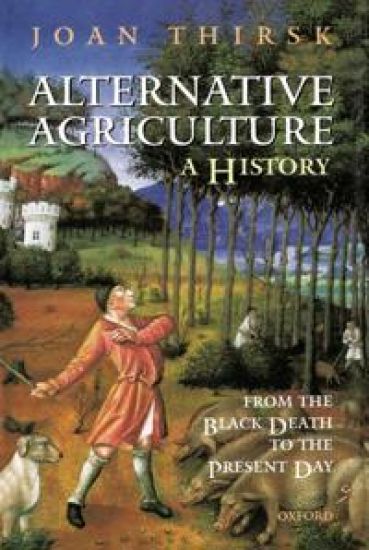
Alternative Agriculture: A History

Alternative Agriculture: A History

Joan Thirsk

Oxford University Press
2000
nidottu
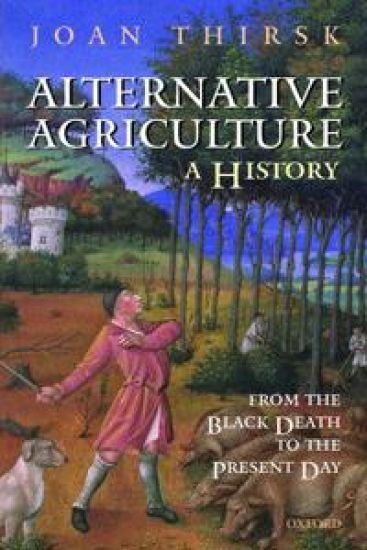
People like to believe in a past golden age of traditional English countryside, before large farms, machinery, and the destruction of hedgerows changed the landscape forever. However, that countryside may have looked both more and less familiar than we imagine. Take todays startling yellow fields of rapeseed, seemingly more suited to the landscape of Van Gogh than Constable. They were, in fact, thoroughly familiar to fieldworkers in seventeenth-century England. At the same time, some features that would have gone unremarked in the past now seem like oddities. In the fifteenth century, rabbit warrens were specially guarded to rear rabbits as a luxury food for rich mens tables; whilst houses had moats not only to defend them but to provide a source of fresh fish. In the 1500s we find Catherine of Aragon introducing the concept of a fresh salad to the court of Henry VIII; and in the 1600s, artichoke gardens became a fashion of the gentry in their hope of producing more male heirs. The common tomato, suspected of being poisonous in 1837, was transformed into a household vegetable by the end of the nineteenth century, thanks to cheaper glass-making methods and the resulting increase in glasshouses. In addition to these images of past lives, Joan Thirsk reveals how the forces which drive our current interest in alternative forms of agriculture a glut of meat and cereal crops, changing dietary habits, the needs of medicine have striking parallels with earlier periods in our history. She warns us that todays decisions should not be made in a historical vacuum: we can find solutions to our current problems in the experience of people in the past.
Alternative Agriculture: A History

Alternative Agriculture: A History

Joan Thirsk

Oxford University Press
1997
sidottu
People like to believe in a past golden age of `traditional' English countryside, before large farms, machinery, and the destruction of hedgerows changed the landscape forever. However, that countryside may have looked both more and less familiar than we imagine. Take, for example, today's startling yellow fields of rapeseed, seemingly more suited to the landscape of Van Gogh than Constable. They were in fact, thoroughly familiar to fieldworkers in seventeenth-century England. At the same time, some features that would have gone unremarked in the past now seem like oddities. In the fifteenth century, rabbits were reared in specially guarded warrens as luxury food for rich men's tables; whilst houses had moats not only to defence but to provide a source of fresh fish. In the 1500s we find Catherine of Aragon introducing the concept of fresh salad to the court of Henry VIII; and in the 1600s, artichoke gardens became a fashion of the gentry in their hope of producing more male heirs. The common tomato, suspected of being poisonous in 1837, was transformed into a household vegetable by the end of the nineteenth century, thanks to cheaper glass-making methods and the resulting increase in glasshouses. In addition to these fascinating images of past lives, Joan Thirsk reveals how the forces which drive our current interest in alternative forms of agriculture - a glut of mainstream meat and cereal crops; changing patterns of diet; the needs of medicine - have striking parallels with earlier periods of our history. She warns us that today's decisions should not be made in a historical vacuum. We can still find solutions to today's problems in the hard-won experience of people in the past.
The Rural Economy of England

The Rural Economy of England

Joan Thirsk

Hambledon Continuum
1984
sidottu
No one has done more to emphasise the significance of the land in early modern England that Joan Thirsk, whose writings are both an important contribution to its history and point the way for future research. The subjects of this collection include the origin and nature of the common fields, Tudor enclosures, the Commonwealth confiscation of Royalist land and its subsequent return after the Restoration, inheritance customs, and the role of industries in the rural economy, among them stocking knitting.
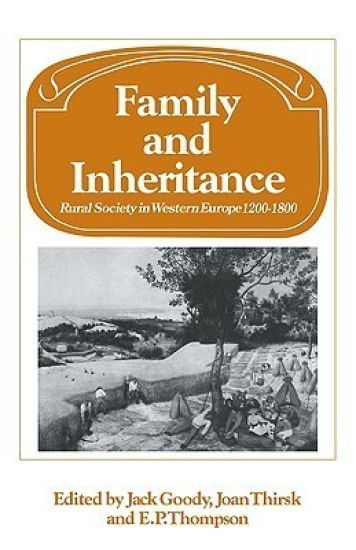
Family and Inheritance

Family and Inheritance

Jack Goody; Joan Thirsk; E. P. Thompson

Cambridge University Press
1978
pokkari
This pioneering book examines different aspects of the inheritance customs in rural Western Europe in the pre-industrial age: for families and whole societies, the roles of lawyers in reducing them to a common system, and the recurring debate on the merits of various inheritance customs in shaping particular kinds of society. At first sight the study of inheritance customs may appear to be a dull affair, concerned with outdated practices of hair-splitting lawyers; certainly, little academic interest has been shown in the subject. Yet inheritance customs are vital means for the reproduction of the social system, by the transmission of property and other rights through the family. Various family structures and social arrangements are linked by different means of inheritance. This book will interest a wide range of historians, students, postgraduates and teachers alike, whether they are concerned with social, economic, demographic or legal history, in the medieval, early modern or modern periods, and whether their interests are directed to England or other countries of Western Europe; it will also be valuable to social anthropologists, sociologists and historians of ideas. A comprehensive glossary of technical terms has been added for the non-specialist.