Kirjojen hintavertailu. Mukana 12 595 353 kirjaa ja 12 kauppaa.

Kirjailija

Joanna Bourke

Kirjat ja teokset yhdessä paikassa: 13 kirjaa, julkaisuja vuosilta 1993-2026, suosituimpien joukossa Five Evil Women. Vertaile teosten hintoja ja tarkista saatavuus suomalaisista kirjakaupoista.

13 kirjaa

Kirjojen julkaisuhaarukka 1993-2026.

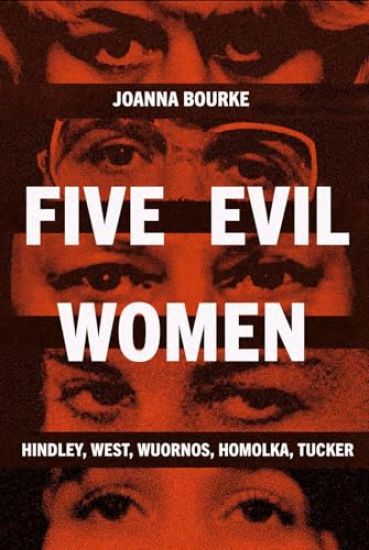
Five Evil Women

Five Evil Women

Joanna Bourke

REAKTION BOOKS
2026
sidottu
Why do certain women become icons of evil? This book offers the first comparative, non-sensationalist account of five of the most reviled women in the modern Anglophone world: Myra Hindley, Rosemary West, Aileen Wuornos, Karla Homolka and Karla Faye Tucker. It examines their lives, crimes and cultural reception in the UK, USA and Canada, asking how violence committed by women is understood, judged and remembered. Going beyond moral outrage or tabloid headlines, the book explores how concepts of 'evil' are shaped by history, belief systems and social context. Through historical and ethical reflections, it offers a deeper, more critical engagement with female violence, and considers how society should respond to those who commit acts of unimaginable harm.
Birkbeck

Birkbeck

Joanna Bourke

Oxford University Press
2022
sidottu
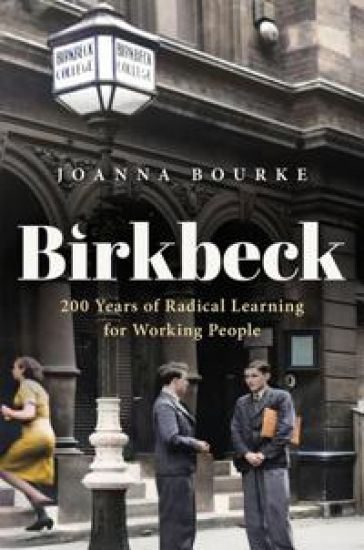
Birkbeck traces the 200-year history of Birkbeck, University of London from its founding at a time when social elites deplored the notion of educated working people to the present day. Joanna Bourke writes a lively history of the institution, and how it contributed to the shaping of modern British higher education. Two hundred years ago, Birkbeck was founded as the London Mechanics' Institution (LMI). When it was established in 1823, one third of all men and half of all women were unable to read or write. British elites were vehemently hostile to educating working people. The country was in political turmoil and it was feared that education would destroy society. This was the context in which the LMI was established. From its foundation, it was unique. Birkbeck traces its history from 1823 to the present, with Joanna Bourke using the history of Birkbeck to reflect on life and culture in London over the past two centuries. What does it mean to be educated? Why have Birkbeck's students been prepared to give up so much in order to study for a higher degree? How does education help us become fully human and self-fulfilled by learning how to use all our faculties - knowledge, imagination, sympathy? The story of Birkbeck contains some blood, oceans of scholarly sweat, and not a few tears. But it is also a story of laughter, intellectual excitement, scholarly eccentricity, collective as well as personal ambition, and, most of all, the quirky passions and personalities that make up the Birkbeck community. It is a story of a unique university but also of higher education of Britain. It shows how knowledge can empower people to better themselves and improve the world.
Disgrace

Disgrace

Joanna Bourke; Tom Moore

REAKTION BOOKS
2022
sidottu
Disgrace is the first truly global history of sexual violence. The book explores how sexual violence varies widely across time and place, from nineteenth-century peasant women in Ireland who were abducted as a way of forcing marriage, to date-raped high-school students in twentieth-century America, and from girls and women violated by Russian soldiers in 1945 to Dalit women raped by men of higher castes today. It delves into the factors that facilitate violence – including institutions, ideologies and practices – but also gives voice to survivors and activists, drawing inspiration from their struggles. Ultimately, Joanna Bourke intends to forge a transnational feminism that will promote a more harmonious, equal and rape- and violence-free world.
Loving Animals

Loving Animals

Joanna Bourke; Tom Moore

Reaktion Books
2020
sidottu
Sexual contact with non-human animals is one of the last taboos but, for a practice that is generally regarded as abhorrent, it is remarkable how many books, films, plays, paintings and photographs depict the subject. In this book renowned historian Joanna Bourke explores the history of human-animal sexuality and examines how the meanings of the words ‘bestiality’ or ‘zoophilia’ have changed. Are people who are sexually attracted to non-human animals psychiatrically ill, or are they normal people who happen to have a minority sexual orientation? How are we to understand human-animal love, as well as other issues within the discourse surrounding sexuality, such as violence, consent and abuse?This book draws queer theory, post-human philosophy, disability studies and the history of the senses into the debate to ask, what would an ethics of animal loving look like? What does it mean to love non-human animals? More pertinently: what does it mean to love?
The Story of Pain

The Story of Pain

Joanna Bourke

Oxford University Press
2017
nidottu
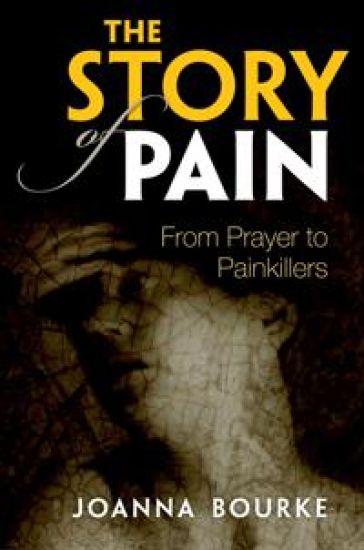
Everyone knows what is feels like to be in pain. Scraped knees, toothaches, migraines, giving birth, cancer, heart attacks, and heartaches: pain permeates our entire lives. We also witness other people - loved ones - suffering, and we 'feel with' them. It is easy to assume this is the end of the story: 'pain-is-pain-is-pain', and that is all there is to say. But it is not. In fact, the way in which people respond to what they describe as 'painful' has changed considerably over time. In the eighteenth and nineteenth centuries, for example, people believed that pain served a specific (and positive) function - it was a message from God or Nature; it would perfect the spirit. 'Suffer in this life and you wouldn't suffer in the next one'. Submission to pain was required. Nothing could be more removed from twentieth and twenty-first century understandings, where pain is regarded as an unremitting evil to be 'fought'. Focusing on the English-speaking world, this book tells the story of pain since the eighteenth century, addressing fundamental questions about the experience and nature of suffering over the last three centuries. How have those in pain interpreted their suffering - and how have these interpretations changed over time? How have people learnt to conduct themselves when suffering? How do friends and family react? And what about medical professionals: should they immerse themselves in the suffering person or is the best response a kind of professional detachment? As Joanna Bourke shows in this fascinating investigation, people have come up with many different answers to these questions over time. And a history of pain can tell us a great deal about how we might respond to our own suffering in the present - and, just as importantly, to the suffering of those around us.
Wounding the World

Wounding the World

Joanna Bourke

Virago Press Ltd
2015
pokkari
Wars are frequently justified 'in our name'. Militarist values and practices co-opt us, permeating our language, invading our dream space, entertaining us at the movies or in front of game consoles. Our taxes pay for those war machines. Our loved ones are killed and maimed.With killing now an integral part of the entertainment industry in video games and Hollywood films, war has become mainstream.With the 100th anniversary of the declaration of the First World War, has come a deluge of books, documentaries, feature films and radio programmes. We will hear a great deal about the horror of the battlefield. Bourke acknowledges wider truths: war is unending and violence is deeply entrenched in our society. But it doesn't have to be this way. This book equips readers with an understanding of the history, culture and politics of warfare in order to interrogate and resist an increasingly violent world.
Eyewitness 1900-1949

Eyewitness 1900-1949

Joanna Bourke

BBC Physical Audio
2014
cd
Eyewitness accounts from the BBC Archive are at the heart of this unique history of the first half of the 20th Century, narrated by Tim Pigott-Smith. The events of 1900-1949 are described by the people who saw them happen, from the death of Queen Victoria and accession of Edward VII through the First World War, the sinking of the Titanic, the General Strike and the Great Depression, to the Second World War and its aftermath. Events both joyful and sorrowful are illustrated with fascinating and rarely heard archive recordings, with a linking narration by the historia Joanne Bourke. Thought-provoking and moving, these are the voices of the past speaking to the present day.
The Story of Pain

The Story of Pain

Joanna Bourke

Oxford University Press
2014
sidottu
Everyone knows what is feels like to be in pain. Scraped knees, toothaches, migraines, giving birth, cancer, heart attacks, and heartaches: pain permeates our entire lives. We also witness other people - loved ones - suffering, and we 'feel with' them. It is easy to assume this is the end of the story: 'pain-is-pain-is-pain', and that is all there is to say. But it is not. In fact, the way in which people respond to what they describe as 'painful' has changed considerably over time. In the eighteenth and nineteenth centuries, for example, people believed that pain served a specific (and positive) function - it was a message from God or Nature; it would perfect the spirit. 'Suffer in this life and you wouldn't suffer in the next one'. Submission to pain was required. Nothing could be more removed from twentieth and twenty-first century understandings, where pain is regarded as an unremitting evil to be 'fought'. Focusing on the English-speaking world, this book tells the story of pain since the eighteenth century, addressing fundamental questions about the experience and nature of suffering over the last three centuries. How have those in pain interpreted their suffering - and how have these interpretations changed over time? How have people learnt to conduct themselves when suffering? How do friends and family react? And what about medical professionals: should they immerse themselves in the suffering person or is the best response a kind of professional detachment? As Joanna Bourke shows in this fascinating investigation, people have come up with many different answers to these questions over time. And a history of pain can tell us a great deal about how we might respond to our own suffering in the present - and, just as importantly, to the suffering of those around us.
Rape

Rape

Joanna Bourke

Basic Civitas Books
2009
pokkari
Joanna Bourke takes the issue of rape out of the academic ghettos and distills the truth so often exploited to sell newspapers. Neither prurient nor overly sympathetic toward any party, she investigates rape from a historical standpoint, examining the history of sexual aggression, the idea of rape as a social construct, and the often-ignored idea of embodiment, and analyzes the physical response of rapists as well as the theory that rape is ?about” power.Indebted to a growing body of sophisticated feminist analyses about rape victims, Bourke here shifts the emphasis from the victims to the perpetrators in order to place rapists in their historical context. An invaluable study, this book delivers the hard truth that if we are to imagine a world free of unwanted sexual violence, then we must consider the issue of rape from every angle.
Fear

Fear

Joanna Bourke

Shoemaker Hoard, Div of Avalon Publishing Group Inc
2007
pokkari
This title provides a history of the last 150 years through those British and American people who experienced the fears of their time - by Wolfson History Prize-winner Joanna Bourke.
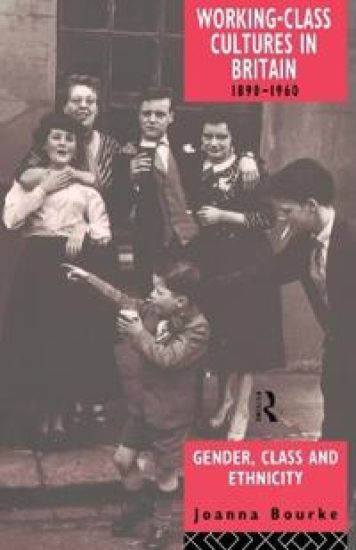
Working Class Cultures in Britain, 1890-1960

Working Class Cultures in Britain, 1890-1960

Prof Joanna Bourke; Joanna Bourke

Routledge
1993
sidottu
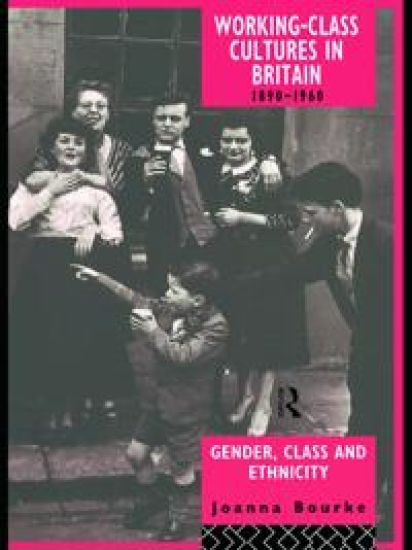
Integrating a variety of historical approaches and methods, Joanna Bourke looks at the construction of class within the intimate contexts of the body, the home, the marketplace, the locality and the nation to assess how the subjective identity of the 'working class' in Britain has been maintained through seventy years of radical social, cultural and economic change. She argues that class identity is essentially a social and cultural rather than an institutional or political phenomenon and therefore cannot be understood without constant reference to gender and ethnicity. Each self contained chapter consists of an essay of historical analysis, introducing students to the ways historians use evidence to understand change, as well as useful chronologies, statistics and tables, suggested topics for discussion, and selective further reading.
Working Class Cultures in Britain, 1890-1960

Working Class Cultures in Britain, 1890-1960

Prof Joanna Bourke; Joanna Bourke

Routledge
1993
nidottu
Integrating a variety of historical approaches and methods, Joanna Bourke looks at the construction of class within the intimate contexts of the body, the home, the marketplace, the locality and the nation to assess how the subjective identity of the 'working class' in Britain has been maintained through seventy years of radical social, cultural and economic change. She argues that class identity is essentially a social and cultural rather than an institutional or political phenomenon and therefore cannot be understood without constant reference to gender and ethnicity. Each self contained chapter consists of an essay of historical analysis, introducing students to the ways historians use evidence to understand change, as well as useful chronologies, statistics and tables, suggested topics for discussion, and selective further reading.
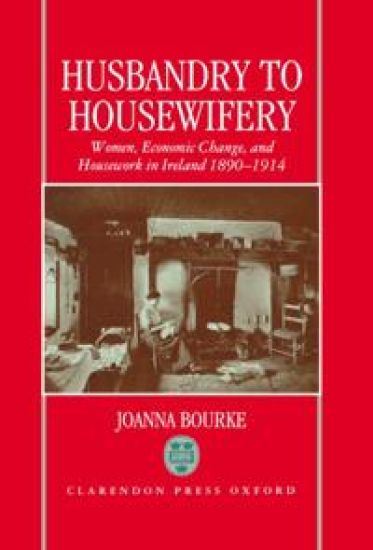
Husbandry to Housewifery

Husbandry to Housewifery

Joanna Bourke

Clarendon Press
1993
sidottu
This book examines the lives of Irish women between 1890 and 1914, tracing the shift of their labour out of the fields and into the home. Joanna Bourke shows how their position within the employment market deteriorated: married women came to be increasingly dependent on their husbands' earnings, while economic opportunities for unmarried and widowed women collapsed. More and more women devoted all their productive enterprise to performing housework. In this thoroughly documented and carefully argued study, Dr Bourke analyses the crucial elements in this change: the coincidence of sectoral shifts in the employment market, increasing investment in the rural economy, and the growth of a labour-intensive household sector. Controversially, she argues that Irish women welcomed their altered role, finding housework preferable to many of the other options available to them.