Kirjojen hintavertailu. Mukana 12 390 323 kirjaa ja 12 kauppaa.

Kirjailija

Joanna Härmä

Kirjat ja teokset yhdessä paikassa: 4 kirjaa, julkaisuja vuosilta 2021-2025, suosituimpien joukossa Low-fee Private Schooling and Poverty in Developing Countries. Vertaile teosten hintoja ja tarkista saatavuus suomalaisista kirjakaupoista.

4 kirjaa

Kirjojen julkaisuhaarukka 2021-2025.

How The New Education Establishment Betrayed The World’s Poorest Children
This book tells the real story of education in low-income countries and shows why ordinary people are making extreme sacrifices to reject free public schools in favor of low quality private schools, both legal and illegal. Based on the author’s experience of working in the UN system, for a child rights NGO in New Delhi; and working on aid projects and with private foundations in Africa and South Asia, Joanna Harma reveals how public education systems got to their current state of dysfunction. She argues that the international aid community and United Nations bodies such as UNESCO and UNICEF have facilitated the decline in public education and argues that young children are being let down by education systems and policy from the local to the international. Harma looks at this issue from the perspectives of various stakeholders including international human rights workers, parents, the companies who set up the schools, policy makers and NGO workers. The book includes a preface from Ben Phillips, Director of Communications at The Joint United Nations Programme on HIV/AIDS (UNAIDS).
How The New Education Establishment Betrayed The World’s Poorest Children
This book tells the real story of education in low-income countries and shows why ordinary people are making extreme sacrifices to reject free public schools in favor of low quality private schools, both legal and illegal. Based on the author’s experience of working in the UN system, for a child rights NGO in New Delhi; and working on aid projects and with private foundations in Africa and South Asia, Joanna Harma reveals how public education systems got to their current state of dysfunction. She argues that the international aid community and United Nations bodies such as UNESCO and UNICEF have facilitated the decline in public education and argues that young children are being let down by education systems and policy from the local to the international. Harma looks at this issue from the perspectives of various stakeholders including international human rights workers, parents, the companies who set up the schools, policy makers and NGO workers. The book includes a preface from Ben Phillips, Director of Communications at The Joint United Nations Programme on HIV/AIDS (UNAIDS).
Low-fee Private Schooling and Poverty in Developing Countries
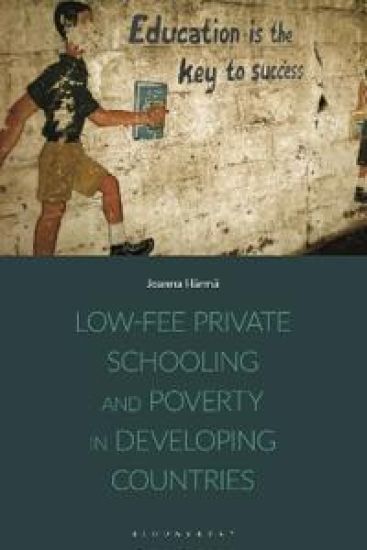
In Low-fee Private Schooling and Poverty in Developing Countries, Joanna Härmä draws on primary research carried out in sub-Saharan African countries and in India to show how the poor are being failed by both government and private schools. The primary research data and experiences are combined with additional examples from around the world to offer a wide perspective on the issue of marketized education, low-fee private schooling and government systems. Härmä offers a pragmatic approach to a divisive issue and an ideologically-driven debate and shows how the well-intentioned international drive towards ‘education for all’ is being encouraged and even imposed long before some countries have prepared the teachers and developed the systems needed to implement it successfully. Suggesting that governments need to take a much more constructive approach to the issue, Härmä argues for a greater acceptance of the challenges, abandoning ideological positions and a scaling back of ambition in the hope of laying stronger foundations for educational development.
Low-fee Private Schooling and Poverty in Developing Countries
In Low-fee Private Schooling and Poverty in Developing Countries, Joanna Härmä draws on primary research carried out in sub-Saharan African countries and in India to show how the poor are being failed by both government and private schools. The primary research data and experiences are combined with additional examples from around the world to offer a wide perspective on the issue of marketized education, low-fee private schooling and government systems. Härmä offers a pragmatic approach to a divisive issue and an ideologically-driven debate and shows how the well-intentioned international drive towards ‘education for all’ is being encouraged and even imposed long before some countries have prepared the teachers and developed the systems needed to implement it successfully. Suggesting that governments need to take a much more constructive approach to the issue, Härmä argues for a greater acceptance of the challenges, abandoning ideological positions and a scaling back of ambition in the hope of laying stronger foundations for educational development.