Kirjojen hintavertailu. Mukana 12 657 676 kirjaa ja 12 kauppaa.

Kirjailija

Joanne C. Burgess

Kirjat ja teokset yhdessä paikassa: 7 kirjaa, julkaisuja vuosilta 1994-2025, suosituimpien joukossa Paradise Lost. Vertaile teosten hintoja ja tarkista saatavuus suomalaisista kirjakaupoista.

7 kirjaa

Kirjojen julkaisuhaarukka 1994-2025.

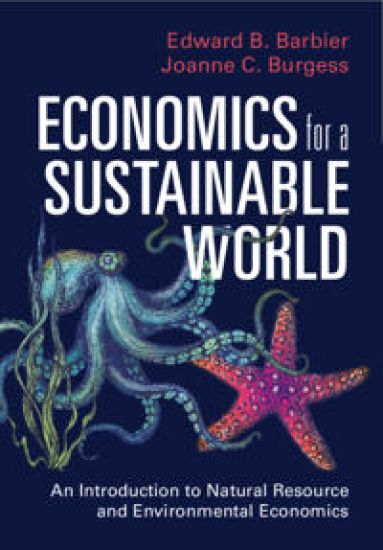
Economics for a Sustainable World

Economics for a Sustainable World

Edward B. Barbier; Joanne C. Burgess

Cambridge University Press
2025
sidottu
Written for undergraduate students with little or no exposure to economics, this introductory textbook offers a new perspective on environmental economics for the 21st century. It explains how economics for a sustainable world requires a new approach: accepting that the economy is intrinsically dependent on nature. Drawing on up-to-date case studies from around the globe, the book examines how economic concepts and techniques can apply to a wide range of environmental challenges while ensuring that poor and vulnerable members of society are included in progress toward sustainable development. The book also addresses current environmental policy options and innovations at the local, regional, and international levels. Chapters cover key topics such as climate change, pollution, energy, minerals, forests, land use, oceans, biodiversity, and water scarcity. Included in the book are the following pedagogical features: learning objectives, boxed examples, discussion questions, lists of further resources, and a glossary.
Economics for a Sustainable World

Economics for a Sustainable World

Edward B. Barbier; Joanne C. Burgess

Cambridge University Press
2025
pokkari
Written for undergraduate students with little or no exposure to economics, this introductory textbook offers a new perspective on environmental economics for the 21st century. It explains how economics for a sustainable world requires a new approach: accepting that the economy is intrinsically dependent on nature. Drawing on up-to-date case studies from around the globe, the book examines how economic concepts and techniques can apply to a wide range of environmental challenges while ensuring that poor and vulnerable members of society are included in progress toward sustainable development. The book also addresses current environmental policy options and innovations at the local, regional, and international levels. Chapters cover key topics such as climate change, pollution, energy, minerals, forests, land use, oceans, biodiversity, and water scarcity. Included in the book are the following pedagogical features: learning objectives, boxed examples, discussion questions, lists of further resources, and a glossary.
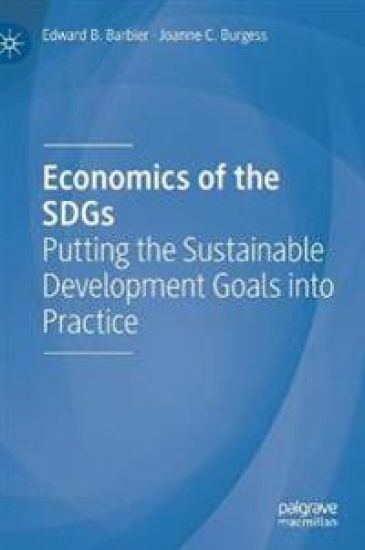
Economics of the SDGs

Economics of the SDGs

Edward B. Barbier; Joanne C. Burgess

Springer Nature Switzerland AG
2022
nidottu
This is the first book that employs economics to develop and apply an analytical framework for assessing progress towards the Sustainable Development Goals (SDGs). The authors explore the historical context for the underlying sustainability concept, develop an economics-based analytical framework for assessing progress towards the SDGs, and discuss the implications for sustainability policy and future research. Economics is concerned with analysing the trade-offs in allocating scarce means to achieve various ends. Thus, economic methods are ideally suited to assessing how progress towards one or more SDGs may come at the expense of achieving other goals. Such interactions are inevitable in meeting the 2030 Agenda over the next decade, given that the SDGs include different economic, social, and environmental elements. Although it may be possible to make progress across all 17 goals by 2030, it is more likely that improvement toward all goals will be mixed.For example, we may have reduced poverty or hunger over recent years, but the way in which this progress has been achieved – e.g. through economic expansion and industrial growth – may have come at the cost in achieving some environmental or social goals. On the other hand, progress in reducing poverty is likely to go hand-in-hand with other important goals, such as eliminating hunger, improving clean water and sanitation, and ensuring good health and well-being. Assessing these interactions is essential for guiding policy, so that countries and the international community can begin implementing the right set of environmental, social and economic policies to achieve more sustainable and inclusive global development.
Economics of the SDGs

Economics of the SDGs

Edward B. Barbier; Joanne C. Burgess

Springer Nature Switzerland AG
2021
sidottu
This is the first book that employs economics to develop and apply an analytical framework for assessing progress towards the Sustainable Development Goals (SDGs). The authors explore the historical context for the underlying sustainability concept, develop an economics-based analytical framework for assessing progress towards the SDGs, and discuss the implications for sustainability policy and future research. Economics is concerned with analysing the trade-offs in allocating scarce means to achieve various ends. Thus, economic methods are ideally suited to assessing how progress towards one or more SDGs may come at the expense of achieving other goals. Such interactions are inevitable in meeting the 2030 Agenda over the next decade, given that the SDGs include different economic, social, and environmental elements. Although it may be possible to make progress across all 17 goals by 2030, it is more likely that improvement toward all goals will be mixed.For example, we may have reduced poverty or hunger over recent years, but the way in which this progress has been achieved – e.g. through economic expansion and industrial growth – may have come at the cost in achieving some environmental or social goals. On the other hand, progress in reducing poverty is likely to go hand-in-hand with other important goals, such as eliminating hunger, improving clean water and sanitation, and ensuring good health and well-being. Assessing these interactions is essential for guiding policy, so that countries and the international community can begin implementing the right set of environmental, social and economic policies to achieve more sustainable and inclusive global development.
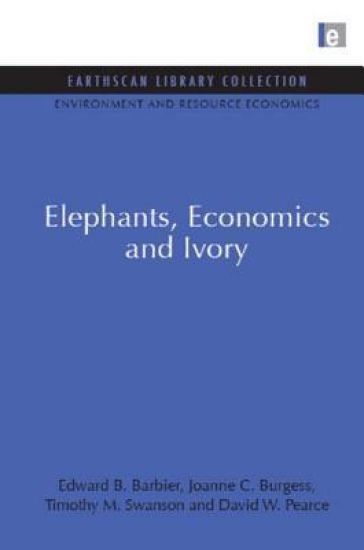
Elephants, Economics and Ivory

Elephants, Economics and Ivory

Edward B. Barbier; Joanne C. Burgess; Timothy M. Swanson; David W. Pearce

Routledge
2013
nidottu
Ivory is big business, and in some parts of Africa elephants have been hunted almost to extinction in the quest for it. The losses to African economies have been catastrophic. Now there is an international ban on the trade and conservation is. the principal goal. This should be a matter for rejoicing, but nothing is quite so simple. The authors of this book have looked at the overall statistics, including those for countries where the elephant population is stable. They have considered the multiplicity of economic and social functions fulfilled by ensuring that elephant herds survive, tourism, a variety of ecological purpose. and, finally, as a source of ivory. They show how the careful management of elephants as a resource can best serve African interests. This book is at the cutting edge of economic thinking and provides a model for the consideration of the difficult relationship between people and wildlife. Originally published in 19990
Elephants, Economics and Ivory

Elephants, Economics and Ivory

Edward B. Barbier; Joanne C. Burgess; Timothy M. Swanson; David W. Pearce

Earthscan Ltd
2009
sidottu
Ivory is big business, and in some parts of Africa elephants have been hunted almost to extinction in the quest for it. The losses to African economies have been catastrophic. Now there is an international ban on the trade and conservation is. the principal goal. This should be a matter for rejoicing, but nothing is quite so simple. The authors of this book have looked at the overall statistics, including those for countries where the elephant population is stable. They have considered the multiplicity of economic and social functions fulfilled by ensuring that elephant herds survive, tourism, a variety of ecological purpose. and, finally, as a source of ivory. They show how the careful management of elephants as a resource can best serve African interests. This book is at the cutting edge of economic thinking and provides a model for the consideration of the difficult relationship between people and wildlife. Originally published in 19990
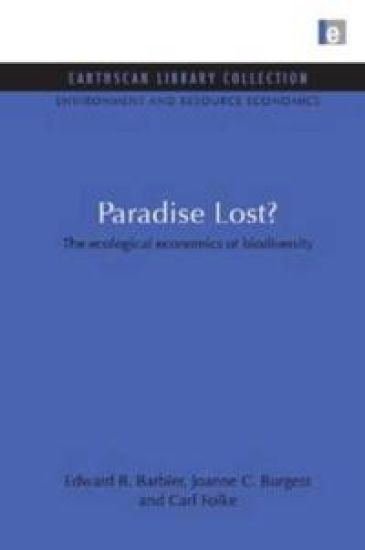
Paradise Lost

Paradise Lost

Edward Barbier; Joanne C. Burgess; Carl Folke

Earthscan Ltd
1994
sidottu
Our wellbeing-even our existence-depends on ecological systems and biological diversity. Ecologists and economists alike recognise that loss of biodiversity is one of the most serious problems the world faces yet their narrow, conventional approaches often fail to grasp all the implications of the problem. New, interdisciplinary thinking is required to safeguard both us and the biosphere from the effects of species extinction. Paradise Lost, the outcome of a unique collaboration between economists and ecologists initiated by the Beijer Institute of the Royal Swedish Academy of Sciences, shows how an integrated approach can understand and tackle the issue: Part 1 provides an overview of the causes of the problem, and of previous approaches to dealing with it; Part 2 examines the effects of biodiversity loss on specific natural systems and the limits to our current knowledge; Part 3 looks at the policy implications discussing the ecological limits to economic activity and the management institutions needed to make an integrated approach effective and Part 4 presents the conclusions: the future research needed and the policy challenges which have to be confronted. Stimulating and clearly written, this book provides a comprehensive account for those academically or professionally involved, and for anyone wanting to know what is at stake and what can be done.