Kirjojen hintavertailu. Mukana 12 657 676 kirjaa ja 12 kauppaa.
Kirjailija
Joanne Tompkins
Kirjat ja teokset yhdessä paikassa: 12 kirjaa, julkaisuja vuosilta 1996-2022, suosituimpien joukossa A Global Doll's House. Vertaile teosten hintoja ja tarkista saatavuus suomalaisista kirjakaupoista.
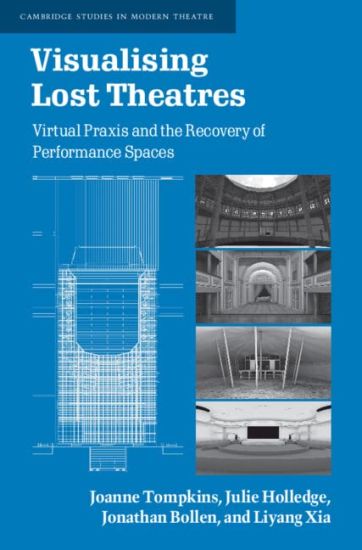
This pioneering study harnesses virtual reality to uncover the history of five venues that have been 'lost' to us: London's 1590s Rose Theatre; Bergen's mid-nineteenth-century Komediehuset; Adelaide's Queen's Theatre of 1841; circus tents hosting Cantonese opera performances in Australia's goldfields in the 1850s; and the Stardust showroom in 1950s Las Vegas. Shaping some of the most enduring genres of world theatre and cultural production, each venue marks a significant cultural transformation, charted here through detailed discussion of theatrical praxis and socio-political history. Using virtual models as performance laboratories for research, Visualising Lost Theatres recreates the immersive feel of venues and reveals performance logistics for actors and audiences. Proposing a new methodology for using visualisations as a tool in theatre history, and providing 3D visualisations for the reader to consult alongside the text, this is a landmark contribution to the digital humanities.
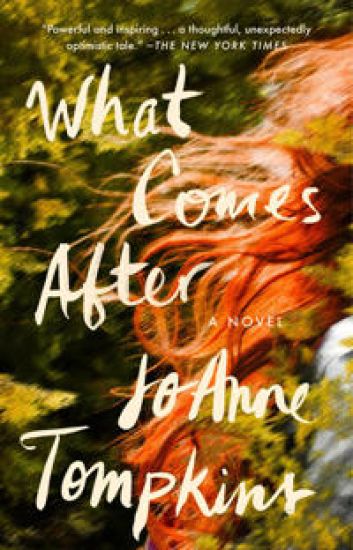
Named a top beach read of summer by Oprah Daily, Good Housekeeping, The Wall Street Journal, and more "Nail-biting wallop of a debut . . . a thoughtful, unexpectedly optimistic tale." --The New York Times "If you enjoyed The Searcher by Tana French, read What Comes After by JoAnne Tompkins. . . . a mystery--and a gritty meditation on loss and redemption, drenched in stillness and grief." --The Washington Post After the shocking death of two teenage boys tears apart a community in the Pacific Northwest, a mysterious pregnant girl emerges out of the woods and into the lives of those same boys' families--a moving and hopeful novel about forgiveness and human connection. In misty, coastal Washington State, Isaac lives alone with his dog, grieving the recent death of his teenage son, Daniel. Next door, Lorrie, a working single mother, struggles with a heinous act committed by her own teenage son. Separated by only a silvery stretch of trees, the two parents are emotionally stranded, isolated by their great losses--until an unfamiliar sixteen-year-old girl shows up, bridges the gap, and changes everything. Evangeline's arrival at first feels like a blessing, but she is also clearly hiding something. When Isaac, who has retreated into his Quaker faith, isn't equipped to handle her alone, Lorrie forges her own relationship with the girl. Soon all three characters are forced to examine what really happened in their overlapping pasts, and what it all possibly means for a shared future. With a propulsive mystery at its core, What Comes After offers an unforgettable story of loss and anger, but also of kindness and hope, courage and forgiveness. It is a deeply moving account of strangers and friends not only helping each other forward after tragedy but inspiring a new kind of family.
This book addresses a deceptively simple question: what accounts for the global success of A Doll’s House, Henrik Ibsen’s most popular play? Using maps, networks, and images to explore the world history of the play’s production, this question is considered from two angles: cultural transmission and adaptation. Analysing the play’s transmission reveals the social, economic, and political forces that have secured its place in the canon of world drama; a comparative study of the play’s 135-year production history across five continents offers new insights into theatrical adaptation. Key areas of research include the global tours of nineteenth-century actress-managers, Norway’s soft diplomacy in promoting gender equality, representations of the female performing body, and the sexual vectors of social change in theatre.
Runner Up for the Dayton Literary Peace Prize Finalist for the Washington State Book Award Edgar Prize Finalist for Best Debut Novel by an American Author Shortlisted for the Prix Libre Nous, Best Foreign Book in French Translation New York Times, Group Text Pick for April 2021 New York Times Editor's Choice Pick Named a top beach read of summer by Oprah Daily, Good Housekeeping, The Wall Street Journal, and more "Nail-biting wallop of a debut . . . a thoughtful, unexpectedly optimistic tale." --The New York Times "If you enjoyed The Searcher by Tana French, read What Comes After by JoAnne Tompkins. . . . a mystery--and a gritty meditation on loss and redemption, drenched in stillness and grief." --The Washington Post After the shocking death of two teenage boys tears apart a community in the Pacific Northwest, a mysterious pregnant girl emerges out of the woods and into the lives of those same boys' families--a moving and hopeful novel about forgiveness and human connection. In misty, coastal Washington State, Isaac lives alone with his dog, grieving the recent death of his teenage son, Daniel. Next door, Lorrie, a working single mother, struggles with a heinous act committed by her own teenage son. Separated by only a silvery stretch of trees, the two parents are emotionally stranded, isolated by their great losses--until an unfamiliar sixteen-year-old girl shows up, bridges the gap, and changes everything. Evangeline's arrival at first feels like a blessing, but she is also clearly hiding something. When Isaac, who has retreated into his Quaker faith, isn't equipped to handle her alone, Lorrie forges her own relationship with the girl. Soon all three characters are forced to examine what really happened in their overlapping pasts, and what it all possibly means for a shared future. With a propulsive mystery at its core, What Comes After offers an unforgettable story of loss and anger, but also of kindness and hope, courage and forgiveness. It is a deeply moving account of strangers and friends not only helping each other forward after tragedy but inspiring a new kind of family.
This is the first in-depth examination of contemporary intercultural performance by women around the world. Contemporary feminist performance is explored in the contexts of current intercultural practices, theories and debates. Holledge and Tompkins provide ways of thinking about and analysing contemporary performance and representations of the performing, female, culturally-marked body. The book includes discussions of: * ritual performance by women from Central Australia and Korea * the cultural exchange of A Doll's House and Antigone * plays from Algeria, South Africa and Ghana * the work of the Takarazuka revue company * the market forces that govern the distribution of women and women's performance. This is an essential read for anyone studying or interested in women's performance.
This book addresses a deceptively simple question: what accounts for the global success of A Doll’s House, Henrik Ibsen’s most popular play? Using maps, networks, and images to explore the world history of the play’s production, this question is considered from two angles: cultural transmission and adaptation. Analysing the play’s transmission reveals the social, economic, and political forces that have secured its place in the canon of world drama; a comparative study of the play’s 135-year production history across five continents offers new insights into theatrical adaptation. Key areas of research include the global tours of nineteenth-century actress-managers, Norway’s soft diplomacy in promoting gender equality, representations of the female performing body, and the sexual vectors of social change in theatre.
This study investigates contestations over spatiality in one culturally composite nation, Australia, where contemporary theatre stages competing cultural and political agendas through space and place. Covering a wide range of plays it will have wide appeal for issues of space, spatiality and territory in all forms of theatre, in all nations.
This is the first in-depth examination of contemporary intercultural performance by women around the world. Contemporary feminist performance is explored in the contexts of current intercultural practices, theories and debates. Holledge and Tompkins provide ways of thinking about and analysing contemporary performance and representations of the performing, female, culturally-marked body. The book includes discussions of: * ritual performance by women from Central Australia and Korea * the cultural exchange of A Doll's House and Antigone * plays from Algeria, South Africa and Ghana * the work of the Takarazuka revue company * the market forces that govern the distribution of women and women's performance. This is an essential read for anyone studying or interested in women's performance.
Post-Colonial Drama is the first full-length study to address the ways in which performance has been instrumental in resisting the continuing effects of imperialism. It brings to bear the latest theoretical approaches from post-colonial and performance studies to a range of plays from Australia, Africa, Canada, New Zealand, the Caribbean and other former colonial regions. Some of the major topics discussed in Post-Colonial Drama include: * the interactions of post-colonial and performance theories * the post-colonial re-stagings of language and history * the specific enactments of ritual and carnival * the theatrical citations of the post-colonial bodyPost-Colonial Drama combines a rich intersection of theoretical approaches with close attention to a wide range of performance texts.