Kirjailija
Joaquim Maria Machado De Assis
Kirjat ja teokset yhdessä paikassa: 25 kirjaa, julkaisuja vuosilta 1977-2026, suosituimpien joukossa Dom Casmurro. Vertaile teosten hintoja ja tarkista saatavuus suomalaisista kirjakaupoista.
25 kirjaa
Kirjojen julkaisuhaarukka 1977-2026.
"A palm tree, seeing me troubled and divining the cause, murmured in its branches that there was nothing wrong with fifteen-year old boys getting into corners with girls of fourteen; quite the contrary, youths of that age have no other function, and corners were made for that very purpose. It was an old palm-tree, and I believed in old palm-trees even more than in old books. Birds, butterflies, a cricket trying out its summer song, all the living things of the air were of the same opinion." So begins this extraordinary love story between Bento and Capitu, childhood sweethearts who grow up next door to each other in Rio de Janeiro in the 1850s. Like other great nineteenth century novels--The Scarlet Letter, Anna Karenina, Madame Bovary--Machado de Assis's Dom Casmurro explores the themes of marriage and adultery. But what distinguishes Machado's novel from the realism of its contemporaries, and what makes it such a delightful discovery for English-speaking readers, is its eccentric and wildly unpredictable narrative style. Far from creating the illusion of an orderly fictional "reality," Dom Casmurro is told by a narrator who is disruptively self-conscious, deeply subjective, and prone to all manner of marvelous digression. As he recounts the events of his life from the vantage of a lonely old age, Bento continually interrupts his story to reflect on the writing of it: he examines the aptness of an image or analogy, considers cutting out certain scenes before taking the manuscript to the printer, and engages in a running, and often hilarious, dialogue with the reader. "If all this seems a little emphatic, irritating reader," he says, "it's because you have never combed a girl's hair, you've never put your adolescent hands on the young head of a nymph..." But the novel is more than a performance of stylistic acrobatics. It is an ironic critique of Catholicism, in which God appears as a kind of divine accountant whose ledgers may be balanced in devious as well as pious ways. It is also a story about love and its obstacles, about deception and self-deception, and about the failure of memory to make life's beginning fit neatly into its end. First published in 1900, Dom Casmurro is one of the great unrecognized classics of the turn of the century by one of Brazil's greatest writers. The popularity of Machado de Assis in Latin America has never been in doubt and now, with the acclaim of such critics and writers as Susan Sontag, John Barth, and Tony Tanner, his work is finally receiving the worldwide attention it deserves. Newly translated and edited by John Gledson, with an afterword by Joao Adolfo Hansen, this Library of Latin America edition is the only complete, unabridged, and annotated translation of the novel available. It offers English-speaking readers a literary genius of the rarest kind.
Released just two months before his death in 1908, Memorial de Ayres was Machado de Assis’s final novel. Written in the form of a diary, it follows the day-to-day happenings of a retired diplomat, Counselor Ayres, during the waning years of the Brazilian empire. Ayres lives a simple life: The most eventful parts of his week are lunch with his sister or a visit to their family cemetery. But a new love interest pushes Ayres from the confines of his quiet routine and into the warm, welcoming home of the Aguiars, an older couple who never had children. The Aguiar household is a center of merriment, a necessary outlet for the reclusive Ayres—and where Brazil’s well-to-do ponder the momentous changes afoot. Marked by Machado’s sly humor and psychological subtlety—and set in a singularly transformative moment in Brazil’s history—Memorial de Ayres is a quietly prescient tale of personal and national legacy.
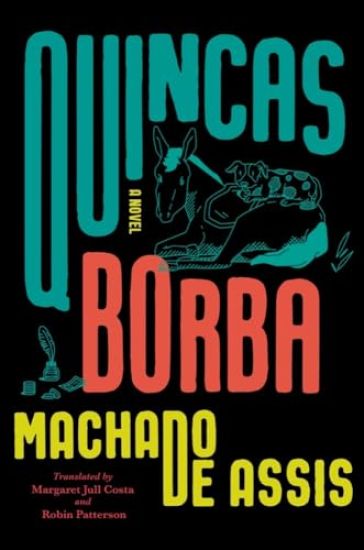
Hailed in his lifetime as Brazil’s greatest writer, Machado de Assis (1839–1908) has found a new generation of readers. Originally published in 1891, Quincas Borba begins with the death of its titular character, a mad philosopher. Borba leaves his fortune—including his dog, also named Quincas Borba—to Rubião, his loyal caretaker. Adrift in the big, bad world, it isn’t long before Rubião is targeted by sycophants, smelling his naïveté. Playfully told by an omniscient and possibly unreliable narrator, the novel is at once irreverent and ambitious, brimming with barbed wit and keen philosophical inquiry. Brilliantly translated by the duo credited with introducing a new generation of readers to Machado through their translations of Dom Casmurro, The Collected Stories and Posthumous Memoirs of Bras Cubas—Quincas Borba is another strikingly modern tale from a blazing progenitor of twentieth-century fiction.
Hailed in his lifetime as Brazil’s greatest writer, Machado de Assis has found a new generation of readers through a series of critically acclaimed translations by Margaret Jull Costa and Robin Patterson. Now, the duo returns to breathe new life into the irreverent, ambitious and darkly funny Quincas Borba. Originally published in 1891, the novel begins with the death of its titular character, a mad philosopher infamous for spouting pessimistic theories of Humanitism. Borba leaves his fortune—including his dog, also named Quincas Borba—to Rubião, his loyal caretaker. Adrift in the big, bad, bustling world of late-1860s Rio de Janeiro, it isn’t long before Rubião is targeted by the city’s sycophants, who can smell his naïveté from a mile away. Playfully told by an omniscient—and possibly unreliable—narrator, and rife with Machado’s signature satirical jabs, Quincas Borba is another strikingly modern tale from a blazing progenitor of twentieth-century fiction.
Originally published in 1899, Dom Casmurro is widely considered to be Joaquim Maria Machado de Assis’s masterpiece and a progenitor of twentieth-century Latin American fiction. This exuberant new translation captures all the hilarious, maddening and utterly compelling idiosyncrasies of one of Machado’s most complex characters. Bento Santiago, our charismatic yet exceedingly unreliable narrator, nicknamed by his enemies Dom Casmurro, has become a bit of a recluse in old age. He spends his days reading and mourning the past in a house built as a replica of his childhood home. One day, musing over the painted busts of Nero, Augustus, Masinissa and Caesar, he is inspired to write his own story, a tale of equally epic proportions. Or so, at least, he thinks. “Yes, let us begin by evoking a famous November afternoon, one I will never forget,” he writes, recalling the day he fell in love with his childhood sweetheart, Capitu. Thus he transports readers back to his youth in a once fashionable neighbourhood, when he and Capitu were neighbours playing innocently in the backyard. But after overcoming many obstacles, Bento’s happy-ever-after ending proves short-lived when he is consumed by paranoia and jealousy. At once oblivious and obsessive, Bento becomes a strangely engaging antihero as he mines the repercussions of his suspicions against the backdrop of a rapidly modernising Rio de Janeiro. Eloquently translated by Margaret Jull Costa and Robin Patterson—the same duo that sparked a Machado renaissance with their brilliant translations of The Collected Stories and Posthumous Memoirs of Brás Cubas—and brimming with his signature charm, Dom Casmurro is a subversive and ground-breaking dark comedy from one of Brazil’s greatest authors.
Margaret Jull Costa and Robin Patterson’s critically acclaimed translations of Posthumous Memoirs of Brás Cubas and The Collected Stories of Machado de Assis introduced a new generation of readers to one of Brazil’s most ground-breaking authors. Hailed as “the greatest writer ever produced in Latin America” (Susan Sontag), Machado’s genius is on full display in this fresh translation of the 1899 classic Dom Casmurro. In his supposed memoir, Bento Santiago, an engaging yet unreliable narrator, suspects his wife, Capitu, of having an affair with his closest friend. Withdrawn and obsessive, our antihero mines the origins of their love story: from childhood neighbours playing innocently in the backyard to his brief spell in a seminary to marriage and the birth of their child—whom, he fears, does not resemble him. A gripping domestic drama brimming with Machado’s signature humour, this is another stunningly modern tale from the progenitor of twentieth-century fiction.
Machado de Assis's first novel visits themes the author developed exquisitely throughout his career including marriage, memory, and perspective. In this insightful translation by Karen Sherwood Sotelino, and with an introduction by José Luiz Passos, the novel reveals the author’s early experiment in drawing out psychological and sociological issues of his times. Readers familiar with his mature works will recognize the progression from infatuation, through passion, doubt, and toxic jealousy, as experienced by protagonists Félix and Lívia in 19th century Rio de Janeiro.
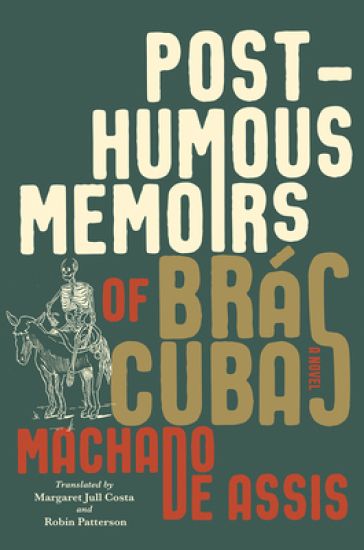
"I passed away at two o’clock in the afternoon on a Friday in August in 1869, in my beautiful mansion in the Catumbi district of the city." So begins Posthumous Memoirs of Brás Cubas—at the end of the narrator’s life. Published in 1881, this highly experimental novel was not at first considered Machado de Assis’ definitive work—a fact his narrator anticipated, bidding "good riddance" to the critic looking for a "run-of-the-mill-novel". Yet in this coruscating new translation, Margaret Jull Costa and Robin Patterson reveal a pivotal moment in Machado’s career, as his flights of the surreal became his literary hallmark. An enigmatic, amusing and frequently insufferable anti hero, Brás Cubas describes his Rio de Janeiro childhood spent tormenting household slaves, his bachelor years of torrid affairs and his final days obsessing over nonsensical poultices. A novel that helped launch modernist fiction, Brás Cubas shines a direct light to Ulysses and Love in the Time of Cholera.
Posthumous Memoirs of Brás Cubas
Joaquim Maria Machado de Assis
Liveright Publishing Corporation
2020
sidottu
"I passed away at two o’clock in the afternoon on a Friday in August in 1869, in my beautiful mansion in the Catumbi district of the city." So begins Posthumous Memoirs of Brás Cubas—at the end of the narrator’s life. Published in 1881, this highly experimental novel was not at first considered Machado de Assis’ definitive work—a fact his narrator anticipated, bidding "good riddance" to the critic looking for a "run-of-the-mill-novel". Yet in this coruscating new translation, Margaret Jull Costa and Robin Patterson reveal a pivotal moment in Machado’s career, as his flights of the surreal became his literary hallmark. An enigmatic, amusing and frequently insufferable anti hero, Brás Cubas describes his Rio de Janeiro childhood spent tormenting household slaves, his bachelor years of torrid affairs and his final days obsessing over nonsensical poultices. A novel that helped launch modernist fiction, Brás Cubas shines a direct light to Ulysses and Love in the Time of Cholera.
Machado de Assis
Joaquim Maria Machado de Assis; Michael Wood
Liveright Publishing Corporation
2019
nidottu
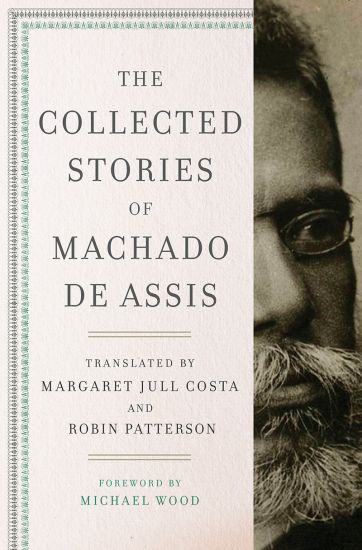
Acclaimed as “the greatest writer ever produced in Latin America” by Susan Sontag, as well as “another Kafka” by Allen Ginsberg, Machado de Assis (1839-1908) was famous in his time for his psychologically probing tales of fin-de-siecle Rio de Janeiro. Margaret Jull Costa and Robin Patterson, “the accomplished duo” (The Wall Street Journal) behind the “landmark...heroically translated” volume (The New Yorker) of The Collected Stories of Machado de Assis (ISBN 978 0 87140 496 1), include twenty-six chronologically ordered stories, Machado de Assis affirms Machado’s status as a literary giant who must finally be fully integrated into the world literary canon.
The Collected Stories of Machado de Assis
Joaquim Maria Machado de Assis; Michael Wood
WW NORTON CO
2018
sidottu
A progenitor of twentieth-century Latin American fiction, Joaquim Maria Machado de Assis (1839-1908), was hailed in his lifetime as Brazil’s greatest writer. This majestic translation combines all his short-story collections appearing in his lifetime and reintroduces de Assis as a literary giant who must be integrated into the world literary canon.
Featuring ten stories never before translated, dating from 1878 to 1886 (regarded as Joaquim Machado de Assis’s most radically experimental period), this selection of short fiction by Brazil’s greatest author ranges in tone from elegiac and philosophical to impishly ironic. Including the author’s classic essay on world literature–also appearing in English for the first time–and with pieces chosen from his vast body of work for their playfulness, pathos, and stylistic subversion, this collection is an ideal introduction to one of world literature’s greatest talents. “A prodigy of accomplishment…deserving of a permanent place in world literature” – Susan Sontag “Everything about Joaquim Maria Machado de Assis seems double. There’s before and after, domestic and metaphysical, high and low, black and white, erotic and austere, short and long, trapped and free, gentle and cruel, perceived and real. The 200 or so stories he wrote spin out these oppositions into a remarkable variousness.”–Peter Robb, Times Literary Supplement “There is in Machado’s prose a playfulness that teases the reader, humor that mocks solemnity and seriousness. He punctures pretentiousness and ridicules received ideas (…) The range of allusions in his work would have amazed even Nabokov. And as with Nabokov, indeed as with any work of art which gives us what Nabokov calls the shiver between the shoulder blades, what elicits one’s astonished admiration is not to do with subject matter…but with that abstract and elusive concept…which manifests itself in that purely aesthetic thing called style.” – Zulfikar Ghose, Context No. 12
Som så mange andre store romaner fra 1800-tallet, utforsker Dom Casmurro temaene ekteskap, utroskap og sjalusi. Det særegne ved Machados roman, og det som gjør den til en så stor leseopplevelse, er dens eksentriske og vilt uforutsigbare språk og form. Når den aldrende Dom Casmurro av kjedsomhet bestemmer seg for å skrive sine memoarer, åpnes langsomt en avgrunn av uoppgjort raseri og fortvilelse; et sinn i dyp nød. Dom Casmurro er en oppvisning i ironi og språklig mesterskap, men mye mer enn det. Det er en historie om kjærligheten og dens hindringer, om falskhet og selvbedrag, og om minnets manglende evne til å tilpasse livets begynnelse til dets slutt.
"ærlighet er en død manns fremste plikt," skriver fortelleren i Brás Cubas' posthume memoarer. Rikmannen Cubas er død, mener samtidig en av verdenslitteraturens mest levende skikkelser. Hinsides graven utfordrer han leseren til å forholde seg til sitt uheroiske liv. I et tidvis fragmentarisk og lattervekkende, tidvis dypsindig språk blir vi kjent med en mann med stor forfengelighet, halvhjertede politiske ambisjoner og en rad don quijotiskeinnfall.Fra forordet: "Jeg kjenner kun ett eksempel innen den fengslende sjangeren diktet selvbiografi som garanterer for dens ideelle og - slik det viser seg - komiske virkeliggjørelse, og det er mesterverket Memóriaspósthumas de Brás Cubas." Med et forord av Susan Sontag. Joaquim Maria Machado de Assis(1839-1908) levde hele sitt liv i Rio de Janeiro. Han var sønn av en frigitt slave, vokste opp i enkle kår og var langt på vei selvlært. Han arbeidet lenge som journalist og skrev innen de fleste sjangre, men er mest kjent for sin prosa. Blant hans beundrere finner vi Susan Sontag, José Saramago, Salman Rushdie, Woody Allen, Philip Roth og Harold Bloom.
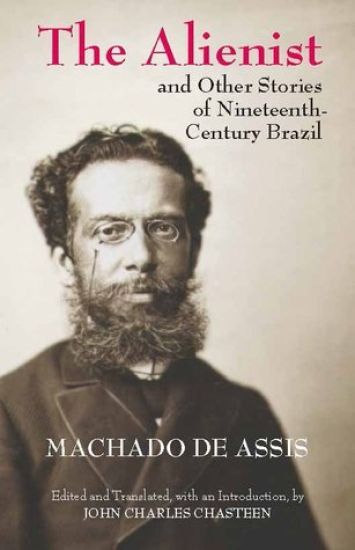
Alienist and Other Stories of Nineteenth-Century Brazil
Joaquim Maria Machado de Assis
Hackett Publishing Co, Inc
2013
pokkari
Accompanied by a thorough introduction to "Brazil's Machado, Machado's Brazil", these vibrant new translations of eight of Machado de Assis's best-known short stories bring Nineteenth-Century Brazilian society and culture to life for modern readers.
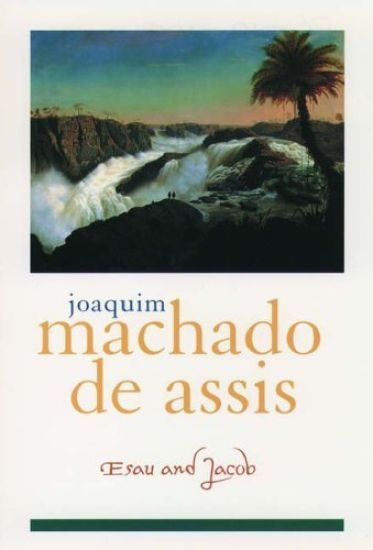
Esau and Jacob is the last of Machado de Assis's four great novels. At one level it is the story of twin brothers in love with the same woman and her inability to choose between them. At another level, it is the story of Brazil itself, caught between the traditional and the modern, and between the monarchical and republican ideals. Instead of a heroic biblical fable, Machado de Assis gives us a story of the petty squabbles, conflicting ambitions, doubts, and insecurities that are part of the human condition.