Kirjojen hintavertailu. Mukana 12 595 353 kirjaa ja 12 kauppaa.

Kirjailija

Jock McCulloch

Kirjat ja teokset yhdessä paikassa: 10 kirjaa, julkaisuja vuosilta 1995-2023, suosituimpien joukossa A Long Way Home. Vertaile teosten hintoja ja tarkista saatavuus suomalaisista kirjakaupoista.

10 kirjaa

Kirjojen julkaisuhaarukka 1995-2023.

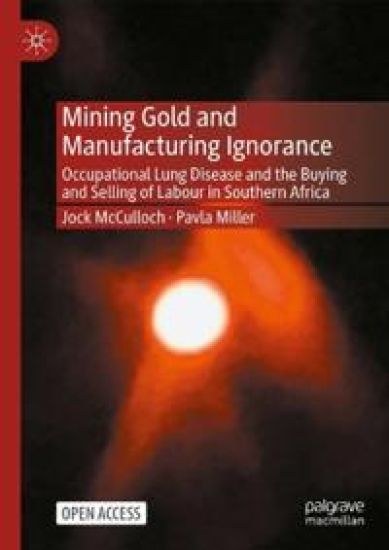
Mining Gold and Manufacturing Ignorance

Mining Gold and Manufacturing Ignorance

Jock McCulloch; Pavla Miller

SPRINGER VERLAG, SINGAPORE
2023
sidottu
This open access book charts how South Africa’s gold mines have systematically suppressed evidence of hazardous work practices and the risks associated with mining.For most of the twentieth century, South Africa was the world’s largest producer of gold. Although the country enjoyed a reputation for leading the world in occupational health legislation, the mining companies developed a system of medical surveillance and workers’ compensation which compromised the health of black gold miners, facilitated the spread of tuberculosis, and ravaged the communities and economies of labour-sending states. The culmination of two decades of meticulous archival research, this book exposes the making, contesting, and unravelling of the companies’ capacity to shape – and corrupt – medical knowledge.
Mining Gold and Manufacturing Ignorance

Mining Gold and Manufacturing Ignorance

Jock McCulloch; Pavla Miller

SPRINGER VERLAG, SINGAPORE
2023
nidottu
This open access book charts how South Africa’s gold mines have systematically suppressed evidence of hazardous work practices and the risks associated with mining.For most of the twentieth century, South Africa was the world’s largest producer of gold. Although the country enjoyed a reputation for leading the world in occupational health legislation, the mining companies developed a system of medical surveillance and workers’ compensation which compromised the health of black gold miners, facilitated the spread of tuberculosis, and ravaged the communities and economies of labour-sending states. The culmination of two decades of meticulous archival research, this book exposes the making, contesting, and unravelling of the companies’ capacity to shape – and corrupt – medical knowledge.

In the Twilight of Revolution

In the Twilight of Revolution

Jock McCulloch

Routledge
2021
nidottu
First published in 1983. Amilcar Cabral was one of Africa’s leading revolutionary figures. Universally recognised as the founding father at the independent state of Guiné-Bissau, he was also the first truly important political thinker to have emerged from Africa’s two decades of revolution. This book was the first publication to present a critical analysis of his standing as a political theorist. Born in 1925 in the then Portuguese colony of Guiné, Cabral devoted his life to the liberation of his people from colonialism and was instrumental in founding the PAIGC, the African Party for the Independence of Guiné and Cape Verde. He was assassinated early in 1973, but the PAIGC continued his task and Guiné-Bissau gained independence in September 1973. Guiné’s revolution came late, but it was a genuine revolution and, like all revolutions, was accompanied by a theory of its own. That theory is found in the writings of Cabral. In this study Jack McCulloch explains that, because of the conjunction of a number of historical factors, the revolution in Guiné assumed an importance for out of proportion to the size or economic significance of the country, and shows that consequently Cabral’s theory has come to have an historical significance of its own. This account of Cabral’s political theory demonstrates clearly that the effect of Cabral’s career was to help bring down the last of the great colonial empires in Africa and, in the realm of theory, to dismantle the central shibboleths of African socialism.
In the Twilight of Revolution

In the Twilight of Revolution

Jock McCulloch

Routledge
2019
sidottu
First published in 1983. Amilcar Cabral was one of Africa’s leading revolutionary figures. Universally recognised as the founding father at the independent state of Guiné-Bissau, he was also the first truly important political thinker to have emerged from Africa’s two decades of revolution. This book was the first publication to present a critical analysis of his standing as a political theorist. Born in 1925 in the then Portuguese colony of Guiné, Cabral devoted his life to the liberation of his people from colonialism and was instrumental in founding the PAIGC, the African Party for the Independence of Guiné and Cape Verde. He was assassinated early in 1973, but the PAIGC continued his task and Guiné-Bissau gained independence in September 1973. Guiné’s revolution came late, but it was a genuine revolution and, like all revolutions, was accompanied by a theory of its own. That theory is found in the writings of Cabral. In this study Jack McCulloch explains that, because of the conjunction of a number of historical factors, the revolution in Guiné assumed an importance for out of proportion to the size or economic significance of the country, and shows that consequently Cabral’s theory has come to have an historical significance of its own. This account of Cabral’s political theory demonstrates clearly that the effect of Cabral’s career was to help bring down the last of the great colonial empires in Africa and, in the realm of theory, to dismantle the central shibboleths of African socialism.
A Long Way Home

A Long Way Home

William Beinart; Julia Charlton; David Coplan; Peter Delius; Jacob Dlamini; Patrick Harries; Michelle Hay; Deborah James; Sekibakiba Peter Lekgoathi; Jock McCulloch; Anitra Nettleton; Noor Nieftagodien; Laura Phillips; Dinah Rajak; Fiona Rankin-Smith; Micah Reddy; Jonny Steinberg

Wits University Press
2014
nidottu
In no other society in the world have urbanisation and industrialisation been as comprehensively based on migrant labour as in South Africa. Rather than focusing on the well-documented narrative of displacement and oppression, A Long Way Home captures the humanity, agency and creative modes of self-expression of the millions of workers who helped to build and shape modern South Africa.The book spans a three-hundred-year history beginning with the exportation of slave labour from Mozambique in the eighteenth century and ending with the strikes and tensions on the platinum belt in recent years. It shows not only the age-old mobility of African migrants across the continent but also, with the growing demand for labour in the mining industry, the importation of Chinese slaves. The essays and visual materials traverse homesteads, chiefdoms and mining hostels in their portrayal of migrant workers’ and their families’ attempts to maintain contact across large distances and uphold their rural customs, traditions and rituals in new spaces and locations. Together, they provide multiple perspectives on the lived experience of migrant labourers and celebrate their extraordinary journeys. A Long Way Home was conceived during the planning of an art exhibition entitled `Ngezinyawo: Migrant Journeys’ at the Wits Art Museum. The interdisciplinary nature of the contributions and the extraordinary collection of images selected to complement and expand on the text make this a unique collection.
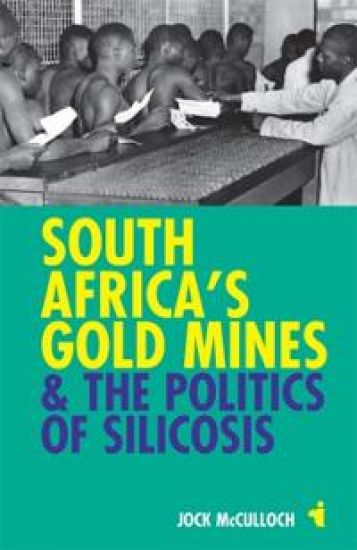
South Africa's Gold Mines and the Politics of Silicosis
Examines the silicosis crisis in the South African mining industry, and reveals how the rate of, often fatal, tuberculosis among black migrant miners was hidden for over a century. South Africa's gold mines are the largest and historically among the most profitable in the world. Yet at what human cost? This book reveals how the mining industry, abetted by a minority state, hid a pandemic of silicosis for almost a century and allowed miners infected with tuberculosis to spread disease to rural communities in South Africa and to labour-sending states. In the twentieth century, South African mines twice faced a crisis over silicosis, which put its workers at risk of contracting pulmonary tuberculosis, often fatal. The first crisis, 1896-1912, saw the mining industry invest heavily in reducing dust and South Africa became renowned for its mine safety. The second began in 2000 with mounting scientific evidence that the disease rate among miners is more than a hundred times higher than officially acknowledged. The first crisis also focused upon disease among the minority white miners: the current crisis is about black migrant workers, and is subject to major class actions for compensation. Jock McCulloch was a Legislative Research Specialist for the Australian parliament and has taught at various universities. His books include Asbestos Blues. Southern Africa (South Africa, Namibia, Lesotho, Swaziland & Botswana): Jacana
Defending the Indefensible

Defending the Indefensible

Jock McCulloch; Geoffrey Tweedale

Oxford University Press
2008
sidottu
In the early twentieth century, asbestos had a reputation as a lifesaver. In 1960, however, it became known that even relatively brief exposure to asbestos can cause mesothelioma, a virulent and lethal cancer. Yet the bulk of the world's asbestos was mined after 1960. Asbestos usage in many countries continued unabated. This is the first global history of how the asbestos industry and its allies in government, insurance, and medicine defended the product throughout the twentieth century. It explains how mining and manufacture could continue despite overwhelming medical evidence as to the risks. The argument advanced in this book is that asbestos has proved so enduring because the industry was able to mount a successful defense strategy for the mineral - a strategy that still operates in some parts of the world. This defence involved the shaping of the public debate by censoring, and sometimes corrupting, scientific research, nurturing scientific uncertainty, and using allies in government, insurance, and medicine. The book also discusses the problems of asbestos in the environment, compensating victims, and the continued use of asbestos in the developing world. Its global focus shows how asbestos can be seen as a model for many occupational diseases - indeed for a whole range of hazards produced by industrial societies. The book is based on a wealth of documentary material gained from legal discovery, supplemented by evidence from the authors' visits and researches in the US, the UK, Canada, Kazakhstan, Zimbabwe, Australia, Swaziland, and South Africa.
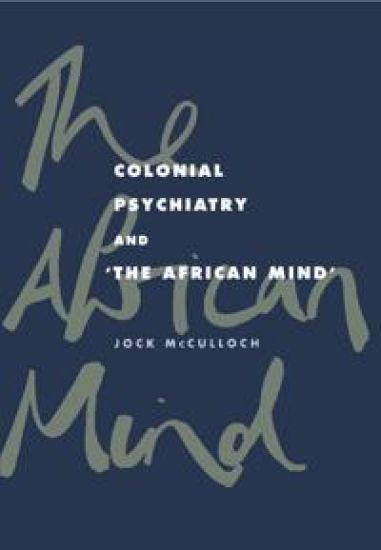
Colonial Psychiatry and the African Mind

Colonial Psychiatry and the African Mind

Jock McCulloch

Cambridge University Press
2006
pokkari
In this history of the practice and theoretical underpinnings of colonial psychiatry in Africa, Jock McCulloch describes the clinical approaches of well-known European psychiatrists who worked directly with indigenous Africans, among them Frantz Fanon, J. C. Carothers and Wulf Sachs. They were a disparate group, operating independently of one another, and mostly in intellectual isolation. But despite their differences, they shared a coherent set of ideas about 'the African mind', premised on the colonial notion of African inferiority. In exploring the close association between the ideologies of settler societies and psychiatric research, this intriguing study is an attempt to explore colonial science as a system of knowledge and power.
Black Soul, White Artifact

Black Soul, White Artifact

Jock McCulloch

Cambridge University Press
2002
pokkari
The death of Frantz Fanon at the age of thirty-six robbed the African revolution of its leading intellectual and moral force. His death also cut short one of the most extraordinary intellectual careers in contemporary political thought. Fanon was a political psychologist whose approach to revolutionary theory was grounded in his psychiatric practice. During his years in Algeria he published clinical studies on the behaviour of violent patients, the role of culture in the development of illness and the function of the psychiatric hospital as a social milieu. These papers illuminate Fanon’s political theory, expose weaknesses in his concept of political consciousness and liberation, and contain a ‘secret history’ explaining the tide of revolutionary movements in the Third World.
Colonial Psychiatry and the African Mind

Colonial Psychiatry and the African Mind

Jock McCulloch

Cambridge University Press
1995
sidottu
In this first history of the practice and theoretical underpinnings of colonial psychiatry in Africa, Jock McCulloch describes the clinical approaches of well-known European psychiatrists who worked directly with indigenous Africans, among them Frantz Fannon, J. C. Carothers and Wulf Sachs. They were a disparate group, operating independently of one another, and mostly in intellectual isolation. But despite their differences, they shared a coherent set of ideas about ‘the African mind’, premissed on the colonial notion of African inferiority. In exploring the close association between the ideologies of settler societies and psychiatric research, this intriguing study is one of the few attempts to explore colonial science as a system of knowledge and power.