Kirjojen hintavertailu. Mukana 12 152 606 kirjaa ja 12 kauppaa.

Kirjailija

Joe Feagin

Kirjat ja teokset yhdessä paikassa: 17 kirjaa, julkaisuja vuosilta 1997-2021, suosituimpien joukossa Racial and Ethnic Relations, Census Update. Vertaile teosten hintoja ja tarkista saatavuus suomalaisista kirjakaupoista.

17 kirjaa

Kirjojen julkaisuhaarukka 1997-2021.

Who Killed Higher Education?

Who Killed Higher Education?

Edna Chun; Joe Feagin

Taylor Francis Ltd
2021
sidottu
Who Killed Higher Education?: Maintaining White Dominance in a Desegregating Era offers a probing and unvarnished look at the causes of the substantial state defunding of public higher education over the last six decades. With the pandemic and cuts to social services, these challenges have only deepened, especially creating real dilemmas for first-generation, minoritized students seeking to complete a college education.Through extensive analysis of trends in public higher education funding, the book documents and lays bare the ways in which elite, neoliberal decision-makers launched a multi-pronged and attack on public higher education. It highlights the confluence of the enrollment of an increasingly diverse cohort of students in college with the efforts of conservative white legislatures to diminish funding support for public higher education. Who Killed Higher Education? is an important resource for students in courses on higher education, and diversity in education. It will also provide instruction for boards of trustees, institutional leaders, faculty and key campus constituencies in developing long-term strategies that ensure the access and success of a diverse and talented student body.
Who Killed Higher Education?

Who Killed Higher Education?

Edna Chun; Joe Feagin

Taylor Francis Ltd
2021
nidottu
Who Killed Higher Education?: Maintaining White Dominance in a Desegregating Era offers a probing and unvarnished look at the causes of the substantial state defunding of public higher education over the last six decades. With the pandemic and cuts to social services, these challenges have only deepened, especially creating real dilemmas for first-generation, minoritized students seeking to complete a college education.Through extensive analysis of trends in public higher education funding, the book documents and lays bare the ways in which elite, neoliberal decision-makers launched a multi-pronged and attack on public higher education. It highlights the confluence of the enrollment of an increasingly diverse cohort of students in college with the efforts of conservative white legislatures to diminish funding support for public higher education. Who Killed Higher Education? is an important resource for students in courses on higher education, and diversity in education. It will also provide instruction for boards of trustees, institutional leaders, faculty and key campus constituencies in developing long-term strategies that ensure the access and success of a diverse and talented student body.

Revealing Britain’s Systemic Racism

Revealing Britain’s Systemic Racism

Kimberley Ducey; Joe Feagin

Routledge
2021
sidottu
Revealing Britain’s Systemic Racism applies an existing scholarly paradigm (systemic racism and the white racial frame) to assess the implications of Markle’s entry and place in the British royal family, including an analysis that bears on visual and material culture. The white racial frame, as it manifests in the UK, represents an important lens through which to map and examine contemporary racism and related inequities. By questioning the long-held, but largely anecdotal, beliefs about racial progressiveness in the UK, the authors provide an original counter-narrative about how Markle’s experiences as a biracial member of the royal family can help illumine contemporary forms of racism in Britain. Revealing Britain’s Systemic Racism identifies and documents the plethora of ways systemic racism continues to shape ecological spaces in the UK. Kimberley Ducey and Joe R. Feagin challenge romanticized notions of racial inclusivity by applying Feagin’s long-established work, aiming to make a unique and significant contribution to literature in sociology and in various other disciplines.
Revealing Britain’s Systemic Racism

Revealing Britain’s Systemic Racism

Kimberley Ducey; Joe Feagin

Routledge
2021
nidottu
Revealing Britain’s Systemic Racism applies an existing scholarly paradigm (systemic racism and the white racial frame) to assess the implications of Markle’s entry and place in the British royal family, including an analysis that bears on visual and material culture. The white racial frame, as it manifests in the UK, represents an important lens through which to map and examine contemporary racism and related inequities. By questioning the long-held, but largely anecdotal, beliefs about racial progressiveness in the UK, the authors provide an original counter-narrative about how Markle’s experiences as a biracial member of the royal family can help illumine contemporary forms of racism in Britain. Revealing Britain’s Systemic Racism identifies and documents the plethora of ways systemic racism continues to shape ecological spaces in the UK. Kimberley Ducey and Joe R. Feagin challenge romanticized notions of racial inclusivity by applying Feagin’s long-established work, aiming to make a unique and significant contribution to literature in sociology and in various other disciplines.
Rethinking Diversity Frameworks in Higher Education
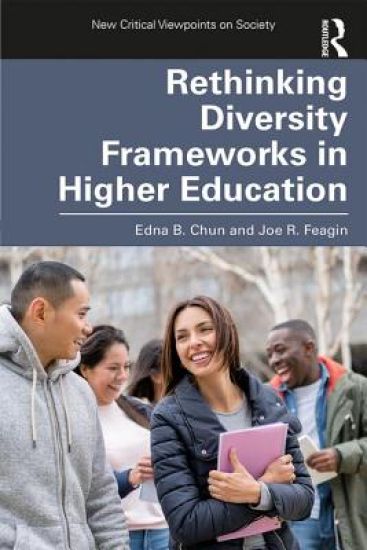
With the goal of building more inclusive working, learning, and living environments in higher education, this book seeks to reframe understandings of forms of everyday exclusion that affect members of nondominant groups on predominantly white college campuses. The book contextualizes the need for a more robust analysis of persistent patterns of campus inequality by addressing key trends that have reshaped the landscape for diversity, including rapid demographic change, reduced public spending on higher education, and a polarized political climate. Specifically, it offers a critique of contemporary analytical ideas such as micro-aggressions and implicit and unconscious bias and underscores the impact of consequential discriminatory events (or macro-aggressions) and racial and gender-based inequalities (macro-inequities) on members of nondominant groups. The authors draw extensively upon interview studies and qualitative research findings to illustrate the reproduction of social inequality through behavioral and process-based outcomes in the higher education environment. They identify a more powerful systemic framework and conceptual vocabulary that can be used for meaningful change. In addition, the book highlights coping and resistance strategies that have regularly enabled members of nondominant groups to address, deflect, and counteract everyday forms of exclusion. The book offers concrete approaches, concepts, and tools that will enable higher education leaders to identify, address, and counteract persistent structural and behavioral barriers to inclusion. As such, it shares a series of practical recommendations that will assist presidents, provosts, executive officers, boards of trustees, faculty, administrators, diversity officers, human resource leaders, diversity taskforces, and researchers as they seek to implement comprehensive strategies that result in sustained diversity change.
Rethinking Diversity Frameworks in Higher Education
With the goal of building more inclusive working, learning, and living environments in higher education, this book seeks to reframe understandings of forms of everyday exclusion that affect members of nondominant groups on predominantly white college campuses. The book contextualizes the need for a more robust analysis of persistent patterns of campus inequality by addressing key trends that have reshaped the landscape for diversity, including rapid demographic change, reduced public spending on higher education, and a polarized political climate. Specifically, it offers a critique of contemporary analytical ideas such as micro-aggressions and implicit and unconscious bias and underscores the impact of consequential discriminatory events (or macro-aggressions) and racial and gender-based inequalities (macro-inequities) on members of nondominant groups. The authors draw extensively upon interview studies and qualitative research findings to illustrate the reproduction of social inequality through behavioral and process-based outcomes in the higher education environment. They identify a more powerful systemic framework and conceptual vocabulary that can be used for meaningful change. In addition, the book highlights coping and resistance strategies that have regularly enabled members of nondominant groups to address, deflect, and counteract everyday forms of exclusion. The book offers concrete approaches, concepts, and tools that will enable higher education leaders to identify, address, and counteract persistent structural and behavioral barriers to inclusion. As such, it shares a series of practical recommendations that will assist presidents, provosts, executive officers, boards of trustees, faculty, administrators, diversity officers, human resource leaders, diversity taskforces, and researchers as they seek to implement comprehensive strategies that result in sustained diversity change.
Elite White Men Ruling

Elite White Men Ruling

Joe Feagin; Kimberley Ducey

Routledge
2017
sidottu
This book examines the “who, what, when, where, and how” of elite-white-male dominance in U.S. and global society. In spite of their domination in the United States and globally that we document herein, elite white men have seldom been called out and analyzed as such. They have received little to no explicit attention with regard to systemic racism issues, as well as associated classism and sexism issues. Almost all public and scholarly discussions of U.S. racism fail to explicitly foreground elite white men or to focus specifically on how their interlocking racial, class, and gender statuses affect their globally powerful decisionmaking. Some of the power positions of these elite white men might seem obvious, but they are rarely analyzed for their extraordinary significance. While the principal focus of this book is on neglected research and policy questions about the elite-white-male role and dominance in the system of racial oppression in the United States and globally, because of their positioning at the top of several societal hierarchies the authors periodically address their role and dominance in other oppressive (e.g., class, gender) hierarchies.
Elite White Men Ruling

Elite White Men Ruling

Joe Feagin; Kimberley Ducey

Routledge
2017
nidottu
This book examines the “who, what, when, where, and how” of elite-white-male dominance in U.S. and global society. In spite of their domination in the United States and globally that we document herein, elite white men have seldom been called out and analyzed as such. They have received little to no explicit attention with regard to systemic racism issues, as well as associated classism and sexism issues. Almost all public and scholarly discussions of U.S. racism fail to explicitly foreground elite white men or to focus specifically on how their interlocking racial, class, and gender statuses affect their globally powerful decisionmaking. Some of the power positions of these elite white men might seem obvious, but they are rarely analyzed for their extraordinary significance. While the principal focus of this book is on neglected research and policy questions about the elite-white-male role and dominance in the system of racial oppression in the United States and globally, because of their positioning at the top of several societal hierarchies the authors periodically address their role and dominance in other oppressive (e.g., class, gender) hierarchies.
Yes We Can?

Yes We Can?

Adia Harvey-Wingfield; Joe Feagin

Routledge
2012
nidottu
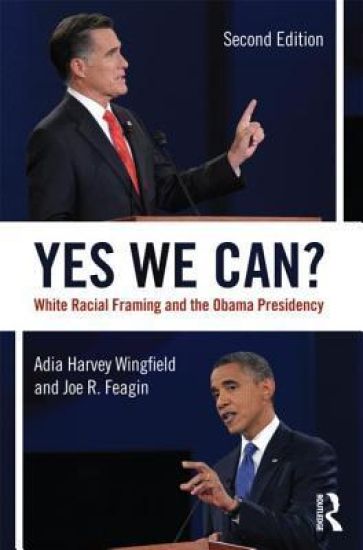
The first edition of this book offered one of the first social science analyses of Barack Obama’s historic electoral campaigns and early presidency. In this second edition the authors extend that analysis to Obama’s service in the presidency and to his second campaign to hold that presidency. Elaborating on the concept of the white racial frame, Harvey Wingfield and Feagin assess in detail the ways white racial framing was deployed by the principal characters in the electoral campaigns and during Obama’s presidency. With much relevant data, this book counters many commonsense assumptions about U.S. racial matters, politics, and institutions, particularly the notion that Obama’s presidency ushered in a major post-racial era. Readers will find this fully revised and updated book distinctively valuable because it relies on sound social science analysis to assess numerous events and aspects of this historic campaign.
Yes We Can?

Yes We Can?

Adia Harvey-Wingfield; Joe Feagin

Routledge
2012
sidottu
The first edition of this book offered one of the first social science analyses of Barack Obama’s historic electoral campaigns and early presidency. In this second edition the authors extend that analysis to Obama’s service in the presidency and to his second campaign to hold that presidency. Elaborating on the concept of the white racial frame, Harvey Wingfield and Feagin assess in detail the ways white racial framing was deployed by the principal characters in the electoral campaigns and during Obama’s presidency. With much relevant data, this book counters many commonsense assumptions about U.S. racial matters, politics, and institutions, particularly the notion that Obama’s presidency ushered in a major post-racial era. Readers will find this fully revised and updated book distinctively valuable because it relies on sound social science analysis to assess numerous events and aspects of this historic campaign.
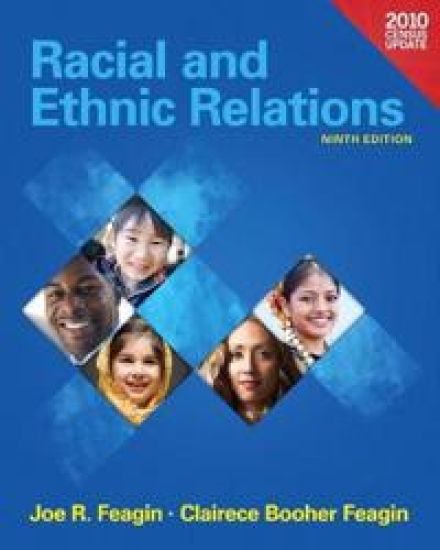
Racial and Ethnic Relations, Census Update

Racial and Ethnic Relations, Census Update

Joe Feagin; Clairece Booher Feagin

Pearson
2012
sidottu
Examining the social, economic, and political realities to racial and ethnic relations Racial and Ethnic Relations, 9/e examines the “what”, “why”, and “how” of racial and ethnic oppression and conflict. Drawing on a broad array of sources, this text provides readers with access to important research and literature on racial and ethnic groups in the United States and, to a lesser extent, in certain other countries around the globe. It is designed for courses in Majority-Minority Relations, Racial and Ethnic Relations, Cultural Diversity, and Multiculturalism in departments of Sociology and Ethnic Studies. The Census Update program incorporates 2010 Census data into a course—simply and easily. The components of the Census Update Program include an updated census edition with all charts and graphs—to reflect the results of the 2010 Census. In addition, A Short Introduction to the U.S. Census is available and an updated MySocKit. Teaching & Learning Experience Personalize Learning—MySocKit delivers proven results in helping students succeed, provides engaging experiences that personalize learning, and comes from a trusted partner with educational expertise and a deep commitment to helping students and instructors achieve their goals. Improve Critical Thinking — Encourages students to critically evaluate racial inequality and conflict. Engage Students — A broad array of sources and new research help students delve into the sociology of inter-group relations. Explore Theory — Power-conflict approach. Support Instructors — MySocKit enables instructors to assess student progress and adapt course material to meet the specific needs of the class. Note: MySocKit does not come automatically packaged with this text. To purchase MySocKit, please visit: www.mysockit.com or you can purchase a ValuePack of the text + MySocKit (at no additional cost). ValuePack ISBN-10: 0205172210 / ValuePack ISBN-13: 9780205172214
Two-Faced Racism

Two-Faced Racism

Leslie Picca; Joe Feagin

Routledge
2007
sidottu
Two-Faced Racism examines and explains the racial attitudes and behaviours exhibited by whites in private settings. While there are many books that deal with public attitudes, behaviours, and incidences concerning race and racism (frontstage), there are few studies on the attitudes whites display among friends, family, and other whites in private settings (backstage). The core of this book draws upon 626 journals of racial events kept by white college students at twenty-eight colleges in the United States. The book seeks to comprehend how whites think in racial terms by analyzing their reported racial events.
Two-Faced Racism

Two-Faced Racism

Leslie Picca; Joe Feagin

Routledge
2007
nidottu
Two-Faced Racism examines and explains the racial attitudes and behaviours exhibited by whites in private settings. While there are many books that deal with public attitudes, behaviours, and incidences concerning race and racism (frontstage), there are few studies on the attitudes whites display among friends, family, and other whites in private settings (backstage). The core of this book draws upon 626 journals of racial events kept by white college students at twenty-eight colleges in the United States. The book seeks to comprehend how whites think in racial terms by analyzing their reported racial events.
Systemic Racism

Systemic Racism

Joe Feagin

Routledge
2006
nidottu
In this book, Feagin develops a theory of systemic racism to interpret the highly racialized character and development of this society. Exploring the distinctive social worlds that have been created by racial oppression over nearly four centuries and what this has meant for the people of the United States, focusing his analysis on white-on-black oppression.Drawing on the commentaries of black and white Americans in three historical eras; the slavery era, the legal segregation era, and then those of white Americans. Feagin examines how major institutions have been thoroughly pervaded by racial stereotypes, ideas, images, emotions, and practices. He theorizes that this system of racial oppression was not an accident of history, but was created intentionally by white Americans. While significant changes have occurred in this racist system over the centuries, key and fundamentally elements have been reproduced over nearly four centuries, and US institutions today imbed the racialized hierarchy created in the 17th century. Today, as in the past, racial oppression is not just a surface-level feature of society, but rather it pervades, permeates, and interconnects all major social groups, networks, and institutions across society.
Systemic Racism

Systemic Racism

Joe Feagin

Routledge
2006
sidottu
In this book, Feagin develops a theory of systemic racism to interpret the highly racialized character and development of this society. Exploring the distinctive social worlds that have been created by racial oppression over nearly four centuries and what this has meant for the people of the United States, focusing his analysis on white-on-black oppression.Drawing on the commentaries of black and white Americans in three historical eras; the slavery era, the legal segregation era, and then those of white Americans. Feagin examines how major institutions have been thoroughly pervaded by racial stereotypes, ideas, images, emotions, and practices. He theorizes that this system of racial oppression was not an accident of history, but was created intentionally by white Americans. While significant changes have occurred in this racist system over the centuries, key and fundamentally elements have been reproduced over nearly four centuries, and US institutions today imbed the racialized hierarchy created in the 17th century. Today, as in the past, racial oppression is not just a surface-level feature of society, but rather it pervades, permeates, and interconnects all major social groups, networks, and institutions across society.
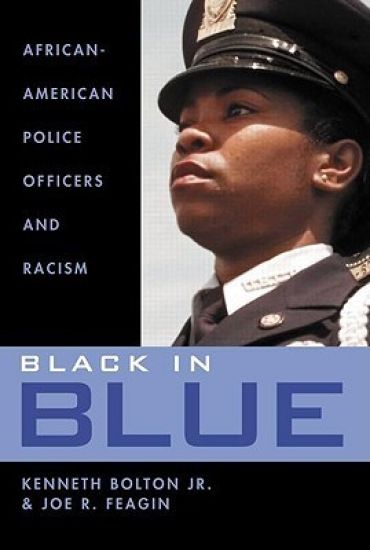
Black in Blue

Black in Blue

Kenneth Bolton; Joe Feagin

Routledge
2004
sidottu
From New York to Los Angeles, police departments across the country are consistently accused of racism. Although historically white police precincts have been slowly integrating over the past few decades, African-American officers still encounter racism on the job. Bolton and Feagin have interviewed fifty veteran African-American police officers to provide real-life and vivid examples of the difficulties and discrimination these officers face everyday inside and outside the police station from barriers in hiring and getting promoted to lack of trust from citizens and members of black community.
Capitalist City

Capitalist City

Michael Peter Smith; Joe Feagin

Blackwell Publishers
1997
sidottu
The world of modern capitalism is a global network both of corporations and of cities - 'world command cities' such as New York, London and Tokyo; 'specialized command cities' which concentrate on particular industries, such as Detroit; 'state command cities' such as Washington and Brasilia; and so on. These cities, linked by an organizational web of transnational corporations, are the pins holding the capitalist world economy together in the new international division of labour. In The Capitalist City a group of eminent scholars analyzes the intricate relationships among cities, state policies and urban politics at a time of economic restructuring at global, national and local levels to provide an original and timely contribution to one of the most important areas of political and social science.