Kirjojen hintavertailu. Mukana 12 595 353 kirjaa ja 12 kauppaa.
Kirjailija
Joe Knetsch
Kirjat ja teokset yhdessä paikassa: 10 kirjaa, julkaisuja vuosilta 2003-2025, suosituimpien joukossa Florida in World War I. Vertaile teosten hintoja ja tarkista saatavuus suomalaisista kirjakaupoista.
A century ago, sparsely populated and largely rural Florida rallied as America plunged into World War I. The state's sacrifices and contributions have rarely been awarded their proper due. The proud USS Florida, too often mentioned as a mere adjunct to the Atlantic Fleet, receives a just accounting, as does the utterly devastating loss of the USS Tampa, the highest death toll the navy suffered in the war. Sunshine State foresters served critical roles abroad, and local libraries became essential hubs for promoting rationing and reporting news from overseas. Floridian aid workers and soldiers training for departure were stricken with the Spanish flu, a pandemic that shook the globe with force equal to the war itself. Authors Joe Knetsch and Pamela Gibson provide a necessary and thorough chronicle of Florida in the Great War.
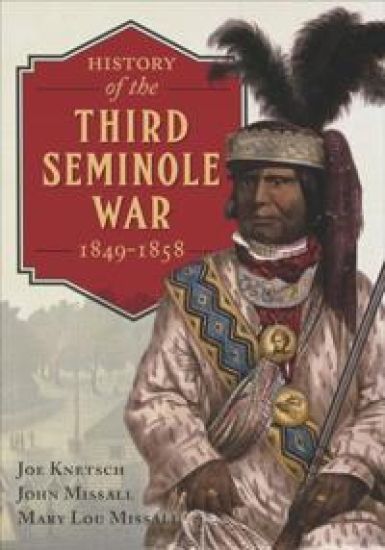
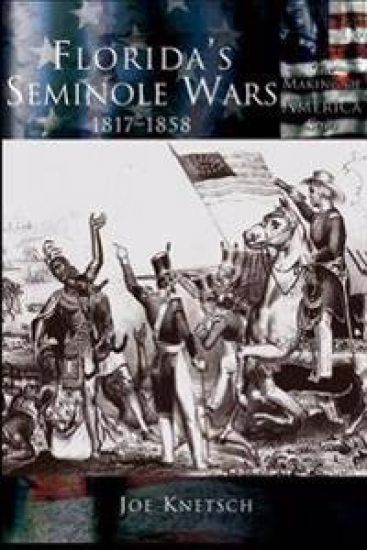
"The authors have done an excellent job bringing this last conflict–one that is often overlooked–to life. And not only that, they have put it into the broader picture of antebellum United States history.” — San Francisco Book Review Spanning a period of over forty years (1817-1858), the three Seminole Wars were America’s longest, costliest, and deadliest Indian wars, surpassing the more famous ones fought in the West. After an uneasy peace following the conclusion of the second Seminole War in 1842, a series of hostile events followed by a string of murders in 1849 and 1850 made confrontation inevitable. The war was also known as Billy Bowlegs' War because Billy Bowlegs (Holata Micco) was the main Seminole leader in this the last Indian war to be fought east of the Mississippi River. Pushed by increasing encroachment into their territory he led a raid near Fort Myers. A series of violent skirmishes ensued. The vastness of the Floridian wilderness and the difficulties of the terrain and climate caused problems for the army, but they had learnt lessons from the second war and amongst other new tactics employed greater use of boats, eventually securing victory through cutting off food supplies. Although there are several books covering the entire Seminole Wars period and excellent works on the First and Second Seminole Wars, the Third Seminole War has long been neglected. This book seeks to fill that void at a time when interest in the Seminole Wars is growing. History of the Third Seminole War is a detailed narrative of the war and its causes, containing numerous firsthand accounts from participants in the war, derived from virtually all the available primary sources, collected over many years. Written in a clear, easy-to-follow style, the work is intended for both a general and scholarly audience and will be of value to those interested in Florida history, American history in general, military history, Native American studies, and nineteenth century subjects. The book will also appeal to Civil War enthusiasts, as many of the officers who served in Florida became leaders in that later conflict.
From small ports to large ports, from rivers to creeks, from lakes to lagoons, water routes have been essential to Florida's development as a commercial, recreational, agricultural, and cultural entity. With more than 30,000 lakes and ponds and some 1,700 rivers, creeks, and streams, Florida ranks second in the list of wettest states in the USA. Native Americans used the rivers, creeks, and lakes as routes to various locales within the peninsula while harvesting fish and other aquatic edibles to sustain their daily lives. Early European settlers followed suit and supplemented their diets with the bounty from the oceans and fresh water sources. Into statehood, settlers relied on the same sources for food while using fresh water to make the land productive for food and cash crops. By the early decades of the 20th Century, water became a marketable attraction to lure millions of tourists to Florida for recreation and sports. The trend continues today. Join a trio of authors on this look at the immense impact water and maritime activities have played in the development of Florida.
Robert Morris Warren was a first-generation Jewish American from Detroit. A member of a prominent Detroit-Flint manufacturing family, he chose to become a lawyer. He graduated from the University of Michigan in 1940, worked for the Office of Price Administration, but left his position to enlist in the United States Army in 1943 as a private. He was eventually assigned to the 143rd Infantry Regiment, a unit of the 36th Infantry Division, and participated in several campaigns in Italy, France, and southern Germany. In command of a mortar squad, Warren was awarded the Distinguished Service Cross, the nation's second highest award for bravery. During his time in service, he exchanged multiple letters with Herman and Celia Chapin, friends from Central High School in Detroit. Those letters are the focus of this book. Discharged in late 1945, he resumed the practice of law in Detroit. He died on December 30, 1978.
Florida has long been viewed as a land of hope and endless possibilities. Visionaries seeking to establish new communities where they could escape the influences of society at large have turned to Florida to construct their utopias from the vast plantations of British philanthropists and entrepreneurs in the eighteenth century to the more exotic Koreshan Unity and its theory that humans live in the center of a Hollow Earth. Some came to the Sunshine State seeking religious freedom, such as the settlers in Moses Levy s Jewish colony, while others settled in Florida to establish alternative lifestyles, like the spiritualists of Cassadaga. Still others created their communities to practice new agricultural techniques or political philosophies. Historians Joe Knetsch and Nick Wynne examine a number of these distinctive utopian communities and how they have contributed to Florida s unique social fabric."
The most southern state has more than its share of Civil War stories. In January 1861, Florida militia forces captured the old Spanish Castillo de San Marcos, then known as Fort Marion, from the single Union soldier who guarded it. In 1862, Union forces recaptured it without a single shot fired. Union general Edward Moody McCook--later minister to Hawaii--accepted the surrender of Tallahassee on May 10, 1865. On May 13, he read the Emancipation Proclamation to an assembled crowd of white Floridians and former slaves on the steps of the Knott House in the city. Authors Nick Wynne and Joe Knetsch detail a Civil War moment for each date on the calendar. Learn a lesson a day or a month at a time.
The financial boom of the 1920s gave Florida citizens a look at prosperity and promise. By 1926, natural disasters, financial misdeeds and failures to realize those promises created a sense of impending doom and forced entrepreneurs into bankruptcy. With the hurricane of 1928, the boom was over, and coupled with bank failures and numerous farming epidemics, Florida plunged into a depression--two years before the stock market crash of 1929. Journey with noted Florida historians Nick Wynne and Joseph Knetsch as they detail the hardships of the times and the defiance of a state determined to rise above them.