

Kirjailija
Joe Moran
Kirjat ja teokset yhdessä paikassa: 14 kirjaa, julkaisuja vuosilta 2005-2025, suosituimpien joukossa First You Write a Sentence: The Elements of Reading, Writing . . . and Life. Vertaile teosten hintoja ja tarkista saatavuus suomalaisista kirjakaupoista.
14 kirjaa
Kirjojen julkaisuhaarukka 2005-2025.
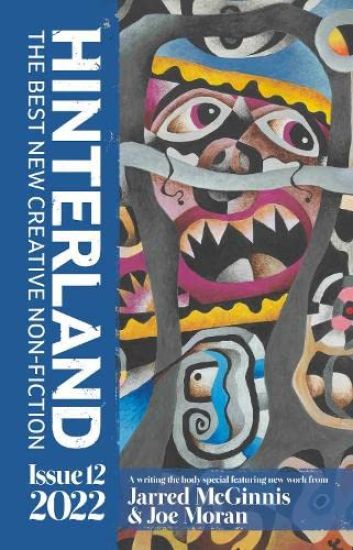
Hinterland
Jarred McGinnis; Ali Seegar; Joe Moran; Adrian Tissier; Dave Wakely; Edvige Giunta; Richard Skelton; Elizabeth Norton
UEA Publishing Project
2023
pokkari
Hinterland is a quarterly magazine showcasing the best in creative non-fiction writing. Each issue features a stellar line-up of writing talent from around the globe: stories by established, best-selling authors as well as a host of exciting new writers making their publishing debut. Much of the writing in our latest issue relates to the body. Whether it’s addiction, illness or a coming-of-age awareness of desire, the authors featured explore how bodies can be afflicted and affected in many different ways. And in light of the recent Covid pandemic, reflections around life and mortality are inevitable, from parental time-travel through a child’s life by Jarred McGinnis (The Coward), to grief as experienced via our online lives by Joe Moran (If You Should Fail, First You Write a Sentence).Also featuring writing by Munizha Ahmad-Cooke, Laura Dobson, Edvige Giunta, Candice Kelsey, Elizabeth Norton, Ali Seegar, Richard Skelton, Michelle Spinei, Adrian Tissier, Dave Wakely and Sam Gordon Webb.
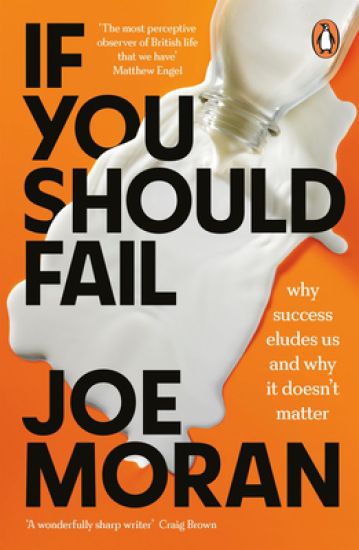
'There is an honesty and a clarity in Joe Moran's book If You Should Fail that normalises and softens the usual blows of life that enables us to accept and live with them rather than be diminished/wounded by them' Julia Samuel, author of Grief Works and This Too Shall Pass 'Full of wise insight and honesty. Moran manages to be funny, erudite and kindly: a rare - and compelling - combination. This is the essential antidote to a culture obsessed with success. Read it' Madeleine BuntingFailure is the small print in life's terms and conditions.Covering everything from examination dreams to fourth-placed Olympians, If You Should Fail is about how modern life, in a world of self-advertised success, makes us feel like failures, frauds and imposters. Widely acclaimed observer of daily life Joe Moran is here not to tell you that everything will be all right in the end, but to reassure you that failure is an occupational hazard of being human. As Moran shows, even the supremely gifted Leonardo da Vinci could be seen as a failure. Most artists, writers, sports stars and business people face failure. We all will, and can learn how to live with it. To echo Virginia Woolf, beauty "is only got by the failure to get it . . . by facing what must be humiliation - the things one can't do."Combining philosophy, psychology, history and literature, Moran's ultimately upbeat reflections on being human, and his critique of how we live now, offers comfort, hope - and solace. For we need to see that not every failure can be made into a success - and that's OK.

'One of London's most influential public artists.' - THE GUARDIAN'The conscience of the 21st Century.' - INTERNATIONAL HERALD TRIBUNEFrom the summer of 2018 to the end of the decade, public artist Martin Firrell created 40 artworks for display on billboards across the UK.It's interesting to ask, what do these artworks convey en masse? What sense of the conscience of our times do they portray? And what do they say about the artist at this point in his development?The attempt to answer these questions is perhaps one of the most interesting and valuable parts of the curatorial process.The expressive power of Firrell's works lies undoubtedly in the elucidatory force of his direct and spare language. His works are plain speaking, Germanic almost.They deal in the imagination of protest. They are powered by a subterranean indignation at the unfairness of the world but that indignation is transmuted into wit, telling observation, and an apparent and touching concern for the world.Barbara Ulbrist Curator, Basel Switzerland
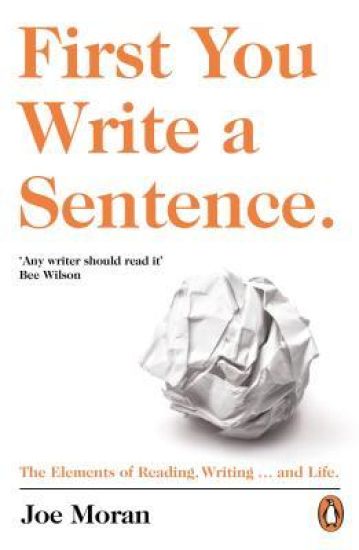
A STYLE GUIDE BY STEALTH - HOW ANYONE CAN WRITE WELL (AND FULLY ENJOY GOOD WRITING)'Joe Moran is a wonderfully sharp writer, calm, precise and quietly comical' Craig BrownAdvanced maths has no practical use, and is understood by few. A symphony can be enjoyed, but created only by a genius. Good writing, however, can be written (and read) by anyone if we give it the gift of our time.Enter universally praised historian Professor Joe Moran. From the Bible and Shakespeare to Orwell and Diana Athill, First You Write a Sentence.show us how the most ordinary words can be turned into verbal constellations, sharing:- The tools of the trade; from typewriters to texting and the impact this has on the craft- Writing and the senses; how to make the world visible and touchable- How to find the ideal word, build a sentence, and construct a paragraphGood writing can ignite the hearts and minds of readers, help us notice the world better and live more meaningful lives. And it's a power we all can wield.'What a lovely thing this is: a book that delights in the sheer textural joy of good sentences . . . Any writer should read it' Bee Wilson'Thoughtful, engaging, and lively . . . when you've read it, you realise you've changed your attitude to writing (and reading)' John Simpson, formerly Chief Editor of the OED and author of The Word Detective'Moran is a past master at producing fine, accessible non-fiction' Helen Davies, Sunday Times

First You Write a Sentence: The Elements of Reading, Writing . . . and Life
Joe Moran
PENGUIN BOOKS
2019
nidottu
"Do you want to write clearer, livelier prose? This witty primer will help." --The New York Times Book Review An exploration of how the most ordinary words can be turned into verbal constellations of extraordinary grace through the art of building sentences The sentence is the common ground where every writer walks. A good sentence can be written (and read) by anyone if we simply give it the gift of our time, and it is as close as most of us will get to making something truly beautiful. Using minimal technical terms and sources ranging from the Bible and Shakespeare to George Orwell and Maggie Nelson, as well as scientific studies of what can best fire the reader's mind, author Joe Moran shows how we can all write in a way that is clear, compelling and alive. Whether dealing with finding the ideal word, building a sentence, or constructing a paragraph, First You Write a Sentence informs by light example: much richer than a style guide, it can be read not only for instruction but for pleasure and delight. And along the way, it shows how good writing can help us notice the world, make ourselves known to others, and live more meaningful lives. It's an elegant gem in praise of the English sentence.
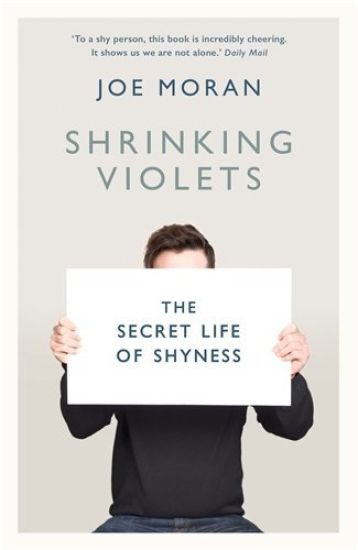
Our success as a species is built on sociability, so shyness in humans should be an anomaly. But it's actually remarkably common - we all know what it's like to cringe in embarrassment, stand tongue-tied at the fringe of an unfamiliar group, or flush with humiliation if we suddenly become the unwelcome centre of attention. In Shrinking Violets, Joe Moran explores the hidden world of shyness, providing insights on everything from timidity in lemon sharks to the role of texting in Finnish love affairs. As he seeks answers to the questions that shyness poses - Why are we shy? Can we overcome it? Does it define us? - he uncovers the fascinating stories of the men and women who were 'of the violet persuasion', from Charles Darwin to Agatha Christie, and from Tove Jansson to Nick Drake. In their stories - often both heart-breaking and inspiring - and through the myriad ways scientists and thinkers have tried to explain and cure shyness, Moran finds a hopeful conclusion. To be shy, he decides, is not simply a burden - it is also a gift, a different way of seeing the world that can be both enriching and inspiring.
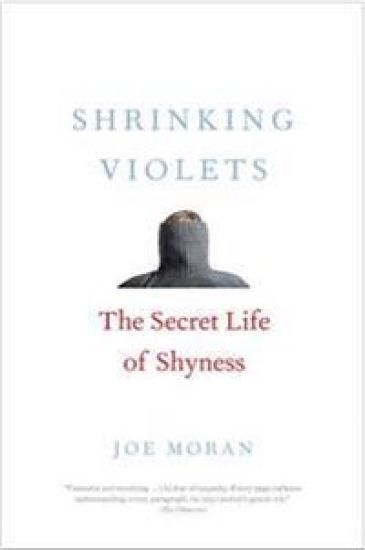
A deeply perceptive and beautifully written cultural history of shyness, from one of our most astute observers of the everyday Shyness is a pervasive human trait: even most extroverts know what it is like to stand tongue-tied at the fringe of an unfamiliar group or flush with embarrassment at being the unwelcome center of attention. And yet the cultural history of shyness has remained largely unwritten--until now. With incisiveness, passion, and humor, Joe Moran offers an eclectic and original exploration of what it means to be a "shrinking violet." Along the way, he provides a collective biography of shyness through portraits of such shy individuals as Charles Darwin, Charles Schulz, Glenn Gould, and Agatha Christie, among many others. In their stories often both heartbreaking and inspiring and through the myriad ways scientists and thinkers have tried to explain and "cure" shyness, Moran finds hope. To be shy, he decides, is not simply a burden; it is also a gift, a different way of seeing the world that can be both enriching and inspiring.
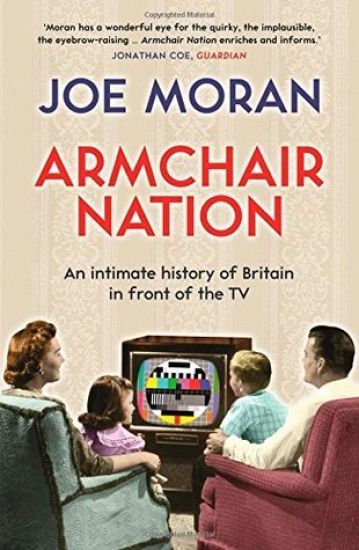
But what does your furniture point at?' asks the character Joey in the sitcom Friends on hearing an acquaintance has no TV. It's a good question: since its beginnings during WW2, television has assumed a central role in our houses and our lives, just as satellite dishes and aerials have become features of urban skylines. Television (or 'the idiot's lantern', depending on your feelings about it) has created controversy, brought coronations and World Cups into living rooms, allowed us access to 24hr news and media and provided a thousand conversation starters. As shows come and go in popularity, the history of television shows us how our society has changed. Armchair Nation reveals the fascinating, lyrical and sometimes surprising history of telly, from the first demonstration of television by John Logie Baird (in Selfridges) to the fear and excitement that greeted its arrival in households (some viewers worried it might control their thoughts), the controversies of Mary Whitehouse's 'Clean Up TV' campaign and what JG Ballard thought about Big Brother. Via trips down memory lane with Morecambe and Wise, Richard Dimbleby, David Frost, Blue Peter and Coronation Street, you can flick between fascinating nuggets from the strange side of TV: what happened after a chimpanzee called 'Fred J. Muggs' interrupted American footage of the Queen's wedding, and why aliens might be tuning in to The Benny Hill Show.

Not All for Love: Six one-act plays and one full-length for community theatre
Joe Moran
Createspace Independent Publishing Platform
2014
nidottu
Interdisciplinarity covers one of the most important changes in attitude and methodology in the history of the university.Taking the study of English as its main example, this fully updated second edition examines the ways in which we have organized knowledge into disciplines, and are now reorganizing it into new configurations as existing structures come to seem restrictive. Joe Moran traces the history and use of the term ‘interdisciplinarity’, tackling such vital topics as: the rise of the disciplinesinterdisciplinary EnglishLiterary and Cultural Studies'theory' and the disciplinestexts and historiesliterature and science, space and nature.Including an updated further reading section and new concluding chapter, Interdisciplinarity is the ideal entry point into one of today's most heated critical debates.
Interdisciplinarity covers one of the most important changes in attitude and methodology in the history of the university.Taking the study of English as its main example, this fully updated second edition examines the ways in which we have organized knowledge into disciplines, and are now reorganizing it into new configurations as existing structures come to seem restrictive. Joe Moran traces the history and use of the term ‘interdisciplinarity’, tackling such vital topics as: the rise of the disciplinesinterdisciplinary EnglishLiterary and Cultural Studies'theory' and the disciplinestexts and historiesliterature and science, space and nature.Including an updated further reading section and new concluding chapter, Interdisciplinarity is the ideal entry point into one of today's most heated critical debates.
In an ever-growing field of study, this is a major contribution to one of the key areas in cultural studies and cultural theory – the spaces, practices and mythologies of our everyday culture.Drawing on the work of such continental theorists as Henri Lefebvre, Michel de Certeau, Marc Augé and Siegfried Kracauer, Joe Moran explores the concrete sites and routines of everyday life and how they are represented through political discourse, news media, material culture, photography, reality TV shows, CCTV and much more.Unique in his focus of the under-explored, banal aspects of everyday culture, including office life, commuting, traffic and mass housing, Moran re-evaluates conventional notions of everyday life in cultural studies, and shows that analysing such ‘boring’ phenomena can help make sense of cultural and social change.This book is interdisciplinary in its approach and covers many different areas including visual culture, cultural geography, material culture, and cultural history as well as the key areas of cultural studies and sociology. Students from all these subjects will find this clearly written and lively work an invaluable study resource.
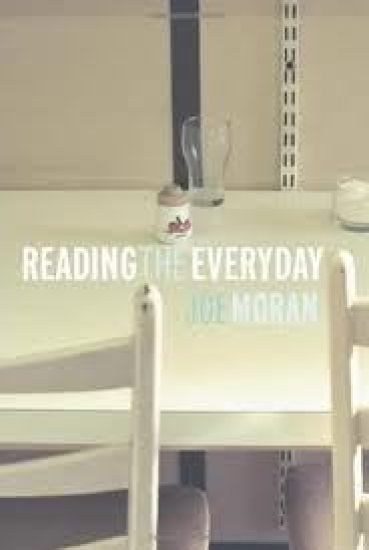
In an ever-growing field of study, this is a major contribution to one of the key areas in cultural studies and cultural theory – the spaces, practices and mythologies of our everyday culture.Drawing on the work of such continental theorists as Henri Lefebvre, Michel de Certeau, Marc Augé and Siegfried Kracauer, Joe Moran explores the concrete sites and routines of everyday life and how they are represented through political discourse, news media, material culture, photography, reality TV shows, CCTV and much more.Unique in his focus of the under-explored, banal aspects of everyday culture, including office life, commuting, traffic and mass housing, Moran re-evaluates conventional notions of everyday life in cultural studies, and shows that analysing such ‘boring’ phenomena can help make sense of cultural and social change.This book is interdisciplinary in its approach and covers many different areas including visual culture, cultural geography, material culture, and cultural history as well as the key areas of cultural studies and sociology. Students from all these subjects will find this clearly written and lively work an invaluable study resource.